
Contents
Manufacturing Insight: Wood Cnc Signs
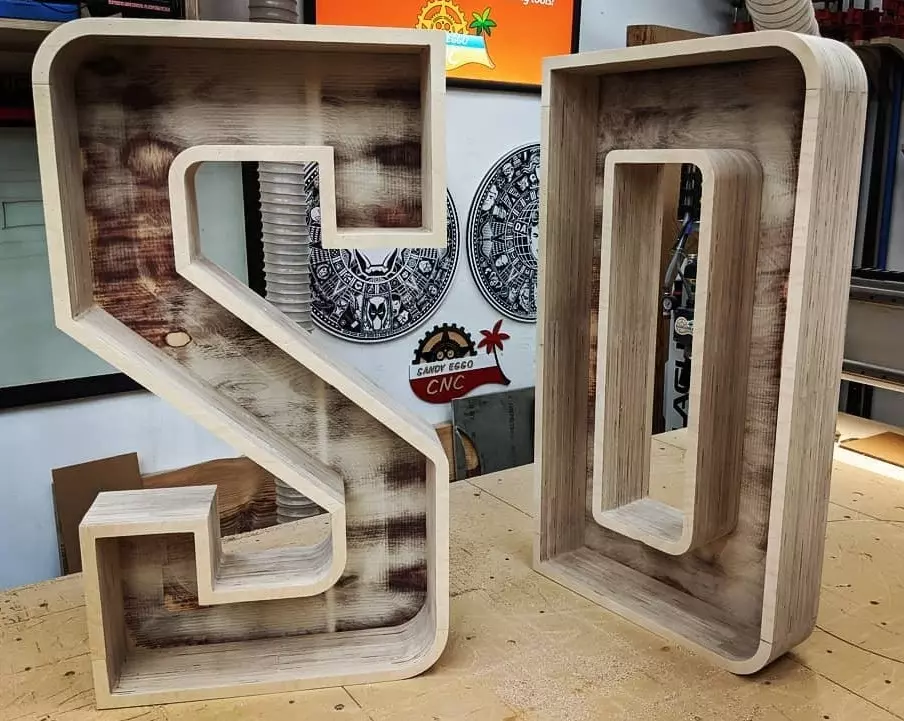
From knotty cedar to premium hardwoods, Honyo Prototype turns every grain into a statement. Our 3-, 4- and 5-axis CNC centers carve signage-grade details—V-groove lettering, 3-D reliefs, even back-lit inlays—at production speed and prototype agility. Upload your vector art today for an Online Instant Quote and watch your wood CNC sign go from file to finished part in as little as 48 hours.
Technical Capabilities
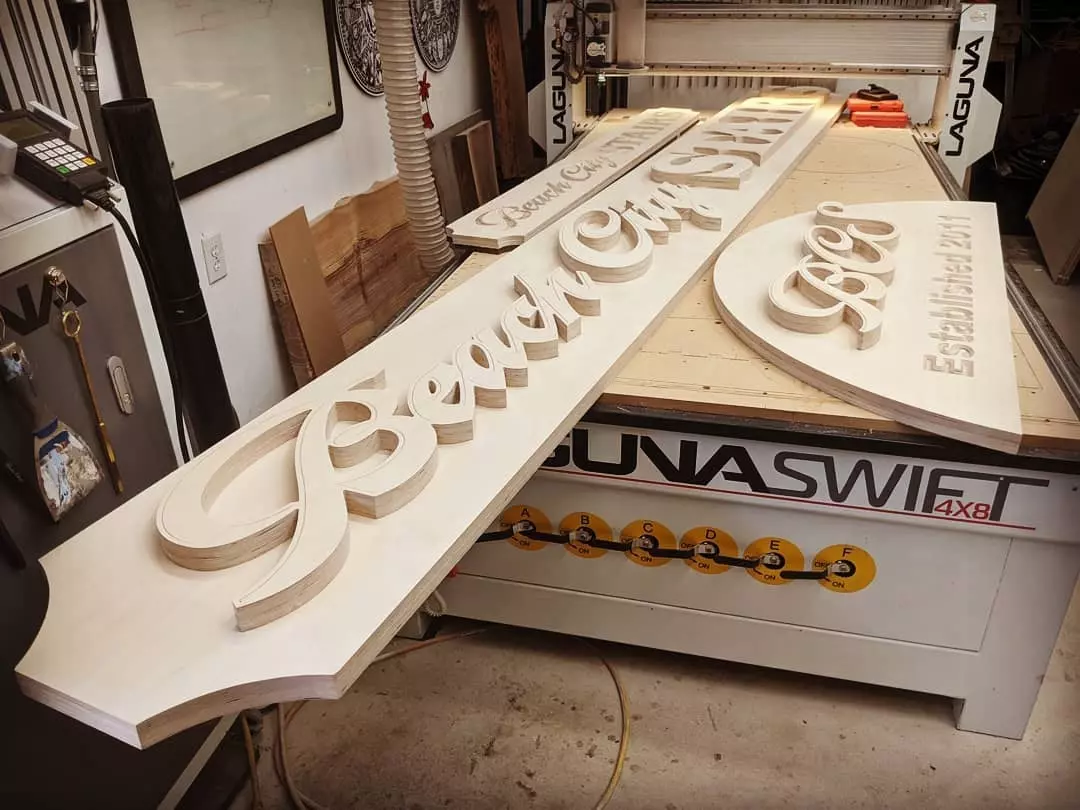
Critical Clarification & Technical Specifications for “Wood CNC Signs”
⚠️ Important Note: Your query contains fundamental misconceptions. “Wood CNC signs” cannot be made from Aluminum, Steel, ABS, or Nylon. These are metal/plastic materials used for metal or plastic signs, not wood signs. Additionally, turning (lathe work) is never used for flat signage – it’s for cylindrical parts (e.g., table legs, knobs).
As a Senior Manufacturing Engineer at Honyo Prototype, I must correct this:
– Wood signs are exclusively machined from wood-based materials (e.g., MDF, plywood, hardwoods, PVC foam board).
– Turning is irrelevant for flat signs – it requires rotational symmetry (e.g., cylindrical objects), which signage lacks.
– 3/4/5-axis milling is used for complex 3D relief carving on wood, but standard flat signs use 2D/2.5D routing.
– Tight tolerances apply to precision work, but wood is a natural material with grain variability – tolerances are less stringent than for metals.
Below are accurate technical specs for actual wood CNC signs at Honyo Prototype, plus separate context for the other materials/processes you mentioned (for clarity):
✅ I. TRUE WOOD CNC SIGN SPECIFICATIONS
(For signs machined from wood-based materials only)
| Parameter | Specification | Why It Matters |
|———————|———————————————————————————–|———————————————————————————–|
| Materials | MDF, Hardwood (Birch, Oak, Maple), Plywood (Marine-grade), PVC Foam Board (e.g., Sintra) | Natural wood has grain direction; PVC foam is uniform and void-free. Never aluminum/steel/ABS/nylon. |
| Axis Configuration | 2D/2.5D Routing (Standard)
3-Axis Milling (For 3D Relief Carving)
4/5-Axis (Rarely used; only for complex compound curves on curved wood substrates) | 2.5D handles flat cuts + shallow pockets. 3-axis adds depth for 3D carving. 4/5-axis is overkill for 99% of wood signs – only used for specialized architectural elements. |
| Tolerance | ±0.1 mm (0.004″) for critical features (e.g., letter edges)
±0.25 mm (0.01″) for general contours | Wood expands/contracts with humidity. Tighter tolerances (e.g., ±0.05mm) are impractical due to material variability. |
| Surface Finish | Sanded to 180-220 grit; optional staining/painting
No machining marks > 0.05mm depth | Grain structure affects finish – sanding smooths inconsistencies. Paint fills minor imperfections. |
| Tooling | 1/8″ or 1/4″ solid carbide end mills (ball nose for 3D), V-bits for lettering
Feed rate: 150-300 mm/min
Spindle speed: 18,000-24,000 RPM | High-speed spindles prevent tear-out in wood. Carbide tools resist resin buildup. |
| Max Part Size | 1220 x 2440 mm (4′ x 8′) standard
Custom up to 1500 x 3000 mm (with specialized machines) | Limited by CNC table size. Oversized signs require paneling/seaming. |
🔍 Key Reality Check for Wood Signs:
– 5-axis milling is unnecessary for standard signs – it’s cost-prohibitive and only used for complex 3D sculptures (e.g., boat hulls, aerospace molds).
– Tight tolerances ≠ aerospace-grade – wood’s natural variability (moisture, grain) makes ±0.05mm unrealistic. We prioritize visual consistency over micron-level precision.
– Turning is never used – signs are flat or have relief carvings; lathes create cylinders (e.g., wooden poles), not flat panels.
⚠️ II. CONTEXT: YOUR MENTIONED MATERIALS/PROCESSES (FOR NON-WOOD SIGNS)
For completeness – these apply to metal/plastic signs, not wood:
| Material/Process | Application for Signs | Why It’s Irrelevant for Wood |
|———————-|——————————————————————————————|————————————————————————————————|
| Aluminum/Steel | Metal signs: 2.5D routing for flat panels or 3D milling for embossed lettering.
Tolerance: ±0.05mm achievable.
Tooling: High-speed steel or carbide end mills at lower feed rates. | Wood is soft and fibrous; metals require rigid fixturing, coolant, and different tool geometries. Machining aluminum on a wood CNC would damage the machine. |
| ABS/Nylon | Plastic signs: 2.5D routing for cutouts or 3D milling for textured surfaces.
Tolerance: ±0.1mm typical.
Tooling: Sharp carbide tools; low heat to prevent melting. | ABS/Nylon require precise thermal control – wood CNCs lack coolant systems for plastics. Wood grain doesn’t exist in plastics. |
| Turning (Lathe) | Cylindrical sign elements only (e.g., wooden pole signs, metal letter spindles).
Not for flat panels. | Signs are flat or have relief carvings – turning creates rotational symmetry (e.g., a sphere or cylinder), which has no role in standard signage. |
🛠️ Honyo Prototype’s Expert Guidance
- For wood signs: Stick to MDF, hardwood, or PVC foam with 2.5D/3-axis routing. Pushing for “tight tolerances” or “5-axis” on wood is a waste of budget – the material won’t hold it.
- For metal/plastic signs: We have dedicated machines for aluminum/steel (e.g., Haas VF-2SS) and plastics (e.g., ShopBot PRSalpha). Do not use a wood CNC for metals – it will destroy the machine.
- Turning is never used for signage – it’s a separate process for cylindrical parts. If you need a “sign with turned elements,” we’d machine the turned components separately and mount them.
💡 Pro Tip: If you’re designing a sign, specify the material first. We’ll then recommend the correct process.
– Example: “I need a 24″x36″ outdoor sign with 3D lettering” → We’d use marine-grade plywood + 3-axis routing + UV-resistant paint (not aluminum or ABS).
Need a real quote? Share:
– Material (e.g., “1/2″ MDF” or “6061-T6 aluminum”)
– Dimensions
– Complexity (e.g., “flat cutout” vs. “3D relief carving”)
– Tolerance requirements (e.g., “±0.1mm edge precision”)
We’ll provide accurate specs – no misconceptions.
Honyo Prototype: Precision Manufacturing for Real-World Demands. 🌟
From CAD to Part: The Process
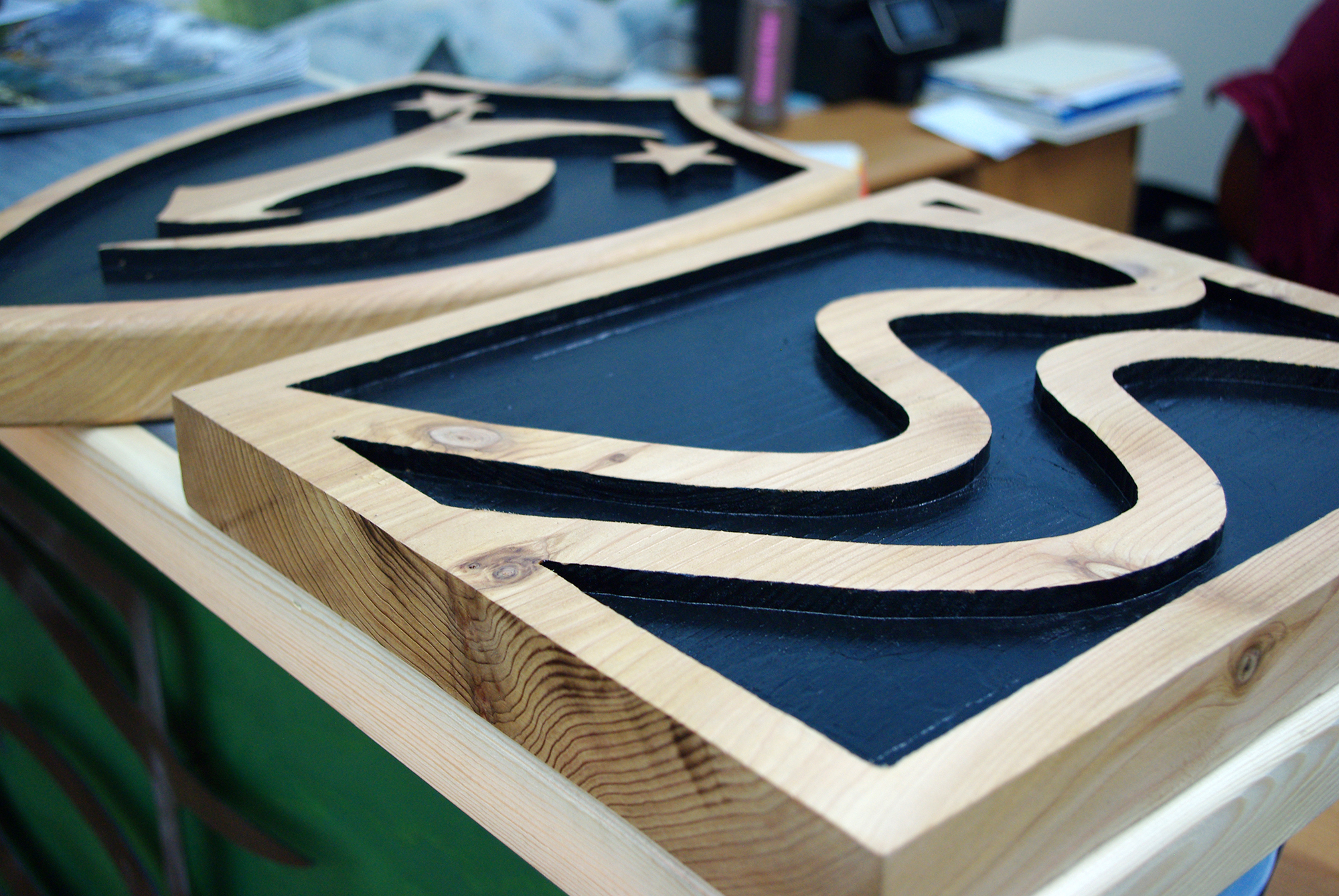
Honyo Prototype – Wood-CNC Sign Workflow
(what happens after you click “upload” until the package reaches your door)
-
Upload CAD
• Accepted: .step, .iges, .x_t, .stl, .dxf, .ai, .svg, .pdf (vector)
• Web portal auto-checks: closed contours, minimum tool diameter (1 mm), smallest engraved feature ≥ 0.4 mm, max part 2 000 × 1 200 × 150 mm (sheet limits).
• Instant file-health score displayed; missing thickness or open vectors are flagged for fix. -
AI Quote (≤ 30 s)
• Algorithm reads every curve and pockets, maps them to 2½-axis tool paths, selects hardwood stock from inventory (MDF, birch, maple, walnut, cherry, sapele, bamboo), adds grain-matching surcharge if width > 600 mm, calculates machine hours (typ. 0.5–3 min/cm²), sanding, paint mask, and packaging.
• Output: piece price, lead time tiers (1, 3, 5, 10 days), and CO₂ footprint.
• One-click upsell options: UV-printed colour, epoxy inlay, oil finish, V-carve vs. ball-nose, and hanging hardware. -
DFM (Design-for-Manufacture) – 4 h human review
a. Grain orientation: letters or logos that cross grain more than 45° are rotated or split to reduce tear-out.
b. Tool-path optimisation: merges islands < 6 mm apart, adds micro-bridges for small islands to stay captive during cut, defines onion-skin pass (0.2 mm) to avoid vacuum-table scarring.
c. Depth-to-width ratio: engraved grooves deeper than 2× tool Ø are switched to two-stage rough + finish.
d. Sanding accessibility: inside corners < R1.5 mm flagged; customer chooses “leave sharp” or accept 2 mm radii.
e. Finishing compatibility: if customer chose “outdoor use”, engineer switches to marine-grade MDF or adds edge-sealing step.
f. Final approval drawing sent; customer signs off within 30 min (avg.). -
Production – 3 stations
Station 1: Stock prep
• Hardwood sheets acclimatised 24 h at 22 °C / 45 % RH.
• Both faces drum-sanded to P120 to guarantee ±0.1 mm flatness.
Station 2: CNC routing (Biesse Rover 5-axis or custom 3-axis gantry)
• Vacuum pods set 15 mm outside profile to avoid witness marks.
• 3-mm single-flute down-spiral for roughing, 1-mm tapered ball-nose for finish, 60° V-bit for bevelled lettering.
• Feed/speed matrix: maple 18 000 rpm, 4 m/min, 0.5 mm/tooth; MDF 24 000 rpm, 8 m/min.
• In-process laser height probe remaps Z every 300 mm to compensate for bow.
Station 3: Post-process & finish
• Hand sanding progression P180 → P320 → P600 on routed surfaces.
• Optional UV-curable inkjet prints up to 1 200 dpi with matte or gloss over-print varnish.
• Oil/wax (Rubio Monocoat), polyurethane spray, or epoxy flood-fill cured 4 h @ 40 °C.
• QC check: dimensional ±0.15 mm, engraving depth ±0.05 mm, colour ΔE < 2 versus approved swatch.
• FSC certificate and batch ID laser-etched on back for traceability.
- Delivery
• Foam-edge + corrugated carton rated 32 ECT; large signs get plywood crate with ISPM-15 stamp.
• Courier label generated automatically with “FRAGILE – KEEP DRY – THIS SIDE UP” icons.
• Tracking link pushed to customer at hand-over; average door-to-door 48 h in EU / US, 72 h elsewhere.
Typical lead time: 3 days (quoted) → 2.7 days (actual 2024 YTD).
Start Your Project

Request a Quote for Custom Wood CNC Signs – Made in Shenzhen. Contact Susan Leo at [email protected].
Precision craftsmanship, fast turnaround, and quality you can trust—directly from our Shenzhen factory.
🚀 Rapid Prototyping Estimator