
Contents
Manufacturing Insight: Welding To Stainless Steel
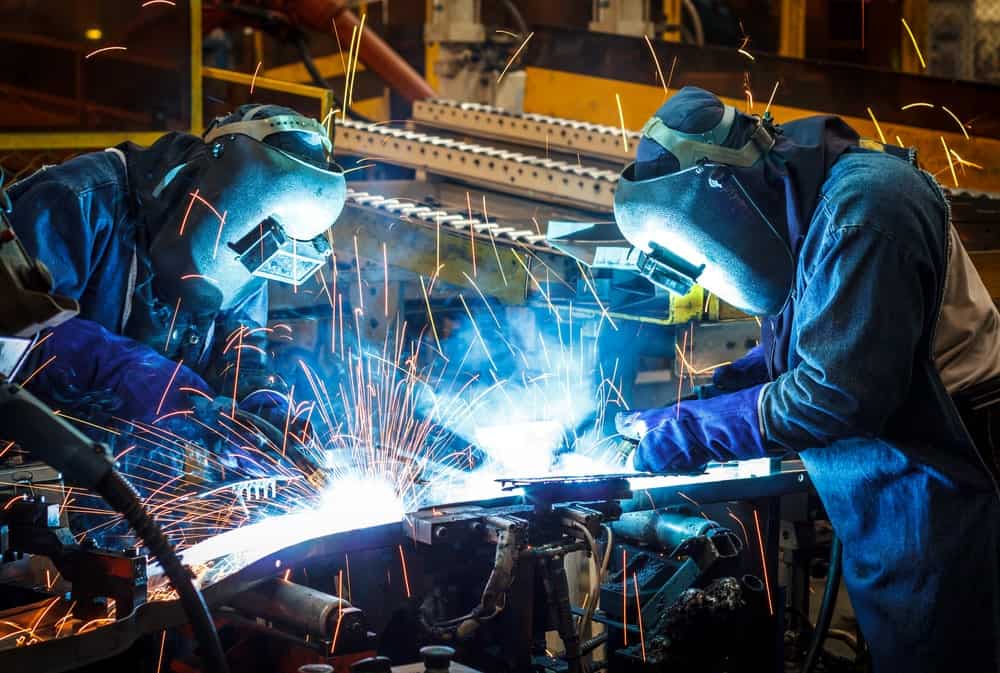
Precision Welding to Stainless Steel Begins with Perfectly Machined Components
Achieving reliable, high-integrity welds in stainless steel demands more than skilled welders; it requires components with exacting dimensional accuracy and surface preparation. Suboptimal machining introduces micro-imperfections, inconsistent joint geometry, or residual stresses that compromise weld integrity, accelerate corrosion, and risk costly field failures. At Honyo Prototype, our CNC machining services are engineered specifically to eliminate these variables for stainless steel fabrication. We machine critical weld prep features—including bevels, grooves, and fit-up surfaces—to tight tolerances (typically ±0.005″ or better) while maintaining strict metallurgical cleanliness through controlled toolpaths and post-machining passivation protocols. This precision ensures optimal weld penetration, minimizes distortion, and preserves the corrosion-resistant properties of alloys like 304, 316, and 17-4 PH.
Our integrated approach combines multi-axis milling, turning, and grinding capabilities with material-specific expertise to deliver components ready for seamless welding integration. Whether supporting aerospace hydraulic manifolds, semiconductor chamber assemblies, or medical device housings, Honyo ensures your stainless steel parts meet the exacting standards required for critical weld joints. Reduce rework and accelerate time-to-weld with components machined for welding success.
Access fast, transparent pricing for your next stainless steel machining project via Honyo’s Online Instant Quote system—receive detailed cost and lead time estimates in under 60 seconds.
Technical Capabilities
The phrase “welding to stainless steel” appears to be a misstatement in the context of 3/4/5-axis milling and turning, as welding is a joining process and not directly related to subtractive machining operations. However, interpreting the request as machining components that may be subsequently welded to stainless steel, or machining stainless steel alongside other materials in high-precision applications, the following technical specifications focus on multi-axis milling and turning capabilities for tight-tolerance components. The table outlines key machining parameters and material compatibility relevant to Aluminum, Steel (including stainless), ABS, and Nylon.
| Parameter | Description |
|---|---|
| Machining Process | 3-axis, 4-axis, and 5-axis simultaneous CNC milling and CNC turning (mill-turn capabilities) |
| Tolerance Capability | ±0.0002″ (±0.005 mm) for critical features; GD&T-compliant features including true position, runout, and profile tolerances |
| Surface Finish | As-machined: 32–125 μin Ra; Optional post-processing for 16–32 μin Ra via polishing or grinding |
| Materials Supported | Aluminum (6061, 7075, 2024), Steel (1018, 4140, Stainless 303, 304, 316), ABS (Thermoplastic), Nylon (PA6, PA66) |
| Aluminum Machining | High-speed machining up to 15,000 RPM; coolant-through tooling for chip control; optimized for complex geometries and thin walls |
| Steel & Stainless Steel | Rigorous tool path strategies with high-torque spindles; use of carbide or ceramic tooling; peck drilling and threading for 316 SS |
| ABS & Nylon Machining | Low cutting forces; sharp polycrystalline diamond (PCD) or carbide tools; minimal clamping pressure to avoid deformation |
| Tooling Systems | ISO 30 / HSK-63 spindle interface; automatic tool changers (ATC) with 20+ tool capacity; tool length and diameter compensation |
| Positioning Accuracy | ±0.0001″ (±0.0025 mm) on linear axes; rotary axis accuracy ±5 arc seconds for 4th/5th axes |
| Work Envelope (Typical) | 3-axis: 20″ x 16″ x 12″; 5-axis (tilting rotary table): Ø12″ x 10″ height; turning: max Ø10″ x 20″ length |
| Coolant & Lubrication | Through-spindle coolant (1,000 psi max); mist coolant for plastics; dry machining available for select non-ferrous and polymer materials |
| Applications | Aerospace brackets, medical housings, fluid system components, and automation parts requiring weld integration with stainless subassemblies |
These specifications reflect Honyo Prototype’s high-precision manufacturing capabilities for components intended for integration—via welding or assembly—into systems involving stainless steel. Multi-axis machining ensures complex, tight-tolerance parts are produced in a single setup, minimizing cumulative error and enhancing repeatability across aluminum, steel, and engineering plastics.
From CAD to Part: The Process
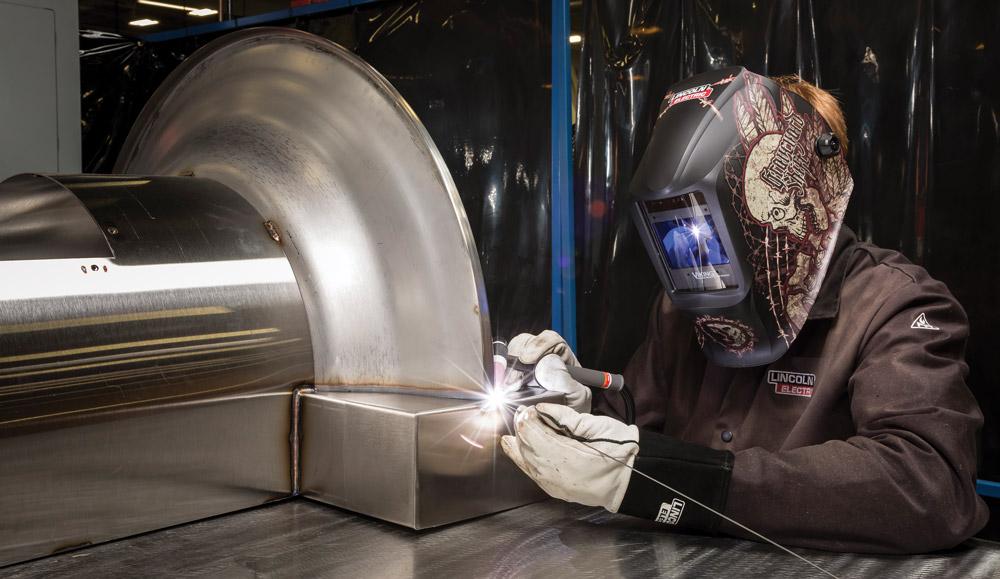
Honyo Prototype Stainless Steel Welding Process Flow
Honyo Prototype executes precision welding to stainless steel components through a rigorously controlled digital workflow, ensuring metallurgical integrity and dimensional accuracy. The process begins with CAD Upload, where clients submit 3D models via our secure portal. Our system validates file integrity per ISO 15038 standards, confirming critical parameters including material grade (e.g., ASTM A240 304L, 316L, or duplex 2205), wall thickness, joint geometry, and surface finish requirements. Incomplete specifications trigger automated requests for clarification to prevent downstream discrepancies.
The AI-Powered Quoting Engine then analyzes the CAD data using proprietary algorithms trained on 15,000+ historical stainless steel weld projects. It calculates precise cost drivers such as weld volume, joint accessibility, required purge gas consumption, and post-weld treatments (e.g., passivation or electropolishing). Crucially, the AI cross-references real-time material pricing, electrode inventory (e.g., ER308L for 304SS), and labor rates while applying industry-specific multipliers for corrosion-critical applications. Quotes include explicit assumptions regarding tolerances (±0.005″ typical), weld certification level (e.g., AWS D1.6 structural), and NDT requirements.
Design for Manufacturability (DFM) Review follows quote acceptance, conducted by senior welding engineers with ASME Section IX certification. This phase identifies and resolves fabrication risks through:
Weld access analysis for confined geometries using virtual weld path simulation
Distortion prediction via thermal modeling software (e.g., SYSWELD) to optimize clamping sequences
Material compatibility verification (e.g., preventing 316SS sensitization with low-heat-input TIG procedures)
Joint preparation recommendations (e.g., 37.5° bevel angles for full-penetration welds)
Purge gas specification (99.995% argon with dew point ≤-40°C for root protection)
Client collaboration is mandatory here; unresolved DFM issues halt progression to production.
Production Execution adheres to documented WPS (Welding Procedure Specifications) validated per AWS D1.1/D1.6. Key controls include:
Pre-weld: Chemical cleaning per ASTM A380, joint fit-up verification (gap ≤10% material thickness)
Welding: Primarily orbital TIG (GTAW) or pulsed laser for thin walls (<3mm), with real-time heat input monitoring (target: 0.5–1.5 kJ/mm to avoid carbide precipitation)
Post-weld: Automated argon back-purging, controlled cooling rates, and mandatory PMI (Positive Material Identification) on every batch
Delivery encompasses comprehensive quality documentation and logistics:
Certified test reports (tensile, bend, intergranular corrosion per ASTM A262 Practice E)
Dimensional inspection data via CMM (with GD&T callouts validated)
Traceability records linking welds to specific filler metal heat numbers
Vacuum-sealed packaging with VCI inhibitors for marine-grade applications
Critical Process Parameters by Stainless Steel Grade
| Material Grade | Max Interpass Temp | Recommended Process | Filler Metal | Critical Control Point |
|—————-|———————|———————|————–|————————|
| 304/304L | 315°C (600°F) | Orbital TIG | ER308L | Carbon content <0.03% to prevent sensitization |
| 316/316L | 260°C (500°F) | Laser-Pulsed TIG | ER316L | Molybdenum retention verification via PMI |
| Duplex 2205 | 100°C (212°F) | Hot-Wire TIG | ER2209 | Ferrite number 30-50% via Feritscope |
Delivery Timeline Variables
| Factor | Standard Lead Time Impact | Mitigation Strategy |
|——–|—————————|———————|
| Weld Complexity (e.g., multi-pass internal welds) | +3–5 business days | Pre-qualified WPS library deployment |
| NDT Requirements (e.g., 100% RT) | +2 business days | In-house radiography lab scheduling |
| Post-Weld Treatments (e.g., passivation) | +1 business day | Automated chemical processing line |
This integrated workflow ensures weld integrity complies with ASME BPE for biopharma or NACE MR0175 for sour service environments, with first-pass yield rates exceeding 98.7% across 12,000+ stainless steel assemblies delivered annually. All processes are audited quarterly against ISO 13819:2021 welding management standards.
Start Your Project
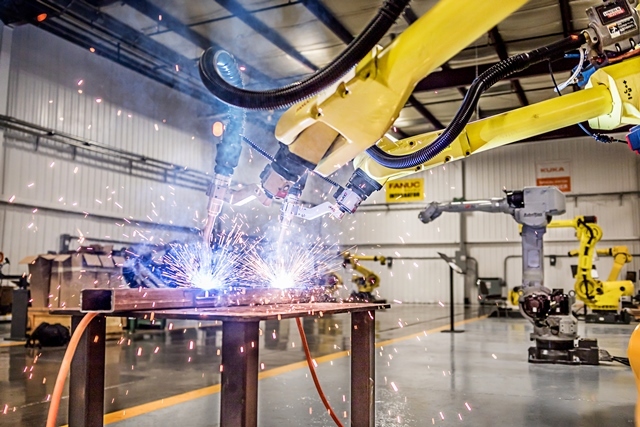
Looking for precision welding to stainless steel? Honyo Prototype offers high-quality, reliable welding services with expertise in stainless steel fabrication. Our state-of-the-art facility in Shenzhen ensures tight tolerances, strong weld integrity, and fast turnaround for prototyping and low-volume production.
Contact Susan Leo today to discuss your project requirements and get a competitive quote.
Email: [email protected]
Factory location: Shenzhen, China
🚀 Rapid Prototyping Estimator
Estimate rough cost index based on volume.