
Contents
Manufacturing Insight: Uv Printing On Metal
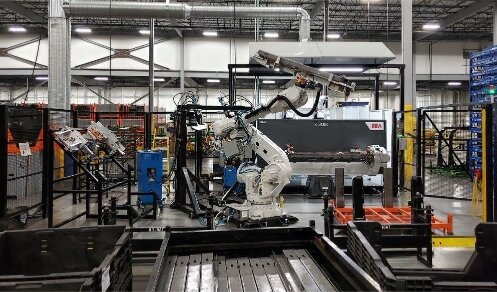
Precision UV Printing on Metal: Engineered for Industrial Applications
Honyo Prototype delivers advanced UV printing solutions specifically engineered for metal substrates, addressing critical challenges in adhesion, durability, and functional performance. Unlike conventional printing methods, our industrial-grade UV-curable inks bond molecularly with treated metal surfaces—including aluminum, stainless steel, and titanium—ensuring resistance to abrasion, chemicals, and extreme environmental exposure. This capability is essential for high-value sectors such as aerospace, medical device manufacturing, and automotive, where traceability markings, instructional labels, and decorative elements must withstand rigorous operational demands without compromising structural integrity.
Seamless Integration with Honyo’s Industrial 3D Printing Ecosystem
Our UV metal printing services operate within Honyo’s end-to-end digital manufacturing framework, directly complementing our industrial 3D printing capabilities. Complex assemblies requiring integrated labeling or surface customization—such as jigs, fixtures, or end-use components—benefit from consolidated production under a single quality-controlled workflow. This integration eliminates supply chain fragmentation, reduces lead times by up to 40%, and ensures dimensional accuracy down to ±0.05mm. Material compatibility spans from printed polymer housings to directly marked metal parts, enabling cohesive multi-material solutions that meet ISO 13485 and AS9100 standards.
Accelerate Prototyping and Production with Real-Time Quoting
Transition from design to physical part in hours, not weeks. Honyo’s Online Instant Quote platform provides immediate cost and lead time validation for UV printing on metal and 3D printing projects, analyzing geometry, material selection, and finishing requirements in under 60 seconds. This transparent, algorithm-driven system—backed by our 15-year manufacturing database—eliminates estimation delays while guaranteeing industrial feasibility. Upload your STEP or STL file today to receive a production-ready quote with no obligations.
Comparative Performance: UV Printing on Metal vs. Traditional Methods
| Parameter | UV Printing on Metal (Honyo) | Screen Printing | Laser Etching |
|——————–|—————————-|—————–|—————|
| Adhesion Strength | Molecular bond (≥5B ASTM) | Moderate | Subsurface |
| Lead Time | 24–72 hours | 7–10 days | 5–7 days |
| Minimum Feature | 0.1 mm | 0.3 mm | 0.2 mm |
| Chemical Resistance| Excellent (MIL-STD-810G) | Poor | Good |
| Cost Efficiency | High (no tooling) | Low (high setup)| Medium |
Technical Capabilities
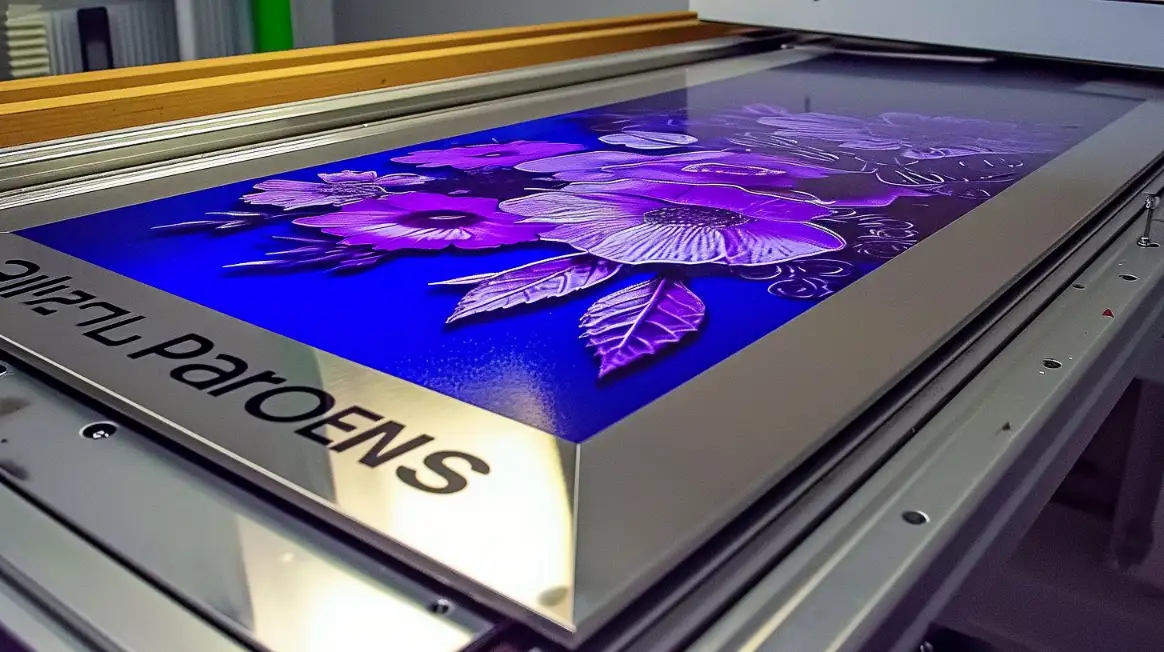
UV printing on metal is a post-processing technique used to apply high-resolution graphics, labels, or functional coatings onto metal surfaces using ultraviolet-curable inks. It is not a primary additive manufacturing process but is often employed as a secondary operation on 3D printed and traditionally manufactured metal parts for branding, identification, or aesthetic enhancement.
The additive manufacturing technologies referenced—SLA (Stereolithography), SLS (Selective Laser Sintering), MJF (Multi Jet Fusion), and DMLS (Direct Metal Laser Sintering)—are distinct in their material compatibility and output. UV printing is typically applied after final part production and finishing. Below is a technical overview of how UV printing relates to parts produced via these technologies, including compatibility with common materials such as Aluminum, Steel, ABS, and Nylon.
| Process | Material Compatibility | UV Printing Feasibility | Surface Requirements | Notes |
|---|---|---|---|---|
| SLA (Stereolithography) | Photopolymer resins (not metals); indirect metal via infiltration or casting | Not applicable to metal directly; possible on resin parts or investment cast metal derivatives | Smooth, clean, fully cured surface | UV printing can be applied to SLA-produced patterns or molds, but not directly on metal parts made through SLA (since SLA does not print metal) |
| SLS (Selective Laser Sintering) | Nylon (PA11, PA12), filled nylons; not suitable for metals | Applicable only on polymer parts; not on metal | Uniform, slightly porous surface; may require priming | UV printing is common on SLS nylon components for labeling; not applicable to aluminum or steel |
| MJF (Multi Jet Fusion) | Nylon (PA12), glass-filled PA, TPU; no metal capability | Limited to polymer parts; not on metal substrates | Smooth, consistent surface with fine grain | UV printing is viable on MJF nylon parts after sealing; not used on aluminum or steel produced by other methods |
| DMLS (Direct Metal Laser Sintering) | Stainless Steel, Titanium, Aluminum, Inconel | Highly feasible on finished metal parts | Smooth, clean, degreased, and sandblasted or polished surface | UV printing is commonly used on DMLS metal parts for barcodes, logos, or instructional markings; requires proper surface prep and adhesion promoters |
Key Technical Considerations for UV Printing on Metal (DMLS-produced parts):
Ink Adhesion: Requires surface cleaning and sometimes chemical priming or plasma treatment.
Curing: UV inks are instantly cured using high-intensity UV lamps, ensuring durability and chemical resistance.
Resolution: Capable of printing at resolutions up to 1200 dpi, ideal for fine text and complex graphics.
Durability: Resistant to abrasion, UV exposure, and industrial cleaning agents when properly cured and coated.
Material-Specific Notes:
Aluminum: Requires surface oxidation control; anodized aluminum may need special primers.
Steel (Stainless): Excellent substrate when cleaned; provides strong ink adhesion.
ABS & Nylon: Not metals; UV printing is common but applies only to SLS/MJF polymer parts, not relevant to direct metal printing.
In summary, UV printing is a secondary process best suited for DMLS-produced metal parts (Aluminum, Steel) after finishing. It is not applicable to SLA, SLS, or MJF when those processes are used with non-metal materials, though UV printing may be used on polymer parts from those systems independently.
From CAD to Part: The Process
Honyo Prototype executes UV printing on metal substrates through a rigorously controlled digital workflow designed for precision, material compatibility, and rapid turnaround. This process integrates automated quoting with engineering validation to ensure manufacturability before production begins. Below is the detailed sequence of operations.
CAD File Upload and System Integration
Clients initiate the process by uploading native CAD files (STEP, IGES, or native SOLIDWORKS) via Honyo’s secure customer portal. The system performs an initial format validation check, confirming file integrity and geometric completeness. Non-CAD artwork (e.g., vector EPS) undergoes conversion to technical drawing standards with client approval before proceeding. This step establishes the digital foundation for all downstream operations.
AI-Powered Preliminary Quoting
Uploaded files trigger Honyo’s proprietary AI quoting engine, which analyzes geometric complexity, surface area, layer count, and material selection against real-time production data. The algorithm cross-references substrate costs (aluminum, stainless steel, brass), UV ink consumption models, and machine availability to generate a non-binding quote within 90 minutes. Critical parameters influencing the quote include part dimensions, required resolution, and post-processing needs. Clients receive instant access to this estimate with clear cost drivers highlighted.
Engineering-Led DFM Analysis
Upon quote acceptance and purchase order submission, Honyo’s manufacturing engineering team conducts a formal Design for Manufacturing review. This phase validates UV print feasibility through:
Substrate surface energy assessment (minimum 42 dynes/cm for adhesion)
Critical feature verification (minimum line width 0.2mm, text height ≥0.8mm)
Thermal distortion analysis for multi-pass printing on thin gauges
Masking strategy development for complex geometries
Confirmation of pre-treatment requirements (plasma activation for non-ferrous metals)
Engineers collaborate directly with clients to resolve conflicts, providing annotated feedback within 24 business hours. Approved DFM reports lock the production methodology.
Controlled Production Execution
Validated jobs enter production under strict environmental controls (22±2°C, 45±5% RH). The UV printing sequence follows this protocol:
| Process Stage | Parameters | Critical Controls |
|---|---|---|
| Substrate Preparation | Degreasing, Plasma treatment (40-60 sec) | Surface energy verification via dyne test |
| UV Printing | Resolution: 1200 dpi, Layer thickness: 10-15μm | Real-time spectrophotometer color calibration |
| Curing | UV-LED lamps (365-395nm), 2-4 passes | In-line IR temperature monitoring (<60°C substrate temp) |
| Post-Processing | Optional clear coat, CNC trimming | Adhesion testing per ASTM D3359 |
Metal substrates undergo centrifugal cleaning before printing to eliminate micro-contaminants. The UV ink system utilizes industrial-grade, metal-adhesion optimized formulations with 9H pencil hardness after curing. All prints undergo 100% optical inspection for defects exceeding 0.05mm.
Quality-Controlled Delivery
Completed parts undergo final validation against AS9102 first article requirements when applicable. Dimensional reports (via CMM for critical features) and colorimetric data (ΔE ≤1.5 against Pantone standards) accompany shipments. Honyo packages parts in anti-static, humidity-controlled containers with serialized tracking. Standard lead time is 5-7 business days from DFM approval, with real-time logistics visibility via the client portal. All deliveries include material certifications and process validation documentation for audit compliance.
This integrated workflow ensures consistent UV print quality on metal by prioritizing engineering validation before production commitment, eliminating common pitfalls like poor ink adhesion or thermal warpage through proactive material science controls. Honyo maintains NADCAP accreditation for specialty processes, providing supply chain transparency from digital file to certified delivery.
Start Your Project
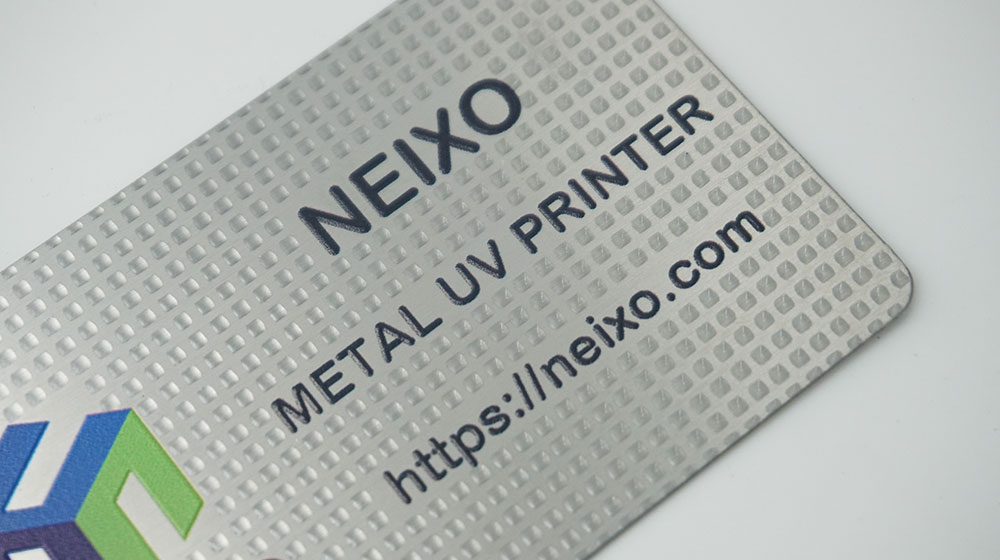
Looking for high-quality UV printing on metal for your next project? Achieve vibrant, durable, and precision results with Honyo Prototype’s advanced UV printing capabilities. Our state-of-the-art facility in Shenzhen ensures fast turnaround and consistent quality for prototypes and low-volume production.
Contact Susan Leo today at [email protected] to discuss your requirements and get a competitive quote.
🚀 Rapid Prototyping Estimator
Estimate rough cost index based on volume.