
Contents
Manufacturing Insight: Titanium Vs Stainless Steel Price
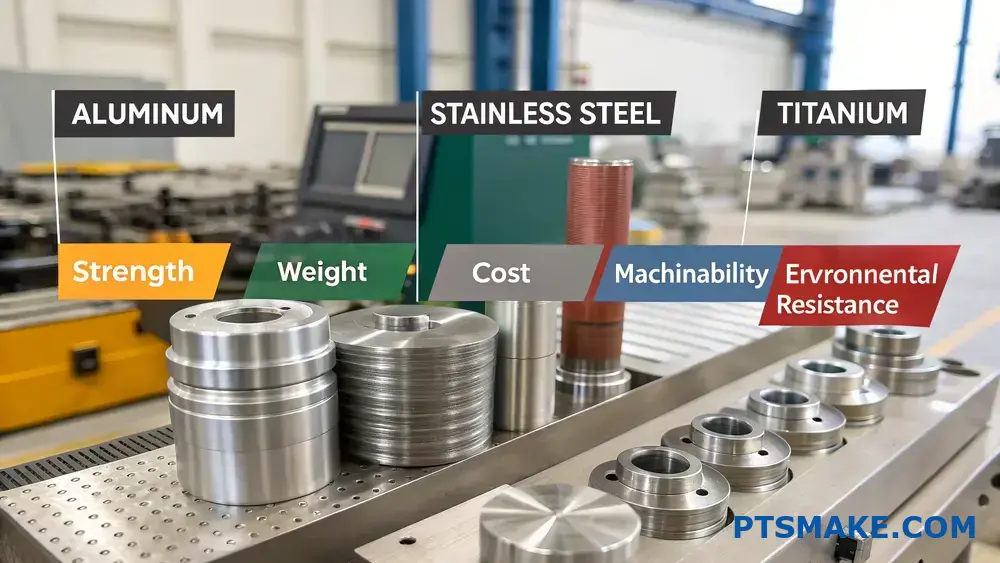
Material selection between titanium and stainless steel significantly impacts both performance and project economics in precision manufacturing. At Honyo Prototype, we recognize that raw material cost is only one component of the total part expense, especially when leveraging CNC machining for complex prototypes or low-volume production. Titanium alloys typically command a raw material cost 3 to 5 times higher than common stainless steel grades like 304 or 316, but machining characteristics further influence the final price due to differences in tool wear, cycle time, and yield. Understanding this interplay is critical for optimizing your component’s value without compromising structural integrity or corrosion resistance.
The table below outlines key cost drivers for both materials in CNC-machined applications:
| Material | Raw Cost Range (Per kg) | Machining Cost Factor | Primary Cost Influencers |
|---|---|---|---|
| Titanium (Grade 5) | $80 – $150 | High (1.8x – 2.5x) | Slow cutting speeds, aggressive tool wear, stringent coolant requirements |
| Stainless Steel (316) | $20 – $40 | Moderate (Baseline) | Higher feed rates, lower tooling consumption, faster cycle times |
Honyo Prototype specializes in optimizing CNC machining processes for both challenging materials, utilizing advanced toolpath strategies, proprietary coolant systems, and material-specific expertise to minimize waste and reduce per-part costs. Our engineering team collaborates with clients to evaluate total landed cost—not just material quotes—ensuring your design achieves the required performance within budget constraints. For immediate clarity on how material choice affects your specific component, leverage our Online Instant Quote platform. Upload your CAD file to receive a detailed, geometry-aware cost analysis within hours, including precise breakdowns for titanium, stainless steel, and other aerospace-grade alloys. This data-driven approach eliminates estimation guesswork, accelerating your path from concept to certified prototype.
Technical Capabilities
When evaluating material selection for precision machining applications such as 3/4/5-axis milling and turning with tight tolerance requirements, cost and machinability are critical factors. Titanium and stainless steel are both high-performance metals used in aerospace, medical, and industrial applications, but they differ significantly in cost, machinability, and performance. Below is a comparative technical and cost analysis, including context for other common materials like aluminum, steel (carbon/alloy), ABS, and nylon.
| Material | Density (g/cm³) | Tensile Strength (MPa) | Machinability Rating | Typical Machining Cost Factor (Relative) | Common Applications in Precision Machining | Notes on 3/4/5-Axis Milling & Turning |
|---|---|---|---|---|---|---|
| Titanium (Grade 5, Ti-6Al-4V) | 4.43 | 900–1,000 | 20–30% (Poor) | 3.5–5.0x | Aerospace components, medical implants, high-performance fixtures | High tool wear, low thermal conductivity; requires rigid setups, lower speeds/feeds, high-quality carbide tools; high cost due to slow machining and material cost |
| Stainless Steel (316/17-4 PH) | 7.9–8.0 | 500–1,300 | 40–55% (Fair) | 2.0–3.0x | Medical devices, food processing, marine hardware | Good corrosion resistance; galling tendency; moderate tool wear; suitable for tight tolerance work with proper cooling |
| Aluminum (6061/7075) | 2.70 | 310–570 | 90–100% (Excellent) | 1.0–1.5x | Enclosures, prototypes, aerospace brackets, jigs | High MRR achievable; excellent for complex 5-axis work; low tool wear; ideal for tight tolerance due to stability and low thermal expansion |
| Carbon/Alloy Steel (e.g., 4140) | 7.85 | 650–900 | 60–70% (Good) | 1.8–2.5x | Tooling, shafts, high-strength mechanical parts | Predictable chip formation; requires tool maintenance; good dimensional stability for tight tolerances |
| ABS (Thermoplastic) | 1.04 | 40–50 | 90–100% (Excellent) | 0.8–1.2x | Prototypes, housings, non-structural components | Low melting point; minimal tool wear; high feed rates; not for high-temp environments |
| Nylon (PA6/PA66) | 1.13 | 70–85 | 80–90% (Very Good) | 1.0–1.3x | Insulators, gears, low-friction parts | Slight elasticity; requires sharp tools and stable setup for tight tolerances; susceptible to moisture absorption |
Cost Drivers in Precision Machining:
Titanium commands the highest cost due to raw material price (often 5–10x that of stainless steel), combined with low cutting speeds, high tooling costs, and extended cycle times.
Stainless steel is moderately priced but incurs higher machining costs than aluminum due to work hardening and moderate tool wear.
Aluminum remains the most cost-effective for complex, tight-tolerance components, especially in high-volume or prototype 5-axis applications.
ABS and Nylon are economical for non-metallic parts, with fast machining and low tooling costs, though not suitable for high-load or high-temperature environments.
Tight Tolerance Considerations:
Materials with high thermal stability and low deformation (e.g., aluminum, steel) are preferred for tolerances < ±0.005 mm.
Titanium requires careful thermal management during machining to avoid dimensional drift.
Plastics like ABS and nylon require environmental control (humidity, temperature) to maintain dimensional accuracy post-machining.
For high-precision 3/4/5-axis operations, material selection must balance performance requirements, cost, and manufacturability. Titanium offers strength-to-density advantages but at a significant cost premium and machining complexity. Stainless steel provides durability and corrosion resistance with moderate machining demands. Aluminum and engineering plastics are preferred when cost, speed, and complexity are primary drivers.
From CAD to Part: The Process
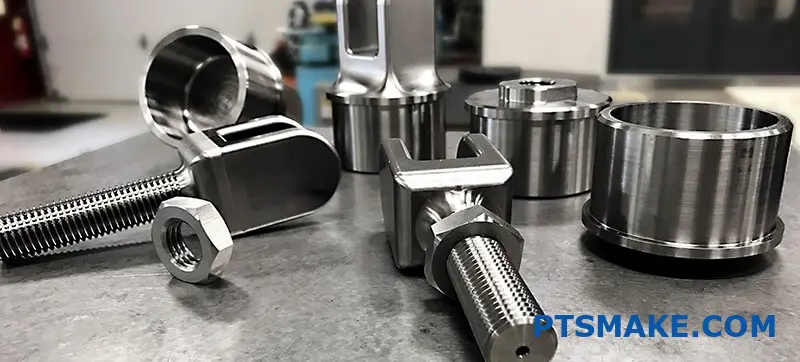
Honyo Prototype’s process for evaluating titanium versus stainless steel pricing follows a structured workflow designed for precision and transparency. Material selection occurs prior to CAD upload, as the specific alloy must be defined in the model’s metadata for accurate cost calculation. Our system does not automatically compare materials; instead, it processes the exact specification provided, enabling customers to run iterative quotes for different materials to assess cost impacts.
Upload CAD
The customer submits a CAD file with explicit material designation (e.g., ASTM F136 titanium or SS316L stainless steel) embedded in the file properties. Material selection is the customer’s responsibility based on application requirements, as titanium offers higher strength-to-weight ratio and corrosion resistance but at significantly elevated raw material and processing costs compared to stainless steel.
AI Quote
Our AI engine analyzes the CAD geometry, tolerances, and declared material to generate an instant quote. Key cost differentiators between titanium and stainless steel are factored in:
Titanium raw material costs are typically 4–5× higher than stainless steel per kilogram
Titanium’s low thermal conductivity and high chemical reactivity increase machining time by 40–60% due to reduced cutting speeds and specialized tooling requirements
Stainless steel benefits from higher machinability ratings (e.g., 303 SS at 70% vs. Ti-6Al-4V at 30–40% relative to 1212 steel)
Material-specific cost drivers are reflected immediately in the quote summary:
| Cost Factor | Titanium (e.g., Grade 5) | Stainless Steel (e.g., 316L) |
|---|---|---|
| Raw Material Cost (USD/kg) | $80–$120 | $15–$25 |
| Machining Time Multiplier | 1.4–1.6× | 1.0× (baseline) |
| Tooling Wear Cost Impact | High (specialty carbide) | Moderate |
DFM Analysis
During Design for Manufacturability review, our engineers identify material-specific optimizations:
Titanium components require avoidance of thin walls (<1.5mm) due to work hardening risks and must specify positive rake angles in toolpaths. Stainless steel designs may need stress-relief considerations for complex geometries but generally allow tighter tolerances at lower cost. We provide actionable feedback to reduce costs—such as suggesting stainless steel for non-critical corrosion environments—while documenting performance trade-offs.
Production
Material properties dictate process parameters:
Titanium machining uses rigid setups, lower RPMs (40–60% of stainless steel speeds), and strict chip evacuation protocols to prevent galling. Stainless steel leverages higher feed rates and standard HSS tooling. Both materials undergo in-process inspections, but titanium requires additional non-destructive testing (e.g., dye penetrant) per ASTM standards for critical applications, adding 8–12% to baseline costs.
Delivery
Final pricing reflects material-specific handling: titanium parts ship in anti-tarnish packaging with material certificates (MTRs), while stainless steel uses standard packaging. Lead times for titanium average 15–20% longer due to extended machining and inspection cycles. Customers receive a detailed cost breakdown showing raw material, processing differentials, and compliance overheads for informed future decisions.
This workflow ensures customers understand exactly how material choice impacts cost and lead time, with data-driven insights to optimize their design-to-manufacturing strategy.
Start Your Project
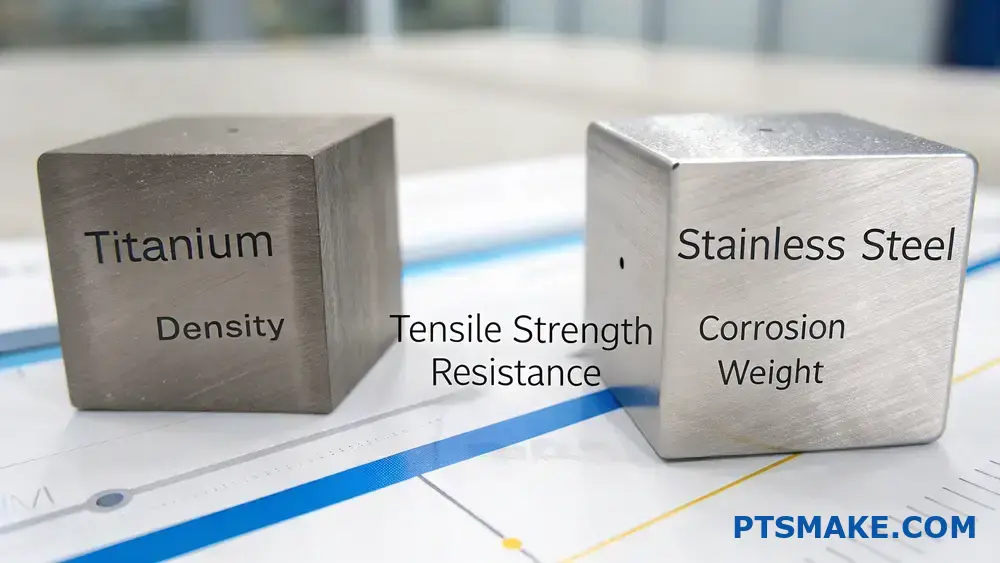
When comparing titanium versus stainless steel pricing for your next project, understanding material costs, machining complexity, and production scalability is critical. While titanium typically carries a higher raw material and processing cost due to its strength and corrosion resistance, stainless steel remains a cost-effective solution for many industrial applications. The right choice depends on your performance requirements, environmental exposure, and budget constraints.
For a detailed cost analysis tailored to your specific application, contact Susan Leo at [email protected]. With our precision manufacturing facility located in Shenzhen, Honyo Prototype delivers high-quality, on-time production with strict quality control for both titanium and stainless steel components. Whether you’re prototyping or scaling to high-volume production, we provide competitive pricing, expert material selection guidance, and fast turnaround.
Let us help you make the most cost-efficient and technically sound decision. Reach out today to request a quote or technical consultation.
Contact:
Susan Leo
Email: [email protected]
Factory Location: Shenzhen, China
🚀 Rapid Prototyping Estimator
Estimate rough cost index based on volume.