
Contents
Manufacturing Insight: Titanium Turned Parts
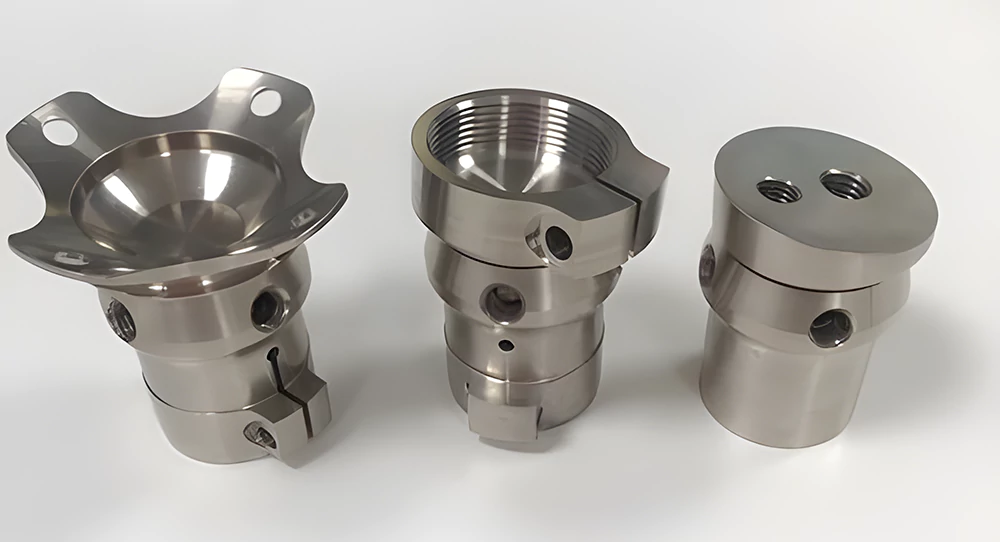
Precision Titanium Turned Parts for Mission-Critical Applications
Demanding aerospace, medical, and industrial applications require titanium components that deliver exceptional strength-to-weight ratios, corrosion resistance, and biocompatibility without compromise. Machining titanium alloys like Ti-6Al-4V (Grade 5) presents significant challenges due to low thermal conductivity, high chemical reactivity, and work hardening tendencies, necessitating specialized expertise and equipment to achieve tight tolerances and flawless surface finishes.
Honyo Prototype excels in producing high-integrity titanium turned parts through advanced CNC Swiss-type and multi-axis turning centers. Our dedicated titanium machining protocols include optimized toolpath strategies, rigid fixturing, and controlled coolant systems to prevent galling, manage heat generation, and maintain dimensional stability down to ±0.0002 inches. We routinely handle complex geometries—from micro-implants to structural aerospace fittings—with secondary operations such as precision threading, micro-boring, and passivation performed in-house under ISO 13485 and AS9100-compliant processes.
Accelerate your prototyping and low-volume production timelines with Honyo’s Online Instant Quote platform. Upload your STEP or IGES file to receive a detailed manufacturability analysis and competitive pricing within hours, not days. Our system automatically evaluates material utilization, machine time, and critical feature requirements specific to titanium, providing transparent cost visibility while our engineering team proactively identifies opportunities for design optimization. For titanium components where failure is not an option, Honyo Prototype delivers precision, speed, and technical partnership from quote to certified shipment. Upload your design today to experience seamless titanium machining.
Technical Capabilities
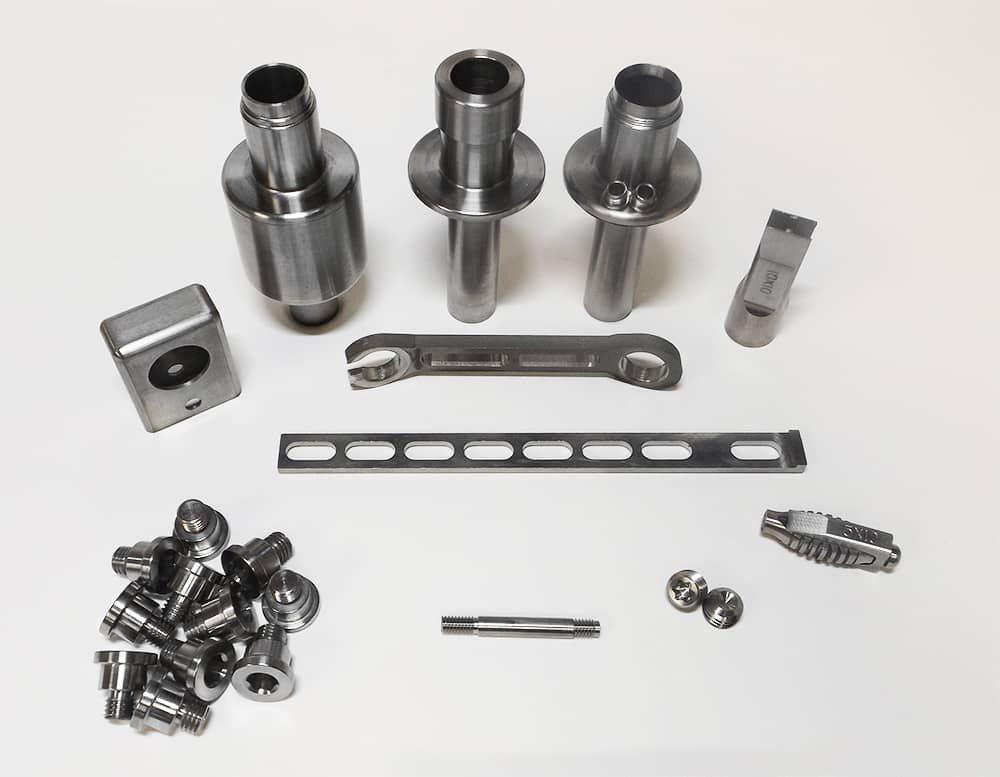
Titanium turned parts are precision-engineered components manufactured using advanced CNC machining techniques, primarily involving 3, 4, and 5-axis milling combined with turning operations. These processes enable the production of complex geometries with high accuracy and excellent surface finish. While titanium is a primary material due to its strength-to-density ratio and corrosion resistance, similar machining capabilities are applied across a range of materials including aluminum, steel, ABS, and nylon. The following table outlines the technical specifications associated with such manufacturing processes:
| Parameter | Description |
|---|---|
| Machining Processes | 3-axis, 4-axis, and 5-axis CNC milling combined with precision turning |
| Tolerance Range | ±0.005 mm to ±0.025 mm (±0.0002″ to ±0.001″) typical for tight-tolerance work |
| Surface Finish (Ra) | 0.8 µm to 3.2 µm (32–125 µin), achievable via fine milling and turning passes |
| Materials Supported | Titanium (Grade 2, 5), Aluminum (6061, 7075), Steel (4140, 17-4 PH), ABS, Nylon (6, 66) |
| Max Part Size (Typical) | Up to 500 mm diameter × 1000 mm length depending on machine envelope |
| Tooling | Carbide and polycrystalline diamond (PCD) tools for hard and abrasive materials |
| Coolant Use | High-pressure coolant for thermal control, especially in titanium and steel |
| Secondary Operations | Deburring, anodizing (Al), passivation (Ti, steel), stress relieving, metrology |
| Inspection Equipment | CMM (Coordinate Measuring Machine), optical comparators, laser scanning |
| Applications | Aerospace, medical devices, defense, high-performance automotive components |
These technical capabilities ensure that titanium turned parts—along with components in aluminum, steel, ABS, and nylon—meet stringent industry requirements for dimensional accuracy, repeatability, and functional performance. Multi-axis integration allows for reduced setup times and improved geometric consistency, particularly critical in tight-tolerance applications.
From CAD to Part: The Process
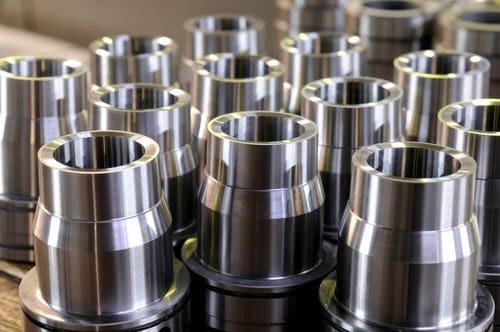
Honyo Prototype Titanium Turned Parts Process Overview
Honyo Prototype executes titanium turned parts through a rigorously defined workflow designed for precision, efficiency, and material-specific optimization. This process leverages advanced digital tools and metallurgical expertise to address titanium’s unique challenges, including high reactivity, low thermal conductivity, and propensity for work hardening.
CAD Upload and Validation
Customers initiate the process by uploading native CAD files (STEP, IGES, or Parasolid formats) via our secure client portal. Our system performs automated validation checks for geometry integrity, unit consistency, and critical feature recognition. For titanium components, we specifically verify wall thickness uniformity, undercuts, and minimum feature sizes against titanium’s machining constraints. Incomplete GD&T callouts or ambiguous surface finish requirements trigger immediate client notification to prevent downstream delays.
AI-Powered Quoting Engine
Uploaded designs feed into our proprietary AI quoting system, which analyzes 300+ parameters within 90 seconds. For titanium, the engine factors in grade-specific variables (e.g., Ti-6Al-4V vs. CP Titanium), raw material costs (including mill-certified traceability), and secondary operation requirements. The algorithm cross-references historical data from 15,000+ titanium jobs to predict tool wear rates, cycle times, and scrap probabilities. Clients receive a detailed quote with material certification options, NDT testing costs, and lead time breakdowns—all before human engineering review.
Metallurgical DFM Analysis
All titanium projects undergo mandatory Design for Manufacturability (DFM) review by senior manufacturing engineers with titanium-specific expertise. This phase identifies critical risk areas:
Common titanium DFM challenges include insufficient support for thin walls causing chatter, inadequate chip evacuation paths leading to re-cutting, and improper toolpath sequencing inducing thermal distortion. We provide actionable redesign suggestions—such as modifying radii to reduce tool deflection or adding temporary support features—with annotated 3D markups. For aerospace-grade titanium, we validate compliance with AMS 4928 and ASTM F136 standards during this stage.
Titanium-Optimized Production
Production occurs in climate-controlled cells dedicated to reactive metals. Key protocols include:
Machine Setup: Swiss-type lathes with rigid tooling and high-pressure through-spindle coolant (minimum 1,000 psi) to manage heat and evacuate swarf
Parameter Control: Strictly enforced low SFM (60-120 m/min) and positive rake-angle carbide inserts to prevent galling
In-Process Verification: On-machine probing after roughing to detect thermal growth, with automated tool compensation
Material Handling: Dedicated tooling and fixtures isolated from steel/iron contaminants to avoid surface embrittlement
Critical titanium production variables are tracked in real time:
| Parameter | Typical Range for Ti-6Al-4V | Monitoring Frequency |
|---|---|---|
| Cutting Temperature | 300-500°C | Continuous via IR |
| Coolant pH | 8.5-9.2 | Hourly |
| Tool Wear (VBmax) | ≤0.15mm | After each part |
Certified Delivery and Traceability
Finished parts undergo final inspection per AS9100 Rev D, including CMM validation of critical features and fluorescent penetrant testing for surface integrity. Titanium components receive:
Mill test reports with full chemical composition traceability
Batch-specific heat treatment certificates (if applicable)
Passivation documentation per AMS 2700
All delivery packages include serialized part tags linking to digital manufacturing records, enabling full process traceability from billet to shipment. Typical lead time from CAD upload to delivery is 10-15 business days for quantities under 50 pieces, with expedited options available for urgent aerospace or medical projects.
Start Your Project
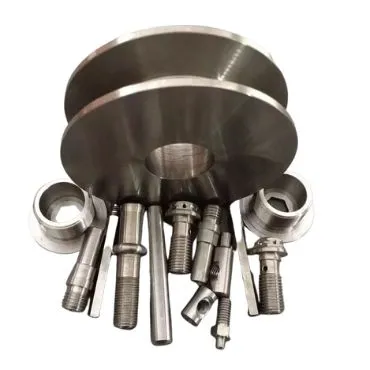
Looking for high-precision titanium turned parts manufactured to strict tolerances? Honyo Prototype delivers reliable, high-quality CNC turning services from our modern facility in Shenzhen, China. Specializing in titanium and other high-performance materials, we support prototyping and low-to-mid volume production for aerospace, medical, and industrial applications.
Contact Susan Leo today to request a quote or discuss your project requirements.
Email: [email protected]
Leverage our in-house capabilities, fast turnaround times, and rigorous quality control for your next precision machining project.
🚀 Rapid Prototyping Estimator
Estimate rough cost index based on volume.