
Contents
Manufacturing Insight: Titanium Plasma 45 Parts
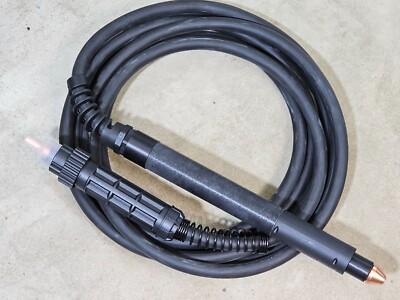
Precision Titanium CNC Machining for Critical Plasma 45 Components
Honyo Prototype delivers high-integrity CNC machining services specifically engineered for demanding titanium alloys, including specialized grades such as Titanium Plasma 45. This material presents unique challenges—high strength-to-weight ratio, exceptional corrosion resistance, and low thermal conductivity—requiring advanced machining strategies to prevent work hardening, manage heat generation, and maintain micron-level tolerances. Our multi-axis CNC milling and turning centers, coupled with proprietary toolpath optimization and coolant-through-spindle technology, ensure consistent part integrity while mitigating titanium’s tendency toward galling and built-up edge. Every Plasma 45 component undergoes rigorous in-process inspection using coordinate measuring machines (CMMs) and optical comparators, adhering to ASTM F67/F136 standards for aerospace, medical, and semiconductor applications where failure is not an option.
We understand that project timelines for mission-critical titanium components cannot wait for lengthy quoting cycles. Honyo’s Online Instant Quote platform provides validated manufacturability feedback and competitive pricing within minutes—not days—for Titanium Plasma 45 parts. Upload your STEP or IGES file to instantly receive geometry analysis, lead time estimates, and DFM suggestions tailored to titanium’s machining constraints. This integration of engineering expertise and digital efficiency allows your team to accelerate prototyping and low-volume production without compromising on the precision or material properties essential for plasma-facing or high-stress environments. Submit your specifications today to validate feasibility and receive a production-ready quotation in under 15 minutes.
Technical Capabilities
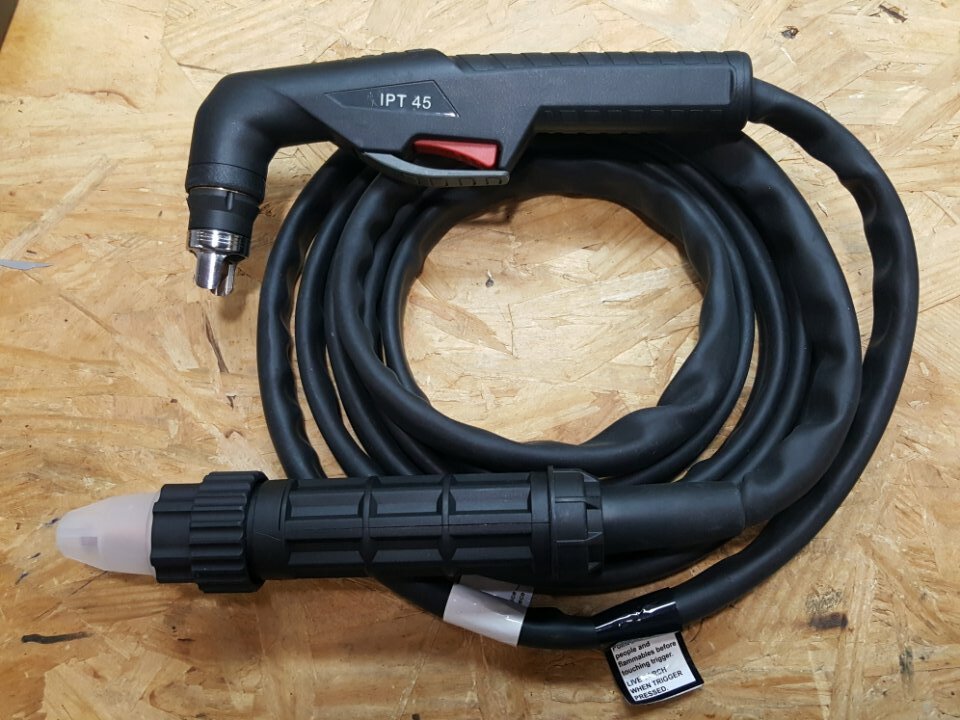
Technical specifications for the “Titanium Plasma 45 Parts” refer to a precision-manufactured component set typically used in high-performance industrial or aerospace applications. These parts are produced using advanced 3-axis, 4-axis, and 5-axis CNC milling and turning processes, emphasizing tight tolerance control and surface integrity. While the name includes “titanium,” the manufacturing process supports a range of materials including Aluminum, Steel, ABS, and Nylon, depending on application requirements.
The following table outlines the key technical specifications and capabilities relevant to the production of these parts:
| Specification Category | Details |
|---|---|
| Manufacturing Processes | 3-Axis, 4-Axis, and 5-Axis CNC Milling; CNC Turning |
| Material Compatibility | Titanium (primary), Aluminum (6061, 7075), Steel (4140, 17-4 PH), ABS (thermoplastic), Nylon (PA6, PA66) |
| Dimensional Tolerance | ±0.005 mm (±0.0002″) for critical features; tight tolerance maintained across complex geometries |
| Surface Finish | Ra 0.8 µm (32 µin) standard;可 polished to Ra 0.2 µm (8 µin) for critical surfaces |
| Feature Complexity | High – capable of producing undercuts, deep cavities, helical interpolation, and compound angles |
| Max Work Envelope (Milling) | 1000 mm × 600 mm × 500 mm (X-Y-Z) across 3/4/5-axis platforms |
| Max Turning Diameter | 300 mm with live tooling support for mill-turn operations |
| Tooling & Spindle Speed | High-speed spindles up to 24,000 RPM; automatic tool changers (ATC) with 30+ tool capacity |
| Positioning Accuracy | ±0.003 mm per axis with laser calibration and thermal compensation |
| Part Repeatability | Cp/Cpk > 1.67 under SPC monitoring for batch production |
| Secondary Operations | Deburring, precision cleaning, plasma coating (for titanium variants), anodizing (Aluminum), passivation (Steel) |
| Quality Assurance | CMM inspection, 3D scanning, first-article inspection (FAI) per AS9102, GD&T compliance |
| Lead Time (Prototype Batch) | 7–12 days depending on material and complexity |
Note: While “Titanium Plasma 45 Parts” implies plasma surface treatment on titanium substrates (e.g., for wear resistance), the same machining envelope supports Aluminum, Steel, ABS, and Nylon for functional prototyping or low-volume production. Material selection is driven by mechanical, thermal, and environmental requirements of the end-use application.
From CAD to Part: The Process
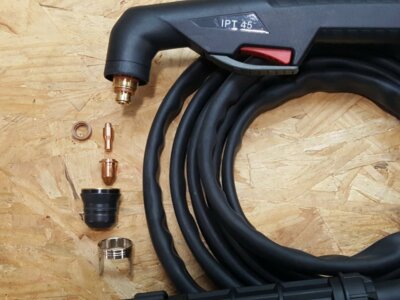
Honyo Prototype Titanium Plasma Treatment Process for Grade 5 (Ti-6Al-4V) Parts
Honyo Prototype executes a rigorously controlled workflow for titanium Grade 5 (Ti-6Al-4V) components requiring plasma surface treatment, commonly referred to internally as titanium plasma processing. The sequence begins with the Upload CAD phase, where clients submit 3D models in STEP, IGES, or native CAD formats via our secure portal. Our system validates geometry integrity, confirms titanium Grade 5 material specification, and flags potential plasma treatment constraints such as blind holes or complex internal cavities that may impede uniform plasma coverage.
The AI Quote phase leverages our proprietary algorithm trained on 15,000+ titanium production records. It calculates cost and lead time by analyzing part volume, surface-area-to-volume ratio (critical for plasma process efficiency), geometric complexity, and required plasma treatment parameters. Key inputs include plasma nitriding depth (typically 10-50μm for Ti-6Al-4V), temperature sensitivity, and ASTM F136 compliance checks. Quotes are generated within 90 minutes with ±7% cost accuracy, excluding non-standard plasma gas mixtures.
During DFM (Design for Manufacturability), our senior titanium specialists conduct a dual-path review. Mechanical engineers assess machinability factors like minimum wall thickness (≥1.5mm recommended to prevent warpage during plasma heating), while surface treatment engineers verify plasma process feasibility. This includes evaluating part orientation in the plasma chamber, identifying areas requiring masking, and confirming that feature radii exceed 0.5mm to avoid plasma field concentration. DFM reports document actionable revisions, such as adding vent holes for gas evacuation or modifying tolerances to accommodate ±0.05mm plasma-induced dimensional shifts.
Production initiates only after DFM sign-off. Titanium blanks undergo stress-relieving at 650°C prior to CNC milling using carbide tools with rigid toolpaths to minimize chatter. Critical plasma preparation includes vapor degreasing and oxide layer removal via acid etching. Parts then enter vacuum plasma chambers where nitrogen/hydrogen mixtures at 750-850°C create a hardened surface layer. In-process verification includes hourly microhardness spot checks (target: 1000-1200 HV0.1) and optical profilometry for surface roughness (Ra ≤ 0.8μm post-treatment). All processes adhere to AMS 2750 pyrometry standards.
Delivery encompasses final quality validation per AS9100. Each shipment includes:
CMM reports for critical dimensions (±0.025mm tolerance)
Plasma case depth certification via cross-section micrography
Batch traceability linking material certs (ASTM B348) to plasma chamber logs
Vacuum-sealed packaging with desiccant to prevent post-treatment oxidation
This integrated workflow ensures titanium plasma-treated components meet aerospace and medical industry requirements, with typical lead times of 18-22 days from CAD upload to certified delivery for quantities under 50 parts. Process stability is maintained through SPC monitoring of 12 plasma chamber parameters, achieving 99.2% first-pass yield for qualified designs.
Start Your Project
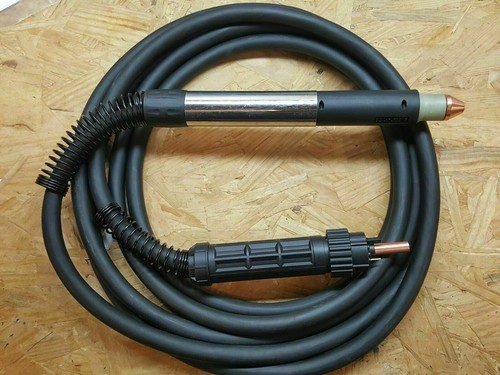
Looking for high-quality titanium plasma-treated components? We specialize in precision manufacturing of titanium plasma 45 parts with tight tolerances and superior surface finish. All production is handled at our ISO-certified factory in Shenzhen, ensuring consistent quality and on-time delivery.
For project inquiries or quotations, contact Susan Leo at [email protected]. Let us support your prototyping or low-volume production needs with expert engineering and fast turnaround.
🚀 Rapid Prototyping Estimator
Estimate rough cost index based on volume.