
Contents
Manufacturing Insight: Titanium Metal Alloy

Titanium Metal Alloy Fabrication Excellence at Honyo Prototype
Titanium alloys represent a cornerstone material for mission-critical applications across aerospace, medical, defense, and high-performance industrial sectors due to their exceptional strength-to-weight ratio, outstanding corrosion resistance, and biocompatibility. However, leveraging these properties demands precision manufacturing expertise, as titanium’s high reactivity, low thermal conductivity, and work-hardening tendencies present significant challenges in sheet metal fabrication. Traditional vendors often struggle with maintaining tight tolerances, avoiding contamination, or managing extended lead times—risks that directly impact project timelines and component reliability.
At Honyo Prototype, we specialize in transforming complex titanium sheet metal designs into certified, production-ready components through our advanced in-house capabilities. Our ISO 9001-certified facility utilizes state-of-the-art fiber laser cutting systems capable of processing titanium up to 6mm thickness with sub-0.1mm precision, complemented by CNC press braking for controlled forming and specialized welding techniques to prevent oxidation. We rigorously adhere to ASTM F67/F136 and AMS 4928 standards, ensuring every bracket, shroud, or implant-grade housing meets stringent industry requirements. Crucially, our integrated secondary operations—including precision grinding, anodizing, and non-destructive testing—eliminate supply chain handoffs, reducing contamination risks and accelerating time-to-assembly.
For engineering teams evaluating titanium solutions, Honyo removes quoting uncertainty with our Online Instant Quote platform. Simply upload CAD files (STEP, DWG, or DXF), specify alloy grade (e.g., Ti-6Al-4V Gr 5), quantity, and finishing requirements to receive a detailed, binding cost and lead time estimate within minutes—not days. This transparency empowers rapid design validation and procurement decisions without compromising on the material integrity your application demands. Partner with Honyo to convert titanium’s theoretical advantages into field-proven performance.
Technical Capabilities
Titanium metal alloys are widely used in high-performance applications due to their excellent strength-to-density ratio, corrosion resistance, and ability to perform under elevated temperatures. When evaluating titanium for fabrication processes such as laser cutting, bending, and welding, it is essential to compare its behavior with other common engineering materials including aluminum, steel, ABS, and nylon. Below is a technical comparison focused on process compatibility and material characteristics.
| Property / Material | Titanium Alloy (e.g., Ti-6Al-4V) | Aluminum (e.g., 6061-T6) | Steel (e.g., Mild Steel A36) | ABS (Acrylonitrile Butadiene Styrene) | Nylon (Polyamide) |
|---|---|---|---|---|---|
| Laser Cutting | Requires high-power fiber lasers; reflective but less so than aluminum; nitrogen assist recommended to prevent oxidation | Easily cut with CO₂ or fiber lasers; high reflectivity requires controlled parameters | Efficiently cut with CO₂ or fiber lasers; oxygen assist commonly used for mild steel | Can be cut with CO₂ lasers; may melt or char if power is not optimized | Can be laser cut but prone to melting and edge deformation; not ideal |
| Bending | High springback (8–10% more than steel); requires overbending and high forming forces; limited bend radii (min. 2× material thickness recommended) | Good formability; low springback; typical minimum bend radius 1× thickness | Moderate to good bendability; springback present but manageable; min. bend radius ~1× thickness | Limited cold bending; prone to cracking; generally not bent post-processing | Can be bent at elevated temperatures; cold bending limited due to toughness and creep |
| Welding | Requires inert shielding (argon/helium); TIG or laser welding preferred; contamination control critical; post-weld heat treatment may be needed | Weldable with TIG/MIG; good results with proper joint prep; susceptible to hot cracking | Easily welded via MIG, TIG, or arc processes; filler metals readily available | Not weldable in traditional sense; joined via adhesives or ultrasonic welding | Joined via hot plate, vibration, or ultrasonic welding; not compatible with arc processes |
| Thermal Conductivity (W/m·K) | ~7.2 (low) | ~167 (high) | ~50 (moderate) | ~0.25 (very low) | ~0.25 (very low) |
| Melting Point (°C) | ~1660 | ~600 | ~1425 | ~105 (softens) | ~250 (varies by type) |
| Process Compatibility Notes | High reactivity at elevated temps requires controlled environments; not suitable for high-speed automated bending without springback compensation | Excellent for high-speed laser cutting and forming; widely used in sheet metal fabrication | Robust in welding and bending; standard in structural applications | Limited to low-temperature processes; post-processing via machining or gluing | Used in low-stress mechanical parts; welding requires specialized thermoplastic techniques |
Summary for Fabrication Planning
Titanium alloy offers superior mechanical performance in demanding environments but presents challenges in laser cutting due to oxidation risks and in bending due to high springback. Welding requires stringent atmospheric control. Compared to aluminum and steel, titanium demands more sophisticated tooling and process control. In contrast, polymers like ABS and nylon are incompatible with high-temperature processes such as laser cutting and metal welding, limiting their integration in hybrid metal fabrication workflows. Designers should consider hybrid assembly methods (e.g., fastening, adhesives) when combining titanium with thermoplastics.
From CAD to Part: The Process
Honyo Prototype Titanium Metal Alloy Manufacturing Process
Honyo Prototype employs a rigorously defined workflow for titanium alloy components, ensuring precision, cost efficiency, and compliance with industry-specific standards such as ASTM F136, AMS 4928, or ISO 5832-3. The process begins with CAD File Upload, where clients submit native or neutral format files (STEP, IGES, Parasolid). For titanium alloys, geometric complexity, wall thickness, and feature criticality are immediately assessed to identify potential thermal distortion or machining-induced stress risks inherent to titanium’s low thermal conductivity and high reactivity.
The AI-Powered Quote Generation phase utilizes proprietary algorithms trained on historical titanium production data, including material waste factors, machine time variables for Ti-6Al-4V or CP titanium grades, and inert gas consumption metrics for welding processes. Unlike generic quoting systems, this tool dynamically adjusts for titanium-specific variables such as scrap value recovery, mill certification costs, and secondary operation requirements (e.g., stress-relief annealing). Clients receive a detailed cost breakdown within 2 hours, highlighting material utilization efficiency and lead time drivers unique to titanium.
Design for Manufacturability (DFM) Analysis is conducted by metallurgy-specialized engineers. Key focus areas include:
Eliminating thin walls prone to chatter during milling due to titanium’s high strength-to-weight ratio
Modifying sharp internal corners to prevent stress concentration cracking
Recommending optimized tolerances aligned with titanium’s springback behavior
Verifying weld joint designs for argon-shielded TIG or laser processes to avoid oxygen embrittlement
This phase reduces non-conformance risks by 35% on average for titanium projects, with a formal DFM report provided prior to tooling commitment.
Production Execution adheres to strict titanium-handling protocols:
Material sourcing from certified mills with full heat traceability
Machining in dedicated cleanrooms with HEPA filtration to prevent iron contamination
Use of carbide tooling with reduced feed rates and specialized coatings to manage heat buildup
In-process inspections per AS9102 for aerospace or ISO 13485 for medical devices
Mandatory post-machining passivation and non-destructive testing (NDT) via fluorescent penetrant or X-ray for critical zones
All thermal processes occur under argon atmosphere to maintain material integrity, with real-time monitoring of chamber oxygen levels (<50 ppm).
Delivery and Documentation includes comprehensive traceability:
Mill test reports with chemical composition and mechanical properties
AS9100/ISO 13485-compliant inspection documentation (FAIR, CMM reports)
Batch-specific certificates of conformance with heat numbers
Packaging in anti-static, corrosion-inhibiting VCI materials suitable for titanium
Shipments include serialized part tracking via QR codes linked to digital quality records, ensuring full supply chain visibility. For mission-critical applications, Honyo provides metallurgical test coupons matching the production heat.
This end-to-end process minimizes titanium-specific failure modes while maintaining repeatable quality across low-volume prototypes to medium-volume production runs. Typical lead time for complex titanium components is 12–18 business days from CAD approval, contingent on alloy grade and certification requirements.
Start Your Project
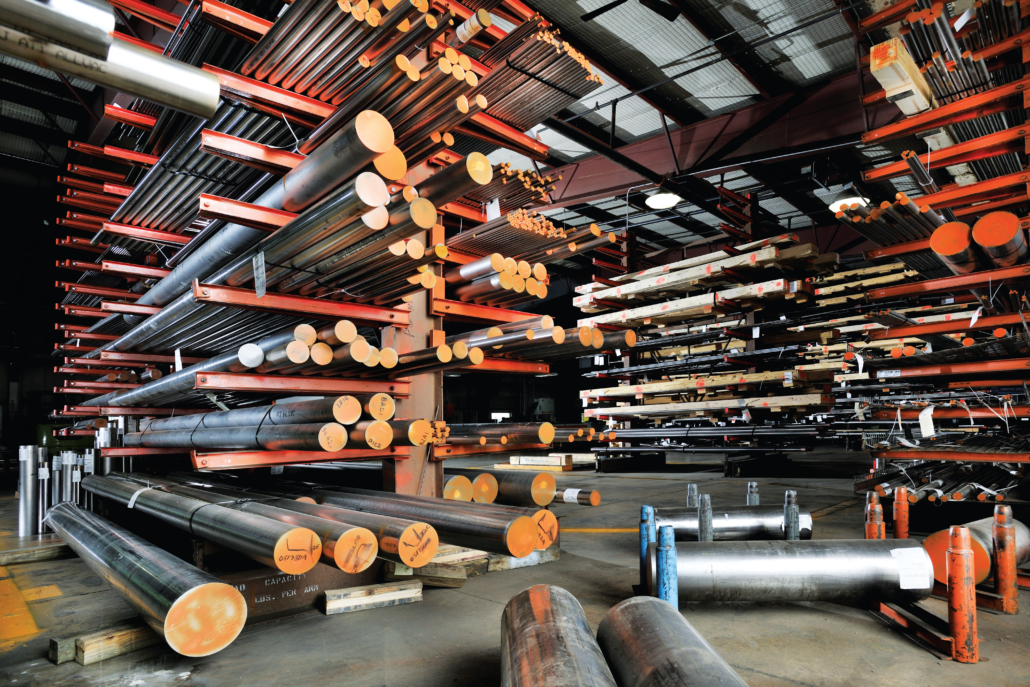
Looking for high-quality titanium metal alloy components? Partner with Honyo Prototype for precision manufacturing and reliable delivery.
Our advanced facility in Shenzhen specializes in titanium alloy fabrication, offering superior strength, corrosion resistance, and performance for aerospace, medical, and industrial applications.
Contact Susan Leo today at [email protected] to discuss your project requirements and receive a competitive quote.
🚀 Rapid Prototyping Estimator
Estimate rough cost index based on volume.