
Contents
Manufacturing Insight: Titanium Metal
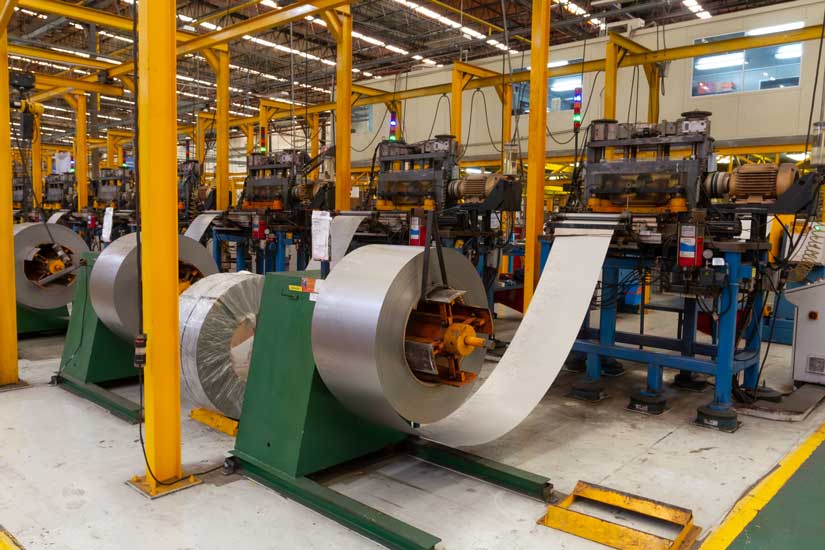
Titanium Metal Fabrication: Precision Engineering for Demanding Applications
Titanium metal remains the material of choice for industries requiring exceptional strength-to-weight ratios, corrosion resistance, and performance in extreme environments. Aerospace, medical device, and defense sectors rely on its unique properties, yet its fabrication presents significant challenges: high material costs, demanding machining requirements, and stringent tolerance adherence. At Honyo Prototype, we specialize in transforming titanium sheet and plate into mission-critical components with uncompromising precision and efficiency.
Our advanced sheet metal fabrication capabilities for titanium include high-precision laser cutting, CNC bending, and specialized forming processes, all executed within a controlled environment to prevent contamination and maintain material integrity. We routinely achieve tolerances of ±0.05mm on complex geometries, leveraging fiber laser systems optimized for titanium’s reflective properties and thermal characteristics. This expertise ensures minimal material waste, reduced lead times, and components that meet ASTM F67/F136 and AMS 4928 specifications without secondary processing.
Honyo Prototype’s integrated workflow—from prototyping to low-volume production—addresses titanium’s cost and complexity barriers. Our engineering team collaborates early in the design phase to optimize manufacturability, mitigating risks like springback or micro-cracking inherent in titanium forming. Combined with rigorous in-process inspection using CMMs and optical comparators, we deliver components that perform flawlessly in life-support or high-stress applications.
Access this expertise immediately through our Online Instant Quote platform. Upload your titanium part drawings in minutes to receive a detailed, transparent cost analysis and lead time estimate—no waiting for manual RFQ processing. This accelerates your development cycle while ensuring fabrication feasibility is validated by engineers with 15+ years of titanium-specific experience.
For projects where material performance is non-negotiable, Honyo Prototype delivers titanium fabrication that balances innovation with industrial reliability. Initiate your quote today to experience how our technical precision reduces your time-to-market.
Technical Capabilities
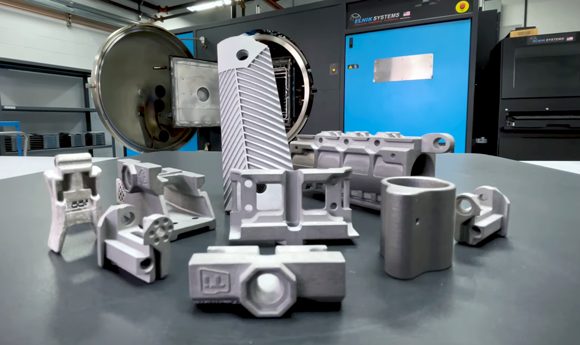
Technical Specifications for Titanium Metal – Focus on Laser Cutting, Bending, and Welding
Titanium is a high-strength, low-density metal renowned for its excellent strength-to-weight ratio, corrosion resistance, and performance at elevated temperatures. These properties make it ideal for aerospace, medical, and high-performance industrial applications. However, its reactivity, thermal conductivity, and work-hardening characteristics present unique challenges in fabrication processes such as laser cutting, bending, and welding. Below is a comparison of titanium with other common engineering materials—aluminum, steel, ABS, and nylon—specifically in the context of these three manufacturing processes.
| Property / Process | Titanium | Aluminum | Steel (Mild) | ABS (Acrylonitrile Butadiene Styrene) | Nylon (Polyamide) |
|---|---|---|---|---|---|
| Laser Cutting | Requires high-power laser (fiber or CO₂); inert gas (argon/nitrogen) assist essential to prevent oxidation and dross; slower cutting speeds due to high reflectivity and thermal conductivity | Easily cut with CO₂ or fiber lasers; nitrogen or air assist; fast speeds; reflective but manageable with proper settings | Well-suited for fiber lasers; oxygen or nitrogen assist; high cutting speeds possible; minimal reflectivity concerns | Cut effectively with CO₂ lasers; low power required; prone to melting if power/speed not optimized | Compatible with CO₂ lasers; melts easily; requires controlled parameters to avoid charring |
| Bending | High springback (up to 5–10%); prone to work hardening; requires overbending and high tonnage; tooling must be oversized to accommodate springback | Moderate springback; easy to form; low yield strength allows for tight bend radii; minimal tool wear | High springback; high force required; risk of cracking at sharp bends; tooling must be robust | Limited bendability; cold forming possible with thin sheets; prone to cracking under stress | Good flexibility; can be cold-formed; high elasticity but may creep under sustained load |
| Welding | Must be performed in inert atmosphere (argon chamber or trailing shield); TIG or laser welding preferred; contamination leads to embrittlement; pre/post-weld cleaning required | Easily welded via TIG, MIG, or laser; good conductivity requires preheating for thick sections; oxide layer must be removed | Weldable with TIG, MIG, laser; robust joints; minimal atmosphere control needed; susceptible to warping | Ultrasonic, hot plate, or laser welding; low melting point; joint strength lower than base material | Weldable via vibration, hot plate, or laser; absorbs moisture—must be dried before welding; moderate joint strength |
| Thermal Conductivity | Low (~7 W/m·K) | High (~235 W/m·K) | Moderate (~50 W/m·K) | Very low (~0.19 W/m·K) | Low (~0.25 W/m·K) |
| Melting Point | ~1668°C | ~660°C | ~1370–1510°C | ~105–125°C | ~215–260°C |
| Common Grades (Examples) | Grade 2 (commercially pure), Grade 5 (Ti-6Al-4V) | 6061, 7075 | A36, 1018 | ABS-M30, ABSplus | Nylon 6, Nylon 6/6 |
| Key Challenges | Oxidation during processing, high cost, tool wear, contamination sensitivity | Reflectivity, thermal management | Warping, high energy input | Melting, fumes, low structural strength | Moisture absorption, thermal degradation |
Summary Notes for Fabrication:
Titanium demands stringent process control during laser cutting and welding to avoid contamination and maintain mechanical integrity. Bending operations require compensation for high springback and work hardening. Compared to aluminum and steel, titanium’s fabrication is more complex and costly, but its performance in extreme environments justifies its use. In contrast, polymers like ABS and nylon are easier to process with lasers but lack the structural and thermal capabilities of metals. Material selection should balance performance requirements with manufacturability and cost.
From CAD to Part: The Process
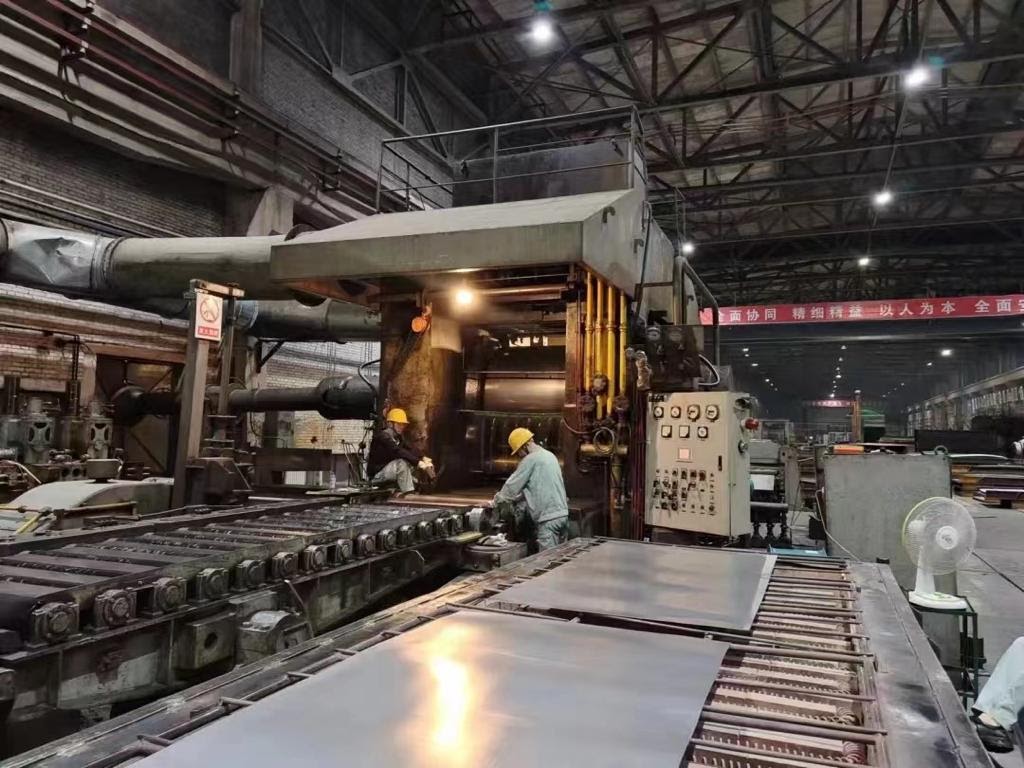
Honyo Prototype Titanium Metal Manufacturing Process Overview
Honyo Prototype employs a rigorously defined workflow for titanium components, optimized for the material’s unique challenges including high reactivity, low thermal conductivity, and stringent aerospace/medical quality requirements. The process begins with CAD upload and progresses through specialized stages to ensure dimensional accuracy, material integrity, and compliance.
CAD Upload and Validation
Clients submit 3D models in STEP or Parasolid formats via our secure portal, specifying titanium grade (e.g., Ti-6Al-4V ASTM F136 for medical, Grade 5 AMS 4928 for aerospace), surface finish (e.g., Ra ≤ 0.8 µm), and critical tolerances. Our system validates file integrity, checks for minimum wall thickness (≥ 0.5 mm for thin features), and flags unsupported overhangs exceeding 45° to prevent build failures in subsequent stages. Non-conforming geometries trigger instant client alerts with corrective recommendations.
AI-Powered Quoting Engine
Proprietary AI algorithms generate real-time quotes by analyzing CAD topology against titanium-specific cost drivers: material scrap rates (typically 70-85% for machined parts), inert gas consumption (argon for welding/EBM), and machine time multipliers. The system references live databases for titanium alloy pricing (e.g., $35-50/kg for Ti-6Al-4V billet) and applies machining complexity factors:
Deep cavity machining: +22% time penalty due to specialized tooling
Thin-wall features (<1mm): +35% cost for vibration mitigation
High-precision threads: +18% for thread milling vs. tapping
Quotes include material certification options (Mill Test Reports per ASTM B348) and NADCAP compliance costs where applicable.
Automated DFM for Titanium
Our DFM module performs 37 titanium-specific checks, prioritizing:
Elimination of sharp internal corners (minimum radius 0.8mm to prevent tool chipping)
Verification of hole depth-to-diameter ratios (<6:1 without peck drilling)
Thermal distortion risk assessment for asymmetric geometries
Weld prep validation (bevel angles 30-37.5° per AWS D17.1)
Common issues and resolutions are tabulated for client transparency:
| DFM Issue Detected | Titanium-Specific Impact | Honyo Resolution |
|---|---|---|
| Wall thickness < 0.4mm | Risk of buckling during stress relief | Recommend ±0.1mm tolerance relaxation or ribbing |
| Blind hole depth > 10xD | Chip evacuation failure causing breakage | Suggest stepped hole design or through-hole conversion |
| Adjacent features < 1.5mm | Heat concentration leading to warpage | Insert thermal relief slots per AMS 2750F |
Precision Titanium Production
Machining occurs in climate-controlled cells with dedicated titanium tooling:
Pre-machining: Stress-relief annealing at 700°C ±10°C (per AMS 2750) in vacuum furnaces
Milling: High-pressure coolant (70 bar) with TiAlN-coated carbide tools at ≤120 m/min surface speed
EDM: For complex internal features using deionized water dielectric to prevent recast layer
In-process metrology: On-machine probing after roughing to correct for springback (titanium exhibits 0.05-0.15mm elastic recovery)
All operations comply with ISO 13485 for medical or AS9100 for aerospace, with full material traceability from billet heat number to final part.
Quality-Controlled Delivery
Final inspection includes:
CMM verification of critical dimensions (per ASME Y14.5 GD&T)
Penetrant testing (ASTM E1417) for surface defects
Microhardness testing (320-380 HV for annealed Ti-6Al-4V)
Batch-certified material test reports with chemical composition
Parts ship in anti-static, humidity-controlled packaging with serialized labels matching MTRs. Standard lead time is 15-20 business days for machined titanium components, with expedited options validated through our production capacity algorithm.
This integrated workflow reduces titanium prototyping lead times by 30% versus industry averages while maintaining first-pass yield rates above 92% through material-specific process controls.
Start Your Project
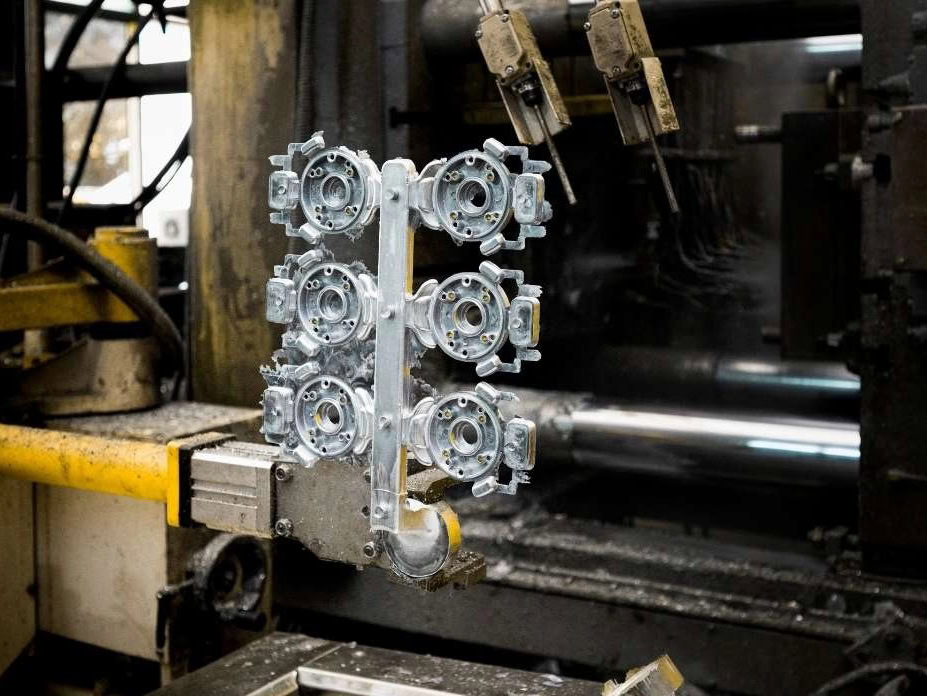
Looking for high-quality titanium metal components? Contact Susan Leo at [email protected] to discuss your project requirements.
Honyo Prototype operates a state-of-the-art manufacturing facility in Shenzhen, specializing in precision titanium machining and rapid prototyping. Our in-house capabilities ensure fast turnaround times, strict quality control, and cost-effective production for both prototypes and low-volume runs.
Partner with us for reliable, scalable solutions backed by engineering expertise. Reach out today to request a quote or technical consultation.
🚀 Rapid Prototyping Estimator
Estimate rough cost index based on volume.