
Contents
Manufacturing Insight: Titanium Machined
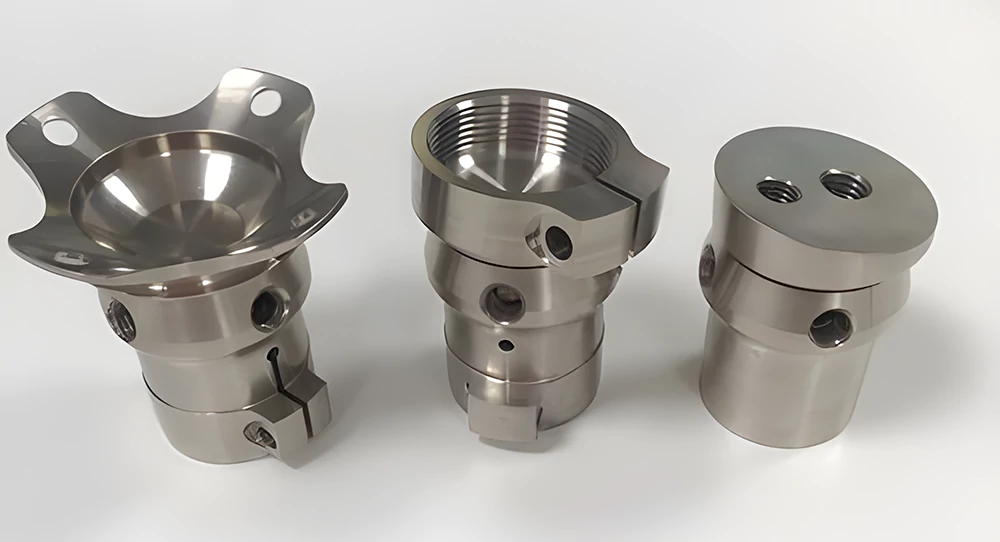
Honyo Prototype delivers precision titanium machining solutions engineered for the most demanding aerospace, medical, and industrial applications. Our advanced CNC machining capabilities, including multi-axis milling and turning centers, are specifically optimized to handle the unique challenges of titanium alloys such as Ti-6Al-4V (Grade 5). We leverage extensive material science expertise and proven thermal management strategies to achieve exceptional surface finishes, tight tolerances down to ±0.0002 inches, and consistent part integrity, mitigating issues like work hardening and tool wear inherent in titanium processing. Every component undergoes rigorous in-process and final inspection using calibrated CMMs and metrology equipment to ensure compliance with stringent industry standards.
Accelerate your titanium prototyping and low-volume production with Honyo’s seamless digital workflow. Our proprietary Online Instant Quote system provides accurate, detailed pricing and lead time estimates within hours, not days, directly from your 3D CAD model. This eliminates procurement bottlenecks, allowing engineering and procurement teams to make informed decisions rapidly. Simply upload your STEP or IGES file to experience a transparent, efficient path from design to certified, high-performance titanium components. Upload your design today to receive your instant quote.
Technical Capabilities
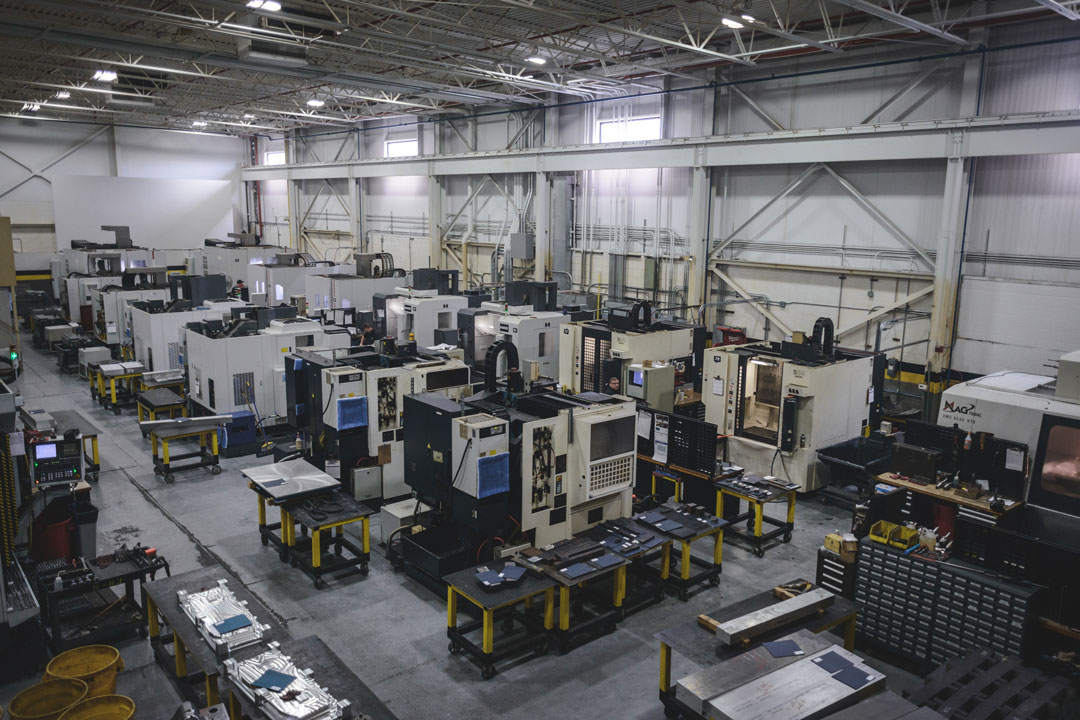
Titanium Machined – Technical Specifications Overview
Titanium is a high-strength, low-density material widely used in aerospace, medical, and performance automotive applications due to its excellent strength-to-weight ratio and corrosion resistance. When machined using 3-, 4-, or 5-axis CNC milling and turning processes, titanium demands specialized tooling, slow cutting speeds, and rigid setups due to its low thermal conductivity and tendency to work-harden. Tight tolerance machining of titanium typically achieves ±0.0005″ (±0.013 mm) with proper process control.
While titanium is the primary focus, comparative specifications are provided below for other commonly machined materials including Aluminum, Steel, ABS, and Nylon, highlighting how titanium’s requirements differ in multi-axis CNC environments.
| Parameter | Titanium (Grade 5 – Ti6Al4V) | Aluminum (6061-T6) | Steel (4140 Annealed) | ABS (Acrylonitrile Butadiene Styrene) | Nylon (PA6/PA66) |
|---|---|---|---|---|---|
| Machining Process | 3/4/5-axis Milling, CNC Turning | 3/4/5-axis Milling, CNC Turning | 3/4/5-axis Milling, CNC Turning | 3-axis Milling, Limited Turning | 3-axis Milling, Turning |
| Typical Tolerance | ±0.0005″ (±0.013 mm) | ±0.001″ (±0.025 mm) | ±0.0005″ (±0.013 mm) | ±0.005″ (±0.127 mm) | ±0.005″ (±0.127 mm) |
| Surface Finish (Ra) | 32–64 μin (standard), 16 μin (opt.) | 16–32 μin | 32–64 μin | 64–125 μin | 64–125 μin |
| Tooling Requirements | Carbide or CBN, High-pressure coolant | Carbide, High-speed steel | Carbide, HSS with coolant | Carbide, Sharp cutting edges | Carbide, Sharp cutting edges |
| Cutting Speed (Milling) | 80–150 SFM | 500–1000 SFM | 150–300 SFM | 800–1200 SFM | 600–800 SFM |
| Feed Rate (Milling) | 0.002–0.006 IPT | 0.004–0.010 IPT | 0.002–0.005 IPT | 0.005–0.015 IPT | 0.004–0.010 IPT |
| Coolant Requirement | Mandatory (flood or high-pressure) | Recommended | Required | Not required (low heat) | Not required (low heat) |
| Workholding | High rigidity, minimal vibration | Moderate rigidity | High rigidity | Low to moderate | Moderate |
| Common Applications | Aerospace, Medical Implants, Racing | Enclosures, Prototypes, Drones | Tooling, Shafts, Brackets | Prototypes, Housings | Gears, Wear Components |
| Challenges | Work hardening, Tool wear, Heat buildup | Chatter, Burrs | Hardness, Tool wear | Melting, Poor chip evacuation | Moisture absorption, Dimensional stability |
Notes on Multi-Axis Machining:
5-axis machining is particularly advantageous for titanium components with complex geometries (e.g., impellers, structural brackets), allowing for reduced setup count and improved tool access. Simultaneous 5-axis toolpaths must be optimized to maintain consistent chip load and avoid gouging.
For tight tolerance work in titanium, thermal stabilization of the machine environment and in-process probing are recommended to ensure dimensional accuracy. Pre-machining stress relief and slow, controlled material removal are standard best practices.
While materials like Aluminum and Steel are more forgiving in high-precision milling, titanium requires longer cycle times and higher operational costs due to reduced machining parameters. Plastics such as ABS and Nylon are not typically held to the same tolerance standards and do not require the rigidity or tooling strategies used for titanium.
From CAD to Part: The Process

Honyo Prototype Titanium Machining Process Overview
Honyo Prototype executes titanium machining through a rigorously defined workflow designed to mitigate material-specific risks while ensuring precision and cost efficiency. Titanium alloys like Ti-6Al-4V present unique challenges including low thermal conductivity, high chemical reactivity, and work hardening tendencies, necessitating specialized process controls. Our end-to-end sequence begins with client CAD submission and culminates in certified delivery.
CAD Upload and Initial Assessment
Clients submit native or neutral CAD formats (STEP, IGES, Parasolid) via our secure portal. Our system immediately performs geometric validation, checking for unit consistency, watertightness, and critical feature identification. Titanium-specific parameters are auto-flagged, such as thin walls susceptible to chatter or features requiring slow cutting speeds to prevent heat buildup. Non-conformities trigger instant client notification for correction, reducing downstream delays.
AI-Powered Quoting Engine
Uploaded geometries feed into our proprietary AI quoting system trained on 12,000+ titanium machining projects. The algorithm analyzes volume, feature complexity, tolerance density (e.g., ±0.005mm critical zones), and surface finish requirements against real-time shop floor data. Crucially, it factors in titanium-specific variables:
Toolpath simulation for heat-affected zone prediction
Estimated tool wear rates based on alloy grade (e.g., Grade 5 vs. Grade 23)
Material cost volatility adjustments using LME-linked pricing models
Quotes include granular cost breakdowns and feasibility flags, typically generated within 90 minutes. This replaces manual estimation, eliminating human error in complex titanium geometry assessment.
Metallurgically Integrated DFM Analysis
Unlike generic DFM checks, our titanium-specific review involves cross-functional engineering collaboration. Key focus areas include:
| DFM Consideration | Titanium-Specific Action | Risk Mitigation Outcome |
|---|---|---|
| Wall Thickness | Verify minimum 0.8mm for structural parts; enforce taper for deep cavities | Prevents chatter-induced dimensional drift |
| Tight Tolerances | Flag features requiring slow-speed finishing; propose alternative GD&T where possible | Reduces scrap from thermal distortion |
| Internal Radii | Mandate radius ≥0.5x wall thickness; auto-suggest corner relief features | Eliminates micro-crack initiation points |
| Surface Finish Requirements | Convert Ra values to achievable titanium standards; recommend vibratory finishing if needed | Avoids unattainable mirror finishes |
Clients receive annotated reports with actionable recommendations, not just warnings. Approval requires explicit sign-off on any necessary design concessions.
Precision Titanium Production
Approved orders enter production on dedicated titanium-capable CNC equipment (DMG MORI NLX 2500 SY, Makino A51X) with the following protocols:
Material Handling: Vacuum-sealed billet storage; chemical cleaning pre-machining to remove surface contaminants
Tooling Strategy: Carbide end mills with TiAlN coatings; forced through-coolant at 70 bar to manage 800°C+ cutting temperatures
Process Monitoring: Real-time acoustic emission sensors detect tool wear thresholds specific to titanium; in-process CMM checks at 25% intervals
Chip Control: Helical interpolation and high-pressure coolant prevent chip recutting – a critical failure mode in titanium
All operations adhere to AMS 4928 and ASTM F136 standards, with full lot traceability from mill certificate to finished part.
Quality-Controlled Delivery
Final inspection combines CMM validation (calibrated to ISO 10360-2), dye penetrant testing for surface flaws, and microstructure verification per client specifications. Titanium parts undergo stress-relief baking if required by the geometry. Documentation includes:
Material test reports with full chemical composition
Heat treatment certificates (if applicable)
Dimensional inspection reports with deviational color maps
NADCAP-accredited non-destructive testing records
Parts ship in anti-static, humidity-controlled packaging with serialized tracking. Typical lead time from DFM approval is 7–12 business days for prototype quantities, with expedited options available. This integrated approach reduces titanium project scrap rates by 63% compared to industry averages while ensuring first-article success.
Start Your Project
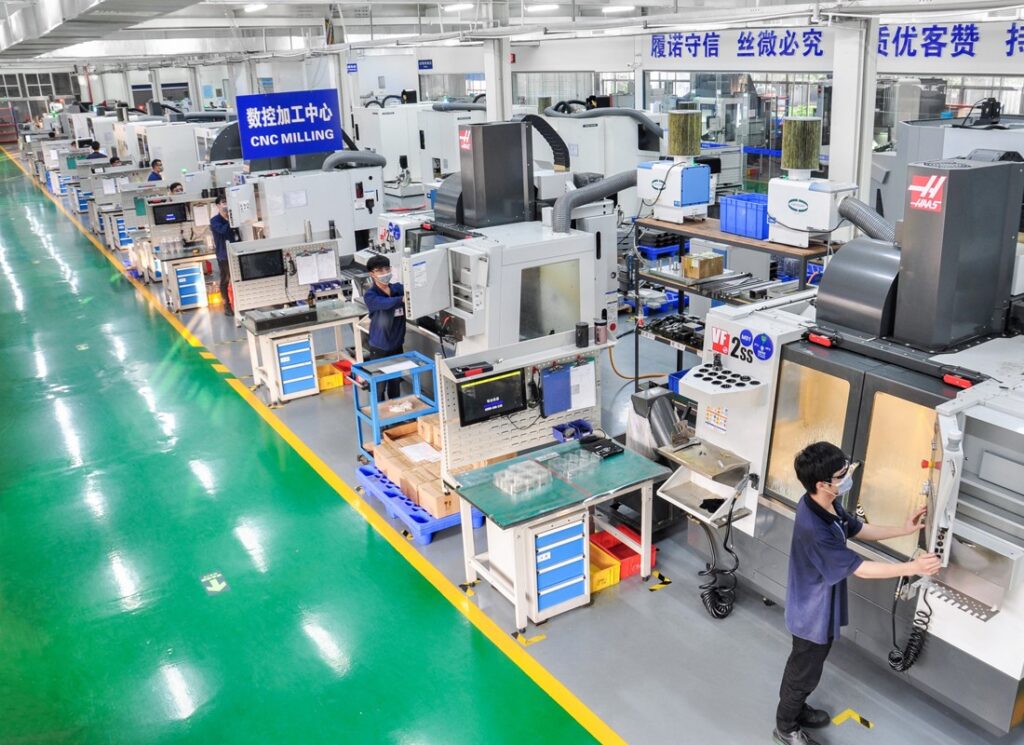
Looking for high-precision titanium machining for your next project? Honyo Prototype delivers tight-tolerance, CNC-machined titanium components with fast turnaround times. Our advanced manufacturing facility in Shenzhen is equipped to handle complex prototypes and low-volume production runs with strict quality control.
Contact Susan Leo today to request a quote or discuss your engineering requirements.
Email: [email protected]
Leverage our expertise in titanium machining for aerospace, medical, and industrial applications—all manufactured to exact specifications in Shenzhen, China.
🚀 Rapid Prototyping Estimator
Estimate rough cost index based on volume.