
Contents
Manufacturing Insight: Thin Nylon Sheet
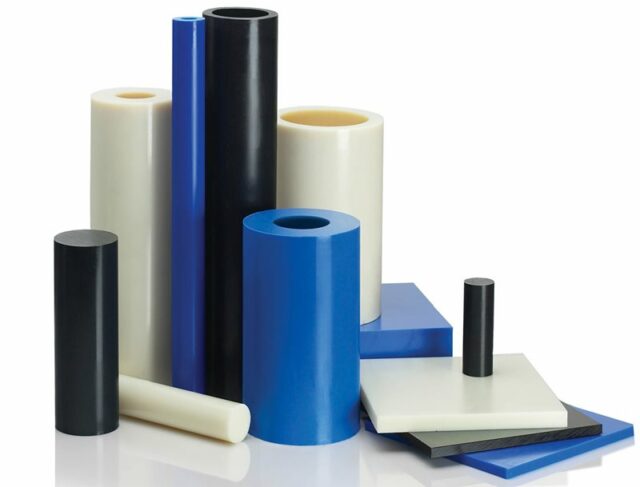
Thin Nylon Sheet Fabrication Expertise at Honyo Prototype
Thin nylon sheets present unique fabrication challenges due to their inherent flexibility, moisture sensitivity, and thermal properties, which can lead to warpage, dimensional instability, or tooling complications during processing. Honyo Prototype excels in precision sheet metal fabrication extended to engineered polymer sheets, including demanding thin-gauge nylon applications. Our advanced CNC punching, laser cutting, and bending capabilities are optimized for materials as thin as 0.3mm, ensuring tight tolerances, clean edges, and consistent flatness without compromising structural integrity. We implement controlled environmental staging and specialized tooling strategies to mitigate nylon’s hygroscopic nature, delivering parts ready for critical assembly in fluid handling, electrical insulation, or wear-component applications.
For rapid prototyping or low-volume production of thin nylon components, leverage our Online Instant Quote platform. Upload your STEP or DXF file to receive a detailed manufacturability analysis and competitive pricing within hours—no manual RFQ delays. This streamlined process accelerates your development cycle while maintaining the engineering rigor Honyo is recognized for in precision sheet fabrication beyond traditional metals.
Technical Capabilities
Technical specifications for a thin nylon sheet relevant to laser cutting, bending, and welding processes are outlined below. For comparative context, similar processing characteristics of aluminum, steel, ABS, and nylon are included. All values are typical and may vary based on grade, thickness, and processing conditions.
| Material | Thickness Range (mm) | Laser Cutting Compatibility | Bending Characteristics | Welding Method | Thermal Conductivity (W/m·K) | Melting Point (°C) | Notes |
|---|---|---|---|---|---|---|---|
| Nylon (PA6/PA66) | 0.5 – 3.0 | Good – requires controlled power and assist gas (air or nitrogen); risk of melting or charring if poorly tuned | Excellent flexibility and resilience; minimum bend radius ~1.5x material thickness; no springback | Hot gas welding, ultrasonic welding, vibration welding; not suitable for traditional arc welding | 0.25 | 215–265 | High moisture absorption; pre-drying recommended before processing |
| Aluminum | 0.5 – 6.0 | Excellent – with high-power fiber lasers; reflective material requires proper beam delivery | Good formability; bend radius ~0.8x thickness; prone to cracking if overbent | TIG, MIG, laser welding; requires clean, oxide-free surfaces | 205 | 660 | Reflective to laser beams; may require specialized parameters |
| Steel (Mild) | 0.5 – 10.0 | Excellent – CO₂ or fiber lasers effective; uses oxygen or nitrogen assist | Moderate; bend radius ~1x thickness; work hardening possible | MIG, TIG, spot welding; high weld strength | 50 | 1370–1510 | Generates slag with oxygen cutting; nitrogen produces cleaner edges |
| ABS | 0.5 – 5.0 | Good – low laser power required; cuts cleanly but may emit toxic fumes (ventilation required) | Good ductility; minimum bend radius ~1x thickness; can be thermoformed | Solvent welding, ultrasonic welding; not suitable for high-heat methods | 0.19 | 105 (softens) | Poor UV and temperature resistance; flammable |
| Nylon (Thin Sheet) | 0.5 – 3.0 | See above – optimized with pulsed laser modes to prevent edge melt | Superior to ABS and metals in elastic recovery; ideal for living hinges | Compatible with thermal and mechanical joining methods | 0.25 | 215–265 | Best-in-class for flexible, repeatable bending without failure |
Key Observations for Thin Nylon Sheet in Manufacturing:
Laser cutting of thin nylon requires precise parameter control to avoid edge degradation. A pulsed laser mode with moderate power and compressed air assist typically yields clean, sealed edges. Due to nylon’s low thermal conductivity and high melt viscosity, excessive heat input can lead to warping or incomplete cuts.
In bending applications, nylon outperforms metals and ABS due to its high elongation at break (~30–150%) and elastic recovery. It is well-suited for dynamic flexing components such as hinges or snap-fits without requiring secondary operations.
Welding nylon is feasible using thermal techniques such as hot gas or ultrasonic welding. These methods are widely used in automotive and industrial applications for joining nylon components reliably. Unlike metals, nylon does not conduct electricity or heat, making traditional arc welding impossible.
When compared to aluminum, steel, and ABS, nylon offers a favorable strength-to-weight ratio, chemical resistance, and damping properties, though it requires environmental conditioning (e.g., moisture stabilization) for dimensional accuracy.
From CAD to Part: The Process
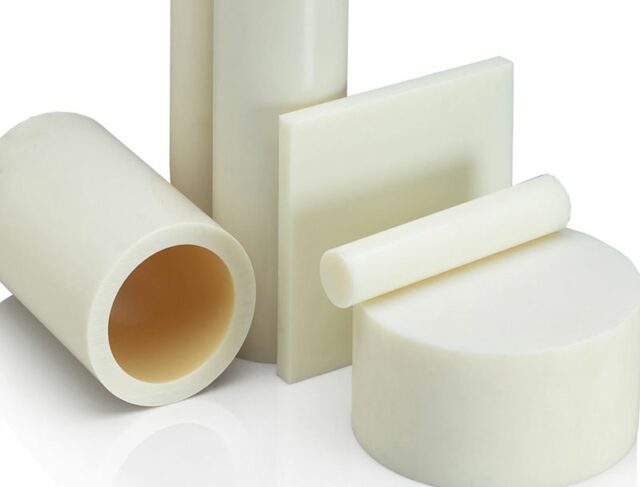
Honyo Prototype Thin Nylon Sheet Manufacturing Process
Our end-to-end workflow for thin nylon sheet fabrication ensures precision, speed, and reliability from design to delivery. This process is optimized for the unique challenges of thin-section nylon, including moisture sensitivity, thermal expansion, and warpage control. Below is a detailed breakdown of each phase.
CAD Upload and Validation
Clients initiate the process by uploading native CAD files (STEP, IGES, or native SOLIDWORKS) via our secure cloud portal. Our system performs automated validation checks for geometric integrity, unit consistency, and minimum feature compliance. For thin nylon sheets, we specifically verify wall thickness uniformity (minimum 0.25mm), draft angles, and tolerance annotations against nylon’s material behavior. Invalid submissions trigger immediate feedback with actionable corrections, reducing iteration cycles.
AI-Powered Quoting Engine
Within minutes, our AI-driven quoting system analyzes the validated CAD data alongside material properties, production complexity, and real-time shop floor capacity. The engine factors in nylon-specific parameters: moisture absorption rates, thermal expansion coefficients, and laser-cutting kerf compensation. Clients receive a transparent quote detailing material grade options, lead time, and cost drivers. Key nylon variants and their attributes are summarized below.
| Nylon Grade | Thickness Range | Key Properties | Typical Lead Time |
|---|---|---|---|
| Nylon 6 | 0.25mm – 3.0mm | High impact resistance, moderate moisture absorption | 5-7 business days |
| Nylon 66 | 0.30mm – 4.0mm | Superior stiffness, lower moisture uptake | 6-8 business days |
| Glass-Filled Nylon | 0.50mm+ | Reduced warpage, enhanced thermal stability | 8-10 business days |
DFM Analysis and Engineering Review
All thin nylon projects undergo mandatory Design for Manufacturability (DFM) review by our engineering team. We focus on mitigating nylon-specific risks: thermal distortion during cutting, hygroscopic swelling, and edge quality. Our DFM report provides actionable feedback, such as adjusting part geometry for nesting efficiency, recommending humidity-controlled post-processing, or suggesting alternative grades to prevent warpage. Clients receive annotated reports with 24 hours, including revised CAD suggestions if needed.
Precision Production
Approved designs move to production in our climate-controlled facility (22°C ±1°C, 45% RH). Thin nylon sheets are cut via CO₂ laser systems with 0.1mm positional accuracy and nitrogen-assisted edge finishing to minimize charring. Each sheet undergoes in-process metrology: flatness is verified using optical comparators (max 0.5mm deviation per 300mm), and thickness is spot-checked with micrometers. All parts are dried to 0.2% moisture content pre-shipment per ASTM D5229 standards.
Quality-Controlled Delivery
Final inspection includes first-article reporting (FAI) per AS9102 standards for critical dimensions and material certification. Parts are vacuum-sealed with desiccant packs to prevent moisture ingress during transit and shipped via tracked logistics. Clients receive full traceability documentation, including lot-specific material certs and dimensional reports. Standard lead time from CAD upload to delivery is 7-10 business days, with expedited options available.
This integrated approach ensures thin nylon components meet stringent functional requirements while minimizing time-to-market. For complex geometries or volume scaling, our engineering team collaborates directly to refine the process. Contact Honyo Prototype’s manufacturing specialists to discuss your specific application.
Start Your Project
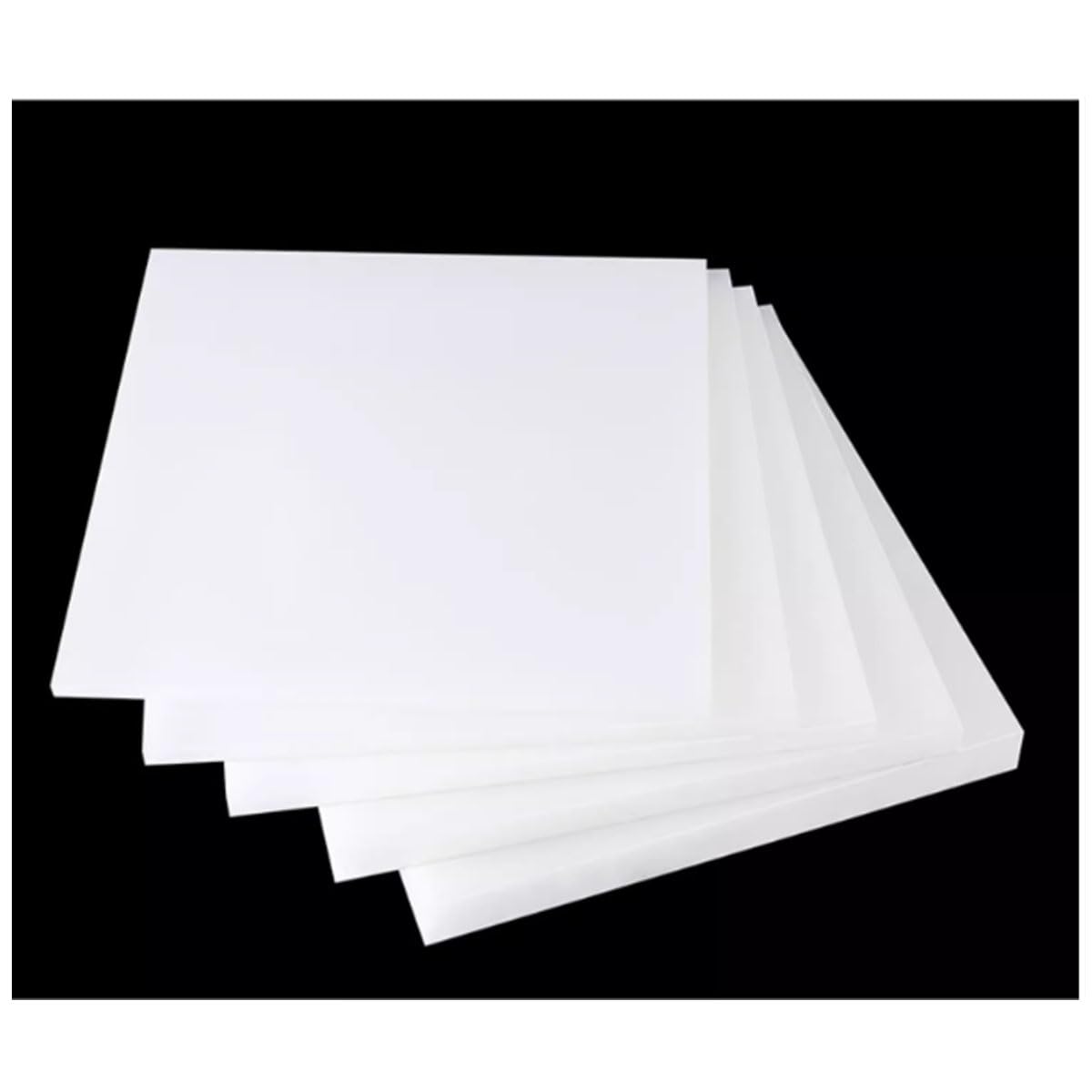
Looking for high-quality thin nylon sheets for your next project? Honyo Prototype offers precision-manufactured nylon sheets tailored to meet strict industrial specifications. With our advanced fabrication capabilities and quality control, we ensure consistent performance and durability.
All products are manufactured in our Shenzhen factory, leveraging years of engineering expertise and lean production practices to deliver reliable, high-performance materials on time.
For inquiries or to request a quote, contact Susan Leo at [email protected]. Let us support your prototyping or production needs with superior nylon sheet solutions.
🚀 Rapid Prototyping Estimator
Estimate rough cost index based on volume.