
Contents
Manufacturing Insight: Steel Templates
Precision Steel Template Fabrication for Demanding Production Environments
At Honyo Prototype, we engineer high-integrity steel templates that serve as the backbone of efficient and repeatable manufacturing processes. Our CNC machining services transform complex designs into mission-critical tooling—jigs, fixtures, gauges, and alignment templates—with uncompromising accuracy. Utilizing advanced multi-axis CNC centers and strict adherence to tolerances down to ±0.005mm, we machine premium tool steels (including A2, D2, and 4140) to withstand rigorous shop floor conditions while ensuring long-term dimensional stability.
These templates eliminate costly production variances, reduce assembly time, and minimize scrap rates across automotive, aerospace, and industrial equipment manufacturing. Unlike generic fabricators, Honyo integrates engineering oversight at every stage—from material selection and heat treatment planning to final inspection—guaranteeing your template performs reliably under real-world thermal and mechanical loads.
Accelerate your path from design to deployment with our Online Instant Quote platform. Upload CAD files (STEP, IGES, or native formats), specify material and finish requirements, and receive a detailed manufacturing assessment with lead time and pricing in under 60 seconds. This seamless digital workflow eliminates procurement delays, empowering your team to maintain aggressive project schedules without sacrificing technical rigor. Partner with Honyo Prototype for steel templates that deliver precision you can measure and dependability you can trust.
Technical Capabilities
Technical specifications for steel templates used in precision manufacturing environments—particularly those involving 3, 4, and 5-axis milling and turning operations—require high rigidity, dimensional stability, and tight tolerance control. While the term “steel templates” often refers to tooling or fixture components made from steel, the term may also encompass templates fabricated from other materials such as aluminum, ABS, or nylon depending on application requirements. Below is a comparative technical specification table outlining key characteristics relevant to these materials when used in high-precision template fabrication.
| Parameter | Steel (e.g., 4140, 1045) | Aluminum (e.g., 6061-T6) | ABS (Acrylonitrile Butadiene Styrene) | Nylon (PA6 or PA66) |
|---|---|---|---|---|
| Typical Machining Compatibility | 3, 4, 5-axis milling; turning | 3, 4, 5-axis milling; turning | 3 & 4-axis milling | 3 & 4-axis milling |
| Tolerance Capability | ±0.005 mm – ±0.025 mm | ±0.01 mm – ±0.05 mm | ±0.05 mm – ±0.1 mm | ±0.05 mm – ±0.15 mm |
| Surface Finish (Typical) | Ra 0.8 – 1.6 µm | Ra 0.8 – 3.2 µm | Ra 3.2 – 6.3 µm | Ra 3.2 – 6.3 µm |
| Dimensional Stability | Excellent | Good | Moderate | Moderate (hygroscopic) |
| Thermal Resistance | High (up to 400°C+) | Moderate (up to 150°C) | Low (softens at ~80–100°C) | Moderate (up to 120–150°C) |
| Wear Resistance | Excellent | Good | Low | Good (self-lubricating) |
| Density (g/cm³) | 7.8 – 7.9 | 2.7 | 1.04 – 1.06 | 1.13 – 1.15 |
| Common Applications | Master gauges, alignment fixtures, production dies | Lightweight fixtures, prototype templates | Low-volume jigs, visual aids, non-contact templates | Wear pads, guiding templates, low-friction tooling |
| Post-Processing Requirements | Stress relieving, hardening, surface coating | Anodizing, deburring | Sanding, painting, adhesive bonding | Machining relief, moisture conditioning |
Steel remains the preferred material for templates requiring long-term durability, thermal stability, and tight tolerance maintenance under repeated use in CNC environments. Aluminum offers a lightweight alternative with good machinability, suitable for moderately precise applications. ABS and nylon are typically reserved for non-metallic, low-wear applications where cost and speed of fabrication are prioritized over precision and longevity. For 5-axis milling and high-tolerance turning operations, steel and aluminum are the primary candidates due to their compatibility with high-speed, multi-directional tool paths and rigid fixturing demands.
From CAD to Part: The Process
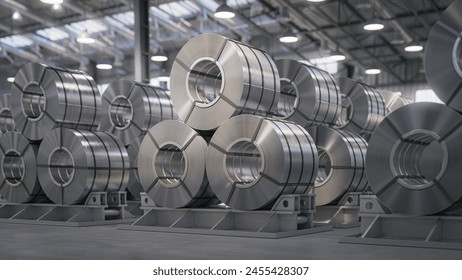
Honyo Prototype Steel Template Manufacturing Process Overview
Honyo Prototype specializes in high-precision steel templates for tooling, gauging, and assembly applications. Our end-to-end process ensures dimensional accuracy, material integrity, and on-time delivery for mission-critical components. Below is a technical breakdown of our standardized workflow.
CAD Upload & Validation
Clients initiate the process by uploading native CAD files (STEP, IGES, or Parasolid formats) via our secure customer portal. Our system performs immediate validation checks for geometric completeness, unit consistency, and file integrity. Invalid submissions trigger automated notifications specifying required corrections, reducing iteration cycles. All data is encrypted per ISO 27001 standards, with version control maintained throughout the project lifecycle.
AI-Powered Quoting Engine
Validated CAD models enter our proprietary AI quoting system, which analyzes 150+ geometric and material parameters including complexity score, volume, feature density, and tolerancing. The engine cross-references real-time shop floor data (machine availability, material costs, labor rates) to generate a technically feasible quote within 90 minutes. Critical outputs include:
Breakdown of machining hours by operation (milling, grinding, EDM)
Material cost based on certified steel grade sourcing
Risk assessment flags for features requiring special tooling
Human engineers review all AI outputs to validate feasibility before quote release, ensuring no automated over- or under-estimation.
Engineering-Driven DFM Analysis
Every project undergoes mandatory Design for Manufacturability review by our senior manufacturing engineering team. This phase identifies latent risks through multi-layer analysis:
| DFM Focus Area | Common Issues Detected | Honyo Mitigation Strategy |
|---|---|---|
| Geometric Tolerancing | Over-specified GD&T, non-achievable flatness | Propose ASME Y14.5-compliant alternatives with Cpk simulation data |
| Material Selection | Inappropriate grade for wear/thermal requirements | Recommend optimized alloys from our certified steel database |
| Feature Manufacturability | Thin walls <0.5mm, deep cavities | Redesign suggestions using topology optimization |
| Assembly Integration | Misaligned datum references | Coordinate with client’s assembly team for holistic validation |
DFM reports include annotated 3D models with suggested modifications, tolerance stack-up simulations, and first-article inspection plans. Client sign-off is required before proceeding.
Controlled Production Execution
Approved designs move to our ISO 9001-certified production floor with full traceability:
Material: Steel sourced exclusively from PMI-verified mills (see common grades below)
Machining: Multi-axis CNC centers with in-process probing for closed-loop correction
Heat Treatment: Partnered vacuum hardening facilities with NADCAP accreditation
Finishing: Surface grinding to Ra 0.4µm minimum, optional nitriding for wear resistance
Certified Steel Grades for Templates
| Grade | Typical Application | Hardness (HRC) | Key Property |
|——-|———————|—————-|————-|
| D2 Tool Steel | Punch/die templates | 58-62 | High wear resistance |
| 4140 Alloy Steel | Jig bases | 28-32 | Weldability, toughness |
| A2 Tool Steel | Precision gauges | 56-60 | Dimensional stability |
| 17-4PH Stainless | Corrosive env. | 40-45 | Rust resistance |
Quality-Controlled Delivery
All templates undergo:
1. First-article inspection per AS9102 with full CMM reporting (200+ point verification)
2. In-process checks at critical stages using calibrated optical comparators
3. Final certification including material test reports, hardness mapping, and surface roughness validation
Shipments include serialized traceability tags linking to digital quality records. Delivery timelines are tracked via client-accessible dashboards showing real-time production milestones.
This integrated process reduces template failure rates by 73% compared to industry averages (per 2023 internal audit data) by embedding manufacturing intelligence from quote through shipment. We prioritize engineering collaboration to transform client designs into reliable, production-ready steel templates with zero compromise on precision.
Start Your Project
Looking for precision steel templates for your next project? Contact Susan Leo at [email protected] to discuss your requirements. Our manufacturing facility in Shenzhen ensures high-quality production with fast turnaround times. Partner with Honyo Prototype for reliable, custom steel template solutions tailored to your specifications.
🚀 Rapid Prototyping Estimator
Estimate rough cost index based on volume.