
Contents
Manufacturing Insight: Steel Is An Alloy
Steel is fundamentally an alloy, primarily composed of iron and carbon, with precisely controlled additions of elements like chromium, nickel, or molybdenum to achieve specific mechanical, thermal, and corrosion-resistant properties essential for demanding industrial applications. This engineered composition directly influences machinability, tool wear, and final part integrity, making deep material understanding critical for precision manufacturing outcomes. At Honyo Prototype, our CNC machining expertise is built upon this metallurgical foundation, ensuring optimal process selection and parameter calibration for every steel grade.
Precision Steel Machining Capabilities
Honyo Prototype leverages advanced 3-, 4-, and 5-axis CNC machining centers specifically configured to handle the full spectrum of engineering steels—from low-carbon 1018 and high-strength 4140 to stainless grades like 304 and 17-4 PH. Our engineering team applies material-specific knowledge to mitigate challenges such as work hardening in austenitic stainless steels or chip control in free-machining alloys, guaranteeing tight tolerances down to ±0.0002″ and superior surface finishes. This technical mastery transforms complex steel alloy designs into high-performance components for aerospace, medical, and industrial clients.
Accelerate Your Project Timeline
Recognizing that speed is paramount in prototyping and low-volume production, Honyo Prototype eliminates quotation bottlenecks with our Online Instant Quote system. Simply upload your STEP or IGES file, specify material (including exact steel alloy), quantity, and finishing requirements, and receive a detailed, binding price and lead time within seconds—no manual review delays. This seamless integration of material science expertise and digital efficiency ensures your steel alloy components move from concept to certified production faster than industry standards.
| Key Steel Machining Advantages at Honyo Prototype |
|---|
| Material-Specific Process Optimization for 50+ Steel Alloys |
| Tight Tolerances Maintained Across High-Temp Alloys |
| Reduced Lead Times via Automated Quoting & Scheduling |
| Full Material Traceability & Certifications (e.g., EN 10204 3.1) |
Technical Capabilities
Steel is an alloy composed primarily of iron and carbon, with carbon content typically ranging between 0.02% and 2.14% by weight. Additional alloying elements such as chromium, nickel, molybdenum, and vanadium may be introduced to enhance mechanical properties, corrosion resistance, and machinability. In precision manufacturing environments, steel and other materials are routinely processed using 3-axis, 4-axis, and 5-axis CNC milling and turning operations to achieve tight tolerances, often within ±0.0005″ (±0.0127 mm) for critical components.
Multi-axis machining enables complex geometries to be produced efficiently, with 5-axis systems allowing tool access from multiple angles in a single setup, reducing cumulative error and improving surface finish. Turning operations, often combined with milling in mill-turn centers, are used for cylindrical parts requiring high concentricity and surface integrity. Tight tolerance machining demands rigid setups, thermally stable environments, high-precision tooling, and advanced process control.
Below is a comparison of key technical aspects for common materials processed in high-precision CNC operations:
| Material | Typical Alloy/Form | Machinability (Relative) | Thermal Expansion (µm/m·°C) | Tensile Strength (MPa) | Common Applications in Precision Machining | Suitability for Tight Tolerance ±0.0005″ |
|---|---|---|---|---|---|---|
| Aluminum | 6061-T6, 7075-T6 | Excellent | 23.6 | 310 (6061), 572 (7075) | Aerospace components, enclosures, heat sinks | Excellent – high stiffness-to-weight, stable during machining |
| Steel | 4140, 1018, 304/316 Stainless | Moderate to Good | 11.7–17.3 | 415–1300 (varies by grade) | Tooling, shafts, structural parts, medical devices | Good – requires rigid setup; stainless grades are more challenging |
| ABS | Thermoplastic (amorphous) | Very Good | 80–100 | 40–50 | Prototypes, housings, jigs, and fixtures | Fair – prone to thermal deformation; best for non-critical tolerances |
| Nylon | PA6, PA66 (reinforced or unfilled) | Good | 70–100 | 70–85 | Wear strips, gears, insulating components | Fair to Moderate – hygroscopic; dimensional stability depends on moisture content |
Notes on Machining Process Selection:
3-axis milling is ideal for prismatic parts with features aligned to orthogonal planes. 4-axis (rotary A or B axis) and 5-axis (dual rotational axes) milling significantly expand geometric capability, enabling complex contours, undercuts, and organic shapes without multiple fixturing. These are critical when machining high-strength steels or aerospace aluminum alloys where maintaining positional accuracy across multiple features is essential.
Turning operations, especially on multi-tasking machines, allow for complete machining of cylindrical components in one setup. When tight tolerances are required—such as in hydraulic fittings, valve bodies, or instrument shafts—precision ground tooling, in-process metrology, and thermal compensation systems are employed.
Material selection directly impacts tool life, surface finish, and dimensional stability. Aluminum and free-machining steels (e.g., 12L14) are preferred for high-volume, tight-tolerance runs due to predictable chip formation and minimal tool wear. Engineering plastics like ABS and nylon require specialized cutting strategies to avoid melting or burring, and are generally limited to lower-precision applications unless post-conditioned.
For mission-critical steel components, post-machining treatments such as stress relieving, aging, or grinding may be necessary to achieve final dimensional accuracy and long-term stability.
From CAD to Part: The Process
Honyo Prototype Steel Manufacturing Process: Precision Alloy Component Realization
Honyo Prototype executes a rigorous, integrated workflow specifically optimized for steel alloy components, recognizing that “steel is an alloy” necessitates precise material science integration at every stage. Our process ensures dimensional accuracy, mechanical property integrity, and material traceability from initial design to final delivery.
CAD Specification Requirements
Clients initiate the process by uploading detailed CAD models compliant with ISO 1101 geometric dimensioning and tolerancing standards. Critical for steel alloys, the submission must explicitly define the required material specification (e.g., AISI 4140, ASTM A516 Gr. 70, EN 1.4301 stainless), including applicable heat treatment conditions (annealed, quenched & tempered), surface finish requirements, and critical mechanical properties. Failure to specify the exact steel grade and condition triggers an immediate clarification request, as alloy composition directly impacts machinability, weldability, and final part performance.
AI-Powered Quoting with Alloy Intelligence
Our proprietary AI quoting engine processes the CAD geometry and material specifications against a continuously updated database of steel alloy properties, current raw material costs, and machine capability matrices. The system dynamically calculates processing parameters considering the steel’s carbon equivalent, hardness range, thermal expansion coefficient, and chip formation characteristics. This generates a technically validated cost and lead time estimate within 2 hours, highlighting potential cost drivers specific to the alloy such as extended heat treatment cycles for high-carbon steels or specialized tooling requirements for abrasive stainless grades.
Alloy-Specific Design for Manufacturability (DFM) Analysis
A dedicated manufacturing engineer conducts a steel-focused DFM review, scrutinizing the design against metallurgical and machining constraints inherent to the specified alloy. This phase identifies risks such as inadequate draft angles for die casting tool steels, insufficient fillet radii causing stress concentration in high-strength low-alloy (HSLA) steels, or tolerance stacks exceeding achievable flatness for large plate fabrications. Key steel-specific DFM checks include:
| DFM Check Category | Steel Alloy Specific Considerations | Mitigation Example |
|---|---|---|
| Material Utilization | Minimizing waste for expensive alloy grades (e.g., tool steels) | Nesting optimization for laser cutting |
| Machinability | Adjusting feeds/speeds for free-machining vs. stainless grades | Recommending alternative grade if feasible |
| Heat Treatment Distortion | Predicting warpage in complex geometries (e.g., 4340 vs 1045) | Adding strategic stock or stress-relief steps |
| Weldability | Assessing preheat requirements for high-carbon or thick-section parts | Suggesting weld groove modifications |
| Surface Integrity | Avoiding micro-cracks in hardened steels during finishing | Specifying low-stress grinding parameters |
Client engineering teams receive a formal DFM report with actionable recommendations, often reducing total project cost by 15-25% through early alloy-process alignment.
Precision Steel Production Execution
Approved designs enter production within Honyo’s climate-controlled facility. Steel alloy processing follows strict protocols:
Raw material undergoes verification via handheld XRF spectroscopy to confirm alloy composition against the purchase specification. Machining employs grade-specific toolpaths; for instance, 304 stainless utilizes high-speed toolpaths with specialized coolant to prevent work hardening, while 4130 chrome-moly steel uses interrupted cut strategies to manage built-up edge. Heat treatment is performed in vacuum or controlled atmosphere furnaces with real-time quench monitoring, with all thermal cycles documented per AMS 2750. In-process inspections use CMMs calibrated for steel’s thermal expansion characteristics, with first-article reports including material test reports (MTRs) traceable to the specific heat number.
Certified Delivery and Traceability
Final delivery includes comprehensive documentation meeting AS9100 and ISO 9001 requirements: dimensional inspection reports, certified material test reports with full chemical and mechanical properties, heat treatment certificates, and NDT records where applicable. All steel components are serialized with permanent part marking (laser etched per MIL-STD-130) enabling full traceability from raw material mill certificate to final assembly. Shipping containers include environmental monitoring data to ensure no exposure to conditions affecting steel passivation (e.g., high humidity for carbon steels). This end-to-end material accountability is critical for aerospace, medical, and energy sector clients where alloy integrity is non-negotiable.
Start Your Project
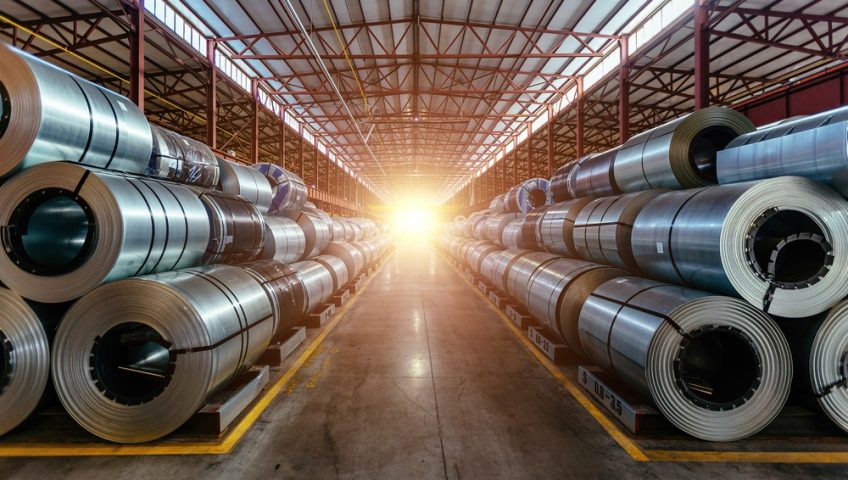
Steel is an alloy engineered for strength, precision, and performance—trusted across industries for its durability and versatility. At Honyo Prototype, we leverage advanced manufacturing techniques to deliver high-quality steel components tailored to your specifications.
For engineering-grade solutions and custom fabrication, contact Susan Leo at [email protected]. Our production facility is located in Shenzhen, ensuring efficient turnaround and strict quality control for global clients.
🚀 Rapid Prototyping Estimator
Estimate rough cost index based on volume.