
Contents
Manufacturing Insight: Steel Cost Per Tonne
Understanding steel cost per tonne is a critical starting point for precision manufacturing projects, but it represents only the foundational material expense. At Honyo Prototype, we recognize that the true cost efficiency for your CNC machined components hinges on maximizing material utilization and minimizing waste through advanced machining capabilities. Our high-precision CNC milling and turning services, operating within tight tolerances of ±0.005mm, significantly reduce effective steel cost per functional part by optimizing billet usage and eliminating rework scrap. This precision-driven approach transforms raw material expenditure into predictable, value-engineered outcomes for engineering teams.
Leveraging our Online Instant Quote platform, you gain immediate visibility into project feasibility and cost drivers. Input your CAD file, specify alloy requirements—such as 304 stainless steel, 4140 alloy steel, or custom grades—and receive a detailed cost analysis within minutes. This transparency allows engineering and procurement teams to benchmark steel cost per tonne against actual machining efficiency, accelerating prototyping timelines while ensuring budget adherence from the earliest design stages.
Honyo Prototype delivers more than raw material cost management; we provide a closed-loop solution where precision machining expertise and digital quoting converge to reduce your total cost of ownership.
Technical Capabilities
The term “steel cost per tonne” refers to the base material pricing for steel, typically quoted in USD or EUR per metric ton (1,000 kg). However, in the context of precision manufacturing services such as 3-axis, 4-axis, and 5-axis milling, turning, and tight-tolerance machining, the cost per tonne of raw material is only one component of the total production cost. The actual machining cost is typically quoted per hour or per part, influenced by material machinability, complexity, required tolerances, and equipment used.
Below is a technical summary of relevant materials—Aluminum, Steel, ABS, and Nylon—including typical raw material cost per tonne and their implications for high-precision machining processes.
| Material | Typical Cost per Tonne (USD) | Machinability Rating | Common Use in Milling & Turning | Tight Tolerance Suitability (±0.005 mm or better) | Notes |
|---|---|---|---|---|---|
| Aluminum (e.g., 6061, 7075) | $2,500 – $3,500 | Excellent (High) | Widely used in 3/4/5-axis milling and turning for aerospace, automotive, and prototyping | High – Excellent dimensional stability and low thermal deformation | Lightweight, corrosion-resistant; favorable for complex, high-speed milling |
| Steel (e.g., 4140, 1018, 304 Stainless) | $800 – $2,500 | Moderate to Poor (varies by alloy) | Common in turning and milling for tooling, fixtures, and high-strength components | Moderate to High – Stainless and tool steels hold tight tolerances well but are harder to machine | Higher tool wear; slower feed/speed rates; 5-axis machining increases cost |
| ABS (Acrylonitrile Butadiene Styrene) | $1,800 – $2,200 | Excellent | Used in 3-axis milling for prototypes, jigs, and non-structural parts | Moderate – Prone to thermal expansion and flexing | Low melting point; not suitable for high-temp environments; easy to machine |
| Nylon (e.g., PA6, PA66) | $2,500 – $3,200 | Good | Used for low-friction, wear-resistant components; machined via turning and milling | Moderate – Absorbs moisture, affecting dimensional stability over time | Requires pre-drying; good impact resistance; suitable for functional prototypes |
Technical Notes on Machining Processes:
3-axis, 4-axis, and 5-axis milling capabilities directly impact the feasibility and cost of achieving tight tolerances. Multi-axis systems allow for complex geometries with reduced setups, improving accuracy. Turning operations—especially CNC turning—are critical for cylindrical steel and aluminum components requiring high precision.
For tight-tolerance applications (±0.010 mm or tighter), material selection is crucial. Aluminum and stainless steel are preferred due to their stability and predictable thermal behavior. ABS and nylon are used when weight, cost, or electrical insulation are priorities, but they require environmental controls to maintain dimensional accuracy.
Raw material cost per tonne does not reflect machining time, tooling wear, fixturing, or metrology. For example, while steel may be cheaper per tonne than aluminum, its lower machinability often results in higher overall part cost due to longer cycle times and increased tool consumption.
From CAD to Part: The Process
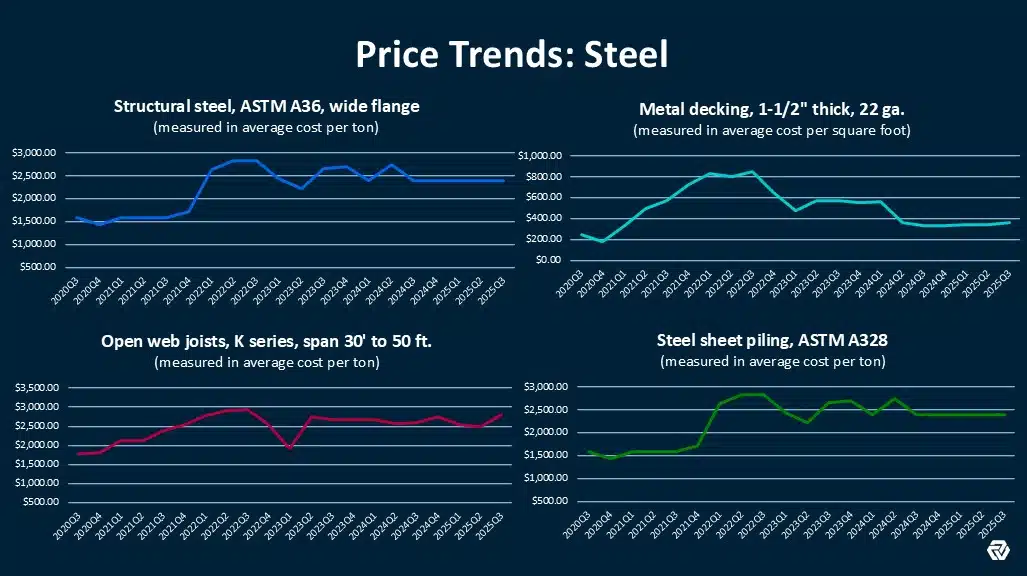
Honyo Prototype does not quote or calculate a standalone “steel cost per tonne” metric for clients. This is a critical distinction as prototyping and low-volume manufacturing involve complex cost drivers beyond raw material weight. Our process focuses on total project cost optimization, with steel material cost being one component dynamically calculated during quoting. Below is the technical workflow and how steel-related costs are integrated:
Upload CAD
The process begins with the client submitting a 3D CAD model (STEP, Parasolid, or native formats). Our system extracts geometric data including net part volume, surface area, and bounding box dimensions. Material specifications (e.g., AISI 304, 1018 CRMS) provided by the client or recommended by Honyo during DFM are recorded. This stage establishes the baseline for material estimation but does not generate a cost figure.
AI Quote Engine
Our proprietary AI engine calculates a preliminary quote using the CAD data. Steel material cost is derived as follows:
Net part weight is computed from volume and material density.
A material utilization factor (typically 1.8x–3.5x net weight) is applied based on nesting efficiency, kerf loss, and minimum sheet size requirements.
Current market rates for the specified steel grade (sourced from real-time vendor feeds) are multiplied by the gross material weight (net weight × utilization factor).
This steel cost is combined with machine time, labor, overhead, and secondary operations to generate a total project quote. No per-tonne steel rate is visible to the client; only the final project cost is presented.
DFM Analysis
Honyo engineers conduct a rigorous Design for Manufacturability review. This stage directly impacts steel cost efficiency:
Redesigning features to minimize sheet waste (e.g., optimizing part orientation, consolidating components).
Recommending alternative alloys with better machinability or lower cost if specifications allow.
Adjusting tolerances to reduce scrap rates during fabrication.
DFM typically reduces gross steel consumption by 15–30% compared to the AI Quote’s initial estimate, directly lowering the material component of the total cost.
Production
Actual steel consumption is tracked using:
Laser/plasma cutting path optimization software to maximize nesting yield.
Real-time scrap monitoring during bending/machining.
Final reconciliation of material usage against the DFM-optimized plan.
The steel cost embedded in production is the actual gross weight consumed (not net part weight) multiplied by the contracted material rate.
Delivery
The final invoice reflects the total project cost, with no line item for “steel per tonne.” Material cost is absorbed into the unit price. Post-delivery, Honyo internally analyzes steel utilization metrics (e.g., net/gross weight ratio) for process improvement, but this data is not client-facing.
Key Clarification on Steel Cost Calculation
| Parameter | How It’s Handled | Client Visibility |
|———————|——————————————-|——————-|
| Raw steel rate | Based on live market data + alloy grade | Not disclosed |
| Net part weight | CAD-derived volume × density | Not quoted |
| Gross material used | Net weight × process-specific utilization | Not itemized |
| Total steel cost | Embedded in project total | Included in final price |
This workflow ensures clients receive a transparent, all-inclusive price reflective of actual manufacturing complexity—not a misleading per-tonne figure that ignores process inefficiencies. Honyo’s value lies in DFM-driven material optimization, which consistently delivers lower total costs than competitors quoting simplistic weight-based rates.
Start Your Project
Request a detailed quote for steel cost per tonne by contacting Susan Leo at [email protected]. As a trusted manufacturing partner with an operational factory in Shenzhen, Honyo Prototype delivers high-quality steel materials with transparent pricing and fast turnaround. Connect with us for competitive rates tailored to your production needs.
🚀 Rapid Prototyping Estimator
Estimate rough cost index based on volume.