
Contents
Manufacturing Insight: Steel Cost Per Lb
Understanding True Steel Cost Per Pound in Precision Manufacturing
When evaluating steel cost per pound for CNC machined components, material expense is only part of the equation. At Honyo Prototype, we optimize the effective cost through precision machining that minimizes waste, reduces secondary operations, and ensures first-time-right quality. Our advanced CNC milling and turning capabilities—paired with rigorous tolerance control—transform raw steel into high-accuracy parts with minimal scrap, directly lowering your cost per functional pound. This efficiency is critical for prototyping and low-volume production where material yield directly impacts project economics.
Leverage our Online Instant Quote platform to immediately calculate steel part costs based on your specific geometry, alloy, and volume. Input your CAD file, and within seconds, receive a transparent breakdown of material utilization, machining time, and total cost—all before committing to production. This real-time visibility empowers design-for-manufacturability decisions that further drive down your per-pound expenditure.
| Key Factor | Impact on Effective Steel Cost Per Pound |
|---|---|
| Material Utilization | Directly reduces waste-related costs |
| Machining Precision | Eliminates rework/scrap expenses |
| Secondary Operations | Lowers labor and handling overhead |
| Volume Efficiency | Optimizes setup and run-time allocation |
Partner with Honyo to convert raw steel pricing into predictable, value-driven outcomes. Start your quote today and see how precision engineering reshapes cost reality.
Technical Capabilities
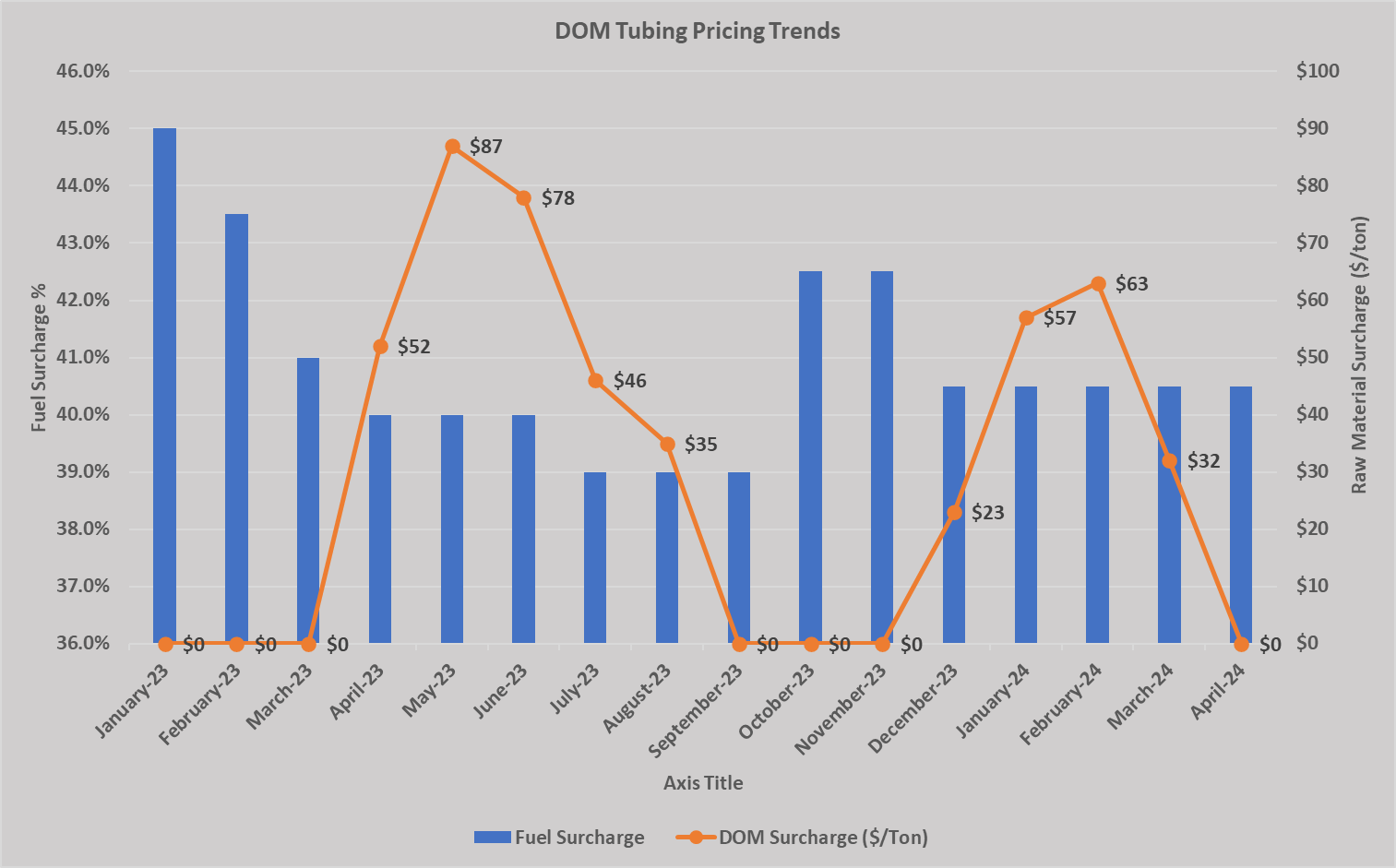
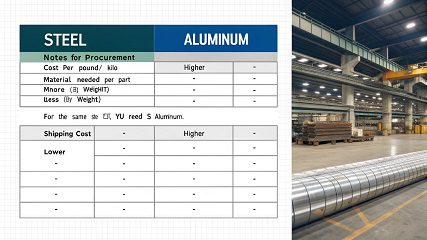
Steel cost per pound is a critical factor in determining overall manufacturing expenses, particularly in precision machining processes such as 3-axis, 4-axis, and 5-axis milling, as well as CNC turning. However, it is important to clarify that “steel cost per lb” refers specifically to the raw material pricing for steel alloys, not a generalized rate across all materials. Below is a comparison of typical raw material costs per pound for commonly used engineering materials in high-precision machining applications, including aluminum, steel, ABS, and nylon. These values reflect approximate market rates for standard grades in bar or plate form as of 2024 and may vary based on alloy type, supplier, quantity, and grade (e.g., aerospace vs. commercial).
| Material | Typical Grade Example | Cost per Pound (USD) | Suitability for 3/4/5-Axis Milling | Suitability for CNC Turning | Common Use in Tight Tolerance Applications |
|---|---|---|---|---|---|
| Aluminum | 6061-T6, 7075-T6 | $2.50 – $4.00 | Excellent – easy to machine, high material removal rates | Excellent – low cutting forces, good surface finish | Widely used for aerospace, prototypes, and precision components |
| Steel | 4140, 1018, A2 Tool Steel | $0.80 – $2.50 | Good – harder than aluminum, requires robust tooling | Good – requires proper speeds/feeds, generates heat | Common in high-strength, wear-resistant tight-tolerance parts |
| ABS | ABS M200, Standard Grade | $1.50 – $2.20 | Very Good – soft, excellent for rapid prototyping | Good – limited to low-load applications | Frequent in non-structural precision prototypes and jigs |
| Nylon | Nylon 6, Nylon 6/6 | $3.00 – $5.00 | Moderate – prone to melting, requires sharp tools and cooling | Moderate – low stiffness, can deflect under cutting forces | Used in wear-resistant, non-metallic precision components |
Notes on Machining and Cost Considerations:
For 3-axis, 4-axis, and 5-axis milling operations, material density, machinability rating, and thermal stability directly influence cycle time, tool wear, and achievable tolerances. Aluminum is favored in high-speed milling due to its low density and excellent thermal conductivity, enabling tight tolerances (±0.0005″ or better with proper fixturing). Steel, while more expensive per pound and slower to machine, provides superior dimensional stability and strength for demanding applications requiring tight tolerances over time.
CNC turning operations benefit from materials with good chip formation and thermal dissipation. Steel requires carbide tooling and slower spindle speeds compared to aluminum. ABS and nylon are often used for non-metallic functional prototypes but require careful handling to maintain tight tolerances due to material creep and moisture absorption.
Material selection must balance raw cost per pound with machinability, part function, and tolerance requirements. While steel may have a moderate raw material cost, its higher density and machining time can increase total part cost significantly compared to aluminum or engineering plastics.
From CAD to Part: The Process
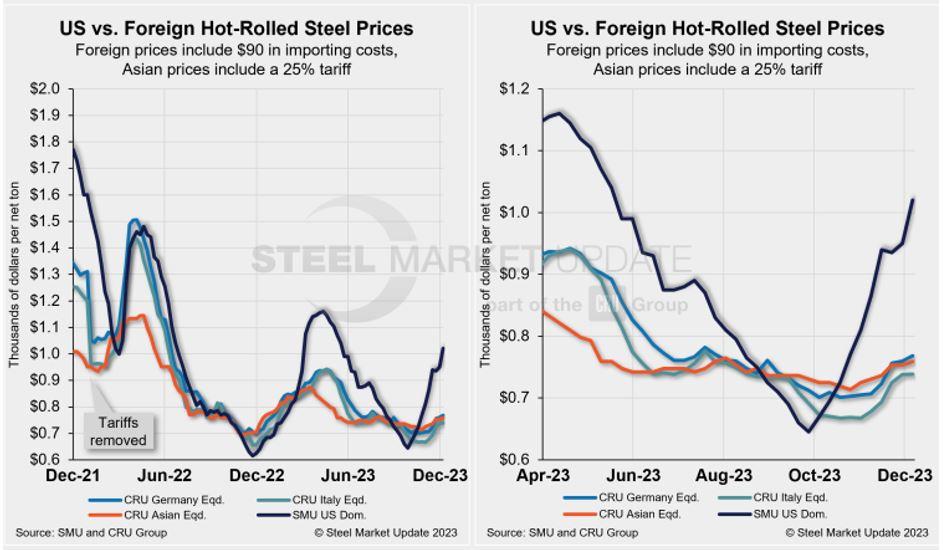
Honyo Prototype’s steel cost per pound metric represents the material cost allocation per unit weight for steel components, derived exclusively from raw material expenses. This figure excludes machining, labor, overhead, or secondary operations. It is calculated and validated through a structured five-stage workflow to ensure accuracy and transparency for clients.
Upload CAD
The process begins when the client submits a native or neutral CAD file. Our system extracts geometric data including volume, bounding box dimensions, and material specification (e.g., ASTM A36, 304 stainless). Material density tables convert volume to theoretical net weight. Critical inputs here are client-designated steel grade and as-designed geometry.
AI Quote Generation
Our proprietary AI engine processes the CAD-derived net weight alongside real-time global steel market pricing (sourced from Platts, Argus) and supplier-specific lot pricing. The algorithm factors in:
Base commodity rate per pound for the specified steel grade
Minimum order quantity adjustments
Current scrap surcharge indices
Regional freight differentials to our facility
This generates a preliminary steel cost per pound, which is presented as a line-item in the initial quote. Note this is a material-only estimate and excludes fabrication costs.
DFM Analysis
During Design for Manufacturability review, our engineers validate and refine the weight calculation. Key activities include:
Verifying material specification feasibility against manufacturing capabilities
Adjusting net weight for geometric realities (e.g., fillet radii, draft angles not modeled in CAD)
Identifying opportunities to reduce material usage without compromising function
Confirming steel grade alignment with client requirements and cost targets
The DFM stage may revise the theoretical weight by 2-5% based on manufacturable geometry, directly impacting the final steel cost per pound. This step ensures the quoted material cost reflects producible conditions.
Production Execution
Actual material consumption occurs here with rigorous tracking:
Raw steel stock is weighed upon receipt using calibrated industrial scales
Nesting software optimizes part placement on sheet/bar stock to minimize kerf loss
Post-cutting, all remnant material is segregated and weighed for scrap accounting
Net component weight is derived from final machined parts (verified via CMM)
The definitive steel cost per pound is calculated as:
(Total raw steel cost consumed for the order) / (Total net weight of delivered parts)
Scrap recovery value is excluded from this calculation per standard industry practice.
Delivery and Final Reconciliation
Before shipment, we conduct final weight verification:
Batch-level net weights are certified via third-party scale documentation
Material traceability certificates (MTRs) accompany all steel components
Any variance between quoted and actual steel cost per pound (typically <3%) is documented in the packing slip notes
Clients receive an itemized cost breakdown showing the exact steel cost per pound used for their specific batch, based on audited material consumption data.
The following table summarizes critical data flow and ownership per stage:
| Process Stage | Primary Inputs | Key Calculations | Output Impact on Steel Cost/lb |
|---|---|---|---|
| Upload CAD | Native CAD file, Material specification | Theoretical net weight = Volume × Density | Establishes baseline weight; errors propagate if inaccurate |
| AI Quote | CAD-derived weight, Real-time steel pricing indices | Preliminary cost/lb = (Base rate + Scrap surcharge) × Weight | Generates client-facing estimate; subject to DFM adjustment |
| DFM | Manufacturing constraints, Feasibility analysis | Validated net weight (adjusted for producibility) | Finalizes weight basis; may increase or decrease cost/lb by 2-5% |
| Production | Actual raw stock weight, Nesting efficiency data | Actual cost/lb = Total steel cost / Verified net parts weight | Determines contractual cost basis; auditable via material logs |
| Delivery | Certified scale tickets, MTRs | Variance report: (Actual vs. Quoted cost/lb) | Provides transparency; explains minor deviations (<3%) |
This closed-loop methodology ensures steel cost per pound is objectively determined, traceable to physical material usage, and consistently reported without conflating material expenses with processing costs. Clients receive predictable material costing aligned with actual consumption metrics.
Start Your Project

For current steel cost per pound pricing and material sourcing details, contact Susan Leo directly at [email protected]. As a manufacturing partner with a fully operational factory in Shenzhen, Honyo Prototype offers competitive material rates backed by precision fabrication capabilities and fast turnaround times. Reach out to Susan to request a detailed quote or to discuss your project specifications.
🚀 Rapid Prototyping Estimator
Estimate rough cost index based on volume.