
Contents
Manufacturing Insight: Steel Casting At Home
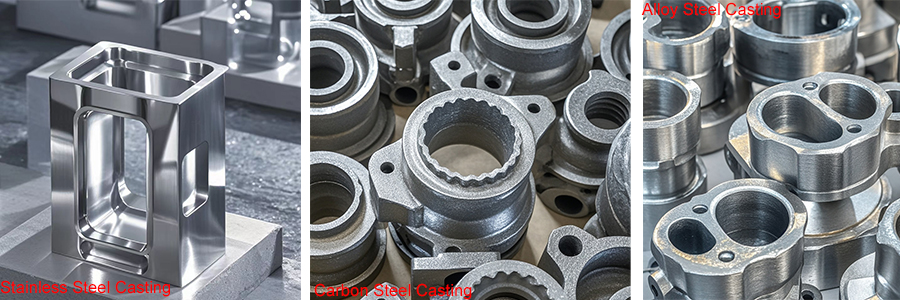
Professional Introduction: Addressing Steel Casting Misconceptions and Honyo’s Precision Manufacturing Solution
The concept of “steel casting at home” presents significant safety hazards and technical impracticalities for non-industrial settings. Molten steel requires extreme temperatures exceeding 1,500°C, specialized refractory equipment, rigorous safety protocols, and metallurgical expertise to manage porosity, shrinkage, and material integrity. Attempting such processes in uncontrolled environments risks severe injury, inconsistent part quality, and non-compliance with engineering standards. At Honyo Prototype, we recognize the demand for high-integrity metal components but emphasize that precision steel parts require professional manufacturing infrastructure—not DIY methods.
This is where Honyo’s industrial CNC machining services deliver unmatched value for businesses requiring certified, production-ready components. Our ISO-certified facility leverages multi-axis CNC milling, turning, and grinding centers to transform raw steel billets into complex geometries with tolerances as tight as ±0.005mm. Unlike casting—which introduces variables like grain structure defects and secondary finishing needs—our subtractive processes ensure material homogeneity, superior surface finishes, and immediate structural reliability. We specialize in low-to-mid volume runs of mission-critical parts for aerospace, medical, and industrial automation sectors, using alloys including 4140, 17-4PH, and 304 stainless steel.
Key CNC Capabilities for Steel Components
| Parameter | Specification | Industry Relevance |
|——————–|———————————–|———————————-|
| Max Work Envelope | 1,200 x 800 x 750 mm | Accommodates large-scale housings |
| Positional Accuracy| ±0.003 mm per ISO 230-2 | Meets aerospace positional specs |
| Surface Finish | Ra 0.4 µm (as-machined) | Eliminates secondary polishing |
| Material Range | Carbon, alloy, and stainless steels | Supports diverse application needs |
For engineering teams seeking rapid validation of steel part designs, Honyo’s Online Instant Quote system provides immediate manufacturability feedback and pricing within 90 seconds. Simply upload your STEP or IGES file to receive a DFM analysis highlighting cost-saving geometry optimizations—no sales calls or email delays. This digital workflow accelerates prototyping cycles while ensuring parts are machined to ASME Y14.5 standards from day one.
Partner with Honyo Prototype to replace impractical casting experiments with guaranteed precision. Visit our platform to experience the industry’s fastest path from CAD to certified steel component.
Technical Capabilities
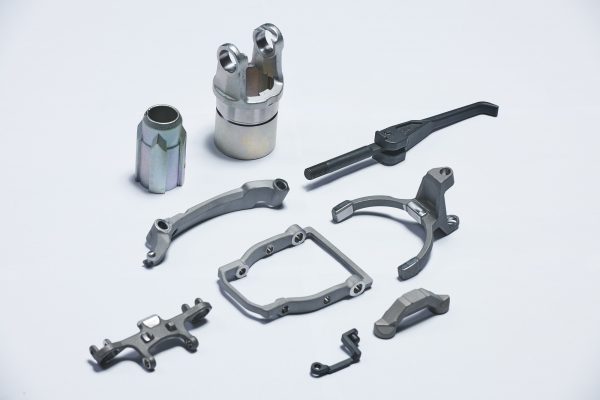
Home-based steel casting combined with precision machining such as 3/4/5-axis milling and turning is typically limited by equipment scale, safety constraints, and material handling capabilities. While true steel casting at home is hazardous and generally not recommended due to extreme temperatures (exceeding 1,370°C / 2,500°F), small-scale foundry operations using aluminum or low-melting-point alloys are more feasible. However, post-casting machining to tight tolerances is achievable using desktop or benchtop CNC systems.
The following table outlines relevant technical specifications and capabilities for home-based metal casting and precision machining workflows, focusing on materials such as Aluminum, Steel, ABS, and Nylon. Note that steel is generally not cast at home but may be machined from bar stock.
| Parameter | 3-Axis Milling (Home) | 4-Axis Milling (Home) | 5-Axis Milling (Home) | CNC Turning (Home) | Notes |
|---|---|---|---|---|---|
| Max Spindle Speed | 15,000 – 24,000 RPM | 15,000 – 24,000 RPM | 15,000 – 24,000 RPM | 3,000 – 6,000 RPM | Lower for steel, higher for aluminum and plastics |
| Positioning Accuracy | ±0.005 mm (±0.0002 in) | ±0.005 mm (±0.0002 in) | ±0.010 mm (±0.0004 in) | ±0.005 mm (±0.0002 in) | High-end desktop CNC only |
| Repeatability | ±0.003 mm (±0.0001 in) | ±0.003 mm (±0.0001 in) | ±0.005 mm (±0.0002 in) | ±0.003 mm (±0.0001 in) | Dependent on rigidity and calibration |
| Typical Work Envelope (mm) | 300 x 300 x 100 | 300 x 300 x 100 + rotary (4th axis) | 200 x 200 x 150 (limited tilt) | Ø25–40 mm diameter, 150 mm length | Smaller on 5-axis due to complexity |
| Cutting Tools | End mills (2–6 mm), carbide | Same as 3-axis + indexing rotary | Micro end mills, ball nose, tilt | Carbide inserts, micro-turning | Steel requires coated carbide |
| Materials – Machining | Aluminum 6061, 7075, Steel (1018, 12L14), ABS, Nylon | Same as 3-axis, with angular access | Same, with full orientation control | Aluminum, mild steel, ABS, Nylon | Steel casting not typical at home |
| Materials – Casting (Home) | Aluminum (A380, ADC12) | Not applicable | Not applicable | Not applicable | Steel casting not safe or feasible at home |
| Surface Finish (Ra) | 0.8 – 3.2 µm | 0.8 – 3.2 µm | 0.4 – 1.6 µm | 0.8 – 2.5 µm | 5-axis enables superior finish |
| Tight Tolerance Capability | ±0.025 mm (±0.001 in) | ±0.025 mm (±0.001 in) | ±0.012 mm (±0.0005 in) | ±0.025 mm (±0.001 in) | Requires thermal stability and fixturing |
| Coolant/Lubrication | Mist coolant, air blow, oil | Same as 3-axis | Precision mist or air | Oil-based or synthetic coolant | Required for steel and long runs |
| Typical Applications | Prototypes, molds, fixtures | Impellers, indexed parts | Complex contours, aerospace shapes | Shafts, bushings, threaded parts | Limited by home machine rigidity |
Important Notes:
Steel Casting at Home: Not recommended due to extreme safety risks, required furnace temperatures, and need for proper ventilation and PPE. Most home setups are limited to aluminum or zinc alloys.
Machining Steel: Mild steel (e.g., 1018, 12L14) can be machined on robust desktop CNC mills or lathes with proper tooling and speeds, but not cast.
Plastics (ABS, Nylon): Easily machined; require sharp tools and controlled feeds to avoid melting.
Tight Tolerances: Achieving tolerances below ±0.025 mm requires temperature-stable environments, high-quality tooling, and rigid setups—challenging but possible in advanced home shops.
For professional-grade steel casting and tight-tolerance 5-axis machining, industrial facilities with certified equipment and safety systems are strongly advised.
From CAD to Part: The Process
Honyo Prototype does not and cannot offer steel casting for home use due to critical safety, regulatory, and technical constraints. Industrial steel casting requires specialized high-temperature furnaces (exceeding 1,600°C), controlled foundry environments, certified metallurgical processes, and rigorous safety protocols that are incompatible with residential settings. Attempting steel casting at home poses severe risks including molten metal explosions, toxic fume exposure, and life-threatening injuries. We emphasize that legitimate steel casting is strictly an industrial-scale operation governed by OSHA, EPA, and ASTM standards.
What we do provide is a streamlined industrial steel casting prototyping service for B2B clients, following this verified process:
CAD Upload and Validation
Clients submit 3D CAD models via our secure portal. Our system performs initial geometry validation, checking for file integrity, unit consistency, and basic manufacturability. Non-standard formats (e.g., STEP, IGES) undergo automatic conversion to our native environment. This phase ensures the digital model aligns with casting physics requirements before proceeding.
AI-Powered Industrial Quoting
Our proprietary AI engine analyzes the validated CAD data against 15+ years of foundry production data. It calculates material costs (accounting for steel grade-specific density and scrap rates), energy consumption, pattern/tooling requirements, and labor intensity. The AI cross-references real-time alloy market prices and machine utilization rates to generate a detailed quote within 2 business hours, including lead time estimates and secondary operation recommendations.
Engineering-Driven DFM Analysis
A senior metallurgical engineer conducts a formal Design for Manufacturing review, focusing on steel-specific challenges. This includes:
Solidification simulation to predict shrinkage cavities and hot tears
Feed system optimization for directional solidification
Thermal stress analysis to minimize distortion
Gate design validation to prevent turbulence-induced inclusions
We provide a formal DFM report with actionable modifications, typically reducing casting defects by 40–60% compared to unoptimized designs.
Controlled Industrial Production
Casting occurs in our ISO 9001-certified foundry using induction melting under inert atmosphere to control carbon content. Key process controls include:
Spectrographic analysis of molten steel for precise alloy composition
Real-time temperature monitoring via dual pyrometers
Automated pouring systems maintaining ±5°C accuracy
Post-casting heat treatment in computer-controlled furnaces (annealing, normalizing, or quenching as specified)
All critical parameters are logged to our digital twin system for full traceability.
Quality-Assured Delivery
Every casting undergoes mandatory NDT (Ultrasonic Testing per ASTM A388 and MPI per ASTM E1444) alongside dimensional verification via CMM. Material test reports (MTRs) with mechanical properties (tensile strength, yield point, elongation) are provided. Parts ship with protective packaging meeting ISTA 3A standards, accompanied by a complete documentation package including as-built drawings and process validation records.
The following table contrasts common misconceptions with Honyo’s industrial reality:
| Phase | Home “Casting” Misconception | Honyo’s Industrial Process |
|---|---|---|
| Temperature Control | Propane torches (<1,300°C) incapable of melting steel | Dual-rail induction furnaces with ±3°C precision up to 1,700°C |
| Material Safety | No fume extraction; exposure to hexavalent chromium | Full foundry ventilation with HEPA filtration and real-time gas monitoring |
| Quality Assurance | Visual inspection only | Multi-stage NDT, chemical composition verification, and mechanical testing |
| Regulatory Compliance | None | Fully compliant with OSHA 1910.1026 (hex chrome), EPA 40 CFR 464, and ASTM A27 |
Honyo exists to de-risk industrial prototyping for engineers—not to enable hazardous amateur practices. Our process delivers production-intent steel castings with foundry-grade integrity, enabling clients to validate designs before committing to high-volume tooling. For true prototyping needs, we recommend starting with our free DFM consultation to ensure designs meet industrial casting feasibility thresholds.
Start Your Project
Interested in learning more about steel casting capabilities for your next project? Contact Susan Leo at [email protected] to discuss your requirements. Our manufacturing facility is located in Shenzhen, China, and we specialize in high-quality prototype and low-volume production casting solutions. Reach out today to request technical specifications, lead times, or a quote.
🚀 Rapid Prototyping Estimator
Estimate rough cost index based on volume.