
Contents
Manufacturing Insight: Stainless Steel Vs Galvanized Steel Strength
Material Selection Critical Path for Precision Components
When engineering mission-critical parts where environmental exposure and structural integrity intersect, the comparative strength characteristics of stainless steel versus galvanized steel become a decisive factor. Stainless steel alloys leverage chromium content for inherent corrosion resistance while maintaining high tensile strength across diverse grades, whereas galvanized steel relies on a zinc coating over carbon steel substrate—the latter’s strength derives entirely from the base metal, with coating integrity directly influencing long-term performance in corrosive environments. Understanding yield strength differentials, fatigue limits, and how machining processes interact with each material’s microstructure is non-negotiable for applications ranging from marine hardware to industrial automation.
At Honyo Prototype, our CNC machining expertise transforms this material science into precision-machined reality. We optimize toolpaths, feeds, and speeds specifically for stainless steel’s work-hardening tendencies or galvanized steel’s coating adhesion challenges, ensuring dimensional accuracy and surface finish meet AS9100 and ISO 2768 standards. Our engineering team collaborates early in your design phase to recommend the optimal material grade and machining strategy, eliminating costly revisions.
Accelerate your prototyping or low-volume production with Honyo’s Online Instant Quote platform. Input your CAD file and specifications to receive a detailed manufacturability analysis and competitive pricing within hours—not days—backed by 15+ years of metal fabrication experience. Start your project with confidence at honyoprototype.com/quote.
Technical Capabilities
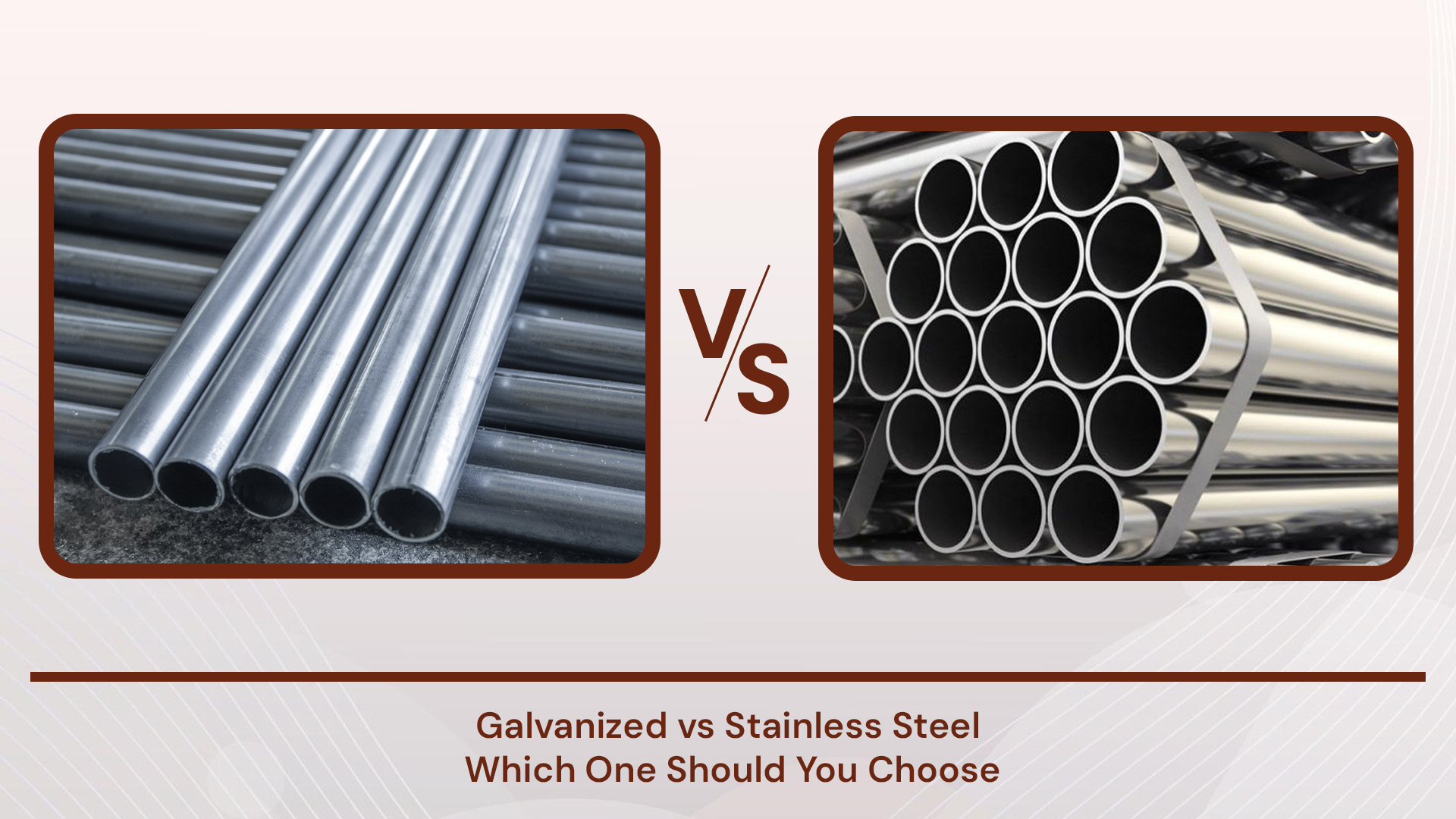
When evaluating stainless steel versus galvanized steel in the context of precision machining processes such as 3-axis, 4-axis, and 5-axis milling and turning—particularly for tight tolerance applications—several mechanical and material properties must be considered. These include tensile strength, hardness, corrosion resistance, machinability, and dimensional stability. Both materials are commonly used in industrial and structural applications, but their behavior under high-precision machining differs significantly.
Stainless steel, particularly grades like 304 and 17-4 PH, offers high tensile strength (700–1200 MPa), excellent corrosion resistance, and good performance under tight tolerance requirements due to its dimensional stability. However, it is more challenging to machine due to work hardening and lower thermal conductivity, requiring rigid setups and optimized toolpaths in multi-axis milling.
Galvanized steel, typically low-carbon steel (e.g., ASTM A36) with a zinc coating, has moderate tensile strength (360–500 MPa) and is easier to machine but lacks the inherent corrosion resistance of stainless steel—relying instead on the zinc layer. The coating can interfere with precision machining and may require post-process re-coating if machined after galvanization. It is less suitable for tight tolerance parts exposed to harsh environments due to potential coating inconsistencies and base material susceptibility to rust.
For high-precision 4-axis and 5-axis milling and turning, stainless steel is often preferred when strength, durability, and corrosion resistance are critical. Galvanized steel is typically used in less precision-dependent structural applications.
Below is a comparative table including additional common materials used in precision machining: aluminum (e.g., 6061-T6), ABS, and nylon.
| Material | Tensile Strength (MPa) | Hardness (Brinell) | Machinability Rating (%) | Corrosion Resistance | Typical Use in 3/4/5-Axis Milling & Turning | Suitability for Tight Tolerances |
|---|---|---|---|---|---|---|
| Stainless Steel (304) | 505–860 | 150–200 | 45 | Excellent | High-precision components, medical, aerospace | High – excellent dimensional stability with proper fixturing and tooling |
| Galvanized Steel (A36) | 360–500 | 120–140 | 70 | Moderate (coating-dependent) | Structural brackets, enclosures – limited post-galvanization machining | Moderate – coating removal affects consistency; risk of warping |
| Aluminum (6061-T6) | 290–330 | 95 | 90 | Good (forms oxide layer) | Aerospace, automotive, rapid prototyping | High – low thermal expansion, excellent for complex 5-axis contours |
| ABS | 30–50 | 80–100 (Shore D) | 100 | Good (non-corroding) | Jigs, fixtures, low-stress prototypes | High – stable under machining, minimal burring |
| Nylon (PA6/PA66) | 60–80 | 75–85 (Shore D) | 85 | Excellent | Insulators, wear components, non-metallic gears | Moderate – prone to slight creep; requires sharp tools and low feed rates |
Notes on Machining for Tight Tolerances:
Stainless steel demands carbide tooling, high rigidity, and controlled feeds/speeds to manage work hardening.
Galvanized steel should ideally be machined prior to galvanization; post-galvanized machining risks exposing the base steel and may require secondary finishing.
Aluminum is highly favorable in multi-axis operations due to low cutting forces and excellent surface finish capability.
ABS and nylon are non-metallic alternatives suitable for functional prototypes and non-structural precision parts, offering ease of machining but lower strength.
For mission-critical tight tolerance components in corrosive environments, stainless steel remains the preferred metallic choice. Aluminum offers the best balance of strength, weight, and machinability for complex geometries. Galvanized steel is generally not recommended for high-precision post-coating machining operations.
From CAD to Part: The Process
Honyo Prototype’s engineering workflow for material selection between stainless steel and galvanized steel integrates technical validation at critical stages, though strength comparison is not a standalone step in the quoted sequence. Material properties are evaluated during Design for Manufacturability (DFM) based on customer specifications and application requirements. Below is the precise process flow with technical context:
Upload CAD
Customers submit CAD files specifying material requirements. If material is undefined or ambiguous (e.g., “steel” without grade), our system flags it for DFM review. Stainless steel (e.g., 304, 316) and galvanized steel (typically ASTM A653 G60/G90) have fundamentally different mechanical properties; initial CAD upload must include material intent for accurate quoting. Omission triggers DFM intervention.
AI Quote
Our AI engine calculates cost and lead time using material-specific parameters from the CAD metadata. It references internal databases for density, machinability factors, and base material costs but does not compare strength properties. For example:
Galvanized steel inputs use yield strength ranges of 36–50 ksi (depending on grade/thickness)
Stainless steel inputs use 30–200 ksi (varying by alloy and temper)
The quote reflects these inputs but does not evaluate suitability—this occurs later.
DFM (Critical Validation Phase)
This is where strength and application fitness are rigorously assessed. If the customer-specified material lacks technical justification for the part’s function, our engineers:
1. Review load requirements, environmental exposure (e.g., saltwater vs. indoor), and lifecycle expectations from the CAD annotations or RFQ.
2. Cross-reference ASTM/ISO standards: Galvanized steel (A123, A653) offers lower corrosion resistance but higher ductility for structural frames, while stainless (A240, A276) provides superior strength-to-corrosion performance for marine/chemical applications.
3. Issue a formal DFM report recommending revisions if strength mismatch is identified (e.g., galvanized steel substituted for stainless in high-salinity environments where pitting corrosion would compromise yield strength over time).
Material strength comparison data used in DFM decisions:
| Property | Galvanized Steel (ASTM A653) | Stainless Steel (304) | Application Implication |
|---|---|---|---|
| Typical Yield Strength | 36–50 ksi | 30–40 ksi (annealed) | Galvanized better for high-static loads |
| Tensile Strength | 58–79 ksi | 75–95 ksi | Stainless superior for dynamic/tensile loads |
| Corrosion Resistance | Moderate (zinc layer) | High (Cr/Ni alloy) | Stainless maintains strength in harsh env. |
| Cost Factor (vs. carbon steel) | +15–25% | +100–200% | Galvanized preferred for budget structures |
Production
Material certification is enforced pre-production. Mill test reports verifying actual yield/tensile strength (e.g., ASTM A370 tensile tests) are required for both materials. Stainless batches undergo intergranular corrosion testing (ASTM A262) if specified; galvanized parts are checked for zinc coating thickness (ASTM B499). No production begins without DFM-approved material validation.
Delivery
Final inspection includes material traceability documentation. Certificates of Conformance (CoC) detail measured mechanical properties against the selected standard. For critical applications, we provide supplementary test data (e.g., hardness verification per ASTM E18) to confirm strength integrity aligns with the DFM-approved material choice.
This process ensures material strength decisions are engineering-driven, not automated. Honyo’s value lies in DFM expertise—converting ambiguous requests into validated solutions where stainless or galvanized steel is technically justified for performance and cost. We do not generate comparative strength analyses post-hoc; validation occurs proactively during DFM to prevent non-conforming production.
Start Your Project
For expert guidance on the strength comparison between stainless steel and galvanized steel for your next project, contact Susan Leo at [email protected].
Honyo Prototype leverages in-house manufacturing capabilities at our Shenzhen facility to provide accurate material analysis, prototyping, and production support tailored to your engineering requirements.
Let us help you select the optimal steel type based on corrosion resistance, mechanical properties, and application environment. Reach out today to discuss your specifications with our team.
🚀 Rapid Prototyping Estimator
Estimate rough cost index based on volume.