
Contents
Manufacturing Insight: Stainless Steel Teflon Coating
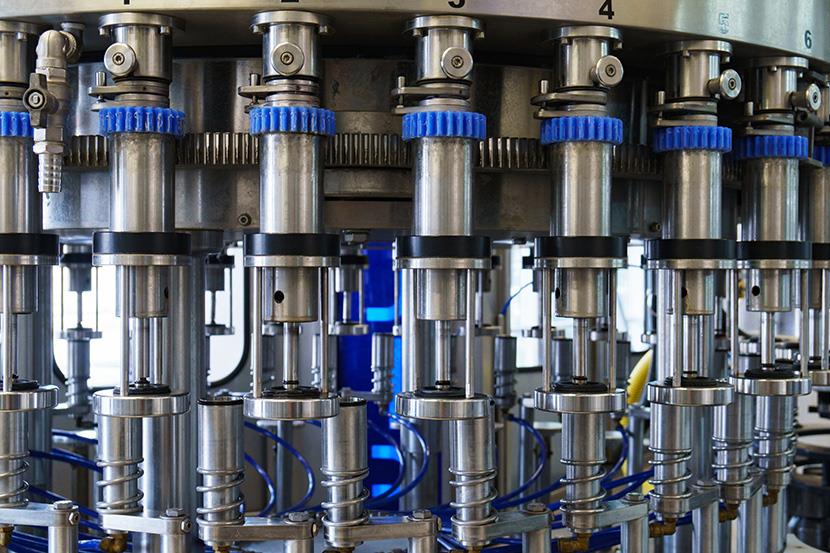
Precision Stainless Steel PTFE Coating Solutions Enabled by Honyo’s Integrated CNC Machining Expertise
For demanding industrial applications requiring non-stick performance, chemical inertness, and reduced friction, stainless steel components with PTFE (Teflon™) coatings deliver critical functional advantages. Achieving optimal coating adhesion and longevity, however, hinges entirely on the precision of the underlying substrate preparation—a process where Honyo Prototype’s advanced CNC machining capabilities provide an indispensable foundation. Our engineering team leverages tight-tolerance milling, turning, and surface finishing operations to create dimensionally stable 304/316 stainless steel substrates with controlled surface roughness profiles. This meticulous preparation ensures uniform coating thickness, eliminates micro-defects that compromise barrier integrity, and maintains critical thermal expansion characteristics during the high-temperature sintering phase.
Unlike fragmented supply chains, Honyo integrates end-to-end manufacturing under one roof: from raw material selection through CNC machining, precision cleaning, and certified PTFE application. This vertical integration guarantees seamless process control, eliminating cross-vendor communication delays and quality variances that often plague outsourced coating projects. Our ISO 9001-certified workflows are validated for aerospace, medical, and semiconductor applications where coating consistency directly impacts product reliability and regulatory compliance.
Engineers seeking to accelerate prototyping or low-volume production can immediately assess feasibility and cost through Honyo’s Online Instant Quote platform. Simply upload CAD files to receive geometry-validated machining estimates within minutes—enabling rapid iteration for coated stainless steel components without traditional procurement bottlenecks. Partner with Honyo to transform functional material requirements into precision-engineered solutions backed by manufacturing rigor.
Technical Capabilities
Technical Specifications for Stainless Steel with Teflon Coating in Precision Machining Applications
The combination of stainless steel substrates with a Teflon (PTFE) coating is employed in high-precision machining environments where low friction, chemical resistance, and dimensional stability are critical. This configuration is particularly beneficial in 3-axis, 4-axis, and 5-axis milling operations, as well as CNC turning, especially when tight tolerances (±0.005 mm to ±0.025 mm) are required across complex geometries. The coating enhances tool life, reduces galling, and improves surface finish on finished components.
The following table outlines key technical specifications and performance characteristics when machining stainless steel with Teflon coating, along with compatibility and considerations for common paired materials such as aluminum, steel, ABS, and nylon.
| Parameter | Specification / Detail |
|---|---|
| Substrate Material | Austenitic Stainless Steel (e.g., 304, 316) – provides structural integrity, corrosion resistance, and dimensional stability under thermal load |
| Coating Type | Polytetrafluoroethylene (PTFE / Teflon™) – applied via spray, dip, or electrostatic process; typical thickness: 15–30 µm |
| Coating Properties | Non-stick surface, low coefficient of friction (0.05–0.10), chemical inertness, operating temperature range: -200°C to +260°C |
| Machining Process Compatibility | Optimized for 3-axis, 4-axis, and 5-axis CNC milling; suitable for precision CNC turning where minimal tool adhesion is critical |
| Tolerance Capability | Achieves tight tolerances from ±0.005 mm (±0.0002″) to ±0.025 mm (±0.001″) depending on geometry and feature complexity |
| Surface Finish (Typical) | Ra 0.4–1.6 µm (as-machined); coating may slightly increase surface uniformity and reduce micro-roughness |
| Tooling Recommendations | Carbide or diamond-coated tools; sharp cutting edges recommended to minimize coating delamination; reduced feed rates during finishing passes |
| Coolant Use | Compatible with water-soluble and mist coolants; avoid chlorinated solvents that may degrade PTFE over time |
| Material Pairing Performance | |
| Aluminum | Reduced built-up edge due to non-stick coating; prevents aluminum adhesion during multi-material setups |
| Steel (Carbon & Alloy) | Minimizes galling and friction during sliding/contact applications; ideal for wear components |
| ABS | Low surface energy prevents molten ABS adhesion in molding or fixturing applications; useful in additive manufacturing support structures |
| Nylon | Excellent release characteristics; prevents hot nylon from sticking during molding, extrusion, or machining fixturing |
| Applications | Precision jigs, molds, guide components, aerospace fixtures, medical device housings, and semiconductor tooling requiring clean, non-reactive surfaces |
Note: The Teflon coating is typically applied post-machining to preserve coating integrity. If coating must be applied before final features, secondary machining should be avoided or minimized to prevent exposing uncoated substrate. Proper surface preparation (e.g., grit blasting, priming) is essential for coating adhesion.
From CAD to Part: The Process
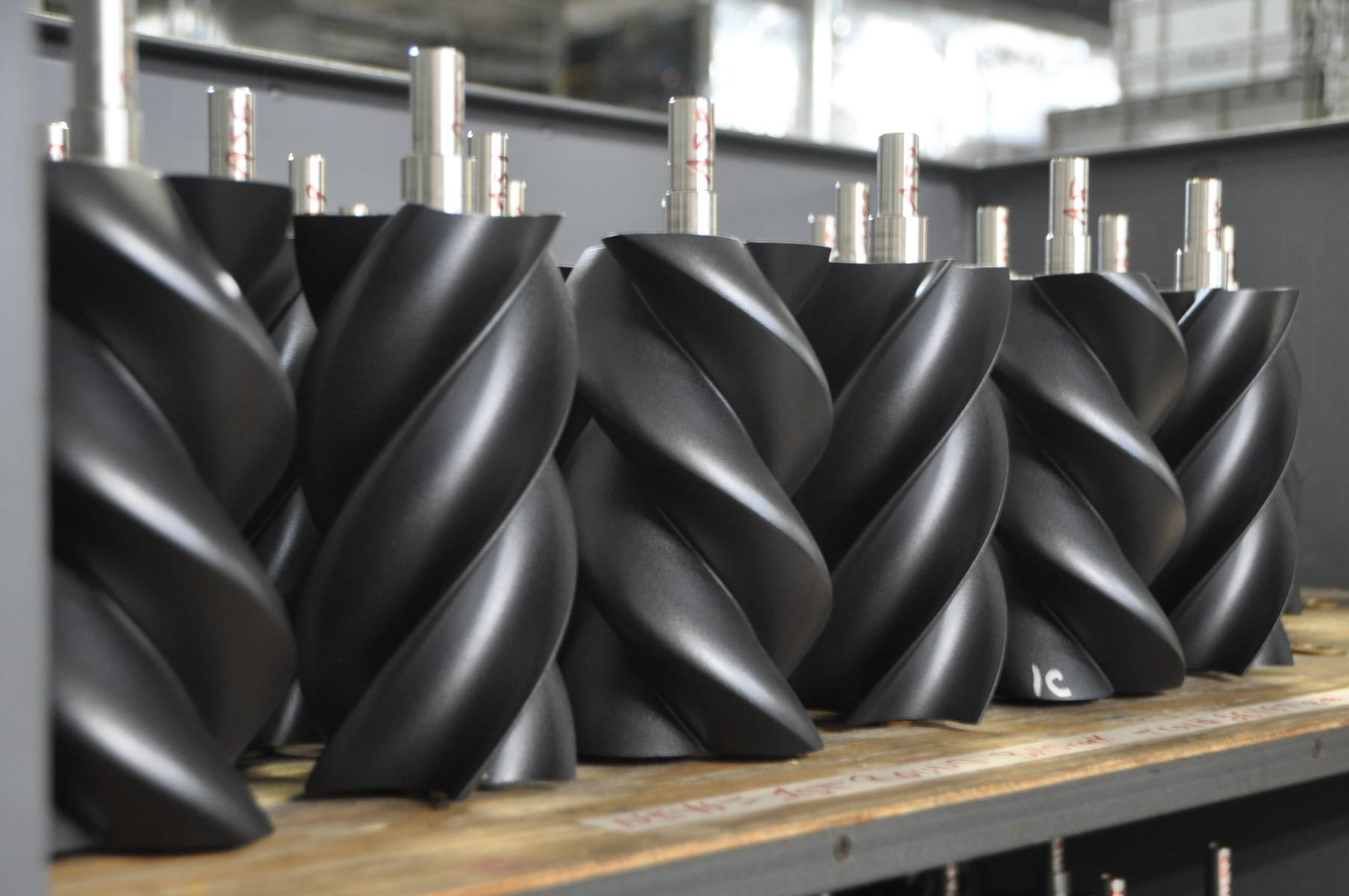
Honyo Prototype Stainless Steel Teflon Coating Process Workflow
Honyo Prototype executes a streamlined, quality-focused process for stainless steel Teflon (PTFE-based) coating services, integrating digital efficiency with precision manufacturing. The workflow ensures optimal adhesion, durability, and compliance with industrial standards such as MIL-STD-810G and ASTM B117. Below is the end-to-end sequence:
Upload CAD
Clients initiate the process by uploading 3D CAD models (STEP, IGES, or native formats) via Honyo’s secure customer portal. The system automatically validates file integrity, geometric complexity, and material specifications. For stainless steel substrates, the portal flags critical parameters including alloy grade (e.g., 304, 316L), surface roughness requirements, and part geometry features that may impact coating uniformity. This step establishes the technical baseline for subsequent stages.
AI-Powered Quoting
Honyo’s proprietary AI engine analyzes the CAD data alongside real-time production variables—including material costs, machine availability, and labor rates—to generate a detailed quote within 2 business hours. The algorithm factors in stainless steel-specific considerations: passive layer removal requirements, part mass for racking, and coating thickness tolerances (typically 15–25 µm for standard applications). The quote includes explicit notes on DFM risks, such as thin-walled sections prone to warpage during thermal curing or blind holes requiring secondary masking.
DFM (Design for Manufacturing) Review
A dedicated Honyo engineering team conducts a rigorous DFM assessment, mandatory for all coating projects. For stainless steel, this phase focuses on:
Surface preparation validation (e.g., grit blasting profile depth for mechanical adhesion)
Thermal expansion compatibility between stainless steel and PTFE during 385°C curing cycles
Identification of non-coatable zones (e.g., sealing surfaces, threaded interfaces)
Optimization of racking points to prevent masking artifacts
The DFM report, delivered within 48 hours, includes actionable revisions—such as chamfer additions to eliminate edge peeling—and finalizes coating specifications (e.g., Xylan 1424 for chemical resistance or Fluon GP-500 for low friction). Client approval is required before proceeding.
Production Execution
Upon DFM sign-off, parts enter a controlled production sequence:
| Process Stage | Key Parameters | Quality Control Checkpoint |
|---|---|---|
| Pre-treatment | Alkaline degreasing, electrolytic polishing, plasma activation (5–7 min @ 100W) | ASTM D2651 adhesion test (cross-hatch) |
| Primer Application | Epoxy-based adhesion promoter (5–8 µm dry film) | Dry film thickness verification (DFT) |
| Teflon Coating | Spray application (2 passes), infrared pre-cure (150°C) | Visual inspection for pinholes/voids |
| Thermal Curing | 385°C for 15 min in inert atmosphere | ASTM D3359 tape test, hardness (Shore D) |
| Post-processing | Precision masking removal, dimensional audit | Final DFT measurement (±2 µm tolerance) |
All stages occur in ISO Class 8 cleanrooms with humidity-controlled curing ovens. Stainless steel parts undergo salt spray testing (96+ hours per ASTM B117) for critical applications.
Delivery & Documentation
Completed parts undergo final packaging in anti-static, VCI-protected containers to prevent corrosion during transit. Each shipment includes:
Certified test reports (adhesion, DFT, salt spray results)
Material traceability documentation (PTFE batch numbers, stainless steel mill certs)
Dimensional conformance data against original CAD
Standard lead time is 7–10 business days from DFM approval, with expedited options available. Honyo maintains 99.2% on-time delivery for coating projects, supported by real-time logistics tracking via the client portal.
This integrated workflow minimizes rework through upfront digital validation and ensures PTFE coatings deliver maximum performance on stainless steel substrates in demanding industrial environments.
Start Your Project
For high-performance stainless steel with Teflon coating solutions, contact Susan Leo at [email protected].
Honyo Prototype specializes in precision manufacturing with advanced coating technologies, ensuring durability, corrosion resistance, and low friction for demanding industrial applications.
Our production facility is located in Shenzhen, enabling rapid prototyping, scalable production, and strict quality control for global clients.
Reach out today to discuss your project requirements and receive expert technical support.
🚀 Rapid Prototyping Estimator
Estimate rough cost index based on volume.