
Contents
Manufacturing Insight: Stainless Steel Pulleys Marine
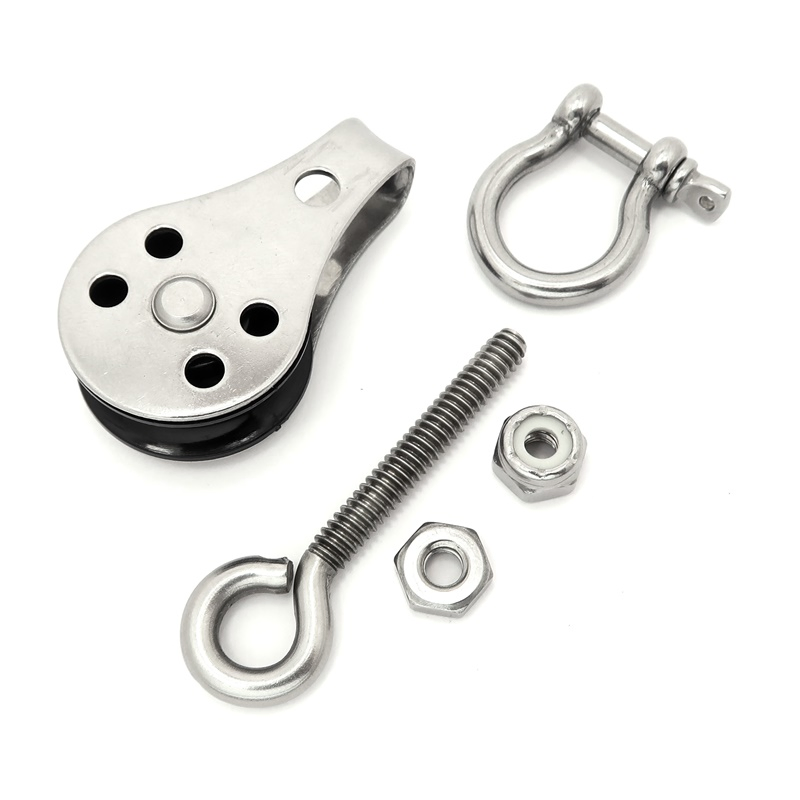
Precision Stainless Steel Pulleys for Demanding Marine Environments
Marine applications demand components that withstand relentless exposure to saltwater, humidity, and mechanical stress without compromise. Standard pulleys often succumb to corrosion pitting, galling, or dimensional drift, leading to critical system failures and costly downtime. At Honyo Prototype, we engineer stainless steel pulleys specifically for marine use, leveraging advanced CNC machining to deliver uncompromising performance where reliability is non-negotiable.
Our expertise centers on precision-machined pulleys using marine-grade 316/L stainless steel, renowned for its superior chloride resistance and structural integrity. Utilizing multi-axis CNC milling and turning centers, we achieve tight tolerances down to ±0.0002 inches, ensuring smooth operation, minimal wear, and perfect alignment in winch systems, rigging, and deck machinery. Every component undergoes rigorous in-process inspection and final validation against ASTM A276 and ASME B16.5 standards, guaranteeing resistance to crevice corrosion and stress cracking even in the harshest offshore conditions.
Honyo Prototype’s end-to-end manufacturing control—from material certification to final surface finishing—eliminates supply chain vulnerabilities. We optimize geometries for load distribution and fatigue life, while proprietary passivation processes enhance the passive oxide layer critical for long-term saltwater exposure. This precision engineering translates directly to extended service life and reduced maintenance cycles for marine OEMs and vessel operators.
Accelerate your prototyping or production timeline with our Online Instant Quote platform. Upload CAD files for stainless steel pulleys, receive detailed manufacturability feedback, and get a formal quotation within hours—not days. Experience how Honyo’s CNC machining excellence and responsive quoting system solve the unique challenges of marine hardware, ensuring your systems perform relentlessly, mile after mile.
Technical Capabilities
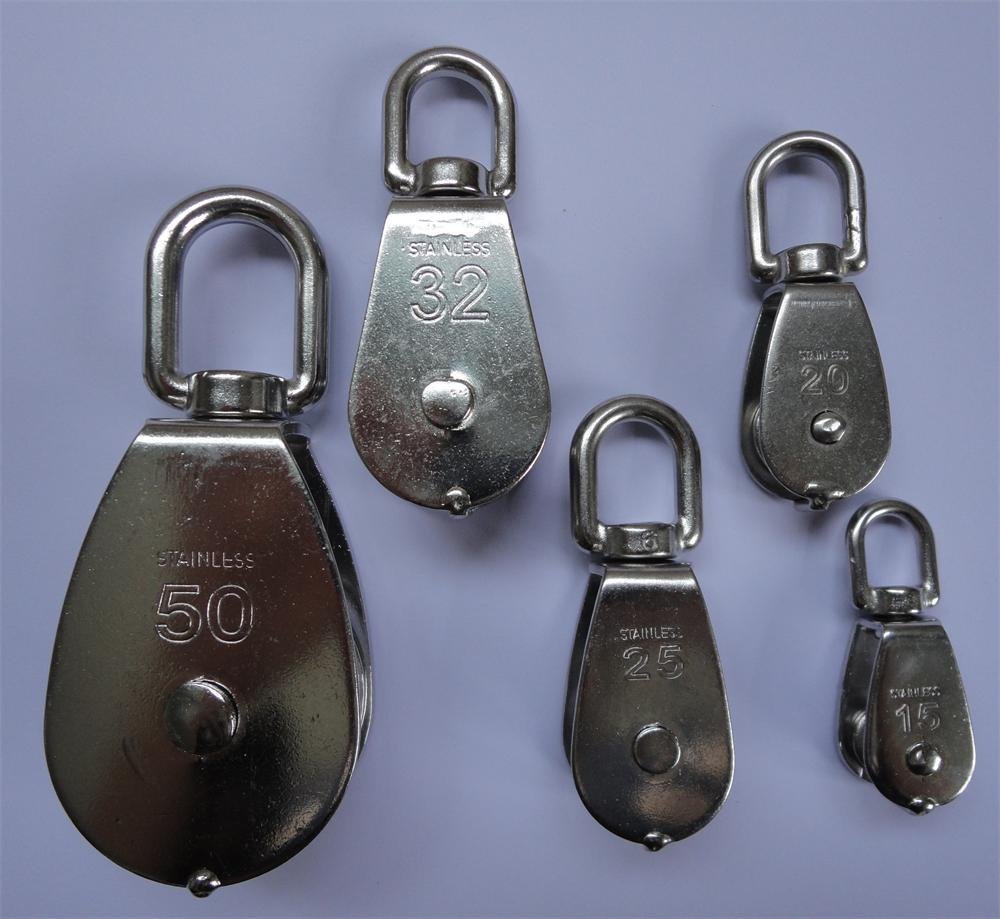
Stainless steel pulleys for marine applications require high corrosion resistance, precise geometry, and durability under dynamic loads. These components are typically manufactured using advanced 3-, 4-, and 5-axis CNC milling and turning processes to achieve tight tolerances and complex geometries necessary for optimal performance in harsh marine environments. While the pulley body is commonly made from stainless steel (e.g., 316 or 316L), other materials such as aluminum, steel, ABS, and nylon may be used for specific subcomponents, prototypes, or lightweight variants.
The following table outlines the technical specifications and manufacturing considerations for stainless steel marine pulleys, with emphasis on CNC machining capabilities and material options:
| Parameter | Specification / Detail |
|---|---|
| Primary Material | Stainless Steel (316/316L) – marine-grade, high corrosion resistance, suitable for saltwater environments |
| Alternative Materials | Aluminum (6061-T6, 7075-T6) – lightweight, anodized for corrosion protection; Mild Steel (for non-marine prototypes); ABS – for rapid prototyping, non-load-bearing parts; Nylon (PA6, PA66) – low friction, chemical resistant, used for bushings or insulating sleeves |
| Machining Process | 3-Axis Milling – for basic pulley flanges and mounting features; 4-Axis Milling – for indexed features and multi-sided machining; 5-Axis Milling – for complex contouring, undercuts, and high-precision groove profiling; CNC Turning – for symmetrical pulley hubs, shaft bores, and concentric features |
| Tight Tolerance Capability | ±0.005 mm (±0.0002″) for critical diameters and bore fits; ±0.01 mm (±0.0004″) for general features; Geometric tolerances (concentricity, runout) held to <0.02 mm (0.0008″) |
| Surface Finish | Ra 0.8–3.2 µm (32–125 µin); optional passivation for stainless steel; optional polishing for enhanced corrosion resistance |
| Typical Features Machined | Precision bore with H7 fit, concentric flanges, V-groove or timing belt profiles, counterbores, tapped holes, keyways, set screw holes |
| Quality Standards | ISO 2768-m for general tolerances; ISO 1302 for surface texture; ASME Y14.5 for geometric dimensioning and tolerancing (GD&T) |
| Inspection Methods | CMM (Coordinate Measuring Machine), optical comparators, bore gauges, surface roughness testers, runout checks on precision spindles |
| Post-Processing | Deburring (manual or automated), passivation (for stainless steel), ultrasonic cleaning, optional coatings (e.g., PTFE for nylon inserts) |
These specifications ensure that stainless steel marine pulleys meet stringent performance demands, including resistance to saltwater corrosion, dimensional stability, and reliable operation under load. Multi-axis machining enables the production of complex, high-precision parts with minimal setup changes, enhancing repeatability and accuracy. Material selection beyond stainless steel supports prototyping, weight reduction, or functional integration of non-metallic components in hybrid pulley assemblies.
From CAD to Part: The Process
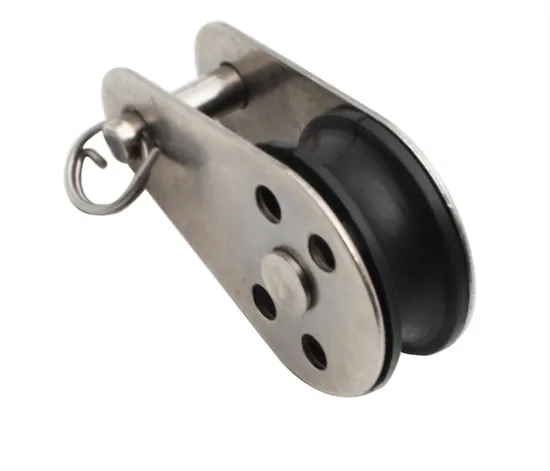
Honyo Prototype Stainless Steel Pulleys Marine Manufacturing Process
Our streamlined workflow for stainless steel marine pulleys ensures precision, corrosion resistance, and adherence to marine industry standards from initial design to delivery. The process begins with secure CAD file submission via our client portal, where we validate critical marine-specific parameters including material grade (e.g., ASTM A276 316/L for saltwater environments), surface finish requirements (typically Ra ≤ 0.8 µm), and geometric tolerances aligned with ISO 2768-mK. Automated validation checks confirm watertight geometry and minimum wall thicknesses to prevent stress corrosion cracking in marine applications.
The AI-powered quoting system rapidly generates cost and lead time estimates by analyzing material utilization, machining complexity, and marine-grade finishing requirements. Unlike generic quoting tools, our AI incorporates real-time variables specific to marine components:
| Cost Driver | Marine-Specific Impact |
|---|---|
| Material Grade | 316/L premium over 304 (25-30% cost increase) |
| Surface Finish | Electropolishing adds 15-20% vs. standard passivation |
| Tolerance Tightness | IT7 tolerances increase machining time by 35% |
| Certification Requirements | ASTM F899 certification adds $120-$200 per lot |
All AI-generated quotes undergo engineering review by our marine specialists to verify technical feasibility and compliance with standards like ISO 9001 and NORSOK M-601. This dual-layer validation ensures no marine-specific requirements are overlooked.
During Design for Manufacturability (DFM) analysis, our engineers conduct a rigorous assessment focused on marine durability. We identify risks such as crevice corrosion in bolt holes, inadequate drainage in groove geometry, and insufficient chamfering that could trap saltwater. Typical recommendations include modifying internal radii to ≥0.5mm to reduce stress points, specifying 316/L over 304 for submerged components, and adding through-holes to eliminate water traps. Clients receive an interactive DFM report with annotated CAD overlays within 72 hours, detailing actionable improvements to extend service life in saline environments.
Production leverages our dedicated marine-grade stainless steel cell featuring CNC Swiss lathes with coolant filtration systems to prevent chloride contamination. All components undergo:
Multi-stage passivation per ASTM A967 Method B
Salt spray testing (ASTM B117) for 500+ hours
Dimensional verification using CMM with NIST-traceable calibration
Final inspection with borescope for internal surface integrity
Marine pulleys are packaged in VCI paper with humidity indicators and shipped in custom foam-lined crates. Each delivery includes full material traceability documentation (mill test reports), salt spray test certificates, and dimensional inspection reports meeting ISO 17025 requirements. Standard lead time from CAD approval to delivery is 12-15 business days, with expedited 7-day service available for critical marine projects. This integrated approach ensures pulleys withstand harsh marine conditions while meeting exacting performance specifications.
Start Your Project
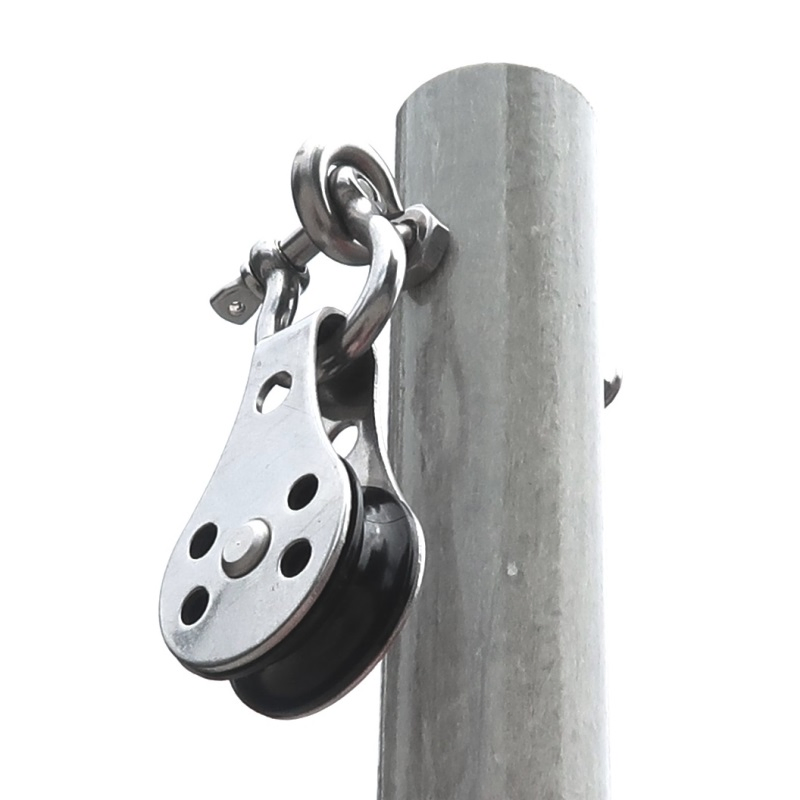
Looking for high-quality stainless steel pulleys designed for marine applications? Honyo Prototype offers durable, corrosion-resistant pulleys engineered to perform in demanding saltwater environments. Manufactured in our Shenzhen factory with precision and strict quality control, our pulleys meet the highest standards for strength and reliability.
For inquiries and custom solutions, contact Susan Leo at [email protected]. Let us support your marine hardware needs with fast turnaround and expert engineering support.
🚀 Rapid Prototyping Estimator
Estimate rough cost index based on volume.