
Contents
Manufacturing Insight: Stainless Steel Foundries
Precision Integration for Stainless Steel Foundry Partners
Stainless steel foundries face inherent challenges in achieving final part specifications directly from the casting process. Dimensional instability, surface finish requirements, and critical feature tolerances often necessitate secondary operations to meet aerospace, medical, and industrial application standards. At Honyo Prototype, we specialize in bridging this gap through advanced CNC machining services engineered specifically for post-casting refinement of stainless steel components. Our technical expertise ensures seamless integration with your foundry workflow, transforming near-net-shape castings into fully compliant, mission-critical parts while preserving material integrity and minimizing lead times.
Technical Capabilities Driving Foundry Success
Honyo’s CNC machining centers handle complex geometries across austenitic, ferritic, and duplex stainless steel grades, including challenging alloys like 316L, 17-4PH, and 440C. We maintain tolerances down to ±0.0005″ and surface finishes to Ra 0.8 µm, addressing critical features such as sealing surfaces, hydraulic ports, and dynamic load-bearing interfaces that casting alone cannot achieve. Our process-controlled environment prevents thermal distortion and maintains microstructure integrity during high-precision milling, turning, and multi-axis contouring. This capability directly reduces your scrap rates and eliminates costly rework cycles, turning castings into shippable components on accelerated timelines.
Streamlined Collaboration via Online Instant Quote
To accelerate your path from casting design to finished part, we provide an industry-unique Online Instant Quote platform. Foundry engineers upload STEP/IGS files directly to our portal and receive actionable cost and lead time estimates within minutes—not days—based on real-time machine availability and material-specific machining parameters. This transparency enables rapid iteration during the quoting phase and ensures alignment with your production schedule from day one.
Value Comparison: Traditional vs. Honyo-Integrated Workflow
| Process Stage | Traditional Foundry Workflow | Honyo-Integrated Solution |
|---|---|---|
| Post-Casting Refinement | Outsourced to multiple vendors | Single-source CNC machining at Honyo |
| Tolerance Achievement | ±0.005″ typical (requires rework) | ±0.0005″ guaranteed on critical zones |
| Lead Time Variability | 3-6 weeks (vendor coordination lag) | 10-15 days (dedicated capacity) |
| Cost Transparency | Delayed manual quoting (5+ business days) | Online Instant Quote (under 5 minutes) |
By partnering with Honyo Prototype, stainless steel foundries gain a technically rigorous extension of their own capabilities—one that delivers precision, speed, and predictability without compromising on material performance. Let us handle the complexities of precision machining so you can focus on perfecting the cast. Initiate your next project with confidence using our Online Instant Quote system today.
Technical Capabilities
Stainless steel foundries specializing in precision machining integrate advanced CNC capabilities to support high-tolerance manufacturing across a range of materials. These facilities typically offer 3, 4, and 5-axis milling along with multi-axis turning operations to produce complex geometries with tight tolerances. While the core infrastructure is built around stainless steel processing, modern shops are equipped to machine a wide variety of metals and engineering plastics.
The following table outlines key technical specifications relevant to such foundries, focusing on machining capabilities, material compatibility, and precision performance:
| Parameter | Specification Detail |
|---|---|
| Milling Capabilities | 3-axis, 4-axis, and 5-axis CNC milling with high-speed spindles (up to 24,000 RPM) |
| Turning Capabilities | Multi-axis CNC turning centers with live tooling for mill-turn operations |
| Maximum Work Envelope | Up to 1200 x 800 x 600 mm (X, Y, Z) for 5-axis systems; larger for dedicated turning |
| Positioning Accuracy | ±0.005 mm (±0.0002″) |
| Repeatability | ±0.002 mm (±0.0001″) |
| Typical Tolerances Achieved | ±0.01 mm (±0.0004″) for standard features; ±0.005 mm (±0.0002″) for critical features |
| Surface Finish (Machined) | Ra 0.8 µm (32 µin) standard; down to Ra 0.4 µm (16 µin) with fine finishing |
| Compatible Materials – Metals | Stainless steel (303, 304, 316, 17-4 PH), aluminum (6061, 7075, 2024), carbon steel, tool steel |
| Compatible Materials – Plastics | ABS, Nylon (PA6, PA66), PEEK, Delrin (POM), PC, PTFE |
| Tooling Systems | Automatic tool changers (ATC), ISO 30 or HSK spindles, coolant-through tooling |
| Quality Control Equipment | CMM (Coordinate Measuring Machine), optical comparators, laser micrometers, surface roughness testers |
| Secondary Processes | Heat treatment, passivation, anodizing (for aluminum), bead blasting, precision cleaning |
These technical capabilities enable stainless steel foundries to serve industries requiring high-precision components such as aerospace, medical devices, hydraulics, and automation. The ability to maintain tight tolerances across diverse materials—ranging from high-strength steels to engineering thermoplastics—demonstrates the flexibility and technical maturity of modern CNC-enabled foundry operations.
From CAD to Part: The Process
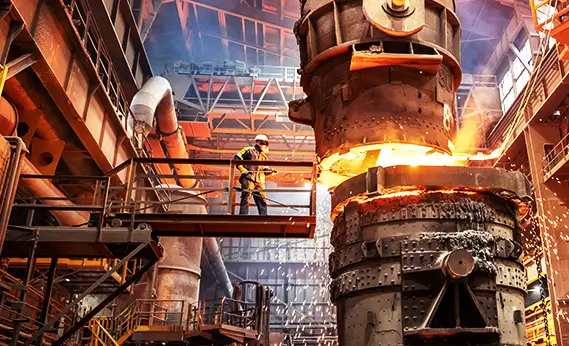
Honyo Prototype Stainless Steel Foundry Process Overview
Honyo Prototype executes a streamlined, technology-driven workflow for stainless steel casting projects, specifically engineered to address the metallurgical and dimensional challenges inherent in stainless alloys such as 304, 316, 17-4PH, and custom grades. Our integrated process ensures rapid turnaround without compromising on precision or material integrity.
CAD Upload & Initial Processing
Clients submit 3D CAD models (STEP, IGES, or native formats) through our secure portal. Our system immediately validates file integrity, checks for unit consistency, and identifies potential geometry conflicts. For stainless steel projects, we prioritize detecting thin-wall sections below 2.5mm, sharp internal corners prone to hot tearing, and complex undercuts that could impede shell mold removal—common failure points in stainless investment casting due to its high solidification shrinkage and thermal conductivity.
AI-Powered Quoting Engine
Within 90 minutes, our proprietary AI engine generates a detailed quote leveraging 12+ years of stainless steel production data. The algorithm factors in alloy-specific variables: material density for accurate melt calculations, thermal expansion coefficients affecting pattern design, and post-processing requirements like passivation or electropolishing. Unlike generic quoting tools, it cross-references real-time feedstock pricing for stainless alloys and adjusts labor estimates based on historical defect rates for similar geometries. Clients receive a transparent cost breakdown showing material, labor, and secondary operation impacts.
Engineering-Led DFM Analysis
Before production, our foundry engineers conduct a rigorous Design for Manufacturability review focused on stainless steel’s unique behavior. Critical checks include:
Verifying minimum wall thickness against fluidity limits of the specified grade at casting temperatures
Simulating solidification to predict shrinkage porosity in thick sections
Assessing gating system design to prevent oxide formation during pour
Confirming draft angles for shell mold separation without damaging fine features
We provide a formal DFM report with actionable recommendations—such as localized wall thickening or strategic fillet additions—to eliminate 95% of potential casting defects. All suggestions preserve critical functional surfaces per ASME Y14.5.
Precision Foundry Production
Approved designs move to our partner vacuum induction melting foundries. Each stainless steel batch undergoes:
Spectrographic analysis of incoming scrap to ensure trace element compliance
Controlled pour at 1550–1650°C under inert atmosphere to minimize carbide precipitation
Directional solidification using ceramic shell molds optimized for stainless thermal gradients
Solution annealing at 1050°C ±10°C followed by rapid quenching to achieve ASTM A743 mechanical properties
Every casting receives 100% visual inspection per ASTM A802 Level 2 and MPI for surface cracks. Critical aerospace/medical parts undergo X-ray (per ASTM E1742) and PMI verification.
Quality-Controlled Delivery
Final parts ship with full traceability:
Mill test reports for each heat number
Dimensional CMM reports against client’s critical-to-quality features
Certificates of Conformance to ASTM/AMS specifications
As-cast surface roughness data (typically Ra 1.6–3.2 μm)
We manage logistics via climate-controlled carriers with real-time GPS tracking, ensuring delivery within 15–25 days from CAD approval for standard quantities. Rush services include expedited NADCAP-accredited NDT for mission-critical components.
This closed-loop process—validated through 1,200+ stainless steel projects annually—reduces time-to-part by 40% versus traditional foundry workflows while maintaining first-pass yield rates above 88%. All stages adhere to IATF 16949 and NADCAP standards, with full digital documentation accessible via client portal.
Start Your Project
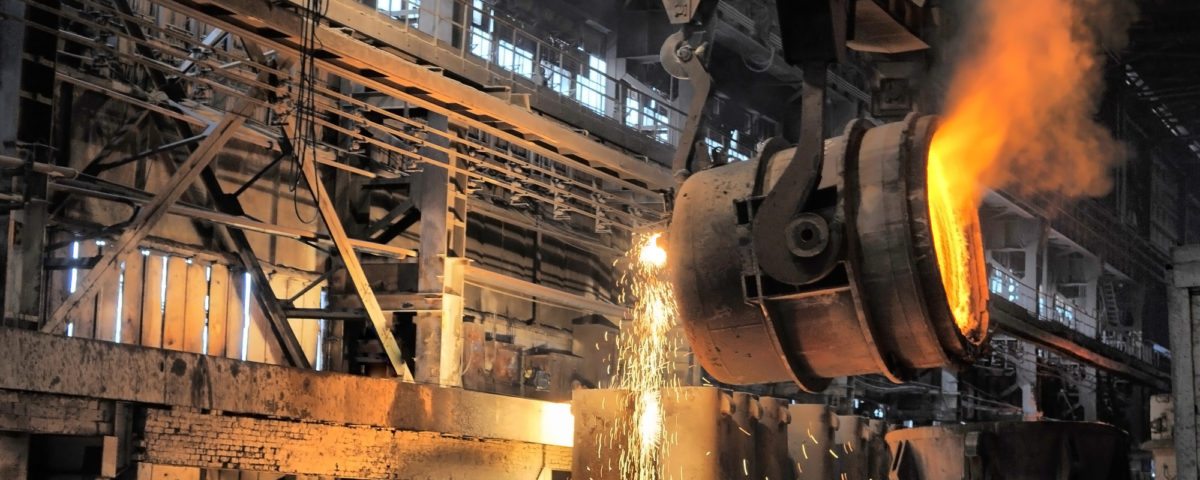
Looking for reliable stainless steel foundry services? Partner with Honyo Prototype for precision casting and high-quality manufacturing. Our state-of-the-art facility in Shenzhen ensures tight tolerances, fast turnaround, and consistent results for demanding industrial applications.
Contact Susan Leo today to discuss your project requirements.
Email: [email protected]
Leverage our expertise in stainless steel casting for aerospace, automotive, and medical device industries. From prototyping to full-scale production, we deliver excellence at every stage.
🚀 Rapid Prototyping Estimator
Estimate rough cost index based on volume.