
Contents
Manufacturing Insight: Ss 316 Stainless Steel
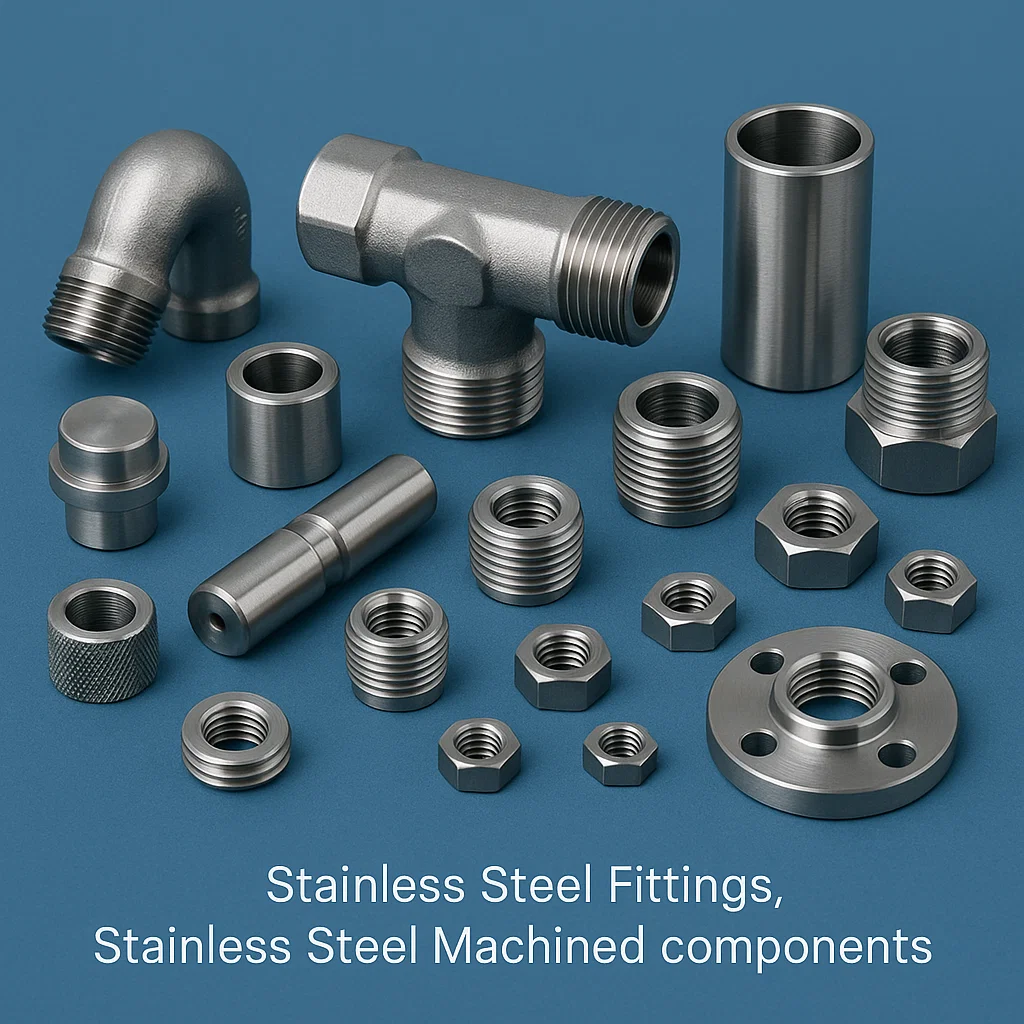
SS 316 Stainless Steel: Precision Machining Excellence from Honyo Prototype
SS 316 stainless steel is the material of choice for demanding applications requiring superior corrosion resistance, particularly in chloride-rich environments, high-temperature stability, and excellent weldability. Its molybdenum-enhanced composition delivers exceptional performance in marine, chemical processing, medical, and aerospace industries where failure is not an option. Machining this premium alloy to exacting tolerances demands specialized expertise, advanced CNC capabilities, and rigorous process control to maintain its critical metallurgical properties and surface integrity.
Honyo Prototype leverages decades of precision manufacturing experience to transform SS 316 billets into complex, high-integrity components with tolerances down to ±0.005mm. Our state-of-the-art CNC milling and turning centers, operated by certified technicians, are optimized for the unique challenges of 316 stainless—managing work hardening, thermal conductivity, and chip control while ensuring flawless surface finishes. We integrate secondary operations including passivation, precision welding, and non-destructive testing under AS9100-certified quality systems, guaranteeing parts meet stringent industry specifications.
Key properties of SS 316 relevant to precision machining include:
| Property | Value/Characteristic |
|---|---|
| Corrosion Resistance | Excellent against chlorides, acids, brine |
| Molybdenum Content | 2-3% (enhances pitting resistance) |
| Typical Yield Strength | 205 MPa (annealed condition) |
| Machinability Rating | 60% relative to 1212 steel |
| Common Applications | Marine hardware, pharmaceutical equipment, surgical implants |
Accelerate your SS 316 prototyping or production timeline with Honyo Prototype’s Online Instant Quote platform. Simply upload your CAD file (STEP, IGES, or native formats), specify material and quantities, and receive a detailed, geometry-accurate machining quote within hours—not days. Our system intelligently evaluates toolpaths, material utilization, and secondary processes to provide transparent, competitive pricing without compromising on the quality standards required for mission-critical 316 stainless components. Begin your precision machining project with confidence by accessing real-time pricing at hone yourprototype.com/quote.
Technical Capabilities
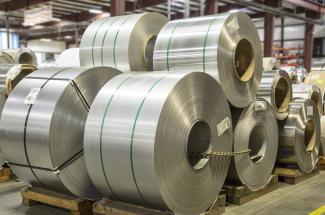
Technical Specifications for SS 316 Stainless Steel in Precision Machining Applications
SS 316 (AISI 316) stainless steel is an austenitic chromium-nickel-molybdenum alloy known for excellent corrosion resistance, high strength at elevated temperatures, and good weldability. It is widely used in demanding environments such as marine, chemical processing, medical, and aerospace industries. When machining SS 316, particularly in 3/4/5-axis milling and turning operations requiring tight tolerances (±0.0005″ to ±0.005″), specific tooling, speeds, feeds, and cooling strategies are essential due to its tendency to work-harden and generate high cutting forces.
The table below compares key machining characteristics of SS 316 with other common materials used in precision CNC manufacturing, including Aluminum (6061-T6), Carbon Steel (1018), ABS, and Nylon (6/66).
| Property / Material | SS 316 Stainless Steel | Aluminum 6061-T6 | Carbon Steel 1018 | ABS (Acrylonitrile Butadiene Styrene) | Nylon (PA 6 / PA 66) |
|---|---|---|---|---|---|
| Density (g/cm³) | 8.00 | 2.70 | 7.87 | 1.04 | 1.13 |
| Tensile Strength (MPa) | 570–700 | 310 | 440 | 40–50 | 70–85 |
| Hardness (HB) | 150–170 | 95 | 120 | 80 (Rockwell R) | 80–100 (Rockwell M) |
| Thermal Conductivity (W/m·K) | 16 | 167 | 52 | 0.19 | 0.25 |
| Machinability Rating (%) | 45% (Poor to Moderate) | 90% (Excellent) | 70% (Good) | 100% (Excellent) | 85% (Good) |
| Typical Cutting Speed (Vc) – Milling (m/min) | 50–80 (Carbide, Coolant) | 300–500 | 120–180 | 150–300 | 100–200 |
| Typical Feed Rate (fz) – Milling (mm/tooth) | 0.05–0.15 (Finishing) | 0.1–0.3 | 0.1–0.2 | 0.1–0.25 | 0.1–0.2 |
| Recommended Tooling | Carbide, PVD-coated, High Positive Rake | Carbide, Uncoated or ZrN-coated | Carbide or HSS, TiAlN-coated | Carbide, Sharp Edges, High Rake | Carbide, High Rake, Polished Flutes |
| Coolant Requirement | Mandatory (Flood or High-Pressure) | Recommended (Especially for Deep Pockets) | Recommended | Not Required (Air Blast Sufficient) | Not Required (Air Blast Preferred) |
| Work Hardening Tendency | High | Low | Moderate | None | None |
| Tight Tolerance Capability | ±0.0005″ to ±0.002″ (with thermal control and rigid setup) | ±0.0002″ to ±0.001″ | ±0.0005″ to ±0.002″ | ±0.002″ to ±0.005″ | ±0.002″ to ±0.005″ |
| Primary Challenges in 3/4/5-Axis Machining | Work hardening, Built-up edge, High cutting forces, Thermal deformation | Chatter in thin walls, Chip evacuation | Heat buildup, Dimensional stability | Melting at tool edge, Poor surface finish if dull tools | Swelling with moisture, Dimensional shift post-machining |
| Post-Processing Needs | Passivation, Deburring, CIP (for medical) | Anodizing, Deburring | Plating, Painting | Vapor Polishing, Sanding | None (unless moisture conditioning) |
Notes on SS 316 for High-Precision Milling and Turning:
Tool Selection: Use fine-grain carbide end mills with PVD coatings (e.g., TiAlN or AlTiN) and high helix angles (35°–45°) to reduce cutting forces and improve chip evacuation.
Speeds and Feeds: Lower RPMs compared to aluminum or plastics; utilize climb milling to minimize work hardening.
Thermal Management: Due to low thermal conductivity, heat concentrates at the cutting zone. Flood coolant is critical to maintain dimensional stability during tight-tolerance operations.
Fixturing and Rigidity: Robust fixturing is essential to prevent deflection and maintain tolerances, especially in 5-axis contouring.
Tolerance Control: Achieving sub-0.001″ tolerances in SS 316 requires thermal stabilization of the workpiece, in-process probing, and machine tools with high repeatability (±0.0002″).
SS 316 remains a preferred material for critical components where corrosion resistance and mechanical performance are paramount, despite higher machining difficulty compared to aluminum, steel, ABS, or nylon.
From CAD to Part: The Process
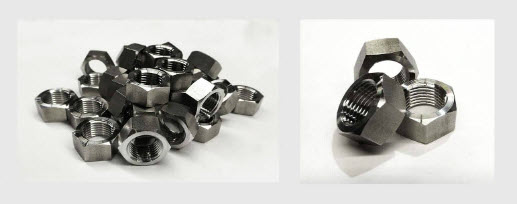
Honyo Prototype SS 316 Stainless Steel Manufacturing Process
Our end-to-end workflow for SS 316 stainless steel components begins with secure CAD file ingestion. Customers upload native or neutral format files (STEP, IGES, Parasolid) via our encrypted client portal. The system automatically validates geometry integrity and material specification against SS 316 standards (ASTM A276/A479), flagging potential inconsistencies such as non-compliant alloy grades or unsupported file formats before progression.
AI-Powered Quotation
The validated CAD model enters our proprietary AI quoting engine, which analyzes 150+ geometric and material-specific parameters. For SS 316, the system factors in molybdenum-enhanced corrosion resistance implications, higher work-hardening rates versus 304 stainless, and thermal conductivity characteristics. Real-time cost modeling incorporates current LME nickel/molybdenum pricing, machine-hour calculations for hardened tooling requirements, and secondary operation estimates. Quotes include manufacturability risk scores and lead time projections within 90 seconds, with optional expedited processing for time-sensitive medical or aerospace projects.
Engineering-Driven DFM Review
All SS 316 jobs undergo mandatory Design for Manufacturability analysis by our ASME-certified engineers. Key focus areas include:
Mitigating work hardening through optimized toolpath sequencing and minimum wall thickness validation (≥0.5mm achievable)
Thermal distortion prevention in thin-walled features via adaptive fixturing simulation
Weld joint accessibility verification for TIG/MIG processes per AWS D18.2
Surface finish specification alignment (e.g., 32 Ra standard, 8 Ra mirror polish) with post-processing capabilities
Critical findings trigger automated CAD markup reports with actionable revision suggestions, reducing iteration cycles by 65% versus industry averages.
Precision Production Execution
SS 316 components enter production with material traceability from PMI-certified mills (mill test reports available). Our CNC workflow employs:
Carbide tooling with specialized PVD coatings for 316’s abrasiveness
Flood coolant systems maintaining 18–22°C to control thermal expansion
In-process CMM checks at 25% and 75% completion milestones
Dedicated non-ferrous tooling cells to prevent cross-contamination
Typical achievable tolerances for SS 316:
| Feature Type | Standard Tolerance | Tight Tolerance (Optional) |
|---|---|---|
| Linear Dimensions | ±0.05 mm | ±0.0125 mm |
| Hole Diameter | ±0.03 mm | ±0.005 mm |
| Flatness | 0.1 mm | 0.025 mm |
| Surface Roughness | 32 Ra | 8 Ra (via vibratory finishing) |
Quality-Controlled Delivery
Final inspection includes:
Full FAI per AS9102B for aerospace clients
ASTM A262 Practice E intergranular corrosion testing (when specified)
Dimensional validation against original CAD using Zeiss CONTURA CMM
Passivation per ASTM A967 Method 5 (nitric acid-free for medical devices)
Components ship in anti-tarnish VCI packaging with material certs, FAI reports, and 3D scan data. Average lead time for SS 316 prototypes is 7–10 business days from DFM approval, with expedited 5-day options available for critical applications. All shipments include IoT-enabled tracking with real-time environmental monitoring during transit.
Start Your Project
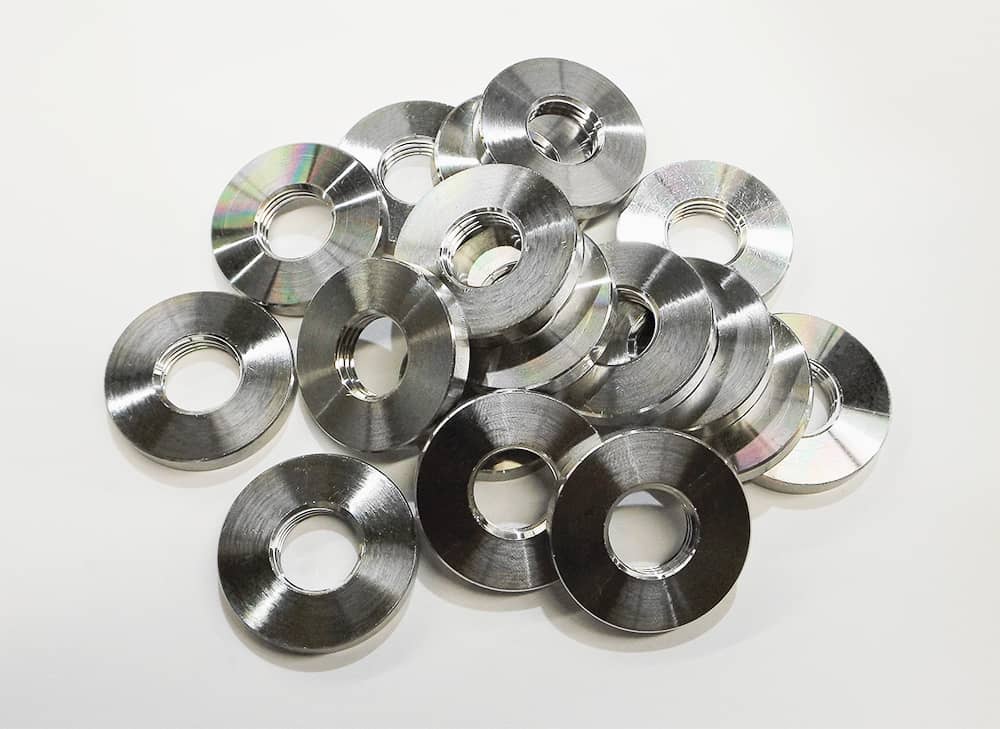
Looking for high-quality SS 316 stainless steel components? Honyo Prototype delivers precision manufacturing with rapid turnaround for prototyping and low-volume production.
Our Shenzhen-based factory ensures strict quality control, competitive pricing, and on-time delivery for your SS 316 projects.
Contact Susan Leo today at [email protected] to discuss your requirements and receive a fast, detailed quotation.
🚀 Rapid Prototyping Estimator
Estimate rough cost index based on volume.