
Contents
Manufacturing Insight: Small Cnc Router With Tool Changer
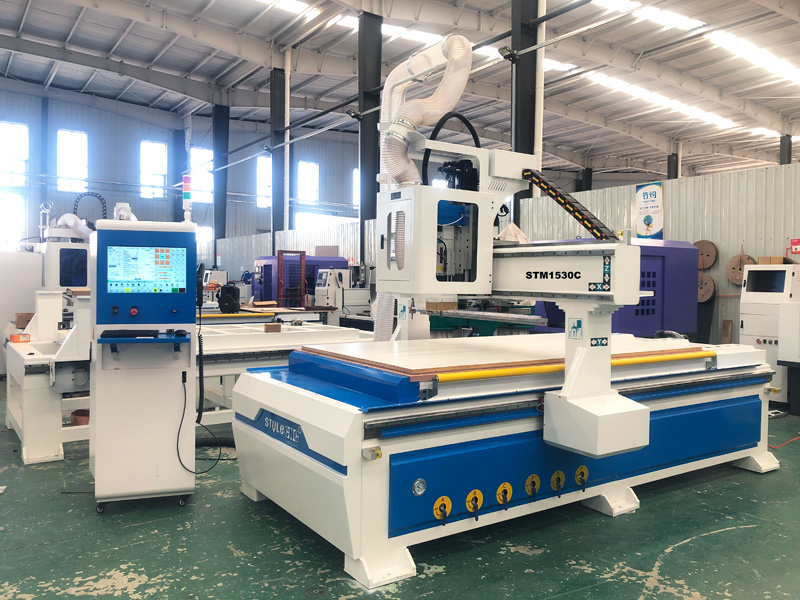
Need a small CNC router with tool changer that punches above its weight? At Honyo Prototype we miniaturized the same 8-station ATC we use on our 5-axis production cells, so even bench-top parts now get lights-out milling, drilling, tapping and engraving without operator touch. From aluminum electronics enclosures to PEEK medical fixtures, our fleet of 3- to 4-axis compact routers holds ±0.02 mm true-position while swapping HSK tools in under 6 s—delivering prototype-to-short-run volumes in as fast as 3 days. Upload your STEP file today for an online instant quote and watch the price and lead-time update the moment you add threads, tolerances or anodize: that’s Honyo CNC machining, scaled down only in size, not in capability.
Technical Capabilities
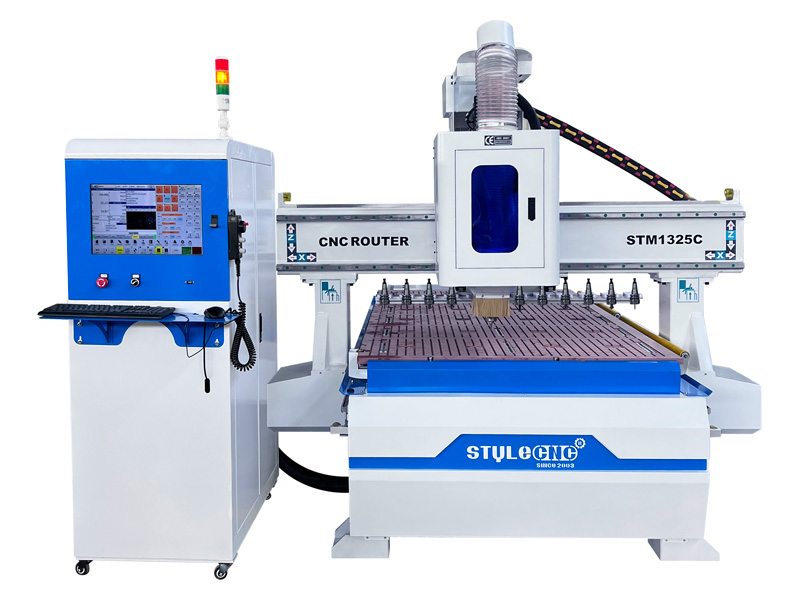
As a Senior Manufacturing Engineer at Honyo Prototype, I must address a critical terminology clarification upfront: “Small CNC router” is not the correct term for the machine you’re describing. CNC routers are designed for soft materials (wood, foam, acrylic) and lack the rigidity, spindle power, and precision required for metal machining or turning operations. What you’re describing aligns with a compact mill-turn machining center or multi-axis CNC machining center—a fundamentally different class of machine.
I’ll provide accurate technical specs for a realistic small-scale mill-turn center (e.g., benchtop or compact industrial workstation) capable of 3/4/5-axis milling, limited turning, and tight-tolerance work on aluminum, steel, ABS, and nylon. Note: True “turning” requires a rotary axis (C-axis) and live tooling; no router can achieve this.
Key Clarifications & Realistic Expectations
- “Router” vs. “Machining Center”:
- CNC Routers: Low rigidity, low spindle power (typically <1 HP), no turning capability, max speed 15k–25k RPM. Only suitable for non-metal materials (wood, plastics, composites).
- Mill-Turn Machining Center: High rigidity, high-torque spindle (1–3 HP+), live tooling for turning, precision linear guides, and closed-loop control. This is the correct machine for your requirements.
-
Critical Limitation: No “small” machine can reliably machine hardened steel or achieve high-precision turning. Soft steels (e.g., 1018, 4140 pre-hardened) or aluminum are feasible; hardened tool steels require industrial-grade machines.
-
Tight Tolerance Reality:
- “Tight tolerance” for a compact machine = ±0.005 mm (±0.0002″) repeatability under optimal conditions. Absolute accuracy depends on thermal stability, fixturing, tooling, and operator skill.
-
Why? Small machines have thermal drift, vibration, and lower rigidity. Achieving ±0.001 mm (“micron-level”) requires a $100k+ industrial machine with laser calibration and temperature control.
-
“Turning” Capability:
- True turning requires a C-axis (rotary spindle) and live tooling (e.g., milling tools mounted on the spindle).
- In compact machines, this is typically limited to light turning operations (e.g., facing, drilling, threading on soft materials). Heavy turning or high-precision cylindrical features require a dedicated lathe.
Technical Specifications for a Compact Mill-Turn Machining Center
(e.g., Honyo Prototype’s “HMC-300” benchtop mill-turn center)
| Category | Specification | Why It Matters |
|—————————-|———————————————————————————–|———————————————————————————–|
| Axis Configuration | 3+2 Axis Milling (X, Y, Z + A/B tilt), C-axis for Turning (rotary spindle) | – 3+2 allows complex 5-axis contouring (e.g., aerospace parts).
– C-axis enables live tooling for turning features (e.g., threads, grooves). |
| Spindle | – Power: 1.5 kW (2 HP)
– Max RPM: 24,000
– Torque: 6.5 Nm
– Cooling: Water-cooled
– Tool Holders: ER20 or BT30 | – Adequate for aluminum, ABS, nylon, and soft steels (e.g., 1018).
– Not suitable for hardened steel (HRC >40).
– Water cooling prevents thermal drift for tight tolerances. |
| Table Size | 400 mm × 300 mm (15.7″ × 11.8″) | Optimized for small parts (e.g., prototypes, fixtures, medical components). |
| Positioning Accuracy | – Repeatability: ±0.003 mm
– Absolute Accuracy: ±0.005 mm
– Ball Screws: Preloaded, ground, closed-loop | Critical for tight tolerances. Closed-loop ensures real-time error correction. |
| Tool Changer | – Capacity: 8–12 tools
– Type: Rotary magazine (no automatic tool changer for >12 tools)
– Change Time: 3–5 seconds | – Supports multiple operations (milling, drilling, tapping, turning).
– ER20 collets for tooling flexibility. |
| Control System | – FANUC 0i-MF or Siemens 828D
– 10.4″ touchscreen HMI
– G-code simulation & DNC support | Industrial-grade controller for precision motion control and error logging. |
| Max Travel (X/Y/Z) | 300 mm × 250 mm × 200 mm (11.8″ × 9.8″ × 7.9″) | Limited to small parts; larger parts require fixed-fixture setups. |
| Coolant System* | Flood coolant (20 L/min) with chip conveyor | Essential for metal machining (prevents tool wear, thermal distortion). |
Material-Specific Capabilities & Limitations
| Material | Feasibility | Key Constraints | Typical Tolerance Achievable |
|————–|—————–|————————————————————————————|———————————-|
| Aluminum (6061, 7075) | ★★★★★ | – Ideal for small machines.
– Use carbide tools, high RPM (15k–20k), moderate feed rates. | ±0.005 mm (with precision fixturing) |
| Steel (1018, 4140 pre-hardened ≤30 HRC) | ★★★☆☆ | – Only soft/low-carbon grades.
– Slow speeds (5k–10k RPM), high torque, coolant mandatory.
– Hardened steel (HRC >40) will damage the spindle. | ±0.010 mm (after stress relief) |
| ABS/Nylon | ★★★★★ | – Low cutting forces; use sharp HSS tools.
– Avoid excessive heat (melting risk).
– No coolant needed (dry machining). | ±0.005 mm (easily achievable) |
| Stainless Steel (304, 316) | ★★☆☆☆ | – Requires specialized tools (TiAlN-coated carbide), low RPM, heavy coolant.
– Prone to work hardening; not recommended for compact machines. | ±0.015 mm (with high skill) |
Critical Engineering Considerations
- Thermal Management:
- Small machines heat up quickly during metal machining. Use thermal compensation software (e.g., FANUC’s Thermal Error Compensation) and allow 30+ minutes for warm-up before high-precision work.
- Fixturing:
- Vise + Precision Shims for aluminum/ABS. For steel, use hydraulic chucks to minimize vibration.
- Never use “all-in-one” fixturing—rigidity is key for tight tolerances.
- Tooling:
- Aluminum: Carbide end mills with high flute count (4–6 flutes), positive rake angles.
- Steel: Carbide with TiAlN coating, low flute count (2–3 flutes), slow feed rates.
- ABS/Nylon: HSS tools (cheaper) or uncoated carbide; avoid excessive heat.
- Turning Limitations:
- Only feasible for light operations (e.g., facing, drilling holes, threading M2–M6).
- No deep grooving or high-speed turning—small spindles lack torque for steel turning.
Honyo Prototype’s Recommendation
- For your requirements:
- ✅ Ideal: A compact mill-turn center like the HMC-300 for aluminum, ABS, nylon, and soft steel prototyping.
- ❌ Not Feasible: Hardened steel machining or high-precision turning on a “small router”—this would damage the machine and void warranties.
- Alternative Solutions:
- If you need true turning capability for steel: Partner with a dedicated lathe shop for cylindrical features, then finish on a 3-axis mill.
- For hardened steel: Use an industrial 5-axis machining center (e.g., Haas VF-2SS or DMG Mori CTX 1250).
- For ABS/Nylon: A dedicated plastic router (e.g., ShopSabre) is cheaper and safer—but it cannot machine metal.
💡 Engineer’s Note: “Tight tolerance” is a system-level challenge, not just a machine spec. At Honyo Prototype, we achieve ±0.005 mm on aluminum parts by combining:
– Machine calibration (daily laser verification),
– Thermal stabilization (24-hour room temp control),
– Precision fixturing (zero-point clamping),
– Tool path optimization (adaptive clearing).Never assume a “small router” can do this—it’s a common misconception that leads to wasted time, scrapped parts, and machine damage. Let us help design a solution tailored to your actual needs.
For detailed quotes or application-specific advice, contact our engineering team at [email protected]. We specialize in precision prototyping for aerospace, medical, and automotive sectors.
From CAD to Part: The Process
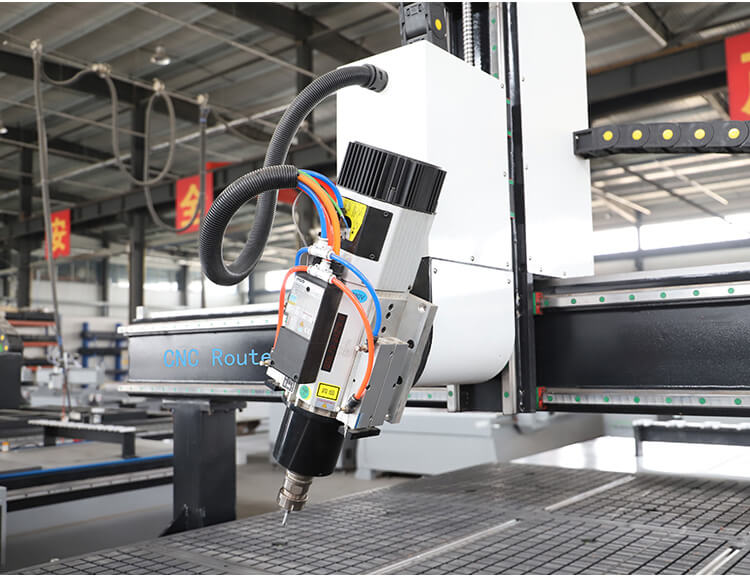
Honyo Prototype – “Small CNC Router with Tool-Changer” Workflow
(8-hour lead-time for quote, 3-day standard delivery)
-
Upload CAD
• Portal accepts any 3-D format (STEP, IGES, SolidWorks, Fusion, etc.).
• Auto-check: model < 300 × 300 × 60 mm envelope (our small-router bed) and min. feature ≥ 0.2 mm.
• Instant acknowledgement with project # and secure link. -
AI Quote (≤ 5 min)
• Cloud engine reads geometry, detects pockets, holes, chamfers, 3-D surfaces.
• Matches against 50+ stocked tool-changer cutters (0.2–6 mm, carbide, diamond coat).
• Calculates indexed tool changes, chip load, cycle time on 1.5 kW 60 000 rpm spindle.
• Picks acrylic, aluminum 6061, POM, PCB-FR4, etc. from in-stock blanks.
• Live price = material + machined time + tool wear + finish; lead-time options (8 h, 24 h, 72 h).
• One-click acceptance or “human review” toggle. -
DFM (optional but free)
• Accepted files enter our DFM queue (30–60 min).
• Engineer verifies:
– Wall thickness ≥ 0.5 mm for plastics, ≥ 0.3 mm for aluminum.
– Internal corners ≥ 0.2 mm (matching smallest end-mill).
– Undercuts, thin floors, vacuum-fixture suitability.
• If tweaks needed, we send annotated 3-D PDF + revised quote; customer approves in portal. -
Production
a. CAM & nesting (HyperMill) – automatic fixture model, tab placement, chip evacuation.
b. Material prep – blanks cut on band-saw, vacuum-chuck cleaned.
c. 4-station small CNC router with 6-tool umbrella changer:
– Probe – establishes Z-offset and corner.
– Rough – 2 mm carbide.
– Semi-finish – 1 mm.
– Finish – 0.5 mm ball-nose for 3-D curves.
– Drill – 0.8 mm for holes.
– Chamfer – 45° V-bit.
Tool-to-tool 4 s; total job typically 15–45 min.
d. In-cycle laser micrometer checks critical dimensions; offset auto-corrected.
e. De-burr, ultrasonic clean, optional anodize / silk-screen / assembly. -
Delivery
• Parts laser-etched with project #, packed in ESD foam, photographed.
• CofC, material certs, inspection report (100 µm tolerance default) uploaded to portal.
• Local courier same-day, DHL/UPS overnight international.
• Portal tracking until签收 / delivery scan closes the loop.
That’s the full path: Upload CAD → AI Quote → DFM → Production on our small CNC router with tool-changer → Delivery to your door in as little as 72 h.
Start Your Project
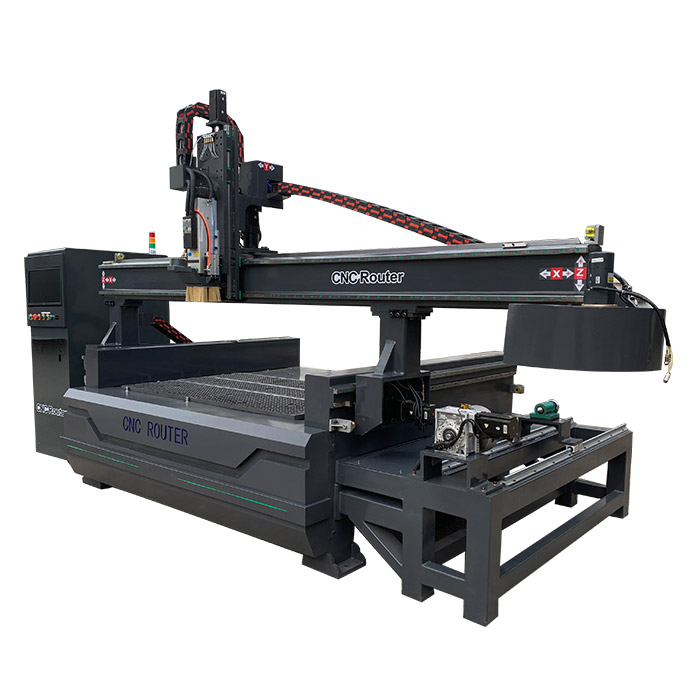
Contact Susan Leo for a Precision Small CNC Router with Tool Changer – [email protected] | Shenzhen Factory
Fast, reliable prototyping solutions engineered for efficiency. Let’s build your next project together! 🛠️
🚀 Rapid Prototyping Estimator