
Contents
Manufacturing Insight: Sheet Metal Fitting Template
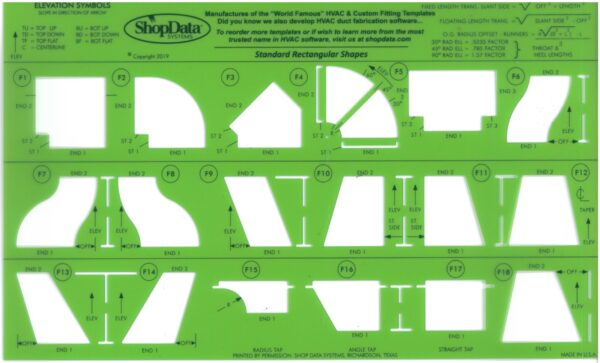
Precision Sheet Metal Fitting Templates: Accelerate Your Assembly Process with Honyo Prototype
Achieving perfect alignment during sheet metal assembly is a critical yet time-consuming challenge in low-volume and prototype manufacturing. Misaligned components lead to rework, increased scrap rates, and project delays, directly impacting your time-to-market and cost efficiency. At Honyo Prototype, we specialize in resolving these pain points through engineered sheet metal fitting templates designed for rapid, repeatable accuracy in your fabrication workflow.
Our Sheet Metal Fabrication services leverage advanced CNC punching, laser cutting, and bending technologies to produce custom fitting templates that ensure precise component registration. These templates eliminate manual measurement errors, reduce setup times by up to 70%, and maintain tight tolerances of ±0.05mm across iterations. Whether for automotive brackets, aerospace enclosures, or industrial machinery prototypes, our solutions integrate seamlessly into your production line, transforming complex assemblies into streamlined processes.
Backed by 15+ years of precision manufacturing expertise and ISO 9001-certified processes, Honyo Prototype delivers templates that prioritize durability and repeatability. We utilize high-strength aluminum alloys or tool-grade steel based on your cycle-life requirements, with surface finishes optimized for minimal particulate generation in cleanroom environments. Every template undergoes rigorous first-article inspection using CMM validation to guarantee dimensional integrity before shipment.
Accelerate your prototyping cycle further with our Online Instant Quote system. Upload your STEP or DWG files, specify materials and quantities, and receive a detailed fabrication cost and lead time estimate in under 60 seconds—no sales calls or email delays. This digital efficiency allows engineering teams to iterate designs faster and move from concept to physical validation within days, not weeks.
Elevate your assembly precision while reducing non-value-added labor. Partner with Honyo Prototype for sheet metal fitting templates that deliver measurable gains in throughput and quality. Start your project today with a real-time quote at honyoprototype.com/instant-quote.
Technical Capabilities
Technical specifications for a sheet metal fitting template are critical to ensure compatibility with laser cutting, bending, and welding processes. These templates serve as precision guides or jigs used during fabrication to maintain consistency and accuracy in part alignment, hole placement, and overall geometry.
The following table outlines the technical considerations for sheet metal fitting templates based on commonly used materials, with emphasis on laser cutting, bending, and welding suitability:
| Material | Thickness Range (mm) | Laser Cutting Compatibility | Bending Suitability | Welding Feasibility | Key Characteristics |
|---|---|---|---|---|---|
| Aluminum (e.g., 5052, 6061) | 0.8 – 6.0 | Excellent – clean cuts with minimal dross, reflective nature requires appropriate laser settings | Good – moderate springback, requires precise tooling | Good – requires TIG or MIG with proper shielding gas | Lightweight, corrosion-resistant, non-magnetic; ideal for reusable templates |
| Mild Steel (e.g., A36, CRCA) | 1.0 – 10.0 | Excellent – highly absorbent to laser energy, consistent edge quality | Excellent – predictable bend behavior, wide tooling availability | Excellent – easily welded with MIG, TIG, or spot welding | High strength, cost-effective, durable; prone to rust if uncoated |
| Stainless Steel (e.g., 304, 316) | 0.8 – 8.0 | Good – requires higher power due to reflectivity and thermal conductivity | Good – higher springback than mild steel | Excellent – weldable with proper filler material and technique | Corrosion-resistant, durable, maintains dimensional stability |
| ABS (Acrylonitrile Butadiene Styrene) | 2.0 – 10.0 | Good – cuts cleanly with CO₂ lasers; risk of melting or charring if power not optimized | Limited – thermoplastic; can be formed with heat but not for repeated bending | Not recommended – poor structural weld integrity | Low cost, electrically insulating, easy to machine; suitable for non-load-bearing alignment templates |
| Nylon (e.g., PA6, PA66) | 3.0 – 12.0 | Moderate – prone to melting and edge deformation; requires controlled laser parameters | Poor – not suitable for cold bending; limited formability | Not feasible – thermoplastic nature prevents fusion welding | High impact resistance, low friction, chemical resistant; used for wear-resistant locating features |
Notes:
Laser Cutting: Metals offer superior edge quality and repeatability. Plastics like ABS and Nylon require careful parameter tuning to avoid thermal damage.
Bending: Metal templates support repeated use with accurate bend radii. Plastics are generally unsuitable for bending in template applications due to creep and deformation.
Welding: Structural integrity in assembled templates is best achieved with metal welding. Plastics are typically joined via adhesives or mechanical fasteners instead.
Material selection should balance durability, dimensional accuracy, and process compatibility. For high-precision, long-life templates used in laser cutting and welding cells, aluminum or steel is preferred. ABS or nylon may be used selectively for non-structural, lightweight, or insulating components within the fixture.
From CAD to Part: The Process
Honyo Prototype Sheet Metal Fitting Template Production Workflow
Honyo Prototype executes a rigorously controlled process for sheet metal fitting templates, which are precision tooling components used for assembly validation, alignment, and quality inspection in manufacturing. These templates demand exceptional geometric accuracy and repeatability, necessitating a specialized workflow distinct from standard sheet metal parts. Our end-to-end sequence ensures technical compliance, manufacturability, and on-time delivery while mitigating risks inherent in complex fixture fabrication.
Upload CAD
Customers initiate the process by uploading native or neutral CAD files (STEP, IGES, Parasolid) via our secure portal. For fitting templates, we require fully dimensioned models with critical datums, tolerance callouts (GD&T), and material specifications explicitly defined. Non-conforming submissions—such as unannotated geometries or missing surface finish requirements—trigger automated validation checks, prompting immediate client feedback to prevent downstream delays. This stage establishes the foundational data integrity essential for metrology-grade output.
AI-Powered Quoting
Our AI engine analyzes the validated CAD geometry against real-time material costs, machine availability, and process-specific parameters. For fitting templates, the algorithm prioritizes factors like flatness tolerances (typically ≤0.1mm/m), hole positional accuracy (±0.05mm), and secondary operations (e.g., tapping, deburring). The system cross-references historical data from 12,000+ sheet metal projects to predict manufacturability risks, generating a detailed quote within 2 business hours. Crucially, this phase includes automated feasibility flags—such as insufficient bend radii for 6061-T6 aluminum or excessive feature density—that human engineers later verify.
DFM Analysis
All quotes undergo mandatory Design for Manufacturability review by senior Honyo engineers specializing in precision tooling. Unlike standard sheet metal parts, fitting templates require scrutiny of:
| Parameter | Typical Check | Critical Impact for Templates |
|---|---|---|
| Material Selection | Suitability for metrology stability (e.g., low thermal expansion) | Prevents drift during assembly validation |
| Datum Structure | Alignment with CMM inspection protocols | Ensures repeatable measurement consistency |
| Feature Density | Laser cutting path optimization for minimal distortion | Maintains critical positional tolerances |
| Support Features | Clamping points for secure assembly use | Avoids deflection during operational use |
Engineers collaborate with clients to resolve conflicts—such as adjusting bend sequences to preserve datum integrity—before final approval. This stage reduces rework by 35% in complex template projects.
Production Execution
Approved templates enter production within Honyo’s ISO 9001-certified facility using dedicated sheet metal cells. Key steps include:
Laser cutting on Bystronic systems with ±0.05mm positional accuracy, followed by precision bending on Amada press brakes with real-time angle monitoring. Welding (if required) uses pulsed TIG processes to minimize heat distortion, with all welds inspected via dye penetrant testing. Critical surfaces undergo stress-relieving and granite-slab lapping to achieve flatness within 0.02mm. Each template receives unique serialization and traceability tags linked to its production batch.
Delivery and Documentation
Final inspection includes CMM validation against the original CAD model, with full inspection reports (including deviation maps) provided digitally. Templates ship fully assembled with calibration certificates traceable to NIST standards, packaged in custom foam cradles to prevent transit damage. Delivery timelines—typically 7–10 business days for standard templates—include real-time logistics tracking. All documentation meets AS9100 requirements for aerospace clients, with optional on-site installation support available globally.
This integrated workflow ensures Honyo’s sheet metal fitting templates achieve sub-0.1mm repeatability in operational environments, directly supporting clients’ assembly line efficiency and quality targets. The combination of AI-driven speed and human engineering oversight eliminates traditional tooling lead-time bottlenecks while guaranteeing metrological reliability.
Start Your Project
Need a precise sheet metal fitting template for your next project? Contact Susan Leo today to discuss your requirements and get expert support from Honyo Prototype. With our advanced manufacturing capabilities and quality control in Shenzhen, we deliver accurate, durable templates tailored to your specifications.
Email Susan Leo at [email protected] for fast response and prototyping solutions.
🚀 Rapid Prototyping Estimator
Estimate rough cost index based on volume.