
Contents
Manufacturing Insight: Sheet Metal Finishes
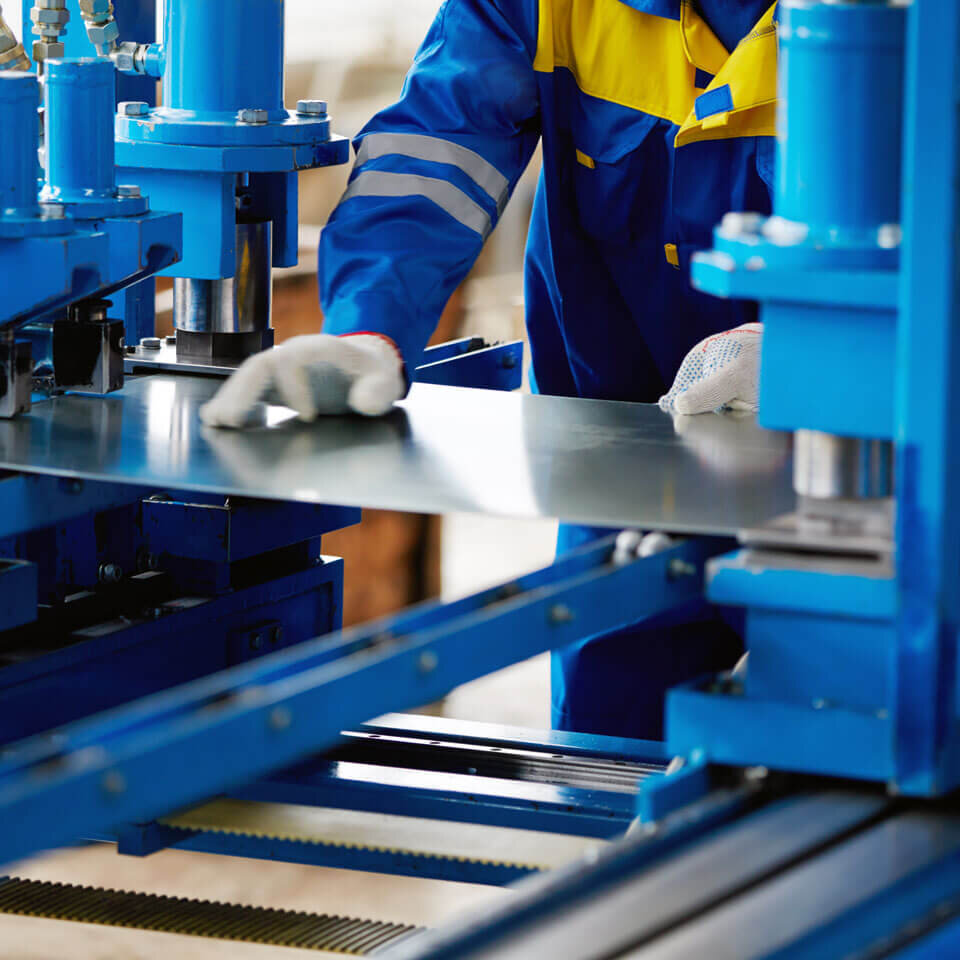
Sheet metal finishes represent a critical engineering decision that directly impacts component performance, longevity, and integration within your final product assembly. Beyond mere aesthetics, the chosen finish dictates resistance to environmental factors like corrosion and wear, influences electrical conductivity, affects thermal management, and ensures compatibility with subsequent assembly processes or end-use conditions. Selecting the optimal finish requires deep material science understanding and precise process control to maintain substrate integrity while achieving the required functional and visual specifications.
Honyo Prototype delivers comprehensive sheet metal fabrication services engineered for demanding industrial applications. Our capabilities span precision laser cutting, CNC punching, bending, welding, and assembly, all executed with rigorous quality control. Crucially, we integrate a wide spectrum of high-performance finishing options directly within our controlled manufacturing environment. This includes but is not limited to precision anodizing (Type II & III), diverse powder coating systems with extensive color and texture options, durable plating solutions (zinc, nickel, chrome), advanced passivation for stainless steel, and specialized brush or bead blasting for consistent surface preparation. Managing the entire process in-house eliminates supply chain handoffs, ensuring finish consistency, superior adhesion, and adherence to exact dimensional tolerances critical for precision assemblies.
For engineering and procurement teams requiring rapid validation of design feasibility and cost, Honyo Prototype provides a significant operational advantage through our Online Instant Quote system. This proprietary platform allows you to upload CAD files (DXF, DWG, STEP) and receive a detailed, transparent cost estimate and lead time projection for your sheet metal fabrication project, including selected finishes, within minutes. This eliminates the traditional delays associated with manual RFQ processing, accelerating your prototyping and low-volume production timelines significantly. Leverage Honyo’s integrated fabrication and finishing expertise, backed by the speed of instant quoting, to optimize your sheet metal component development cycle.
Technical Capabilities
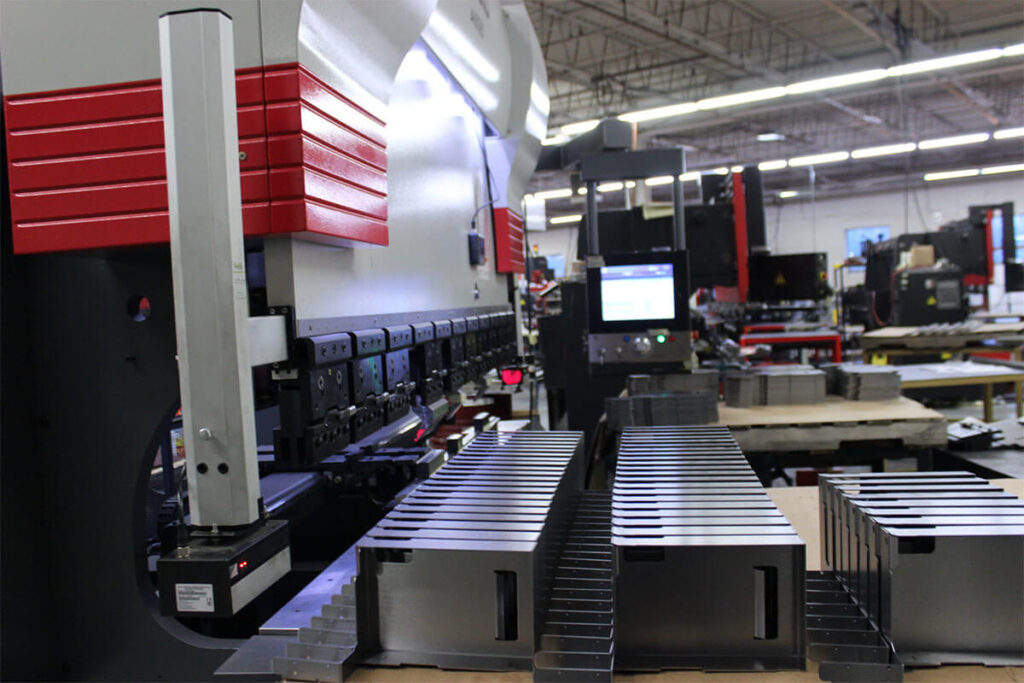
Sheet metal finishes refer to the surface characteristics and treatments applied to sheet materials after primary fabrication processes such as laser cutting, bending, and welding. These finishes impact both functional performance (e.g., corrosion resistance, weldability, formability) and aesthetic quality. Below is a technical overview of common sheet metal finishes for key materials—Aluminum, Steel, ABS, and Nylon—with relevance to laser cutting, bending, and welding processes.
| Material | Typical Sheet Thickness Range | Laser Cutting Compatibility | Bending Characteristics | Welding Compatibility | Common Surface Finishes | Notes |
|---|---|---|---|---|---|---|
| Aluminum (e.g., 5052, 6061) | 0.5 mm – 6.0 mm | Excellent – clean cuts with minimal dross using fiber laser | Good – moderate springback; requires larger bend radii | Good – requires clean surfaces and proper shielding gas (TIG/MIG) | Mill finish, anodizing (Type II/III), powder coating, brushed | Reflective surface may require assist gas optimization; oxide layer affects weld quality |
| Carbon Steel (e.g., A36, CRCA) | 0.8 mm – 12.0 mm | Excellent – high-speed cutting with nitrogen or oxygen assist | Excellent – predictable forming with standard tooling | Excellent – readily welded via MIG, TIG, or spot welding | Galvanized, painted, powder coated, oiled | Oxidation risk post-laser; grinding often needed on weld seams |
| Stainless Steel (e.g., 304, 316) | 0.5 mm – 10.0 mm | Very Good – nitrogen for clean edges, oxygen for thicker sections | Good – higher springback than carbon steel | Excellent – weldable with proper heat control to avoid sensitization | No. 4 brushed, BA (bright annealed), pickled & passivated | Resists corrosion; finish preservation post-welding critical for hygiene/medical apps |
| ABS (Acrylonitrile Butadiene Styrene) | 1.0 mm – 5.0 mm | Limited – possible with CO₂ laser but risk of melting/charring | Fair – thermoplastic behavior; prone to creep under load | Not applicable – joined via adhesives or mechanical fasteners | As-molded, painted, textured | Not a metal; used in hybrid assemblies; avoid high heat exposure |
| Nylon (e.g., PA6, PA66) | 1.0 mm – 6.0 mm | Poor – highly absorptive but melts easily; CO₂ laser not recommended | Fair – flexible and tough but exhibits cold flow | Not applicable – typically assembled non-thermally | Natural, matte, pigmented | Poor laser cut edge quality; best cut via CNC routing; not weldable in metal sense |
Process-Specific Observations:
Laser Cutting: Metals respond well to high-precision fiber or CO₂ lasers. Aluminum and steel produce clean edges with appropriate assist gases. Thermoplastics like ABS and Nylon are not ideal for laser cutting due to thermal degradation and poor edge quality.
Bending: Metals require consideration of bend allowance, springback, and minimum bend radius. Aluminum and steel are readily formed on press brakes. Plastics require slower, controlled bending with heated tooling to prevent cracking.
Welding: Structural integrity in metal assemblies depends on proper joint preparation and welding technique. Aluminum requires cleaning and precise heat input. Steel offers broad weldability. ABS and Nylon are not welded using traditional methods; instead, ultrasonic welding or adhesives are used in assembly.
Summary: Sheet metal finishes must be selected based on material compatibility with fabrication processes. Metals dominate in laser cutting, bending, and welding applications, while polymers like ABS and Nylon are better suited for non-metallic fabrication techniques and secondary joining processes.
From CAD to Part: The Process
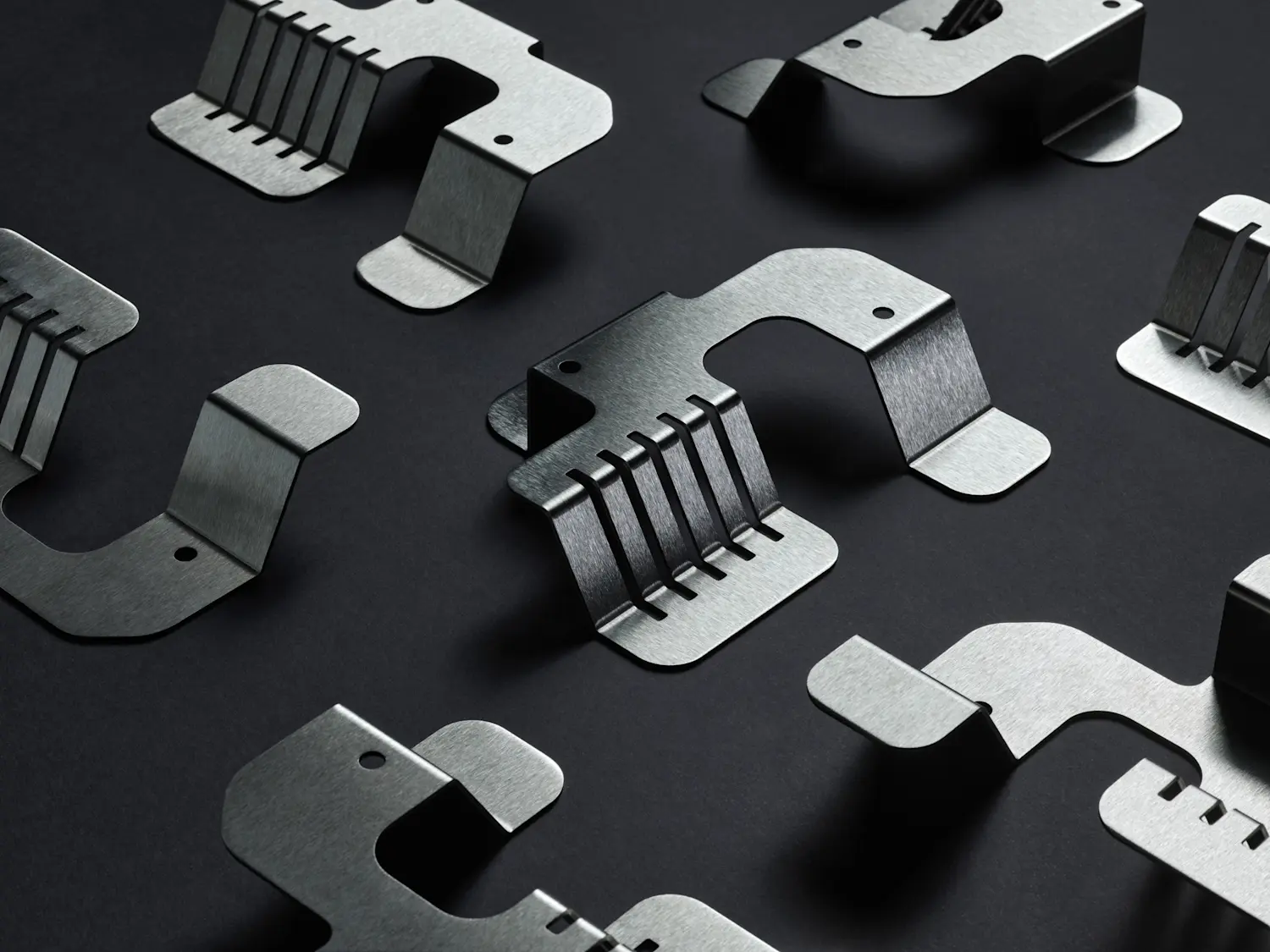
Honyo Prototype Sheet Metal Finishing Process Overview
Honyo Prototype integrates sheet metal finishing as a critical phase within our end-to-end manufacturing workflow. Our process ensures finish specifications are validated early, optimized for manufacturability, and executed with precision. Below is a detailed explanation of each stage, emphasizing how finishing requirements are managed from design to delivery.
Upload CAD
Clients initiate the process by uploading detailed CAD files through our secure online portal. During this step, explicit finish specifications must be included in the design documentation or accompanying notes. Acceptable inputs include surface roughness callouts, coating types (e.g., powder coat RAL codes), anodizing thickness, or plating requirements. Our system validates file integrity and cross-references finish notes against geometric features. Missing or ambiguous finish details trigger an automated notification to the client, preventing downstream delays.
AI-Powered Quoting
Our proprietary AI engine analyzes the CAD geometry, material selection, and declared finish requirements to generate an instant, data-driven quote. The AI cross-references historical production data, material compatibility matrices, and finish-specific parameters such as:
Minimum bend radii for coated parts to avoid cracking
Surface area calculations for precise coating cost estimation
Thermal distortion risks during curing processes
Tolerance allowances for post-finish dimensional stability
The quote explicitly itemizes finish costs, lead time implications, and flags potential conflicts (e.g., “Powder coating not recommended for internal cavities per design”). Clients receive a transparent breakdown before proceeding.
DFM Analysis with Finish Integration
During Design for Manufacturability (DFM) review, our engineering team conducts a dedicated finish-specific assessment. This phase is non-automated and leverages senior engineer expertise to identify conflicts between the design intent and finish feasibility. Critical checks include:
| DFM Check Category | Specific Finish-Related Considerations |
|---|---|
| Geometry Validation | Bend radii vs. coating ductility; hole sizes for rack points; sharp edges causing thin coating coverage |
| Material Compatibility | Aluminum alloy suitability for anodizing; steel zinc-plating adhesion; laser-cut edge oxidation effects |
| Tolerance Analysis | Finish layer thickness impact on critical fit dimensions (e.g., ±0.05mm coating added to ±0.1mm tolerance) |
| Process Constraints | Minimum part spacing for automated powder coating; weld seam visibility under polished finishes |
Engineers provide actionable feedback via our portal, such as modifying flange widths to accommodate rack hooks or suggesting alternative finishes for complex geometries. Client approval of DFM recommendations is mandatory before production.
Production Execution
Approved designs enter production with finish requirements embedded in our shop floor control system. Key production steps include:
Pre-treatment: Parts undergo rigorous cleaning, degreasing, and chemical conversion (e.g., zinc phosphate for steel) to ensure adhesion.
Finish Application: We deploy industry-specific methods—electrostatic powder coating for durability, Type II anodizing for corrosion resistance, or precision-plated finishes per ASTM standards. In-process checks verify coating thickness (using eddy current gauges) and uniformity.
Post-Processing: Curing ovens maintain ISO-classified temperature profiles; parts undergo dimensional validation post-finish to confirm tolerance compliance. Any deviation triggers automatic rework protocols.
Delivery Assurance
Finished parts undergo final inspection against the original finish specifications. Our quality report documents:
Coating thickness measurements at multiple points
Adhesion test results (e.g., cross-hatch ASTM D3359)
Color matching data (Delta-E values vs. RAL standards)
Surface roughness verification (Ra values)
Parts ship with protective packaging tailored to the finish type (e.g., anti-tarnish paper for anodized components). All documentation, including finish certifications, is accessible digitally via the client portal upon delivery.
This integrated approach minimizes rework, ensures finish consistency, and guarantees that surface treatment requirements are treated as a core manufacturing parameter—not an afterthought. Honyo’s process delivers sheet metal components where functional performance and aesthetic specifications are equally validated.
Start Your Project
For expert guidance on sheet metal finishes and to discuss your project requirements, contact Susan Leo at [email protected].
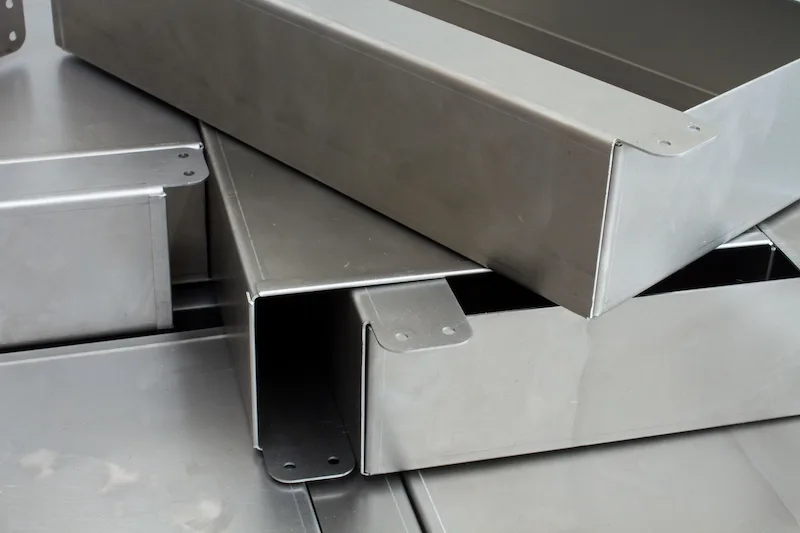
Honyo Prototype’s manufacturing facility in Shenzhen is equipped to deliver precision sheet metal components with a range of surface finish options, including anodizing, plating, powder coating, and more—ensuring optimal performance and aesthetics for your application.
Reach out today to request technical specifications, lead times, or a competitive quote.
🚀 Rapid Prototyping Estimator
Estimate rough cost index based on volume.