
Contents
Manufacturing Insight: Screen Printing Onto Metal

Screen printing onto complex metal substrates presents significant challenges for engineering teams, particularly when dealing with curved surfaces, tight radii, or subsurface geometries where standard flatbed printing fails. Achieving precise ink registration, consistent adhesion, and durability on demanding metal components requires specialized tooling solutions that traditional manufacturing methods often cannot deliver efficiently or cost-effectively.
Honyo Prototype addresses this critical manufacturing bottleneck through our Industrial 3D Printing services, specifically engineered for metal screen printing applications. We produce high-precision, application-specific tooling—including custom jigs, vacuum fixtures, and registration guides—using industrial-grade polymer composites optimized for thermal stability and chemical resistance against common metal inks and cleaning solvents. These 3D printed fixtures ensure micron-level accuracy during the printing process, enabling reliable ink deposition on intricate metal parts that would otherwise be impractical or prohibitively expensive to decorate.
Our integrated workflow accelerates time-to-market by transforming CAD data directly into functional tooling within 24-72 hours, eliminating lengthy CNC machining lead times while maintaining strict dimensional tolerances. This capability directly improves production yield and repeatability for aerospace nameplates, medical device markings, automotive control panels, and industrial equipment branding. For immediate project assessment, leverage our Online Instant Quote system to upload your metal part geometry and receive a precise manufacturing evaluation with lead time and cost transparency within minutes.
Technical Capabilities
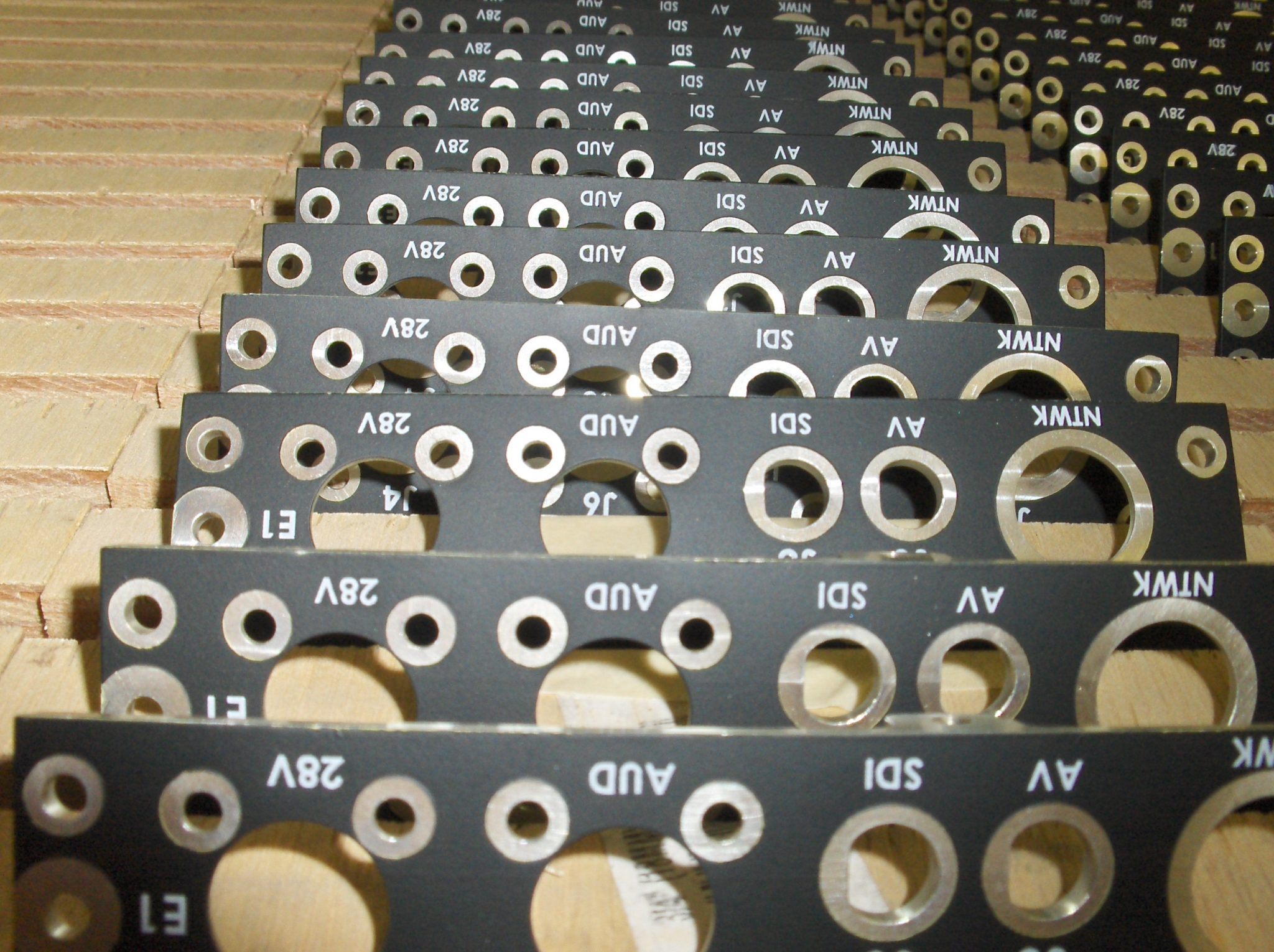
Screen printing onto metal is a surface finishing technique used to apply ink or coating through a mesh screen onto a substrate, commonly for labeling, branding, or functional markings. While screen printing itself is not a primary manufacturing process, it is often applied as a secondary operation on parts produced via additive manufacturing technologies such as Stereolithography (SLA), Selective Laser Sintering (SLS), Multi Jet Fusion (MJF), and Direct Metal Laser Sintering (DMLS). The compatibility and effectiveness of screen printing depend on the surface quality, porosity, and material type of the printed part.
Below is a technical overview of how screen printing integrates with these additive processes and their associated materials:
| Additive Process | Material Compatibility | Surface Characteristics | Screen Printing Suitability | Notes |
|---|---|---|---|---|
| SLA (Stereolithography) | ABS-like resins, Standard/Engineering Photopolymers | Smooth, high-resolution surface; may require post-curing and coating | Moderate to High | SLA produces smooth surfaces ideal for screen printing; however, full curing and potential surface sealing (e.g., lacquer) may be required for ink adhesion on photopolymer resins |
| SLS (Selective Laser Sintering) | Nylon (PA11, PA12), Glass-filled Nylon | Grainy, porous surface; good mechanical properties | Moderate | Surface porosity may absorb ink; pre-treatment with sealant or primer is recommended to ensure consistent print quality and durability |
| MJF (Multi Jet Fusion) | Nylon (PA11, PA12), Glass-filled Nylon | Uniform, slightly textured surface; less porous than SLS | Moderate to High | Smoother than SLS; better ink adhesion; sealant still recommended for long-term durability of screen-printed markings |
| DMLS (Direct Metal Laser Sintering) | Aluminum (AlSi10Mg), Stainless Steel (17-4 PH, 316L), Titanium, Inconel | Metallic, grainy surface; post-processing (e.g., sanding, polishing, coating) often required | High (with surface prep) | Screen printing is feasible on metal surfaces; surface finishing such as sandblasting, anodizing (for aluminum), or coating improves ink adhesion and longevity |
Material Notes:
Aluminum (DMLS): Requires surface oxidation control; anodizing enhances ink bonding.
Steel (DMLS): High surface energy allows good adhesion; passivation or coating may be needed for corrosion resistance.
ABS (SLA resin analog): Chemically similar to injection-molded ABS; responds well to screen printing with proper surface cleaning.
Nylon (SLS/MJF): Low surface energy and porosity challenge ink adhesion; flame or plasma treatment can improve printability.
In summary, screen printing onto metal and polymer parts from additive manufacturing is technically feasible across SLA, SLS, MJF, and DMLS, but success depends on material selection and surface preparation. Metal parts from DMLS offer the most direct compatibility with industrial screen printing processes, while polymer-based parts from SLA, SLS, and MJF typically require surface treatments to ensure durable, high-quality prints.
From CAD to Part: The Process

Honyo Prototype executes screen printing onto metal substrates through a rigorously controlled digital workflow designed for precision, speed, and manufacturability. This process integrates advanced digital tools with deep metallurgical expertise to ensure optimal adhesion, resolution, and durability on challenging metal surfaces including aluminum, stainless steel, brass, and anodized finishes.
CAD Upload and Pre-Processing
Clients initiate the process by uploading vector-based CAD files (DXF, DWG, or AI formats) via our secure portal. Our system immediately validates file integrity, checks for critical parameters such as layer registration marks, screen mesh compatibility (120–305 mesh typical for metals), and minimum feature size adherence (≥0.25mm line/space for standard production). Non-vector formats undergo automated vectorization with client confirmation to prevent data loss, a critical step given metal’s low tolerance for misregistration compared to flexible substrates.
AI-Powered Quoting Engine
Uploaded CAD data feeds into our proprietary AI quoting system, which analyzes geometric complexity, surface area, ink coverage percentage, and substrate specifications. The engine cross-references real-time variables: metal alloy type (e.g., aluminum 6061-T6 vs. 304 stainless steel), required pre-treatment (e.g., chemical etching for bare aluminum or plasma activation for passivated surfaces), ink chemistry (UV-curable, epoxy-based, or ceramic frit for high-temp applications), and secondary processes like curing profiles. Quotes include precise lead times, material utilization metrics, and cost drivers—such as the 15–20% premium for halftone printing on textured metal finishes—delivered within 90 minutes.
DFM Analysis with Metal-Specific Protocols
Every job undergoes mandatory Design for Manufacturability (DFM) review by our metallurgy-specialized engineering team. This phase addresses metal-unique failure points:
| DFM Parameter | Critical Check for Metal Substrates | Standard Tolerance |
|---|---|---|
| Surface Flatness | <0.1mm deviation over 100mm to prevent ink bleed | Verified via CMM |
| Edge Clearance | Minimum 1.5mm from cut edge to prevent chipping | CAD rule check |
| Ink Adhesion | Substrate pre-treatment validation (e.g., chromate conversion for Al) | ASTM D3359 test |
| Mesh Tension | 22–25 N/cm² for fine detail on rigid surfaces | Dynamometer log |
| Off-Contact Distance | 1.0–1.5mm optimized for metal rigidity | Machine calibration |
Engineers collaborate with clients to resolve conflicts—such as adjusting squeegee angle for curved stainless steel parts or specifying ceramic inks for aerospace components requiring MIL-STD-810G compliance—before formal approval.
Production Execution
Approved jobs move to production with full digital traceability. Metal substrates undergo precision cleaning (ultrasonic degreasing followed by deionized water rinse) and substrate-specific activation. Printing occurs on servo-driven, micro-registration presses with closed-loop tension control. Key production controls include:
Real-time viscosity monitoring of inks (±50 cP tolerance) to counteract metal’s rapid thermal conductivity during printing
Dual-stage curing: initial IR flash (80–120°C) to prevent metal-induced solvent retention, followed by UV/final thermal cure per ink spec
100% inline AOI with spectral analysis verifying optical density (≥1.8 OD for opaque coverage) and edge acuity
Delivery and Validation
Completed parts undergo final inspection per AS9102 aerospace standards or client-specific protocols, including cross-hatch adhesion tests and dimensional verification against original CAD. All shipments include a digital DFM report, material certificates (e.g., mill test reports for base metal), and process validation data. Typical lead time from CAD to delivery is 5–7 business days for prototypes, with rush options leveraging our automated screen-making cell. This closed-loop system ensures first-pass yield rates exceeding 98.5% even for complex metal screen printing applications.
Start Your Project

Looking to achieve high-precision screen printing on metal components? Honyo Prototype delivers consistent, industrial-grade results with tight tolerances and durable ink adhesion, ideal for nameplates, control panels, and custom metal parts.
Our dedicated production facility in Shenzhen ensures rapid turnaround and strict quality control for both prototyping and low-to-mid volume production runs.
Contact Susan Leo today to discuss your project specifications and receive a competitive quote.
Email: [email protected]
🚀 Rapid Prototyping Estimator
Estimate rough cost index based on volume.