
Contents
Manufacturing Insight: S S 316 Stainless Steel
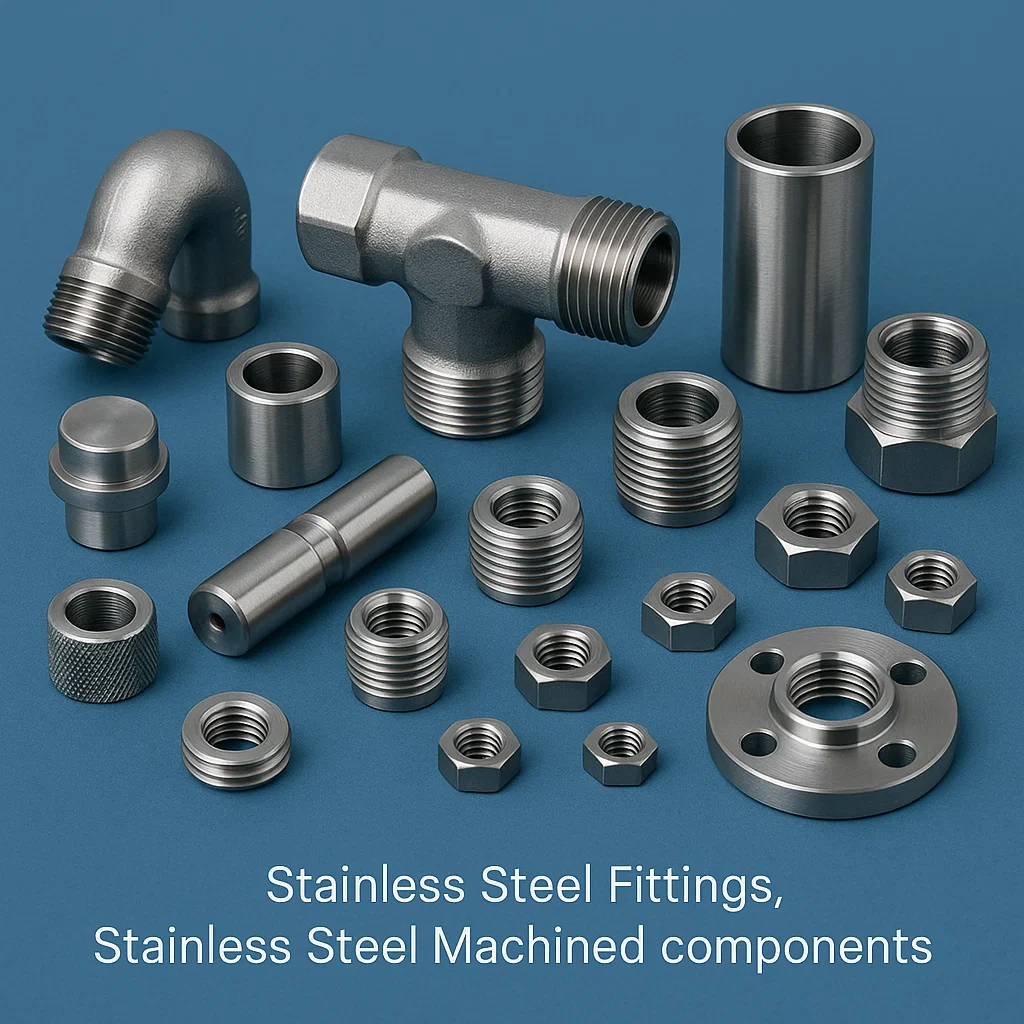
Honyo’s Precision CNC Machining for 316 Stainless Steel
316 stainless steel remains the material of choice for demanding applications requiring exceptional corrosion resistance, particularly in chloride environments, high strength, and biocompatibility. Its superior performance in marine, chemical processing, medical device, and high-temperature aerospace components stems from its molybdenum-enhanced austenitic structure. However, realizing the full potential of 316 SS in precision components demands advanced machining expertise to overcome challenges like work hardening, thermal conductivity limitations, and stringent surface finish requirements.
Honyo Prototype delivers the critical manufacturing capability required for complex 316 stainless steel parts. Our state-of-the-art CNC machining centers, operated by veteran technicians with deep metallurgical understanding, consistently achieve tight tolerances down to ±0.0002 inches and superior surface finishes essential for functional performance and regulatory compliance. We specialize in machining intricate geometries, thin walls, and critical features inherent to high-value 316 SS components, utilizing optimized toolpaths, specialized tooling, and controlled coolant strategies to mitigate material challenges and ensure dimensional stability.
Material properties directly impact manufacturability and final part performance. Key characteristics of 316 SS relevant to precision machining include:
| Property | Value/Characteristic | Relevance to CNC Machining |
|---|---|---|
| Corrosion Resistance | Excellent (Mo 2-3%) | Enables use in harsh environments; machining must avoid surface contamination |
| Tensile Strength | 75,000 – 100,000 psi | Requires robust fixturing and controlled cutting forces |
| Hardness (Annealed) | 79 HB max | Prone to work hardening; demands sharp tools, proper speeds/feeds |
| Thermal Conductivity | Low (~16.2 W/m·K) | Generates heat at cut; necessitates effective cooling strategies |
| Machinability Rating | Fair (65% relative to 1212 steel) | Requires expertise to optimize parameters and prevent galling |
Leveraging our dedicated 316 stainless steel machining protocols, Honyo Prototype ensures your components meet the highest standards of quality, integrity, and performance. Accelerate your next 316 SS project with Honyo’s Online Instant Quote system. Upload your CAD file today for a precise, detailed manufacturing assessment and competitive pricing within hours, not days, enabling faster prototyping and production ramp-up.
Technical Capabilities
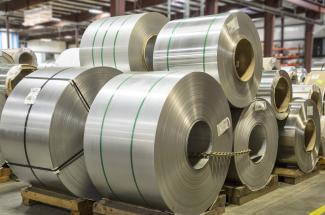
Honyo Prototype delivers precision machining services utilizing high-performance materials, including 316 stainless steel, for demanding applications requiring tight tolerances and superior surface finishes. Our 3/4/5-axis CNC milling and CNC turning capabilities support complex geometries across a range of engineering materials such as Aluminum, Steel, ABS, and Nylon. Below is a comparison of key technical characteristics for these materials, with a focus on machinability in multi-axis environments and tolerance performance.
| Material | Tensile Strength (MPa) | Hardness (HRC) | Thermal Conductivity (W/m·K) | Machinability Rating | Typical Tolerance (± mm) | Surface Finish (Ra, µm) | Common Applications in Precision Machining |
|---|---|---|---|---|---|---|---|
| 316 Stainless Steel | 570–620 | 25–30 | 15 | Fair (60%) | 0.010 | 0.8–1.6 | Medical devices, marine components, chemical processing equipment |
| Aluminum (6061-T6) | 310 | 15–20 | 167 | Excellent (90%) | 0.005 | 0.4–0.8 | Aerospace housings, prototypes, heat sinks |
| Mild Steel (A36) | 400–500 | 12–18 | 50 | Good (70%) | 0.010 | 1.6–3.2 | Industrial fixtures, structural components |
| ABS | 40–50 | 8–10 (Shore D) | 0.25 | Very Good (80%) | 0.025 | 3.2–6.3 | Functional prototypes, enclosures, jigs |
| Nylon (PA6) | 70–80 | 8–10 (Shore D) | 0.25 | Good (75%) | 0.025 | 3.2–6.3 | Wear strips, gears, low-friction components |
316 stainless steel is particularly valued for its excellent corrosion resistance and mechanical properties at elevated temperatures, making it ideal for critical environments. While more challenging to machine than aluminum or plastics due to work hardening and lower thermal conductivity, our advanced toolpath strategies, high-precision spindles, and in-process metrology ensure consistent achievement of tight tolerances down to ±0.010 mm. For aluminum and plastics like ABS and nylon, we leverage high-speed machining capabilities to deliver superior surface finishes and dimensional accuracy, often holding tolerances down to ±0.005 mm in optimized setups.
Our 5-axis milling platforms reduce setup次数 and improve feature alignment, especially beneficial for complex stainless steel components. CNC turning is employed for rotational parts in all materials, with live tooling enabling mill-turn efficiency. All processes are supported by CMM verification and SPC monitoring to ensure compliance with technical specifications.
From CAD to Part: The Process
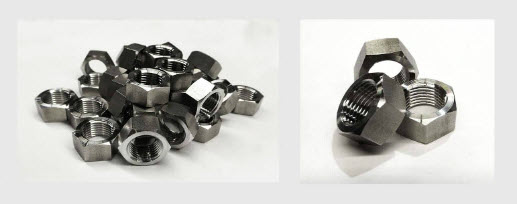
Honyo Prototype’s end-to-end manufacturing process for 316 stainless steel components follows a rigorously defined sequence designed to ensure precision, compliance, and efficiency. This workflow leverages both advanced automation and engineering expertise specifically optimized for the metallurgical demands of 316/L stainless steel, including its corrosion resistance, weldability, and post-processing requirements. Below is the detailed phase-by-phase breakdown.
Upload CAD
Customers initiate the process by uploading native or neutral format CAD files (STEP, IGES, Parasolid) via our secure portal. For 316 stainless steel projects, our system immediately flags critical parameters: material grade specification (316 vs. 316L), required surface finishes (e.g., #4 brush, electropolished), weld zones, and tolerance-critical zones. Geometric complexity affecting stainless steel machinability—such as thin walls below 0.5mm, deep cavities, or tight internal radii—is auto-detected for downstream DFM analysis. All uploads undergo automated validation for unit consistency (mm/inch) and watertight geometry to prevent quoting errors.
AI Quote Generation
Our proprietary AI engine processes the CAD data against live machine capacity, raw material pricing (including 316 stainless steel mill-certified bar stock or plate inventory), and historical production metrics. The algorithm factors in stainless-specific variables:
Higher tool wear rates versus carbon steel (adjusting machining time estimates)
Required coolant types (non-chlorinated for 316L to prevent stress corrosion)
Secondary operation sequencing (e.g., mandatory passivation after welding)
The output is a detailed quote within 2 hours, specifying material certification (ASTM A276/A479), achievable tolerances (±0.05mm standard), and lead time. Critical deviations—like recommending 316L over 316 for welded assemblies due to carbide precipitation risks—are highlighted with technical justification.
DFM Engineering Review
All 316 stainless steel projects undergo mandatory DFM by certified metallurgical engineers. This phase addresses stainless-specific failure modes:
Weld distortion mitigation in thin sections using thermal simulation
Avoiding crevices where chlorides could accumulate in end-use environments
Specifying appropriate fixturing to prevent galling during machining
Validating post-weld heat treatment (PWHT) necessity per ASME Section VIII
The engineer provides a formal DFM report with actionable recommendations (e.g., “Increase weld groove radius from 0.5mm to 1.2mm to prevent hot cracking”), not merely a pass/fail assessment. Customers approve revisions digitally before production release.
Production Execution
Manufacturing occurs in our ISO 9001-certified facility with dedicated stainless steel tooling to prevent cross-contamination:
CNC machining uses carbide inserts with specialized coatings for stainless alloys, with strict chip evacuation protocols to avoid work hardening
TIG welding employs AWS A5.9 ER316L filler metal under argon shielding gas with oxygen sensors (<50 ppm)
All post-processing (grinding, polishing) follows ASTM A967 for passivation, verified via ferroxyl testing
Real-time SPC monitoring tracks critical dimensions, with first-article inspection (FAI) per AS9102 reporting. Material traceability is maintained via serialized heat numbers from mill certificate to final part.
Delivery & Certification
Shipments include comprehensive documentation:
Material Test Reports (MTRs) with full chemical composition and mechanical properties
Weld procedure specifications (WPS) and welder qualification records
Dimensional inspection reports (CMM data)
Passivation validation certificates
Parts are packaged in VCI paper with humidity indicators, labeled for stainless steel-specific handling. For medical or marine applications, we provide optional ASTM A262 intergranular corrosion test results. Delivery timelines include buffer days for mandatory 24-hour post-passivation drying to prevent flash rusting.
This integrated process ensures 316 stainless steel components meet stringent industry requirements while minimizing rework—critical given stainless steel’s higher scrap value and processing costs versus standard alloys. Our closed-loop system reduces time-to-shipment by 35% compared to traditional prototyping workflows.
Start Your Project
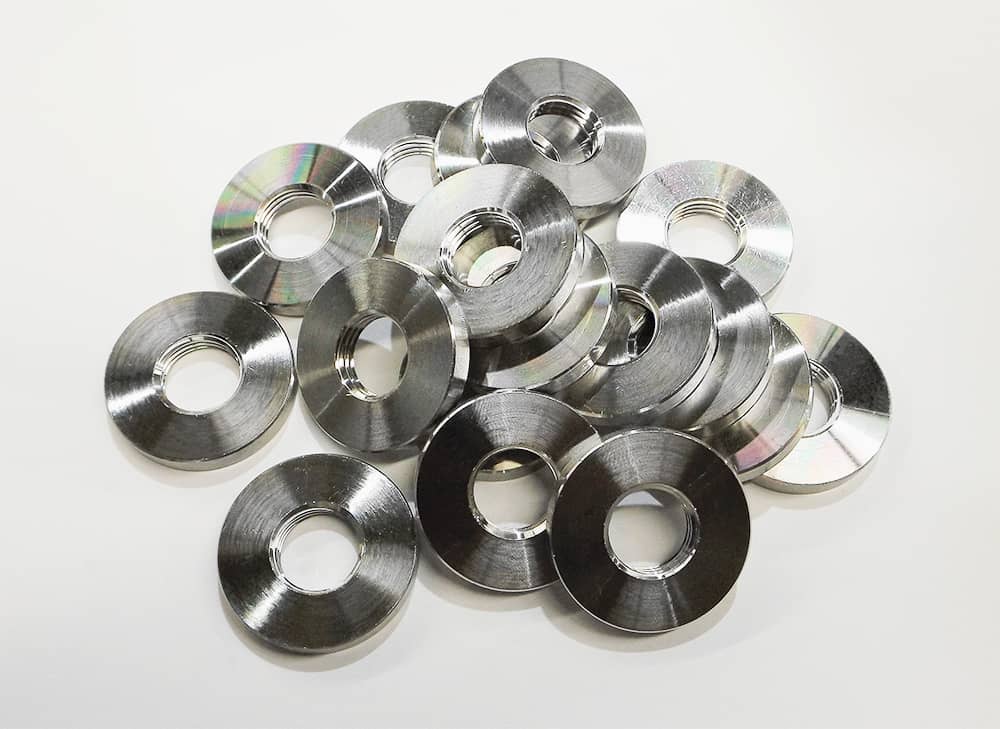
Looking for high-quality 316 stainless steel components? Honyo Prototype offers precision manufacturing services with materials built to meet rigorous industry standards. Our facility in Shenzhen ensures fast turnaround and consistent quality control for both prototypes and production runs.
Contact Susan Leo today at [email protected] to discuss your 316 stainless steel project requirements. Let us support your next precision engineering challenge with technical expertise and reliable delivery.
🚀 Rapid Prototyping Estimator
Estimate rough cost index based on volume.