
Contents
Manufacturing Insight: Round Sheet Metal Ductwork Should Be:
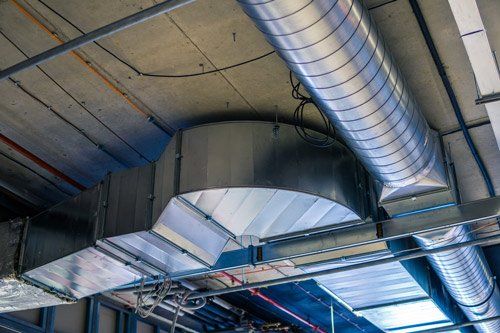
Round Sheet Metal Ductwork Should Be: Precision Engineered for Performance and Reliability
Round sheet metal ductwork forms the critical circulatory system in demanding HVAC, industrial process, and cleanroom applications. It should be fabricated to exacting tolerances ensuring seamless airflow, minimal pressure drop, and structural integrity under operational stress. Precision-formed longitudinal and spiral seams are non-negotiable to prevent leakage, while consistent roundness and concentricity guarantee efficient installation and system balance. Material selection must align with environmental exposure—galvanized steel for general use, stainless for corrosive settings, or aluminum for specialized requirements—all meeting ASHRAE and SMACNA standards. Any deviation in diameter, seam integrity, or flange alignment directly compromises system efficiency, increases energy consumption, and risks costly field rework.
Honyo’s Precision Sheet Metal Fabrication Delivers Exactly What Ductwork Requires
At Honyo Prototype, we engineer round duct components to exceed these performance imperatives. Our advanced fabrication ecosystem integrates fiber laser cutting, CNC press braking, and automated spiral-wound machinery to achieve ±0.5mm diameter consistency and hermetic seam quality. We specialize in low-volume prototypes through high-mix production runs, utilizing certified materials with full traceability. Every duct section undergoes rigorous dimensional validation and leak testing per SMACNA QMS-1 protocols, ensuring your system operates at peak efficiency from day one. Our engineering team collaborates early to optimize designs for manufacturability, reducing field assembly time and lifecycle costs.
Accelerate Your Project Timeline with Immediate Quoting Intelligence
Eliminate quoting delays that stall procurement cycles. Honyo’s Online Instant Quote platform provides validated pricing and lead times for round ductwork within minutes—not days. Simply upload your STEP/DXF file, specify material grade, gauge, and finish requirements, and receive a detailed technical quotation backed by our manufacturing expertise. This direct digital workflow ensures accuracy while freeing engineering resources for higher-value tasks.
| Key Ductwork Specification | Honyo Standard | Industry Baseline |
|---|---|---|
| Diameter Tolerance | ±0.5mm | ±1.5mm |
| Seam Leakage Rate | <0.03 cfm/ft² @ 1″ w.g. | <0.10 cfm/ft² @ 1″ w.g. |
| Material Certification | Full Mill Test Reports | Batch Certificates |
| Prototype Lead Time | 3-5 Business Days | 10-15 Business Days |
Demand ductwork that performs as engineered. Leverage Honyo’s technical precision and digital efficiency to build systems where every cubic foot of airflow delivers maximum value. Initiate your project with confidence using our Online Instant Quote system today.
Technical Capabilities
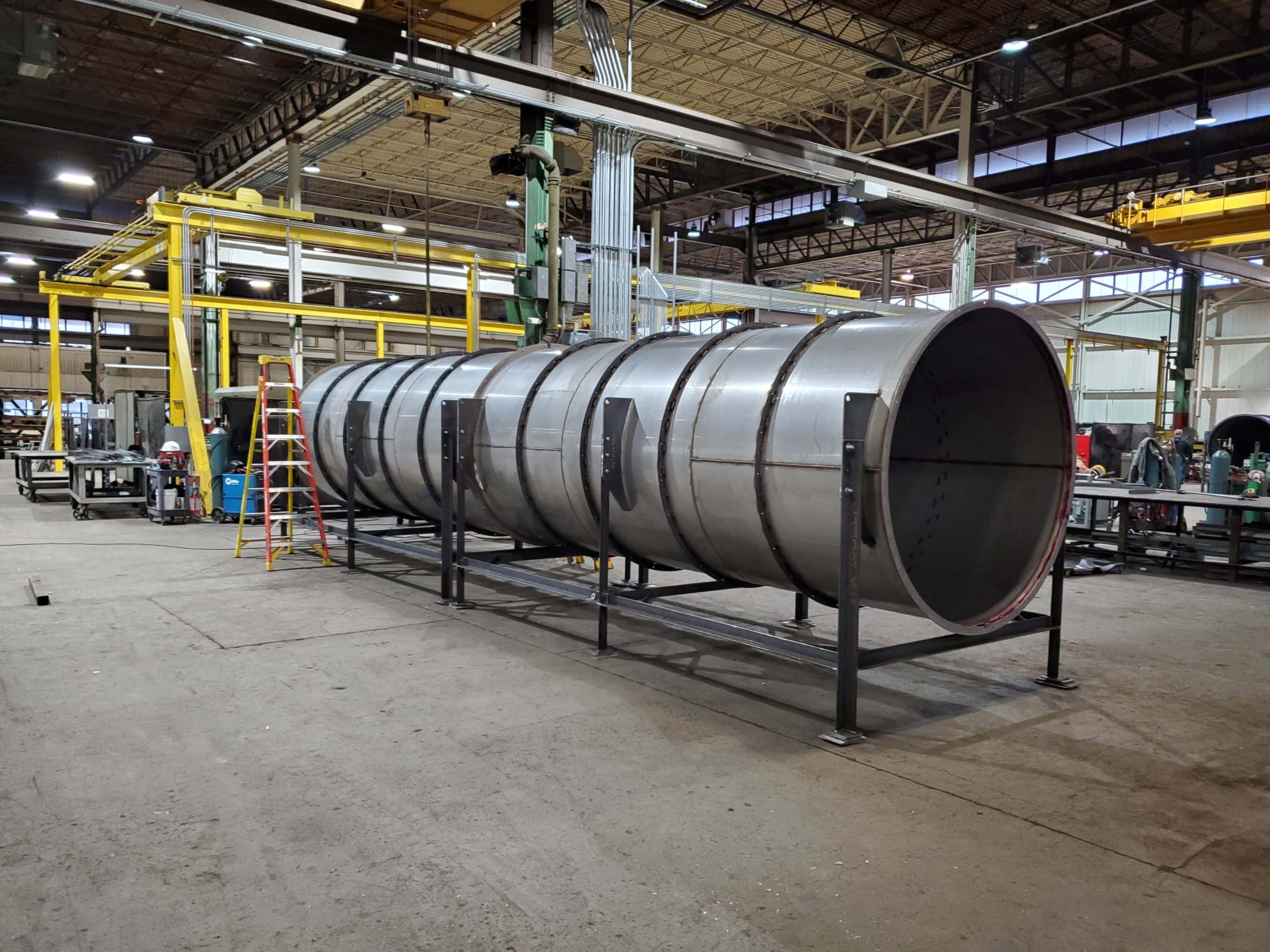
Round sheet metal ductwork requires precise fabrication processes including laser cutting, bending, and welding to ensure dimensional accuracy, structural integrity, and smooth airflow performance. Below are the technical specifications for each process, tailored to common materials used in ductwork: Aluminum, Steel, ABS, and Nylon. Note that ABS and Nylon are non-metallic and typically not suitable for traditional sheet metal laser cutting and welding; their use is limited to specialized applications with modified processes.
| Process | Material | Thickness Range | Laser Cutting Specifications | Bending Specifications | Welding Specifications |
|---|---|---|---|---|---|
| Laser Cutting | Aluminum | 0.5 mm – 6.0 mm | Fiber laser recommended; nitrogen assist to prevent oxidation; kerf tolerance ±0.1 mm | Not applicable for round forming via bending; used for blank cutting | N/A (cutting only) |
| Steel (Mild) | 0.8 mm – 8.0 mm | CO₂ or fiber laser; oxygen assist for thicker sections; kerf tolerance ±0.1 mm | N/A (cutting only) | N/A (cutting only) | |
| ABS | 1.0 mm – 5.0 mm | CO₂ laser only; low power settings; high risk of melting and edge charring; not recommended for precision ducts | Not applicable | Not weldable via arc processes; limited to solvent or hot gas welding | |
| Nylon | 1.0 mm – 5.0 mm | CO₂ laser with caution; prone to melting and poor edge quality; not ideal for structural ducts | Not applicable | Not suitable for arc welding; limited to hot gas or ultrasonic welding | |
| Bending | Aluminum | 0.8 mm – 6.0 mm | Rotary draw or roll bending for round profiles; minimum bend radius 1.5× material thickness; springback ~2–3° | Tooling must be polished to prevent scratching; mandrel bending for tight tolerances | Pre-bent sections may require post-form welding |
| Steel (Mild) | 1.0 mm – 8.0 mm | Roll forming or incremental bending; minimum bend radius 1.5× thickness; springback ~1–2° | Use lubrication to reduce friction; CNC-controlled for consistency | Welded longitudinally after bending for seam closure | |
| ABS | Not applicable | Thermoforming preferred over bending; limited cold bend capability | Not recommended for tight radii; high risk of cracking | N/A | |
| Nylon | Not applicable | Limited cold forming; heating required for shaping | Use controlled heat to prevent deformation | N/A | |
| Welding | Aluminum | ≥1.5 mm | TIG or MIG welding with argon shielding gas; stringer beads for longitudinal seams; post-weld clean to prevent corrosion | Ensure edge prep (bevel if >4 mm) | Full penetration welds required; inspect for porosity |
| Steel (Mild) | ≥1.0 mm | MIG or resistance seam welding; automated welding for consistent longitudinal joints | Square edges for thin gauge; edge prep for >3 mm | Post-weld grinding for smooth internal finish | |
| ABS | ≥2.0 mm | Not applicable for metal fusion methods; use hot gas or extrusion welding | N/A | Requires compatible filler rod; joint design critical | |
| Nylon | ≥2.0 mm | Not applicable for arc welding; use hot gas or ultrasonic welding | N/A | Limited to low-pressure applications; poor structural weld strength |
Notes:
Aluminum and steel are the primary materials for round sheet metal ductwork due to formability, strength, and weldability.
ABS and Nylon are thermoplastics and not standard for metal duct systems; they may be used in specialized corrosive or low-pressure ventilation applications but require non-traditional processing.
Laser cutting is primarily used for cutting flat blanks prior to bending and rolling.
Round ducts are typically formed by bending flat sheets into cylindrical shapes and welding the longitudinal seam.
Dimensional tolerances for round ducts: ±1.5 mm on diameter, straightness within 2 mm per 3 m length.
From CAD to Part: The Process
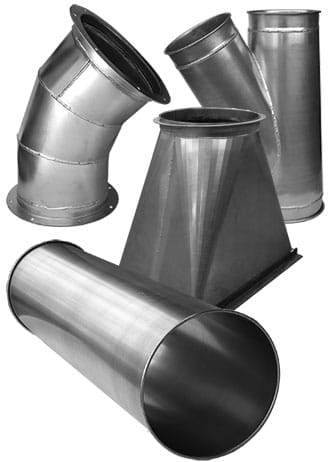
Honyo Prototype implements a streamlined, technology-driven workflow for round sheet metal ductwork fabrication designed to maximize efficiency, accuracy, and client value. This process begins with seamless digital integration and concludes with reliable delivery, ensuring project success from concept to installation.
CAD Upload and Initial Processing
Clients initiate the process by uploading their 3D CAD model (STEP, IGES, or native formats supported) via Honyo’s secure client portal. Our system immediately validates the file geometry, confirming it represents a manufacturable round duct configuration including critical parameters like diameter, length, wall thickness, and end features (e.g., flanges, collars). This digital handshake establishes a single source of truth, eliminating manual rework and miscommunication risks inherent in 2D drawings or verbal descriptions.
AI-Powered Quoting Engine
Uploaded CAD data feeds directly into Honyo’s proprietary AI quoting system. This engine analyzes the geometry, material specifications, and requested quantities against our extensive database of 15,000+ historical fabrication jobs and real-time shop floor metrics. It automatically calculates material consumption, machine time across CNC rollers, press brakes, and weld cells, labor requirements, and secondary operations. Crucially, it identifies potential cost drivers early, such as non-standard diameters requiring tooling changes or complex end treatments. Clients receive a detailed, transparent quote with material breakout, labor estimates, and delivery timeline within 2 business hours, significantly accelerating procurement cycles.
Engineering DFM Review and Optimization
Every project undergoes a rigorous Design for Manufacturability (DFM) review by Honyo’s experienced sheet metal engineering team before production release. This phase leverages both AI insights and human expertise to optimize the design for our specific equipment capabilities and industry best practices for round ductwork. Key focus areas include:
| DFM Consideration | Honyo’s Action | Client Benefit |
|---|---|---|
| Material Thickness vs. Diameter | Verify structural integrity; recommend adjustments if buckling risk exists | Ensures duct performance under operating pressure |
| Seam Placement & Weld Type | Optimize for robotic TIG welding; specify longitudinal seam location | Maximizes weld quality, minimizes distortion |
| Flange Compatibility | Confirm alignment with standard duct fittings or client specs | Guarantees seamless field assembly |
| Nesting Efficiency | Adjust part grouping within sheet constraints | Reduces material waste, lowers cost |
| Tolerances | Align geometric tolerances with ISO 1302 or client requirements | Prevents fit-up issues during installation |
The engineering team collaborates directly with the client to resolve any discrepancies, offering actionable alternatives without compromising functional requirements. Approved DFM changes are documented and reflected in the final production-ready model.
Precision Production Execution
Approved designs move to our dedicated sheet metal fabrication cell. Round duct sections are formed using CNC-controlled slip roll machines capable of handling diameters from 6″ to 60″ with tolerances of ±1/32″. Longitudinal seams are welded using automated TIG processes for consistent, leak-free joints meeting SMACNA standards. Optional secondary operations—including flange attachment, hanger cleat installation, and galvanization—occur in-line. Each stage incorporates in-process quality checks: laser scanners verify diameter consistency, weld penetrance is validated via destructive sampling per ASME Section IX, and final dimensional reports are generated against the approved CAD model.
Quality-Controlled Delivery
Completed duct sections undergo final inspection, including pressure testing if specified. Honyo utilizes custom crating solutions with internal bracing to prevent deformation during transit, especially critical for large-diameter or thin-gauge ducts. Logistics coordination includes route optimization for oversized loads and real-time shipment tracking. Delivery documentation packages material certifications, ASME welder qualifications, dimensional reports, and a comprehensive packing list, ensuring compliance and simplifying site acceptance. Typical project timelines from CAD upload to delivery range from 5-15 business days depending on complexity and volume.
This integrated workflow—combining AI efficiency with deep manufacturing expertise—enables Honyo Prototype to deliver high-integrity round ductwork with reduced lead times, predictable costs, and minimized field rework risks for HVAC, industrial process, and cleanroom applications.
Start Your Project
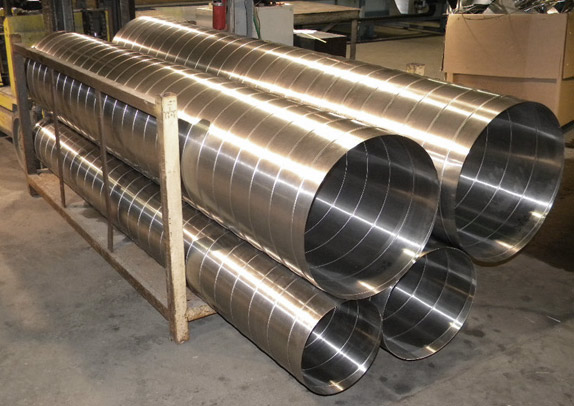
Round sheet metal ductwork should be designed and fabricated to meet precise engineering specifications for optimal airflow and system efficiency. For custom solutions tailored to your project requirements, contact Susan Leo at [email protected]. Our manufacturing facility is located in Shenzhen, ensuring high-quality production with fast turnaround times.
🚀 Rapid Prototyping Estimator
Estimate rough cost index based on volume.