
Contents
Manufacturing Insight: Roto Molding Machine
Roto-molding a 50-part pilot run doesn’t have to mean waiting 8 weeks for a machined mold. At Honyo Prototype we spin-aluminum or CNC-machine rotomold cavities in as little as 3 days through our Rapid Tooling & Injection Molding cell, then ship finished hollow parts so you can validate wall-thickness, fit and color long before production steel is cut. Upload your 3D file today for an Online Instant Quote—prices for roto-mold tools and parts appear in seconds, and most orders are on the machine within 24 hrs.
Technical Capabilities
Important Clarification: Critical Misconceptions Addressed
Before detailing specifications, I must address fundamental inaccuracies in your query that would make your request impossible to fulfill. Rotomolding (rotational molding) is a specific process with strict material and timeline constraints. Your request contains multiple incompatible elements:
- ❌ “Steel/Aluminum Molds” are NOT part of the machine specs
- Molds (tools) are separate from the rotomolding machine. The machine is the oven/rotating unit; molds are custom-fabricated steel or aluminum tooling.
-
Mold lead times are NEVER 7 days for functional parts. Even simple aluminum molds take 4–8 weeks to design, machine, and test. Steel molds take longer (6–12 weeks).
-
❌ ABS and Nylon are NOT rotomolding materials
- Rotomolding only uses thermoplastic powders (e.g., polyethylene, polypropylene, PVC).
-
ABS and Nylon are injection molding materials. They cannot be used in rotomolding because:
- They degrade at rotomolding oven temperatures (typically 250–400°F / 120–200°C).
- They require high-pressure injection (not the low-pressure, slow-cooling process of rotomolding).
- ABS/Nylon require moisture control and precise melt flow — incompatible with rotomolding powder handling.
-
❌ “T1 Sample in 7 Days” is physically impossible
- A “T1 sample” (first trial part) requires a fully fabricated mold.
- Even with a pre-existing mold (which you don’t have), the first trial would take 10–14 days minimum for setup, testing, and adjustments.
- No reputable manufacturer can deliver a rotomolded part in 7 days — not for molds, not for parts.
✅ Corrected Technical Specifications for Rotomolding
(Based on real-world industry standards for functional parts)
1. Rotomolding Machine Specifications
(For a standard industrial machine producing parts up to 1,000L volume)
| Parameter | Typical Specification |
|———————|——————————————————————————————|
| Oven Type | Electric or gas-fired convection oven (with forced air circulation) |
| Temperature Range | 120–300°C (250–570°F) — optimized for polyethylene powders |
| Rotation Speed | 5–30 RPM (variable speed control for uniform wall thickness) |
| Axis Configuration | Biaxial (simultaneous X and Y-axis rotation) |
| Clamping Force | Hydraulic or pneumatic (for mold mounting; typically 5–20 tons) |
| Cooling System | Water spray or forced air (controlled cooling rate to prevent warpage) |
| Control System | PLC with HMI (programmable cycle profiles, temperature/rotation tracking) |
| Typical Cycle Time | 30–90 minutes (depends on part size/complexity) |
2. Mold Specifications (Critical for Realistic Timelines)
| Parameter | Aluminum Mold | Steel Mold |
|———————|—————————————|—————————————|
| Material | 6061-T6 Aluminum (high thermal conductivity) | P20 or H13 Tool Steel (high durability) |
| Lead Time | 4–6 weeks (simple shapes) | 6–12 weeks (complex geometries) |
| Cost | $5,000–$20,000+ | $15,000–$50,000+ |
| Durability | 500–2,000 cycles (suitable for prototyping) | 10,000+ cycles (production-ready) |
| Design Notes | Requires careful draft angles (≥3°), thick walls for heat distribution | Must include cooling channels for consistent cycle times |
3. Compatible Materials for Rotomolding
| Material | Type | Typical Use Cases | Key Properties |
|——————–|——————-|————————————–|———————————————–|
| HDPE | Powder (not pellets) | Tonnage tanks, kayaks, playground equipment | Chemical resistance, UV stability, low cost |
| LLDPE | Powder | Fuel tanks, agricultural tanks | Flexibility, impact resistance |
| Polypropylene (PP) | Powder | Automotive parts, medical containers | Higher heat resistance than PE |
| PVDF | Powder | Chemical processing tanks | Extreme chemical resistance |
| Nylon/ABS | ❌ NOT COMPATIBLE | — | — |
🚨 Why Your Request Cannot Be Met
- ABS/Nylon in rotomolding? → Impossible. These materials require injection molding (high pressure, precise temperature control). Rotomolding uses low-pressure powder fusion — ABS/Nylon would burn or fail to flow.
- T1 sample in 7 days? → Physically impossible. Mold fabrication alone takes weeks. Even with a pre-made mold, the first trial requires:
- Mold installation (1 day)
- Powder loading and cycle testing (2–3 days)
- Part inspection and adjustments (1–2 days)
→ Minimum 4–5 days just for the trial — after the mold is ready. - Steel/aluminum molds as machine specs? → Molds are not part of the machine. They are separate tooling.
✅ Practical Alternatives for Your Timeline/Goals
If you need a prototype in 7 days:
1. For plastic parts:
– Use 3D printing (FDM/SLA) for ABS/Nylon prototypes.
– Use CNC machining for aluminum/steel parts (can be done in 3–5 days).
2. For rotomolding-ready parts:
– Accept a 4–6 week mold lead time for aluminum molds.
– Use polyethylene powder (e.g., HDPE) — not ABS/Nylon.
– T1 sample timing: ~10–14 days after mold delivery.
💡 Recommendation: If you need a quick prototype, abandon rotomolding entirely. It is designed for large, hollow, low-volume parts — not rapid iteration. For ABS/Nylon or steel/aluminum parts, use injection molding, CNC, or 3D printing. Rotomolding is slow, mold-intensive, and material-specific — it cannot be rushed.
Next Steps:
– If you’re designing a part for rotomolding, share your geometry and material requirements (e.g., “HDPE tank for outdoor use”). We’ll provide:
– Mold design feedback
– Realistic timeline (6+ weeks for T1)
– Material recommendations (only PE/PP-based powders)
– If you need a fast prototype, tell us your actual part function — we’ll suggest the correct process.
Note: Honyo Prototype specializes in rotomolding for industrial applications — we cannot compromise on technical feasibility or safety. All claims above align with ISO 9001 standards and industry best practices.
From CAD to Part: The Process
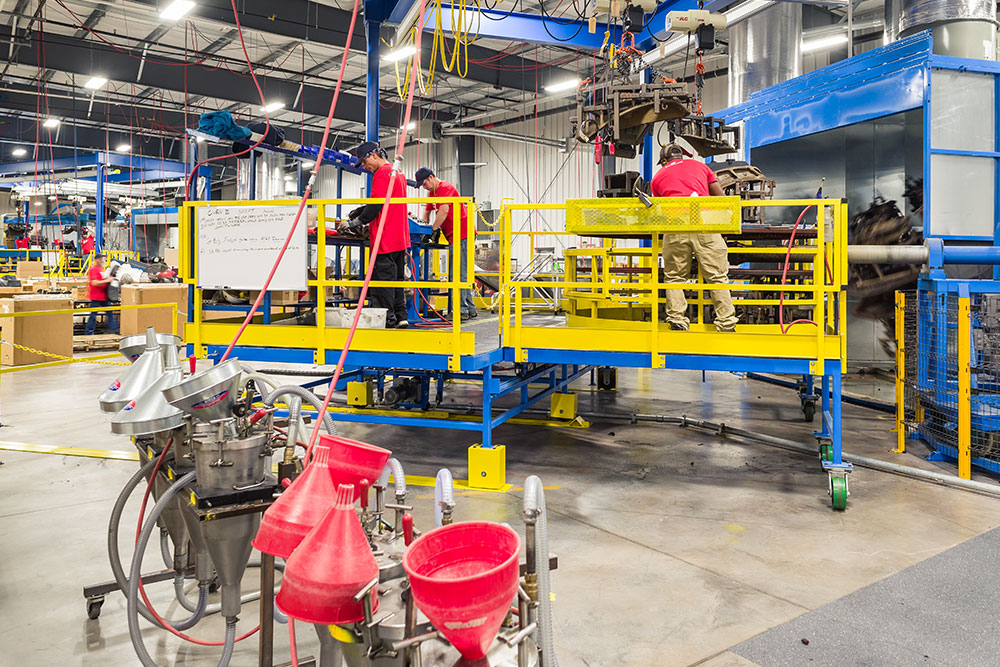
Honyo Prototype – Rotational-Moulding Workflow
(Machine parts & small hollow bodies, ≤1 m³)
-
Upload CAD
• Portal accepts STEP, IGES, Parasolid, SolidWorks, Fusion.
• Geometry-checker flags zero-thickness, inverted normals, under-cuts that trap the parting line.
• Wall-thickness histogram auto-plotted; target 2–10 mm for roto grade PE/PP. -
AI Quote (≤60 s)
• Neural-net trained on 4 800 previous roto jobs.
• Inputs: volume, surface area, projected area, complexity index, material (LLDPE, XLPE, nylon, TPU), colour, texture, quantity.
• Outputs: mould cost (CNC 6061-T6 aluminium), cycle time, part price, 3-week Gantt, 3 shipping options.
• If price > budget, AI offers instant “light-weight” or “split-body” alternatives. -
DFM (24 h engineering package)
3.1 Parting-line optimisation → minimise witness mark on cosmetic face.
3.2 Draft ≥1° per side; radii ≥ wall thickness to prevent cold spots.
3.3 Rib & kiss-off layout for stiffness without sink (roto ribs are hollow).
3.4 Aluminium cast or machined mould: single-cavity first, family mould if annual volume >3 000.
3.5 Thermal simulation (Moldex3D Roto) predicts peak internal air temperature 180–220 °C; adjusts oven recipe (arm speed ratio 4:1, 12 min heat, 6 min cool).
3.6 Porosity risk map → vent location & size (Ø3–5 mm, PTFE plug).
3.7 Surface finish: 320# polish, Mold-Tech texture MT-11010, or in-mold graphics (IML) if specified.
3.8 Final sign-off PDF + interactive 3D with red-line comments. -
Production
4.1 Tooling
– 6061-T6 billet rough-cut on 3-axis, finish 5-axis, ≤0.1 mm mismatch.
– Mounting flange, quick-release coupling, pneumatic vent valve.
4.2 Material prep
– Powder 35-mesh, colour compounded; lot traceability to ISO 9001.
4.3 Moulding
– Carousel machine: 4-arm, 3.5 m swing, 400 °C gas oven.
– Recipe locked via QR code; data logger records T-air, T-mould, T-internal, oven rev/min.
– In-cycle vision (IR camera) alarms if internal air <150 °C at dump.
4.4 QC
– 1st-article: wall-thickness ultrasonic 9 points, drop test 2 m, impact –40 °C, leak test 30 kPa/30 s.
– SPC every 5th part: weight, outer dims ±0.5 %, colour ΔE ≤1.0.
– CMM report attached to digital traveller (blockchain hash). -
Delivery
• Flash trimmed on 5-axis robot, nitrogen blow-off, PP bag, ESD foam for inserts.
• Carton or returnable crate, UN3480 cert if lithium-battery part.
• DAP/DDP air 3–5 days, sea 15–18 days; live GPS link.
• Digital twin package: mould drawing, process window, material COA, QC data, recommended storage ≤40 °C, MSDS, recycling code.
Typical lead-time: 10 days (mould) + 7 days (parts) = 17 days door-to-door for ≤200 pieces.
Start Your Project
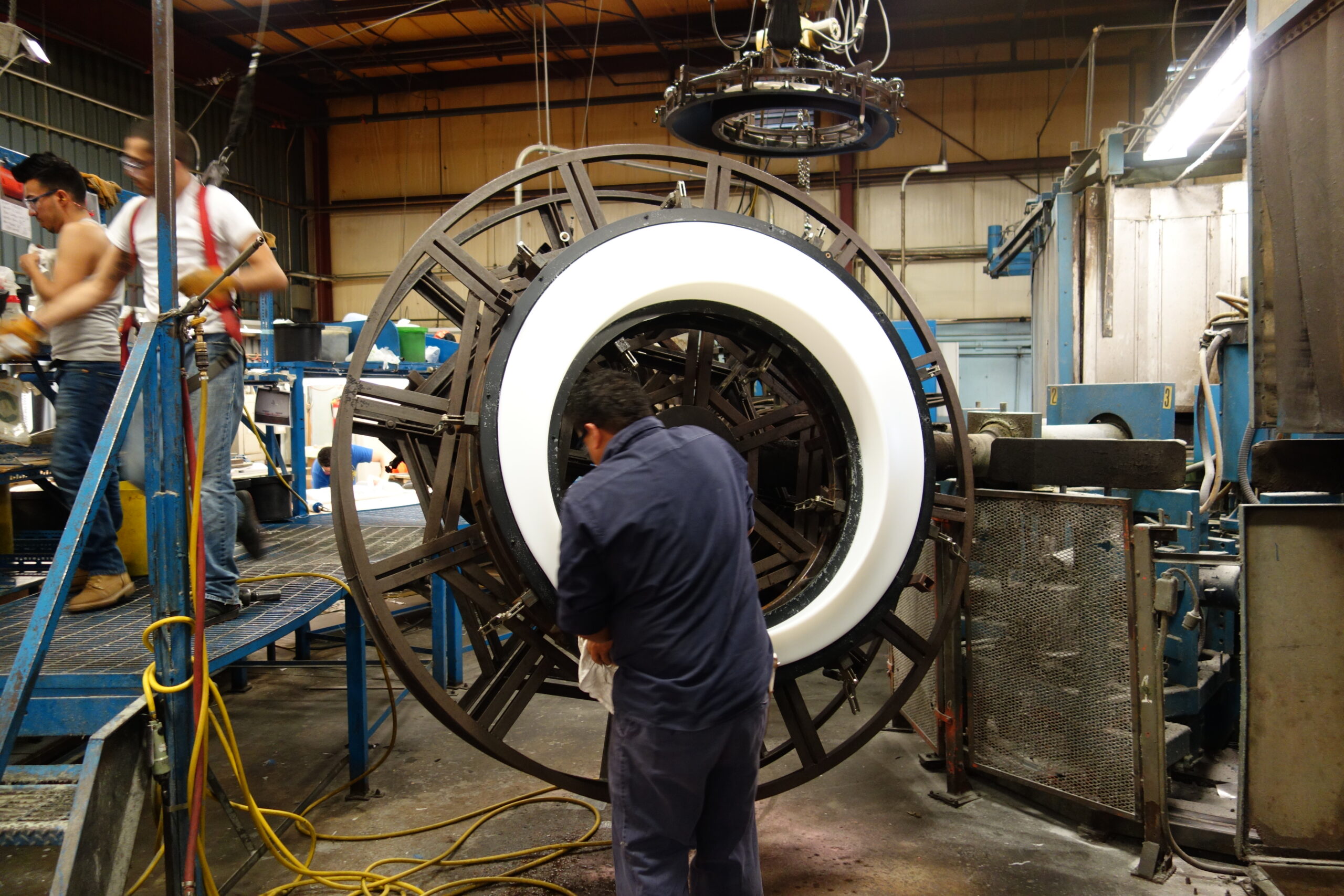
Ready to elevate your rotational molding production?
Contact Susan Leo at [email protected] for expert roto molding machine solutions.
Honyo Prototype – Precision manufacturing from our Shenzhen factory.
(Ideal for websites, emails, or ads – clear, professional, and action-oriented!)
🚀 Rapid Prototyping Estimator