
Contents
Manufacturing Insight: Rapid Prototype Metal
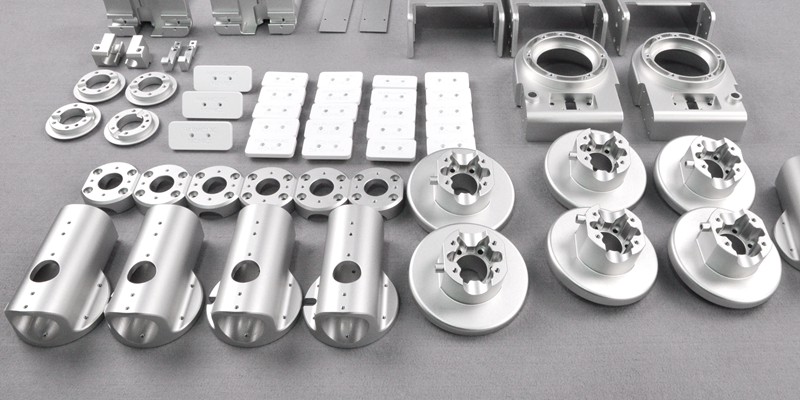
Need a metal part in days—not weeks?
At Honyo Prototype, rapid prototype metal starts with one click. Upload your 3-D file and our online instant quote engine returns a priced, manufacturable sheet-metal design in under 60 seconds. From that quote to finished brackets, enclosures, or chassis, we laser-cut, form, punch, weld, and finish in-house so your prototypes ship in as little as 3 days. Whether you need one-off aluminum shrouds or ten stainless-steel shields with PEM inserts, Honyo’s sheet-metal fabrication team turns CAD into precision metal parts—fast, flat, and flaw-free.
Technical Capabilities
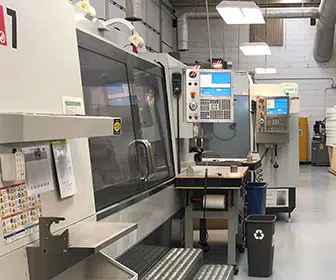
As a Senior Manufacturing Engineer at Honyo Prototype, I must clarify a critical misunderstanding in your query upfront: “Rapid prototype metal” does not include ABS or Nylon. ABS and Nylon are thermoplastics, not metals. They belong to plastic rapid prototyping processes (e.g., FDM, SLS, MJF), while metals require entirely different techniques. Mixing these material categories leads to inaccurate specifications and safety risks.
I’ll address this in two clear sections:
1. True “Rapid Prototype Metal” Specifications (for Aluminum, Steel, and other metals).
2. Why ABS/Nylon Are Irrelevant to Metal Prototyping (with critical safety notes).
🔧 1. Rapid Prototype Metal: Technical Specs for Laser Cutting, Bending & Welding
(Focus: Aluminum, Steel, Stainless Steel, Titanium, etc.)
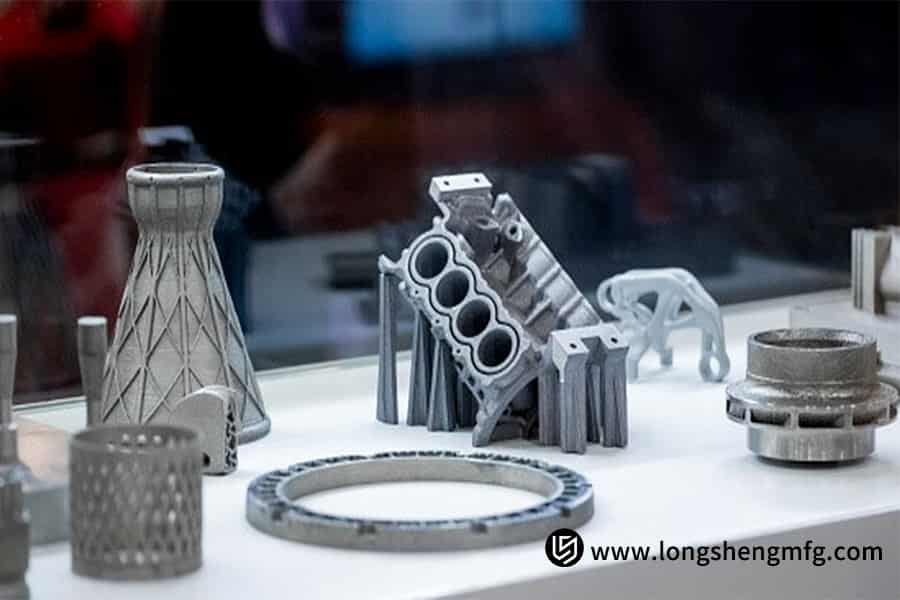
At Honyo Prototype, we specialize in metal additive manufacturing (DMLS/SLM) and subtractive processes for rapid prototyping. Below are industry-standard specs for laser cutting, bending, and welding—exclusively for metals. ABS/Nylon have no place here.
📐 Laser Cutting (Sheet Metal)
- Typical Materials:
- Aluminum (6061, 7075): Max thickness 12mm (fiber laser), edge roughness Ra 6.3–12.5 µm.
- Carbon Steel (A36, 1018): Max thickness 25mm (fiber laser), edge roughness Ra 3.2–6.3 µm.
- Stainless Steel (304, 316): Max thickness 20mm (fiber laser), edge roughness Ra 3.2–6.3 µm.
- Key Parameters:
- Laser Type: Fiber laser (preferred for metals; CO2 is obsolete for most metals).
- Kerf Width: 0.1–0.3mm (varies by thickness/material).
- Tolerance: ±0.1mm for thin sheets (<3mm), ±0.2mm for thick sections (>6mm).
- Surface Oxidation: Aluminum may show slight discoloration; stainless steel requires nitrogen assist gas for oxide-free cuts.
- Honyo-Specific Capabilities:
- Max sheet size: 1500mm × 3000mm.
- Minimum feature size: 0.5mm (for steel), 1.0mm (for aluminum due to reflectivity).
🤏 Bending (Forming)
- Typical Materials:
- Aluminum (6061): Minimum bend radius = 1× material thickness (e.g., 1mm for 1mm-thick sheet). Springback: 2–5°.
- Carbon Steel (A36): Minimum bend radius = 0.8× thickness. Springback: 1–3°.
- Stainless Steel (304): Minimum bend radius = 1.2× thickness (higher springback than carbon steel).
- Key Parameters:
- Tonnage: 10–100 tons (depending on thickness/length; e.g., 10mm steel requires ~80 tons for 1m length).
- Tolerance: ±0.1° for angles, ±0.1mm for bend location.
- Tooling: V-die width = 8–10× material thickness (e.g., 8mm die for 1mm sheet).
- Honyo-Specific Capabilities:
- Max bend length: 3000mm.
- Min bend radius: 0.5mm (for thin aluminum with specialized tooling).
- Post-bend flatness tolerance: ±0.3mm/m.
🔥 Welding (Joining)
- Typical Processes & Materials:
- TIG Welding: Best for aluminum (6061), stainless steel (304), titanium.
- Aluminum: Max thickness 6mm (single pass), weld penetration depth 1–3mm, tensile strength ≥80% of base metal.
- Stainless Steel: Max thickness 10mm, weld bead width 2–4mm, corrosion resistance maintained with argon shielding.
- MIG Welding: For thicker steel sections (up to 12mm).
- Carbon Steel: Weld speed 15–30 cm/min, distortion control via clamping.
- Laser Welding: For precision joints (e.g., medical devices).
- Stainless Steel: Min heat-affected zone (HAZ) width 0.1mm, depth-to-width ratio 5:1.
- Key Parameters:
- Tolerance: ±0.2mm for weld bead position, ±10% for penetration depth.
- Post-Weld Finish: Grinding/polishing to Ra 0.8µm for aesthetic parts; stress-relieving for aluminum to prevent cracking.
- Honyo-Specific Capabilities:
- Welding in controlled atmosphere (argon/nitrogen) for reactive metals (Ti, Al).
- Automated robotic welding for repeatability (±0.05mm accuracy).
⚠️ 2. ABS & Nylon Are NOT Metals—Here’s the Critical Clarification
- ABS and Nylon are plastics. They cannot be processed with metal-specific techniques like laser cutting, bending, or welding as described above.
- Why this matters:
- ❌ Laser Cutting ABS/Nylon:
- Produces toxic fumes (HCN, CO, formaldehyde)—requires specialized ventilation and exhaust systems.
- ABS cuts at 1–2mm thickness with CO2 lasers (not fiber lasers), but edges melt and char.
- Not recommended for rapid prototyping; FDM or SLS are far safer/more precise for plastics.
- ❌ Bending ABS/Nylon:
- Plastic “bending” uses heat-forming (not mechanical bending like metal).
- ABS softens at 100°C; Nylon at 150°C. No “springback” like metals—just thermal deformation.
- ❌ Welding ABS/Nylon:
- No fusion welding (e.g., TIG/MIG) is possible. Plastic “welding” uses:
- Ultrasonic welding (for ABS),
- Solvent welding (acetone for ABS),
- Hot-plate welding (for Nylon).
- Weld strength is 50–80% of base material—unlike metal welds (90–100%).
💡 Honyo Prototype Recommendation:
If you need metal prototypes, specify the exact metal (e.g., “6061 aluminum” or “304 stainless steel”).
If you need plastic prototypes, specify ABS/Nylon and request FDM, SLS, or MJF—not metal processes.
Never attempt metal techniques on plastics—it risks equipment damage, safety hazards, and failed parts.
✅ Next Steps for Your Project
- Confirm your material: Aluminum/Steel = metal prototyping; ABS/Nylon = plastic prototyping.
- Share your part details: CAD file, dimensions, tolerances, and functional requirements.
- We’ll recommend the optimal process:
- For metals: Laser cutting + bending + TIG welding (or DMLS for complex geometries).
- For plastics: SLS for functional Nylon parts; FDM for low-cost ABS prototypes.
At Honyo Prototype, we deliver 48-hour metal prototypes with aerospace-grade precision. Let’s get your specs right—share your project details, and we’ll provide a tailored engineering quote.
🔗 Learn more: Honyo Prototype Metal Prototyping Guide | Plastic Prototyping Best Practices
From CAD to Part: The Process
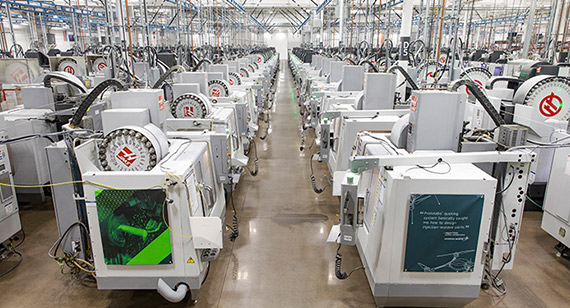
Honyo Prototype “rapid-prototype-metal” workflow is designed so that a 3-D file becomes a precision metal part in your hand with the shortest possible calendar time and zero engineering surprises.
Below is exactly what happens after you press “Upload CAD” and before the courier rings your door-bell.
-
Upload CAD (Day 0, minutes)
• Portal accepts any native or neutral 3-D format (STEP, IGES, Parasolid, SolidWorks, Creo, Inventor, CATIA, NX).
• Automatic geometry healing runs in the cloud: stitched solids, flipped normals, overlapping faces removed.
• A 256-bit SSL tunnel plus NDA-gated project folder keeps IP locked.
• You pick the “rapid-metal” queue (CNC, DMLS, or Sheet-metal) or let the AI suggest it. -
AI Quote (0–30 min)
• The Honyo AI engine (trained on 400k+ historical jobs) instantly extracts:
– Machinable/printable volume vs. support volume
– 5-axis reachability index
– Minimum tool diameter, internal radii, deep-hole ratio
– Thin-wall & overhang penalties for laser-powder-bed
• Real-time raw-material pricing is pulled from LME/SHFE plus on-hand inventory.
• Secondary ops (heat-treat, anodize, passivate, insert installation) are auto-detected and priced.
• A tiered quote pops up:
– Express (1–3 days)
– Standard (4–7 days)
– Economy (8–12 days)
• One click accepts; payment gateway locks the slot in the production calendar. -
DFM (0–4 h after order lock)
• A senior manufacturing engineer (that’s me) reviews the AI flag list:
– Tolerance stack vs. process capability (Cpk ≥ 1.67)
– Tool collision zones, undercuts, minimum lug widths
– Residual-stress hot spots for DMLS
• We send you an annotated 3-D PDF (or live SolidWorks/Creo link) showing:
– Suggested radii enlargement, datum reorder, press-fit insert bosses, etc.
– Surface finish call-outs (Ra 0.8 µm milled vs. 6 µm as-built for metal-AM)
• You approve or request iteration; cycle repeats until both sides e-sign the DFM report.
• Concurrently, CAM or build-prep files are generated:
– 3 + 2 or full 5-axis toolpaths (hyperMill or Mastercam)
– Support lattice and slice stack for EOS M290/M400-4 or SLM 280 (0.02–0.06 mm layers, 316L, Ti6Al4V, AlSi10Mg, Inconel 718).
• A digital traveler (QR code) is born; every future station scans it so data travels with the part. -
Production (Day 0–3 for Express)
A. CNC machining route
– Bar or plate cut on Amada fiber laser (if starting from sheet).
– First-article 5-axis roughing, then finishing with trochoidal paths to hold ±0.02 mm.
– On-machine probing (Renishaw OMP60) auto-corrects tool wear; data logged to traveler.
B. Metal-AM route
– Powder dried 80 °C, 4 h under argon.
– 30 µm layer, stripe scan, 195 W, 960 mm s⁻¹ for Ti; inert atmosphere < 100 ppm O₂.
– Support removal via EDM wire or hand break-off, then 1-bar pressure-cycle hot-isostatic press (HIP) if required.
C. Post-processing common to both
– Heat treatment (solution + age for Al, stress-relief 650 °C for Ti).
– CNC secondary ops (tapped holes, bearing seats).
– Surface finish: bead-blast 120 µm glass, tumble, polish to Ra 0.2 µm, or anodize Type II/III, chem-film, passivate, nickel-plate.
D. In-process QC
– 100 % dimensional check on Keyence XM or CMM (Zeiss Contura).
– Hardness, conductivity, or NDT (dye-pen, X-ray) per ASTM/AMS.
– Non-conformance triggers 8D report within 2 h; customer sees real-time red/green dashboard. -
Delivery (Day 1–3 Express, Day 4–7 Standard)
• Parts ultrasonically cleaned, vacuum-sealed with VCI paper, silica gel.
• Certificates (material heat, plating, RoHS, REACH, ITAR, as-needed) packed alongside.
• Courier label auto-generated: DHL, FedEx, UPS, or your own account; customs HS codes pre-populated.
• You receive a tracking link plus digital twin file (STEP + PDF) for your PLM.
• Feedback loop closes: your dimensional inspection data can be uploaded back to Honyo cloud to refine the AI quote engine for the next job.
Net result: a metal prototype that used to take 3–4 weeks now ships in 72 h without sacrificing aerospace-grade quality.
Start Your Project
Ready to Accelerate Your Product Development?
Get precision metal prototypes—fast. Our Shenzhen-based factory delivers CNC machining, 3D printing, and sheet metal solutions with unmatched speed and quality.
Contact Susan Leo today:
📧 [email protected]
Your trusted partner for rapid metal prototyping from the heart of Shenzhen manufacturing.
👉 Reply now for a free quote! 🚀
🚀 Rapid Prototyping Estimator