
Contents
Manufacturing Insight: Printable Plastic Sheet
Precision Plastic Sheets On Demand Through Industrial 3D Printing
Honyo Prototype delivers engineered plastic sheet solutions tailored to demanding industrial applications, leveraging advanced additive manufacturing to overcome traditional fabrication constraints. Our Industrial 3D Printing services produce functional, durable sheets in high-performance polymers like Nylon 12 and ABS-M30 directly from digital models—eliminating tooling costs, reducing material waste, and accelerating iteration cycles. Unlike conventional sheet production, which requires lengthy setup and minimum order quantities, Honyo’s selective laser sintering (SLS) and multi-jet fusion (MJF) processes enable rapid production of custom geometries, textures, and integrated features at prototype or low-volume production scales. This capability ensures your plastic sheets meet exact mechanical, thermal, and dimensional specifications without compromising on lead time or design flexibility.
Accelerate your development cycle with Honyo’s Online Instant Quote platform, providing transparent pricing and manufacturability feedback within minutes. Upload your CAD file to receive a validated cost estimate and lead time—no manual RFQ delays or procurement bottlenecks. Whether you require lightweight structural panels, chemical-resistant enclosures, or ergonomic components, our industrial-grade additive processes deliver consistent, end-use ready plastic sheets that perform under real-world conditions. Explore how Honyo Prototype bridges the gap between concept and production-ready fabrication.
Technical Capabilities
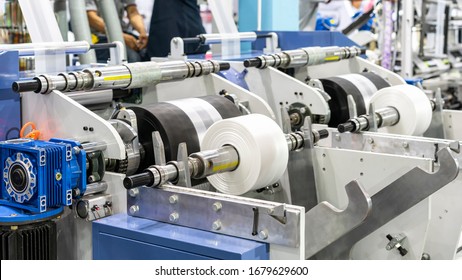
The term “printable plastic sheet” is not standard in additive manufacturing, as these processes typically build parts layer by layer from raw materials rather than printing on pre-formed sheets. However, interpreting the request as specifications for materials used in the indicated 3D printing processes—Stereolithography (SLA), Selective Laser Sintering (SLS), Multi Jet Fusion (MJF), and Direct Metal Laser Sintering (DMLS)—the following table outlines the relevant technical specifications and compatible materials, including plastics like ABS and Nylon, and metals such as Aluminum and Steel.
| Process | Material Type | Compatible Materials | Typical Layer Thickness | Build Resolution (XY) | Tensile Strength (Typical) | Heat Deflection Temperature | Key Characteristics |
|---|---|---|---|---|---|---|---|
| SLA (Stereolithography) | Photopolymer Resin | Standard Resin, Tough Resin (ABS-like), Durable Resin, Castable Resin | 25–100 µm | 50–100 µm | 35–65 MPa | 45–60 °C | High surface finish, brittle, limited thermal stability, good for visual prototypes |
| SLS (Selective Laser Sintering) | Thermoplastic Powder | Nylon 12 (PA12), Nylon 11 (PA11), Glass-filled Nylon, TPU | 80–150 µm | 100–150 µm | 45–55 MPa | 170–180 °C | Good mechanical strength, functional parts, no support structures needed |
| MJF (Multi Jet Fusion) | Thermoplastic Powder | Nylon 12 (PA12), Glass-filled Nylon, TPU | 80–100 µm | 100 µm | 48–50 MPa | 176–180 °C | Faster than SLS, excellent part uniformity, slightly smoother surface |
| DMLS (Direct Metal Laser Sintering) | Metal Powder | Stainless Steel (17-4 PH, 316L), Aluminum (AlSi10Mg), Titanium (Ti6Al4V), Tool Steel | 20–50 µm | 50–100 µm | 450–600 MPa (varies by alloy) | N/A (metal) | Fully dense metal parts, high strength, complex geometries, high cost |
Notes:
ABS-like materials are available in SLA (e.g., Tough Resin) and SLS (Nylon with modifiers), but true ABS is not typically used in these processes. FDM is the standard for ABS thermoplastic.
Nylon (PA12) is the most common material in both SLS and MJF, offering excellent durability, chemical resistance, and mechanical performance.
Aluminum and Steel are processed in DMLS only, not in SLA, SLS, or MJF, as those are primarily polymer-based technologies.
Surface finish varies significantly: SLA offers the smoothest surface, while SLS and MJF have a grainy texture; DMLS parts require post-processing for smoothness.
Post-processing such as sanding, bead blasting, heat treatment (for metals), or sealing (for resins) is often required to achieve final part specifications.
This comparison supports material and process selection for functional prototyping and end-use part production in industrial applications.
From CAD to Part: The Process
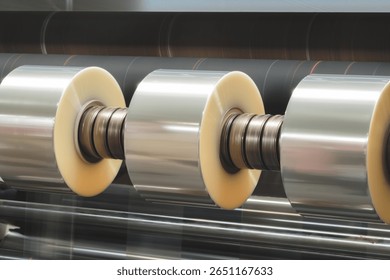
Honyo Prototype delivers precision laser-cut and engraved plastic sheet components through a rigorously controlled digital workflow designed for engineering accuracy and rapid turnaround. Our process specifically addresses materials like acrylic (PMMA), polycarbonate (PC), and ABS sheets where “printable” refers to laser marking or engraving capabilities, not additive manufacturing. Below is the technical sequence:
Upload CAD
Customers initiate the process by uploading native CAD files (STEP, IGES, DWG, or native SOLIDWORKS) via our secure customer portal. We require vector-based 2D DXF or DWG files for laser cutting paths, with critical dimensions and tolerances explicitly annotated per ASME Y14.5. Raster image formats (JPG, PNG) are only accepted for engraving artwork and must include embedded scale references. File validation checks for unit consistency (mm/inch), layer separation (cut vs. engrave), and minimum feature size compliance (typically ≥0.5mm for acrylic) occur immediately upon upload.
AI Quote
Our proprietary AI quoting engine analyzes the validated CAD data against real-time material inventory, machine availability, and geometric complexity. The algorithm calculates processing time based on cut path length, engraving density, and sheet nesting efficiency while applying material-specific cost factors. Crucially, the AI performs preliminary feasibility screening: flagging potential issues like unsupported geometries, insufficient kerf compensation, or material thickness exceeding laser power limits (e.g., >12mm for CO2 laser cutting on PC). Quotes include precise cost breakdowns, lead time estimates, and any immediate design constraints requiring attention before proceeding.
DFM (Design for Manufacturability) Review
All quotes trigger a mandatory engineering review by our manufacturing team. This phase involves detailed DFM analysis using specialized CAM software to simulate laser paths and thermal effects. Key checks include:
Kerf width validation (typically 0.1–0.2mm for acrylic) against tolerances
Heat-affected zone assessment for brittle materials like cast acrylic
Nesting optimization to minimize sheet waste (<5% target)
Verification of engraving depth consistency relative to material grade
Confirmation of hole diameter-to-thickness ratios meeting laser capabilities
We provide actionable feedback within 4 business hours, suggesting modifications such as adding bridge tabs for intricate cutouts or adjusting engraving power settings to prevent melting in polycarbonate. Customer approval of the DFM report is required before production release.
Production
Approved designs move to our automated production cell featuring CO2 laser systems with ±0.1mm positional accuracy. Material selection adheres to our certified inventory:
| Material Type | Common Thickness Range | Key Properties | Laser Compatibility Notes |
|---|---|---|---|
| Cast Acrylic | 1.5mm – 25mm | Optimal clarity, low stress | Highest edge quality; minimal flame polishing needed |
| Extruded Acrylic | 1.5mm – 19mm | Cost-effective, uniform | Slight edge frosting; requires post-process polishing |
| Polycarbonate | 1.0mm – 12mm | Impact-resistant, UV stable | Requires reduced power/speed to prevent yellowing |
| ABS | 1.0mm – 6mm | Good machinability, matte finish | Prone to melting; needs compressed air assist |
All sheets undergo pre-production inspection for surface defects. Laser parameters (power, speed, frequency) are dynamically adjusted per material batch certifications. In-process metrology verifies critical dimensions on first articles using calibrated optical comparators.
Delivery
Components undergo final inspection against the original CAD per ANSI B4.2 standards, with CMM reports available upon request. Parts are cleaned, packaged in anti-static materials with protective film, and shipped via tracked courier services. Customers receive automated shipment notifications with real-time logistics data through our portal. Typical lead time from DFM approval to delivery is 3–7 business days for standard orders, with expedited options available. All deliverables include material certification and process documentation meeting ISO 9001 requirements. This integrated workflow ensures geometrically compatible, functionally validated plastic sheet components with minimized iteration cycles.
Start Your Project
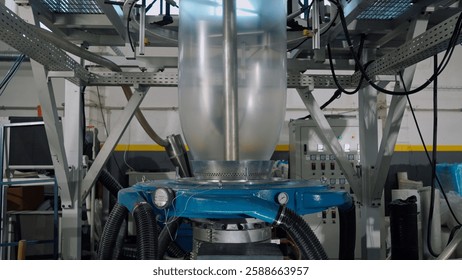
Looking for high-quality printable plastic sheets for your next project? Honyo Prototype offers precision-manufactured plastic sheets ideal for prototyping, signage, displays, and custom fabrication. Our materials are optimized for excellent print adhesion and durability.
Contact Susan Leo today at [email protected] to request samples, pricing, or technical specifications. With our factory located in Shenzhen, we provide fast production and global shipping for both small-batch prototypes and large-volume orders.
Let us support your manufacturing needs with reliable, cost-effective solutions—direct from the source.
🚀 Rapid Prototyping Estimator
Estimate rough cost index based on volume.