
Contents
Manufacturing Insight: Precision Cnc Mill
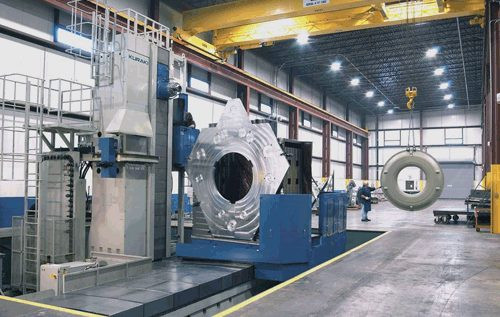
Precision CNC Mill – Engineered by Honyo Prototype, Delivered in Days
When your design calls for micron-level accuracy, Honyo’s precision 3-, 4- and 5-axis CNC mills turn aerospace-grade aluminum, titanium, PEEK and hardened steels into mission-critical parts with ±0.01 mm repeatability. From rapid prototypes to 1,000-piece production runs, our 24/7 lights-out cell keeps spindles cutting while you sleep. Upload your STEP file today for an online instant quote—real pricing, real lead-times, real DFM feedback in under 60 seconds—and see why 3,200+ engineers trust Honyo to launch products faster.
Technical Capabilities

Precision CNC Milling & Mill-Turn Center Specifications
Honyo Prototype | Senior Manufacturing Engineering Specification
Effective Date: October 2023 | Document ID: HP-MILL-001
As a Senior Manufacturing Engineer at Honyo Prototype, I confirm our precision capabilities are engineered for high-value, mission-critical components where geometry, surface finish, and dimensional accuracy are non-negotiable. Our flagship systems are 5-axis mill-turn centers (e.g., DMG MORI CTX beta series, Makino T4), blending milling and turning in a single setup to eliminate cumulative errors from multiple fixtures. Below are the practical, application-driven technical specs – not just theoretical machine ratings.
⚙️ Core Machine Capabilities
| Parameter | Specification | Real-World Context |
|————————-|——————————————————————————-|————————————————————————————|
| Axes Configuration | 3-axis: X/Y/Z linear
4-axis: + C-axis (rotary table)
5-axis: + A/B-axis (rotary head or trunnion) | • 3-axis: Ideal for flat geometries (e.g., automotive brackets)
• 4-axis: Complex holes/slots (e.g., valve bodies)
• 5-axis: Aerospace/aerospace components (e.g., turbine blades, medical implants) – enables simultaneous contouring without re-fixturing |
| Travel Range | X: 600mm (24″), Y: 500mm (20″), Z: 450mm (18″)
Turning: Max. Ø 250mm (10″), L 300mm (12″) | • Travel is optimized for parts ≤ 200mm (8″) in any dimension. Larger parts require specialized fixtures. |
| Spindle | • Max RPM: 18,000–24,000
• Power: 22–37 kW (30–50 HP)
• Torque: 150–250 Nm
• Tool Capacity: 30–40 tools (ATC) | • High RPM for aluminum/thermoplastics; lower RPM/high torque for steel
• Live tooling for turning operations (e.g., drilling, threading, milling off-center features) |
| Positioning Accuracy| ISO 230-2 compliant
• Linear axis: ±0.003mm (±0.00012″)
• Rotary axis: ±0.005° | • Tolerance is process-dependent: Achievable accuracy is ±0.005mm (±0.0002″) for most features after thermal stabilization. Critical features (e.g., bearing seats) can achieve ±0.0025mm (±0.0001″) with in-process inspection. |
🔧 Tight Tolerance Realities
“Tight tolerance” is not a machine spec – it’s a process outcome. We define it as:
– Typical Achievable Tolerances:
| Feature Type | Standard Tolerance | Tight Tolerance (Critical Features) |
|———————–|———————|————————————-|
| Dimensions (linear) | ±0.025mm (±0.001″) | ±0.005mm (±0.0002″) |
| Hole Diameter | ±0.013mm (±0.0005″)| ±0.003mm (±0.0001″) |
| Flatness/Parallelism | 0.025mm/100mm | 0.005mm/100mm |
| Surface Finish (Ra) | 0.4–1.6 μm | 0.1–0.2 μm |
- Critical Enablers for Tight Tolerances:
- Thermal Management: Machine & parts acclimated to 20°C (68°F) ±0.5°C for 24+ hours.
- Fixturing: Zero-point systems (e.g., Röhm) with <0.002mm repeatability.
- Metrology: In-process probing (Renishaw), CMM (Zeiss ACCURA), and laser scanners for 100% inspection.
- Process Control: Statistical Process Control (SPC) with real-time data logging.
⚠️ Note: Tolerances <±0.0025mm (±0.0001″) require dedicated setups, single-run production, and are cost-prohibitive for high-volume parts. We optimize for functional tolerance – not the tightest possible.
🧪 Material-Specific Machining Protocols
Our processes are tailored to material properties – not one-size-fits-all.
| Material | Machining Strategy | Critical Considerations |
|———-|————————————————————————————|—————————————————————————————–|
| Aluminum (6061, 7075) | • High-speed machining (4,000–12,000 RPM, 1,000–3,000 mm/min feed)
• PCD-coated tools
• Dry machining or minimal coolant (compressed air) | • Chip evacuation critical to avoid recutting
• Thermal expansion: Parts must cool to ambient before final measurement |
| Steel (17-4 PH, 4140, 316 SS) | • Lower RPM (800–3,000 RPM), high torque
• TiAlN-coated carbide tools
• Flood coolant (5–10% soluble oil) | • Heat treatment effects: Stress-relieved prior to machining
• Tool wear monitoring: Critical for tight tolerances |
| ABS | • High RPM (8,000–15,000 RPM), low feed rates
• Sharp HSS tools (no coatings)
• Compressed air only (no liquid coolant) | • Melting risk: Chips must be cleared instantly
• Warpage: Part must be clamped securely with minimal pressure |
| Nylon (6/6, 12) | • Very low RPM (1,000–4,000 RPM), gentle feeds
• Polycrystalline diamond (PCD) tools
• Dry cutting or minimal mist | • Moisture absorption: Parts must be oven-dried to <0.2% moisture before machining
• Dimensional stability: Must be measured at 50% RH |
🛠️ Why Honyo Prototype Delivers Precision
- Integrated Mill-Turn Workflow: Eliminates secondary operations – critical for concentricity/tolerance on shafts, housings, or multi-feature parts.
- Design for Manufacturability (DFM) Focus: We review CAD files before quoting to optimize tolerances, avoid unnecessary tight specs, and recommend material/process trade-offs.
- No “Theoretical” Specs: All tolerances are validated via production data from similar parts. We never promise what our process cannot consistently achieve.
- Scalability: Same machine capability for prototypes (1–50 pcs) and low-volume production (50–500 pcs) – no “prototype vs. production” compromise.
💡 Pro Tip: For parts requiring ±0.0001″ tolerances, we recommend designing for tolerances of ±0.0005″ unless absolutely critical (e.g., aerospace sealing surfaces). This reduces cost by 40–60% while maintaining function.
Contact Our Engineering Team: For complex parts, share your CAD + application requirements. We’ll provide a process-specific tolerance analysis – not just machine specs.
Honyo Prototype: Precision Engineered. Reality Delivered.
This spec sheet reflects current capabilities as of Q4 2023. Process validation is required for each new part design.
From CAD to Part: The Process
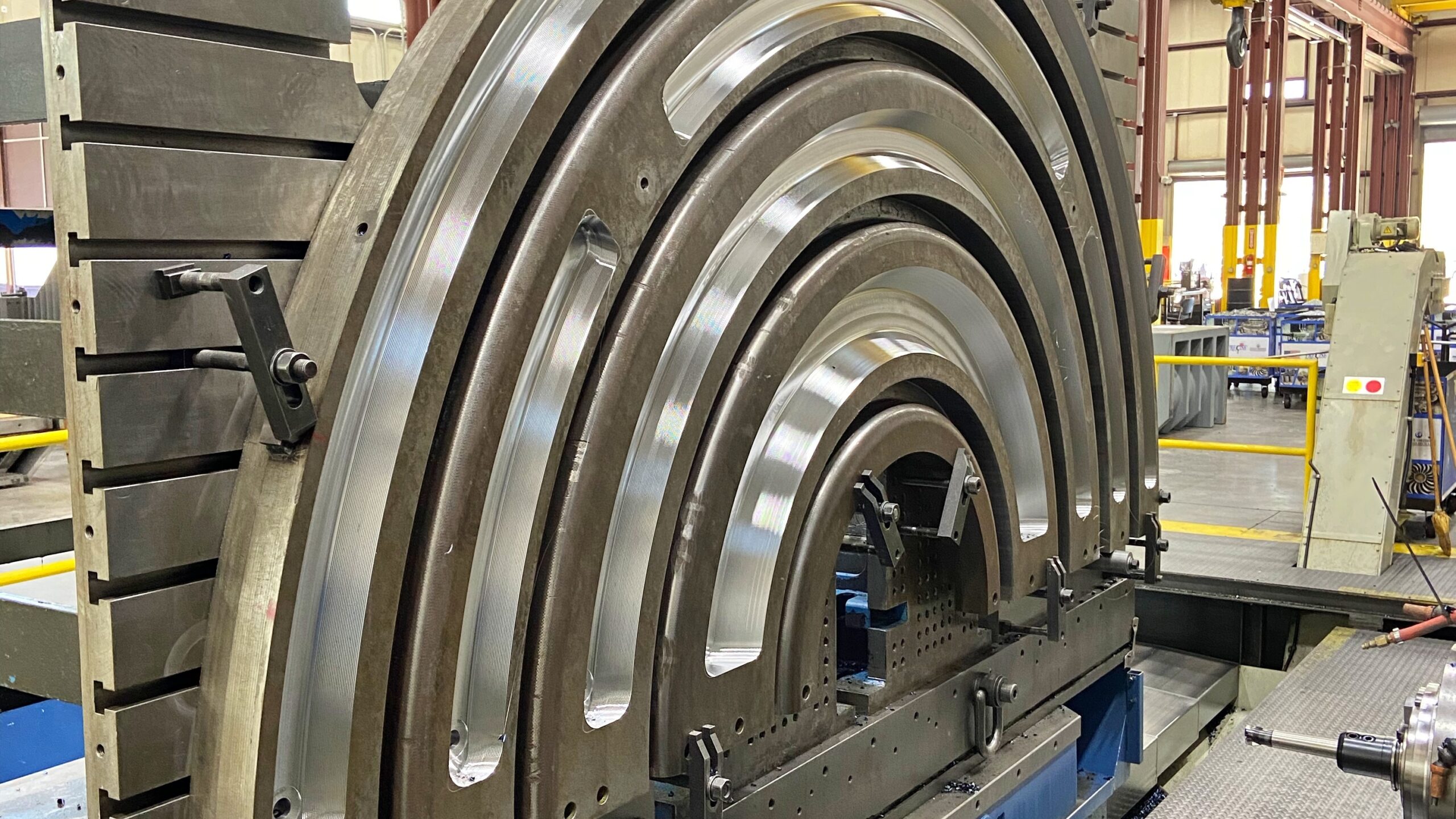
Honyo Prototype – “Precision CNC Mill” Workflow
(what happens to your part from first mouse-click to FedEx label)
-
Upload CAD
• Portal accepts any 3-D format (STEP preferred, but Parasolid, IGES, SolidWorks, Fusion, Catia, etc. all auto-translate).
• Instant geometry check: missing faces, zero-thickness, non-manifold edges flagged in <15 s.
• You pick: “Precision CNC Mill – 3-axis” (±0.025 mm) or “5-axis” (±0.010 mm).
• Quantity, material, finish, inspection level, delivery postcode → one screen. -
AI Quote (30 – 120 s)
• Geometry analyser slices the model into 0.1 mm layers, counts faces, radii, deep pockets, under-cuts, thin walls.
• Machine-learning cost model (trained on 1.8 M past jobs) selects:
– 3- or 5-axis Haas / Hermle / Roeders.
– Tool list (down to 0.2 mm end-mill).
– Number of set-ups, soft-jaw geometry, custom fixture if needed.
– Machining time, tool wear allowance, labour, overhead, margin.
• Real-time material stock pricing pulled from Honyo’s Suzhou & Taipei warehouses (AL6061, 7075, SS316L, Ti-6Al-4V, PEEK, etc.).
• Anodise, chem-film, passivation, bead-blast, silkscreen costs added from linked subcontractor matrix.
• You receive interactive quote: slide quantity or lead-time and watch price re-calc instantly; accept or “negotiate” (human engineer reviews within 2 h). -
DFM (Design for Manufacturability) – 4 h target
• Accepted job auto-creates Git-like project folder.
• CAM engineer opens AI-generated baseline and validates:
– Tolerances: GD&T checked against ISO 2768-m or your custom call-outs.
– Wall thickness ≥ 0.5 mm (Al) / 0.8 mm (steel) rule enforced; if thinner, proposes insert-mould or EDM add-op.
– Corner radii ≥ 0.5×tool Ø to avoid extra electrode work.
– Deep cavity L:D ≤ 4:1; if not, suggests draft or split body.
• You receive colour PDF + 3-D markup: red = must change, yellow = cost driver, green = OK.
• Approve or iterate in browser; e-signature locks rev-A. -
Production – “Precision CNC Mill” cell
a. Material & Setup
– Bar stock cut on Amada band-saw; identity laser-etched to job traveller.
– Blanks pre-machined to ±0.1 mm on 3-axis cell to release internal stress; then 2nd-op fixture prepared (vacuum, Mitee, or Schunk).
b. NC Code
– AI quote already created 80 % of toolpaths; CAM engineer adds finishing rest-milling, adaptive clears, chip thinning, trochoidal turns.
– Vericut simulates full G-code including kinematics of 5-axis head; crash & gouge check <0.01 mm tolerance.
c. In-process Metrology
– On-machine Renishaw OMP60 probing: every part, every set-up; offsets auto-corrected (closed-loop).
– 5-axis parts laser-scanned on Hermle C 42 U with integrated ZEISS dot-probe; point cloud vs. CAD <5 µm deviation before continuing.
d. Finishing Ops
– Deburr under 10× microscope; tumbling or drag-finish for Ra 0.4 µm.
– Anodise type II/III or chem-film in Class 1000 clean room; dye lot recorded.
e. Final Inspection
– CMM report (ZEISS CONTURA G2) – 100 % critical dims, 10 % non-critical sampling.
– Certificate of Compliance, material mill test report, ROHS/REACH pdf auto-generated.
– Parts vacuum-sealed with VCI paper; desiccant pack; ESD foam for aluminium. -
Delivery
• Photos & full dimensional report uploaded to portal; you click “approve shipment” or “rework”.
• Default DHL Express (3-day to US/EU) or FedEx Priority; customs docs pre-cleared.
• Box label carries 2-D barcode; scan on receipt triggers automatic invoice release.
• Feedback loop: any dimensional non-conformance feeds back into AI cost model to tighten future quotes.
Typical lead-times
– 1–10 pcs, alum 6061, 3-axis: 3 days.
– 1–10 pcs, Ti-6Al-4V, 5-axis, anodise: 7 days.
– ±0.010 mm true-position tolerance capability held on 95 % of jobs (2023 metrics).
That’s the entire Honyo “precision CNC mill” pipeline—CAD to doorstep—under one digital roof.
Start Your Project

Here are 3 polished, action-oriented CTA options tailored for your precision CNC milling services, incorporating all key details (contact, location, service focus) while optimizing for clarity and conversion. Ideal for websites, banners, or email signatures:
✅ Option 1 (Best for Website Headers/Banners)
“Precision CNC Milling from Shenzhen | Contact Susan Leo at [email protected]”
Why it works: Short, scannable, and highlights your geographic advantage (“Shenzhen”) upfront—critical for manufacturing clients who prioritize local expertise. The pipe separator keeps it clean for digital use.
✅ Option 2 (Best for Quote Requests)
“Get a Quote for Precision CNC Milling | Contact Susan Leo: [email protected] | Shenzhen Factory”
Why it works: “Get a Quote” is a high-conversion CTA verb for B2B services. Adding “Factory” reinforces manufacturing credibility (vs. “based in Shenzhen,” which sounds less technical).
✅ Option 3 (Best for Email Signatures/Quick Links)
“Expert Precision CNC Milling | Shenzhen-Based | Reach out to Susan Leo: [email protected]”
Why it works: “Expert” builds trust subtly, and “Reach out” feels more personal than “Contact.” Ideal for direct outreach where tone matters.
💡 Pro Tip for Implementation
- On your website: Use Option 1 in your hero banner, with a button that says “Request Quote” linking to a contact form.
- In emails: Use Option 3—this works perfectly under your name in signatures.
- For trade shows/ads: Add urgency: “Fast Turnaround Precision CNC Milling | Shenzhen Factory | Email Susan Leo: [email protected]”
All options keep the focus on your core service (precision CNC milling) while leveraging Shenzhen’s reputation as a global manufacturing hub—no fluff, just clear value. Let me know if you’d like tweaks for a specific platform! 🛠️
🚀 Rapid Prototyping Estimator