
Contents
Manufacturing Insight: Plastic Machinability
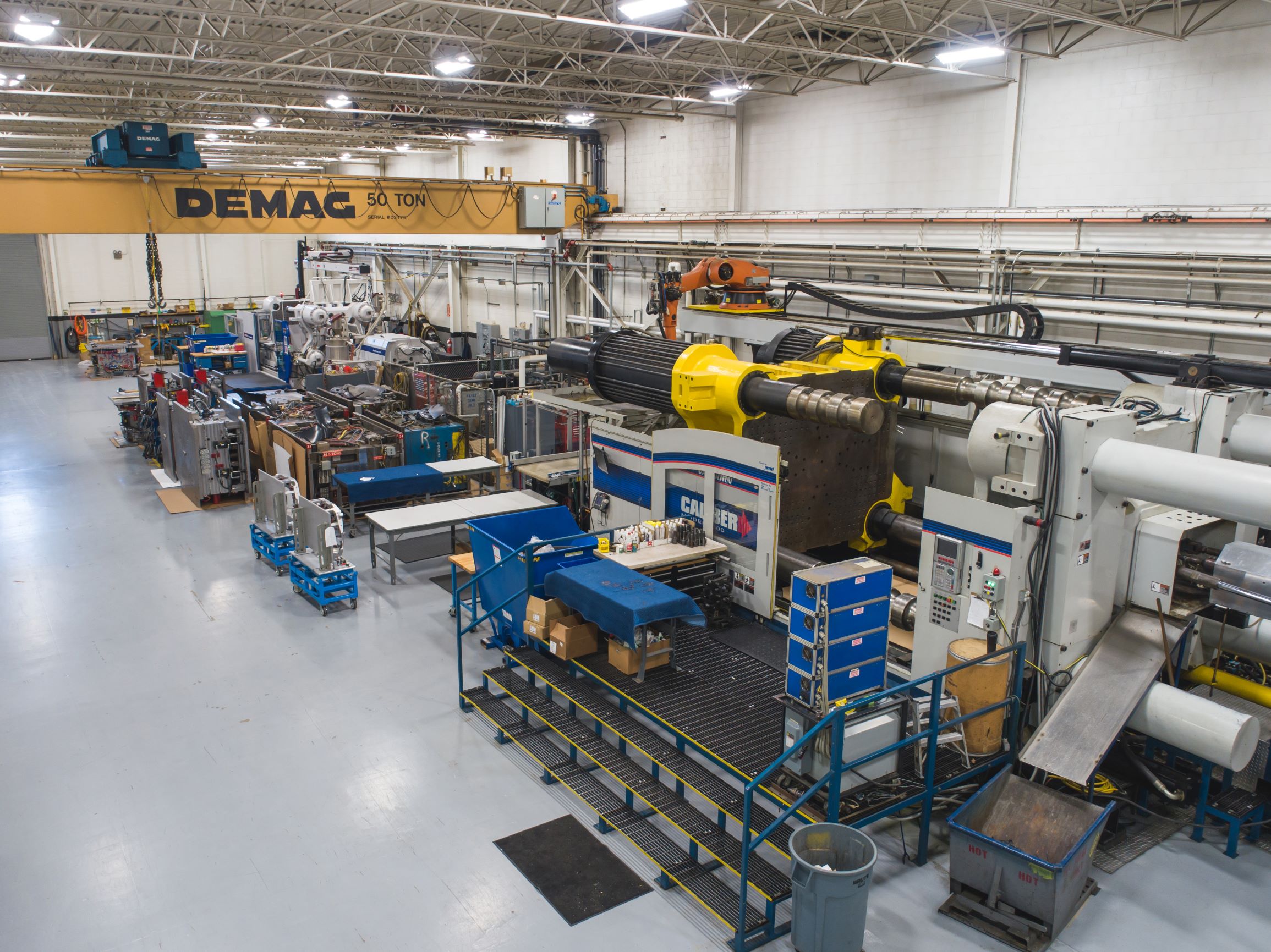
Mastering Plastic Machinability for Precision CNC Components
Achieving tight tolerances and superior surface finishes in plastic components presents distinct challenges compared to metal machining. Thermoplastics and engineering polymers exhibit unique behaviors under cutting forces, including thermal sensitivity, variable chip formation, and susceptibility to stress-induced warping. Material selection—ranging from easily machined acrylics and polycarbonates to demanding PEEK or UHMW-PE—directly impacts toolpath strategies, feed rates, and coolant requirements. Without specialized process knowledge, common issues like melting, burring, or dimensional instability can compromise part functionality and lead to costly rework.
Honyo Prototype leverages decades of advanced CNC machining expertise specifically optimized for plastic fabrication. Our engineering team applies material-specific protocols, including precision spindle speed control, custom tool geometries, and non-contact cooling techniques, to mitigate thermal deformation and ensure repeatability down to ±0.005 mm. We maintain strict environmental controls during machining and post-processing to manage material memory and humidity effects, critical for high-performance applications in medical, aerospace, and semiconductor industries. This disciplined approach transforms complex plastic designs into dimensionally stable, functionally reliable components on schedule.
Accelerate your prototyping or low-volume production with Honyo’s Online Instant Quote system. Upload your STEP or IGES file to receive a detailed manufacturability analysis and competitive pricing within hours—no manual RFQ delays. Our platform automatically evaluates material compatibility, geometric complexity, and tolerance requirements against our CNC capabilities, providing transparent cost and lead time visibility from the first design iteration. Start machining with confidence: submit your project at honyoprototype.com/quote.
Technical Capabilities
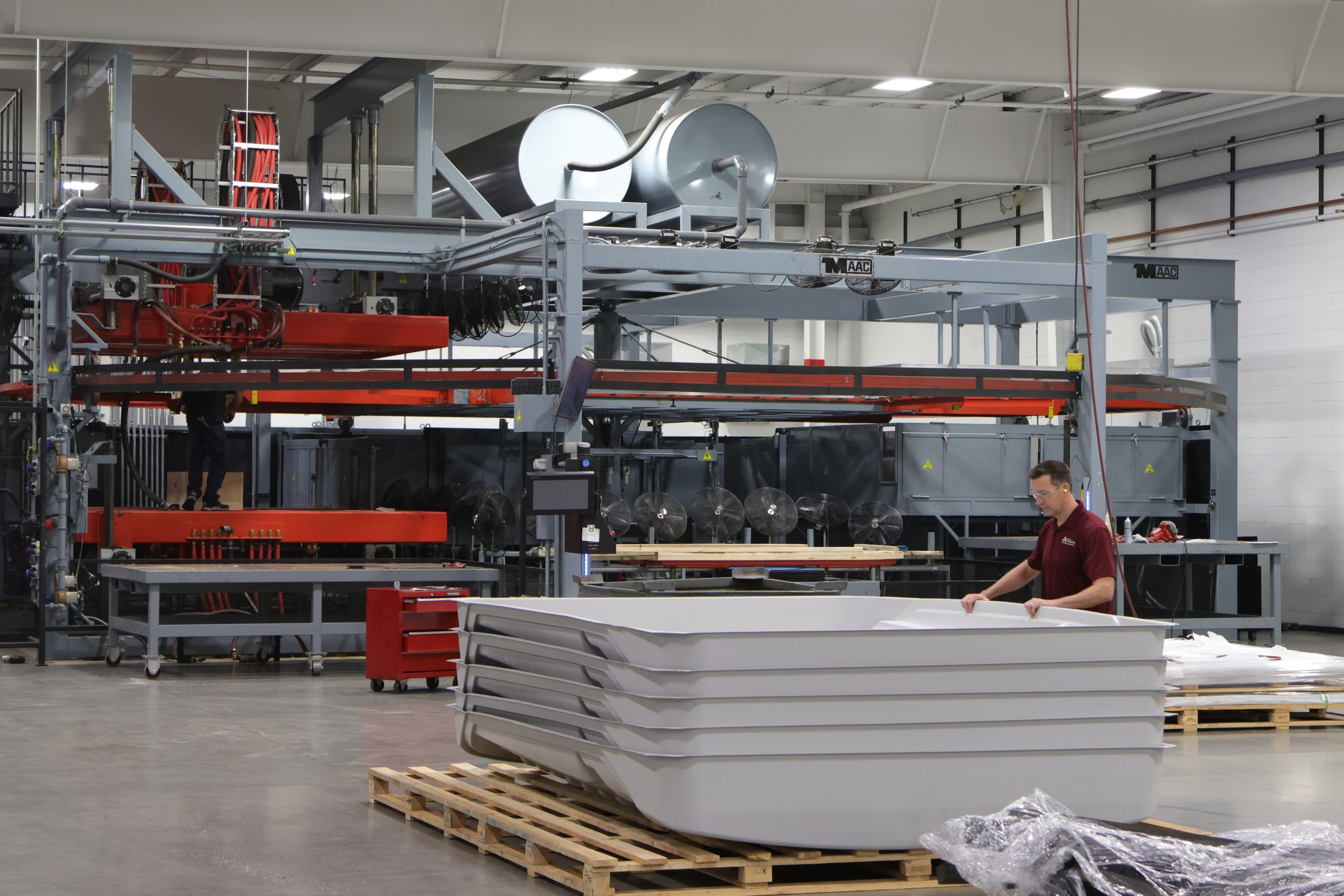
Technical specifications for plastic machinability in the context of 3/4/5-axis milling and turning operations—especially when targeting tight tolerances (±0.001″ to ±0.005″)—depend on a combination of material properties, tooling strategy, thermal behavior, and fixturing. While aluminum and steel are metals, they are included here as common comparison points for machining performance. The focus on plastics such as ABS and Nylon highlights their unique challenges and capabilities under precision machining.
Below is a comparative table outlining key technical aspects relevant to machinability across these materials in high-precision CNC environments:
| Material | Typical Machining Process | Max Achievable Tolerance (±) | Surface Finish (Ra, µin) | Thermal Sensitivity | Tool Wear Consideration | Notes for Tight Tolerance Work |
|---|---|---|---|---|---|---|
| Aluminum (6061-T6) | 3/4/5-axis milling, turning | 0.0005″ | 32–64 | Moderate | Low to moderate | Excellent for complex geometries; high thermal conductivity aids heat dissipation; easy to hold tight tolerances with proper fixturing |
| Steel (1018/4140) | 3/4/5-axis milling, turning | 0.0005″ | 16–32 | Low | High | Requires rigid setup and carbide tooling; slower feeds/speeds; excellent dimensional stability under load |
| ABS (Acrylonitrile Butadiene Styrene) | 3/4/5-axis milling, light turning | 0.001″ | 64–125 | High | Low | Prone to melting if excessive heat builds; sharp tools and high-speed, low-depth cuts recommended; use of coolant or air blast advised |
| Nylon (PA6/PA66) | 3/4/5-axis milling, turning | 0.001″–0.002″ | 64–125 | High | Low to moderate | Hygroscopic—must be dry before machining; exhibits creep; post-machining dimensional shift possible; use non-ferrous tooling to avoid contamination |
Key Technical Notes:
For 3/4/5-axis milling and turning of plastics like ABS and Nylon, success in tight tolerance applications depends heavily on controlling thermal expansion and minimizing residual stresses. Unlike metals, plastics have lower thermal conductivity and higher coefficients of thermal expansion, making them more susceptible to dimensional drift during and after machining.
Use of sharp, polished carbide or high-speed steel (HSS) cutters with high rake angles reduces cutting forces and heat generation. Climb milling is preferred to minimize material deflection. Fixturing must apply even, moderate pressure to avoid part deformation—vacuum or soft-jaw fixtures are common.
In multi-axis setups, tool reach and collision avoidance become critical, especially when machining deep or undercuts in thermoplastics. Programming strategies should prioritize consistent tool engagement and avoid full-slotting to prevent melting or burring.
Overall, while aluminum and steel offer superior dimensional repeatability and surface finish, engineering plastics like ABS and Nylon can achieve tight tolerances with optimized CNC parameters, environmental control, and post-process stabilization.
From CAD to Part: The Process
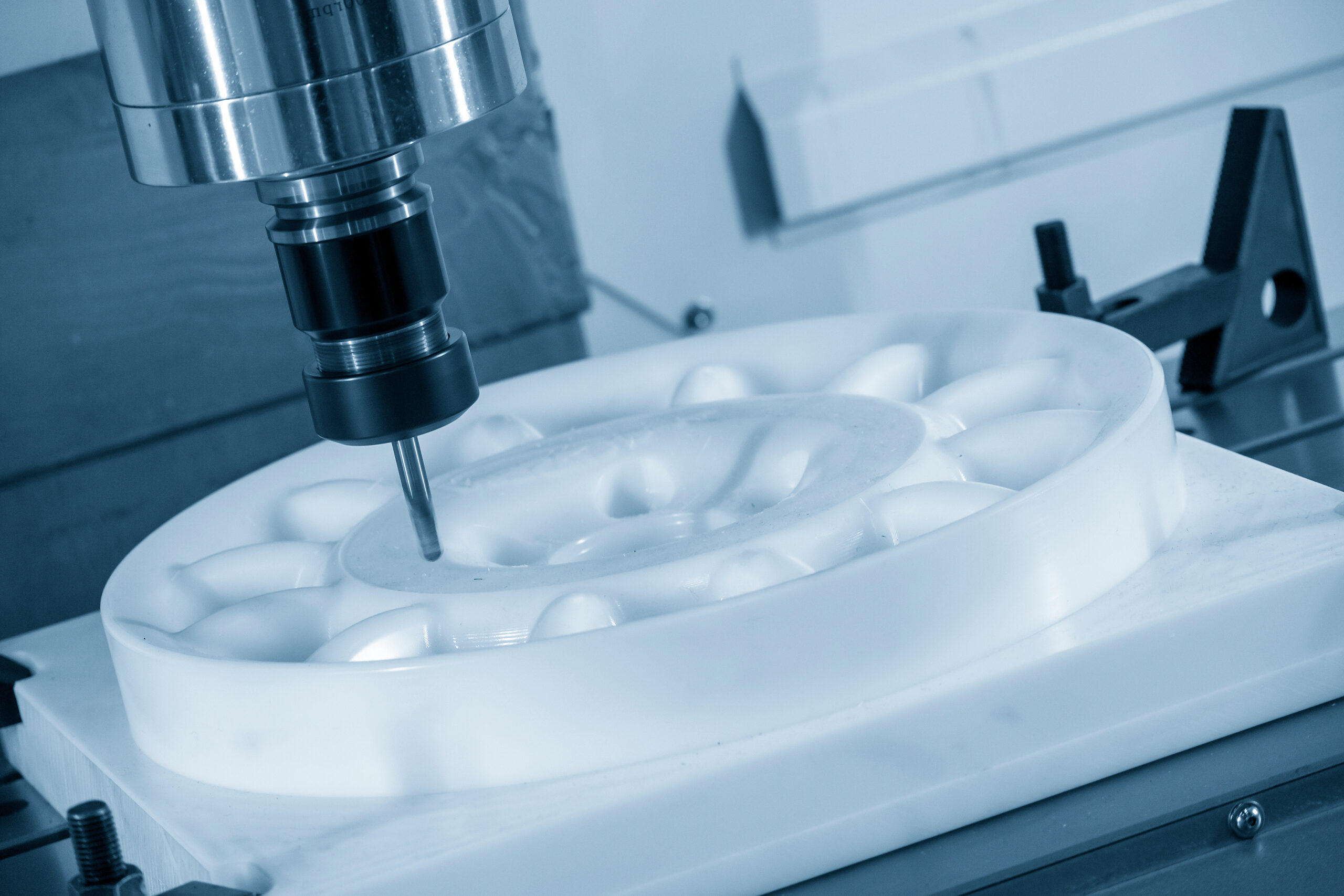
Honyo Prototype’s plastic machinability process is a tightly integrated, technology-driven workflow designed to ensure precision, efficiency, and material-specific optimization for custom plastic components. This end-to-end system addresses the unique challenges of machining engineering-grade plastics—including thermal sensitivity, chip control, and dimensional stability—through specialized protocols at every stage. Below is a detailed explanation of each phase, emphasizing how plastic-specific considerations are embedded into the process.
CAD Upload and Material Specification
Clients initiate the process by uploading native CAD files (STEP, IGES, or native formats like SolidWorks) via Honyo’s secure portal. Crucially, material selection is validated during this phase using our proprietary material database, which includes 200+ engineering plastics (e.g., PEEK, Ultem, Acetal, Polycarbonate). The system cross-references the CAD geometry against material properties such as thermal expansion coefficients, modulus of elasticity, and moisture absorption rates. For instance, if a client selects Delrin for a thin-walled feature, the system flags potential warpage risks during machining due to internal stresses, prompting early collaboration with our engineering team.
AI-Powered Quoting with Material Intelligence
Our AI quoting engine analyzes the CAD geometry alongside the specified plastic material to generate instant, accurate cost and lead time estimates. Unlike generic quoting tools, this system incorporates plastic-specific machining parameters: cutting speeds adjusted for material melting points (e.g., slower feeds for PTFE to prevent smearing), toolpath strategies to minimize heat buildup (critical for amorphous plastics like ABS), and waste factor calculations based on material brittleness. The AI also evaluates tolerance feasibility—flagging unrealistic ±0.001″ tolerances for hygroscopic nylons unless post-machining conditioning is specified. Clients receive a transparent breakdown of material costs, machine time, and plastic-specific secondary operations (e.g., stress-relieving annealing).
DFM Analysis Focused on Plastic Behavior
Honyo’s DFM review is conducted by manufacturing engineers with specialized expertise in polymer machining. This phase goes beyond standard DFM to address plastic-specific failure modes:
Thermal Management: Recommending coolant alternatives for moisture-sensitive plastics (e.g., air blast instead of water for Nylon 6/6)
Fixturing Strategy: Proposing low-clamp-force vacuum tables for brittle materials like PMMA to avoid cracking
Geometry Optimization: Suggesting gradual wall transitions to prevent sink marks in semi-crystalline plastics
Stress Mitigation: Adding relief cuts for internal features in materials prone to creep (e.g., PEI)
The DFM report includes annotated CAD visuals and quantified impact on lead time/cost, with 92% of plastic projects requiring 1–2 collaborative iterations to resolve material-driven issues.
Precision Production with Material-Specific Protocols
Machining occurs in climate-controlled environments (22±1°C, 45% RH) to minimize thermal drift in dimensionally sensitive plastics. Key plastic-optimized practices include:
Tool Selection: Diamond-coated cutters for abrasive composites (e.g., PEEK with carbon fiber)
Process Sequencing: Roughing at high RPM with minimal depth of cut to reduce heat, followed by stress-relief annealing before finish passes
In-Process Metrology: Real-time laser scanning for warpage detection in large acrylic parts
All plastic batches include material traceability tags (e.g., UL certification for medical-grade PPSU) and undergo post-machining conditioning per ASTM D618 standards where required.
Delivery with Material Compliance Documentation
Final inspection includes material-specific validation: CTE testing for aerospace polymers, moisture content verification for injection-molding-prepped stock, and surface roughness checks tailored to plastic applications (e.g., Ra ≤ 0.8µm for fluid-contact PTFE). Every shipment includes:
Material Certificates of Conformance (CoC) with lot traceability
As-machined dimensional reports against original CAD
Processing parameters log (showing plastic-optimized feeds/speeds)
Packaging documentation confirming anti-static or moisture-barrier protection for sensitive polymers
Honyo’s process ensures plastic machinability is not an afterthought but a core engineering consideration from quote to delivery. By embedding material science expertise into each phase, we achieve first-pass yield rates exceeding 88% for complex plastic components—significantly higher than industry averages for polymers with challenging machinability profiles. Below is a summary of common plastics we machine and their critical process adjustments:
| Plastic Material | Key Machinability Challenge | Honyo-Specific Process Adjustment |
|---|---|---|
| PTFE | Low stiffness, smearing | 0.001″ depth of cut max, diamond tooling, no coolant |
| Polycarbonate | Stress cracking | Pre-heat to 80°C, avoid sharp internal corners |
| Nylon 6/6 | Moisture absorption | Post-machining conditioning at 80°C/65% RH for 48h |
| PEEK | High melt viscosity | Rigid toolholding, 12,000 RPM minimum spindle speed |
| Acrylic | Brittle fracture | Polycrystalline diamond (PCD) tooling, vacuum fixturing |
Start Your Project
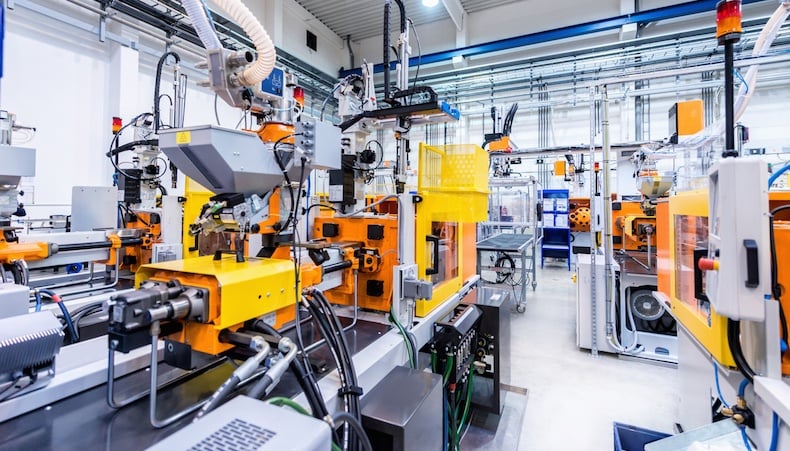
For expert guidance on plastic machinability and precision prototype manufacturing, contact Susan Leo at [email protected]. Leverage our in-depth material knowledge and advanced machining capabilities to optimize your component designs for performance and manufacturability.
Honyo Prototype operates a dedicated manufacturing facility in Shenzhen, ensuring tight tolerances, rapid turnaround, and consistent quality for machined plastic components. From engineering thermoplastics to high-performance polymers, we support your project with material selection, prototyping, and low-volume production.
Reach out today to discuss your requirements and discover how our Shenzhen-based team can deliver precision-machined plastic solutions tailored to your application.
🚀 Rapid Prototyping Estimator
Estimate rough cost index based on volume.