
Contents
Manufacturing Insight: Oem Plastic
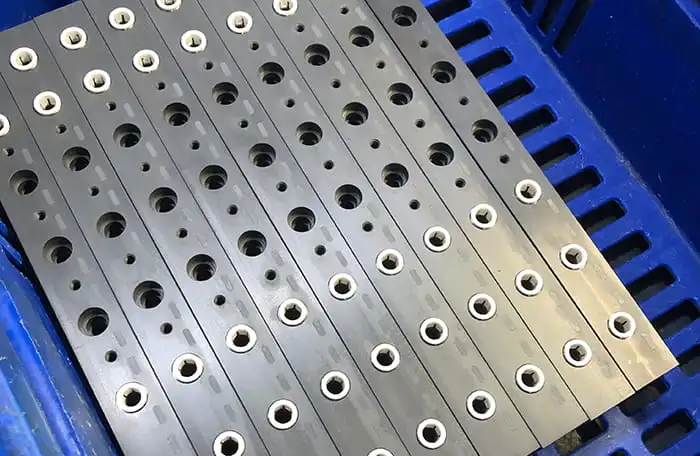
Precision OEM Plastic Components Through Advanced CNC Machining
Honyo Prototype delivers mission-critical plastic components for OEMs requiring uncompromising precision, repeatability, and material integrity. Our CNC machining capabilities transform engineering-grade polymers into complex, production-ready parts that meet stringent aerospace, medical, and industrial specifications. Unlike conventional manufacturing methods, our subtractive process ensures dimensional stability and surface finishes unattainable through injection molding or 3D printing alone—eliminating sink marks, internal stresses, and secondary operations.
CNC Plastic Machining Technical Capabilities
| Parameter | Specification | Supported Materials |
|---|---|---|
| Tolerance Range | ±0.005 mm to ±0.025 mm | PEEK, Ultem, PPSU, Acetal, Polycarbonate, Nylon, PTFE |
| Max Work Envelope | 1,200 x 600 x 500 mm | Glass-filled, carbon-reinforced, and FDA-compliant grades |
| Surface Finish | Ra 0.8 µm (as-machined) | Custom annealing and stress-relieving protocols |
| Lead Time | 3–7 days (prototypes); 10–15 days (low-volume) | ISO 9001-certified process validation |
This precision stems from our HAAS and DMG MORI 5-axis machining centers, calibrated for thermal stability and equipped with non-contact tool measurement systems. Every plastic component undergoes in-process CMM verification against ASME Y14.5 standards, ensuring first-article compliance without iterative corrections. For time-sensitive OEM programs, our Online Instant Quote platform eliminates traditional quoting delays: upload CAD files in STEP, IGES, or native formats to receive geometry-validated pricing, lead time estimates, and manufacturability feedback within 24 hours. This digital workflow accelerates your prototyping cycle while providing transparent cost visibility from initial design review to full-scale production ramp. Submit your requirements today to validate feasibility and accelerate time-to-market with Honyo Prototype.
Technical Capabilities
Technical specifications for OEM plastic components manufactured via 3/4/5-axis milling and turning processes require precise control over dimensional accuracy, surface finish, and material performance. While the term “OEM plastic” typically refers to custom-manufactured plastic parts for original equipment manufacturers, the machining of such components often involves both plastic and metal materials depending on application requirements. Below is a comparison of key technical capabilities and material considerations for high-precision machining processes, including both engineering plastics and common metals used in hybrid or comparative applications.
| Parameter | 3-Axis Milling | 4-Axis Milling | 5-Axis Milling | CNC Turning | Tight Tolerance Capability |
|---|---|---|---|---|---|
| Max Working Axes | X, Y, Z | X, Y, Z + Rotary (A or B) | X, Y, Z + Dual Rotary (e.g., A/B) | X, Z + C-axis (rotary) | Up to ±0.005 mm (±0.0002″) |
| Typical Surface Finish | 1.6–3.2 µm Ra | 1.6–3.2 µm Ra | 0.8–1.6 µm Ra | 0.8–1.6 µm Ra | As low as 0.4 µm Ra (polished) |
| Material Compatibility | Aluminum, Steel, ABS, Nylon | Aluminum, Steel, ABS, Nylon | Aluminum, Steel, ABS, Nylon | Aluminum, Steel, ABS, Nylon | All listed materials |
| Aluminum Machinability | Excellent – high MRR, low tool wear | Excellent – improved undercuts | Excellent – complex geometries | Excellent – high precision dia. | Common in tight-tolerance optics, housings |
| Steel Machinability | Moderate – higher tool wear | Moderate – requires carbide | Moderate – slow feed rates | Moderate – hardened steels possible | Used in high-strength OEM inserts |
| ABS Machinability | Very Good – low melting point | Very Good – easy chip removal | Very Good – minimal clamping | Good – requires sharp tools | Ideal for prototypes, enclosures |
| Nylon Machinability | Good – slight elasticity | Good – needs stable fixturing | Good – low thermal conductivity | Very Good – excellent for bushings, gears | Tight tolerance possible with moisture control |
| Dimensional Stability | Moderate (plastics) to High (metals) | Moderate to High | High – especially for metals | High – with thermal compensation | Critical for nylon due to hygroscopy |
| Common Applications | Flat housings, brackets | Impellers, fixtures | Aerospace manifolds, molds | Shafts, connectors, seals | Medical devices, sensors, actuators |
Notes on Tight Tolerance Machining:
Environmental Control: Achieving tolerances below ±0.01 mm requires climate-controlled environments, especially for plastics like ABS and Nylon which are sensitive to temperature and humidity.
Tooling: Carbide or diamond-coated tools are recommended for plastics to prevent edge buildup and ensure clean cuts. For steel, PVD-coated carbide or ceramic inserts are standard.
Fixturing: 5-axis milling reduces setup次数 and enhances repeatability, critical for complex OEM parts requiring tight tolerances.
Post-Processing: Stress relieving (for metals) and annealing (for plastics) may be necessary to maintain dimensional stability after machining.
Honyo Prototype supports tight-tolerance machining across all listed materials, with in-process CMM inspection and first-article inspection (FAI) reports available to ensure OEM compliance.
From CAD to Part: The Process
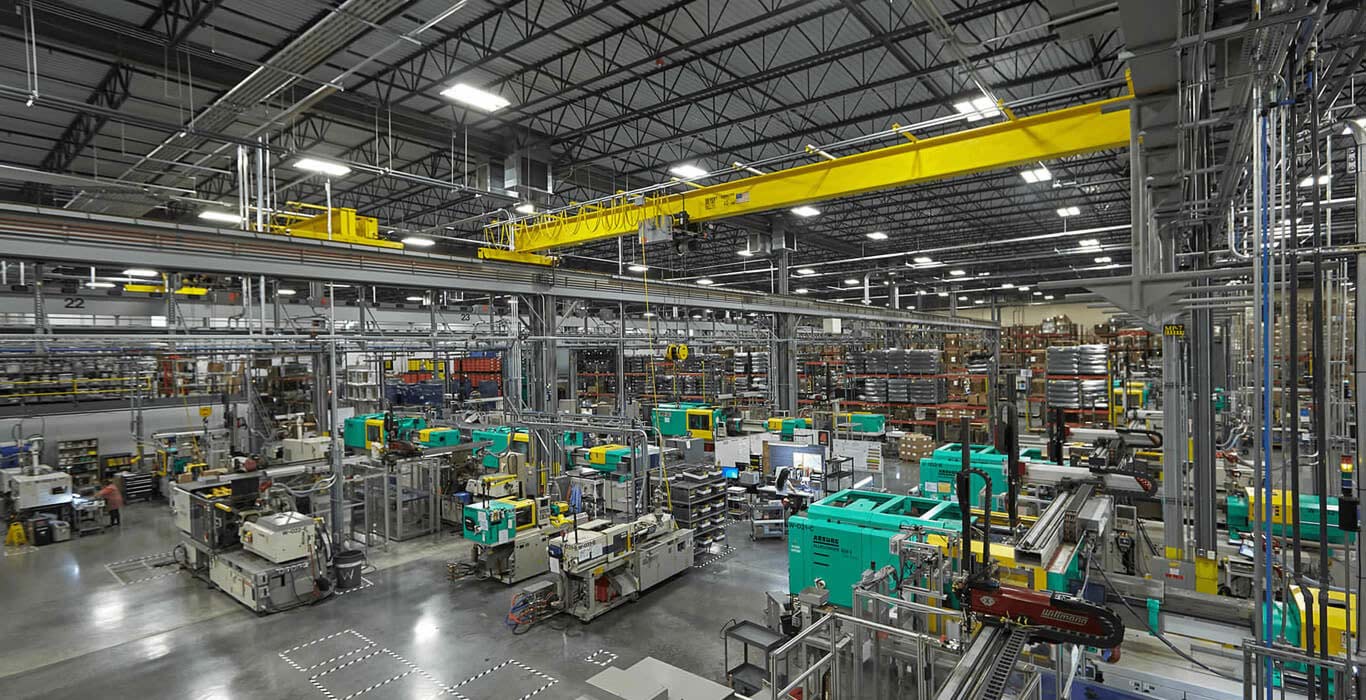
Honyo Prototype OEM Plastic Manufacturing Process Overview
Honyo Prototype delivers precision plastic components for OEMs through a streamlined, technology-driven workflow designed to minimize time-to-market while ensuring manufacturability and quality. Our process begins with CAD submission and progresses through integrated validation stages to final delivery, all managed within our secure digital platform.
CAD Upload and Initial Processing
Clients initiate the process by uploading native or neutral CAD files (STEP, IGES, Parasolid, or native formats from SolidWorks, Creo, NX, etc.) via our encrypted portal. Our system automatically validates file integrity, checks for geometry errors, and extracts critical parameters such as part volume, bounding box dimensions, and surface complexity. This step ensures downstream processes operate on technically sound data, eliminating common submission errors that cause delays in traditional quoting.
AI-Powered Quoting Engine
Uploaded CAD data is processed by Honyo’s proprietary AI quoting engine, which analyzes over 200 manufacturability factors specific to plastic injection molding. The system evaluates draft angles, wall thickness uniformity, rib-to-wall ratios, potential sink marks, and undercuts in real time. Material selection (e.g., ABS, PC, PP, POM, or engineering-grade resins) is dynamically priced based on real-time polymer market data and regional supplier costs. Clients receive a preliminary quote with cost drivers visualized within 2 business hours, including estimated cycle times and tooling complexity classifications (e.g., 2-plate vs. 3-plate molds).
Engineer-Validated DFM Analysis
All AI-generated insights undergo mandatory review by Honyo’s senior plastic molding engineers. This phase combines algorithmic precision with human expertise to address nuanced challenges: optimizing gate locations to prevent weld lines, adjusting ejector pin placements to avoid part deformation, and validating material-specific shrinkage calculations. Clients receive a formal DFM report within 48 hours, highlighting actionable recommendations such as suggested radius adjustments for stress concentration zones or modifications to core-cavity interfaces. Crucially, this step includes tolerance stack-up analysis against OEM specifications using GD&T principles, ensuring final parts meet functional requirements.
Production Execution
Approved designs move to production in Honyo’s ISO 9001-certified facilities. We deploy multi-cavity molds with real-time cavity pressure monitoring and automated part ejection systems. Each production run includes:
First-article inspection reports with full FAI documentation per AS9102 standards
In-process checks using calibrated CMMs and optical comparators at defined intervals
Material lot traceability with certified supplier data sheets
Environmental controls for hygroscopic resins (e.g., drying parameters logged per material specs)
All plastic parts undergo 100% visual inspection for cosmetic defects and AQL 1.0 sampling for dimensional conformance.
Quality-Controlled Delivery
Final packaging complies with OEM-specific requirements, including ESD-safe materials for electronic components or serialized labeling for traceability. Every shipment includes:
Comprehensive test reports (tensile strength, deflection temperature, flammability ratings)
Dimensional inspection data mapped to client CAD nominal values
Customs documentation with HS code classification for global logistics
Parts are shipped via client-designated carriers with real-time GPS tracking. Honyo maintains a 99.2% on-time delivery rate for OEM programs, supported by buffer stock agreements for critical components.
This integrated approach reduces prototyping lead times by 35–50% compared to conventional methods while ensuring production-ready designs. Honyo’s closed-loop system captures process data from each run to continuously refine AI models, directly benefiting clients through predictive quality improvements in subsequent orders.
Start Your Project
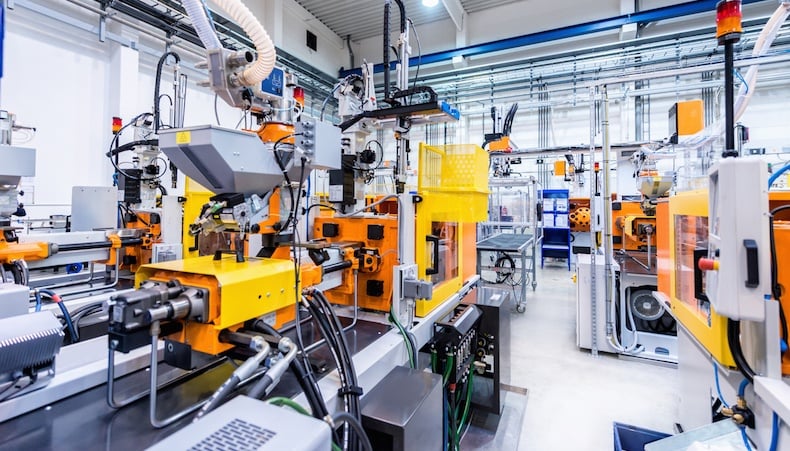
Looking for reliable OEM plastic manufacturing? Partner with Honyo Prototype for precision-engineered plastic components tailored to your specifications. Our Shenzhen-based factory delivers high-quality, cost-effective solutions with fast turnaround times.
Contact Susan Leo today at [email protected] to discuss your project and get a competitive quote.
🚀 Rapid Prototyping Estimator
Estimate rough cost index based on volume.