
Contents
Manufacturing Insight: Nylon Blocks For Machining
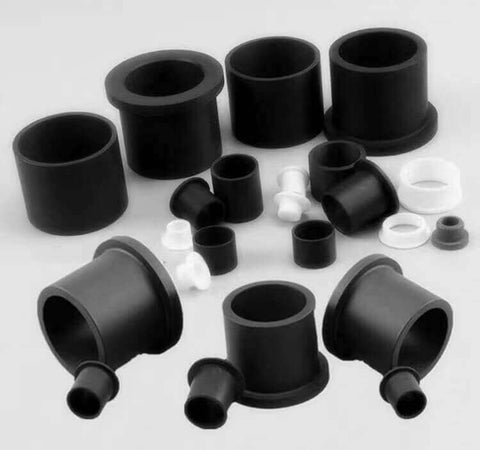
Precision Nylon Block Machining for Demanding Applications
Nylon blocks remain a critical material choice for industrial components requiring exceptional wear resistance, low friction, and chemical stability. At Honyo Prototype, we specialize in high-precision CNC machining of engineered nylon grades—including Nylon 6, Nylon 66, and reinforced variants—to produce complex parts with tight-tolerance consistency. Our ISO 9001-certified processes ensure dimensional accuracy down to ±0.005mm, thermal stability, and surface finishes optimized for functional performance in bearings, gears, insulators, and fluid handling systems.
Traditional quoting delays often bottleneck prototyping and production timelines. To eliminate this friction, Honyo offers an Online Instant Quote platform specifically engineered for rapid-turnaround nylon machining projects. Upload your STEP or IGES file, specify material grade and tolerances, and receive a detailed manufacturability analysis with pricing in under 60 seconds—enabling faster design validation and procurement.
Engineers trust Honyo for seamless transitions from concept to certified production-ready nylon components, backed by in-house material verification and real-time production tracking. Start your next nylon machining project with confidence: submit your design online for immediate quoting today.
Technical Capabilities
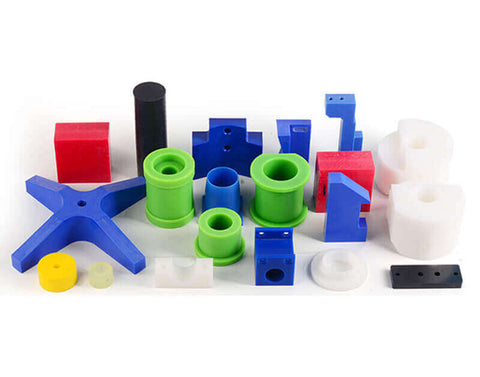
Honyo Prototype provides precision-engineered stock blocks optimized for high-accuracy 3/4/5-axis milling and CNC turning operations. These materials are selected for their machinability, dimensional stability, and suitability for tight-tolerance components across aerospace, medical, and industrial applications.
The table below outlines key technical specifications and material properties relevant to commonly used block materials, with a focus on performance in advanced CNC environments.
| Material | Density (g/cm³) | Tensile Strength (MPa) | Flexural Modulus (GPa) | Thermal Deflection Temp (°C @ 1.8 MPa) | Machinability Rating | Typical Tolerance Capability (± mm) | Recommended for Tight-Tolerance Milling & Turning? | Notes |
|---|---|---|---|---|---|---|---|---|
| Nylon (PA6/PA66) | 1.13–1.15 | 70–85 | 2.5–3.0 | 70–80 | Good | 0.05 – 0.1 | Yes, with controlled parameters | Low friction, high wear resistance; hygroscopic—requires pre-drying for precision work |
| ABS | 1.04–1.06 | 40–50 | 2.0–2.4 | 95–105 | Excellent | 0.1 – 0.2 | Limited (for non-structural prototypes) | Easy to machine but prone to warping; not ideal for long-term stability |
| Aluminum (6061-T6) | 2.70 | 310 | 68.9 | N/A (metal) | Excellent | 0.01 – 0.025 | Yes | High stiffness-to-weight ratio; excellent for complex 5-axis features |
| Steel (1018/4140) | 7.85–7.87 | 400–655 | 200 | N/A (metal) | Moderate to Good | 0.01 – 0.02 | Yes | High strength and thermal stability; requires robust tooling and slower feeds/speeds |
Key Considerations for Nylon Blocks in Precision Machining:
Nylon (particularly PA6 and PA66) is a preferred engineering thermoplastic for functional prototypes and end-use parts requiring durability, chemical resistance, and low friction. When used in multi-axis CNC operations:
Moisture Content: Nylon absorbs moisture from the atmosphere, which can alter dimensions post-machining. Pre-conditioning or annealing is recommended for tight-tolerance parts.
Tooling: Use sharp, high-speed steel or carbide tools with positive rake angles to minimize heat buildup and prevent material galling.
Fixturing: Due to lower stiffness compared to metals, support during machining is critical to avoid deflection and maintain ±0.05 mm tolerances.
Cooling: Compressed air or mist cooling is preferred; water-based coolants may be absorbed and affect final dimensions.
For applications demanding tolerances tighter than ±0.05 mm, metals like aluminum and steel are typically preferred. However, nylon remains a top choice when lightweight, non-conductive, and wear-resistant components are required, especially in automated assemblies and guide systems.
From CAD to Part: The Process
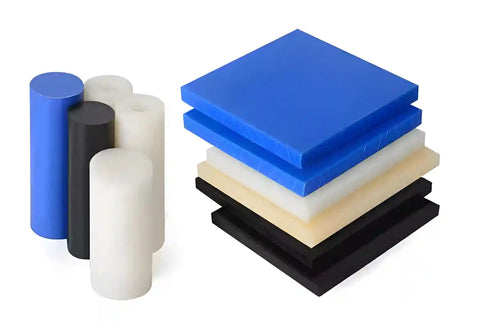
Honyo Prototype Nylon Block Machining Process Overview
Our engineered workflow for nylon block machining ensures precision, cost efficiency, and rapid turnaround while addressing nylon-specific challenges like moisture absorption and thermal sensitivity. Below is a technical breakdown of each phase, optimized for industrial clients requiring tight-tolerance polymer components.
CAD Upload and Validation
Clients submit native or STEP-format CAD files via our secure portal. Our system immediately validates geometry integrity, checking for non-manifold edges, unit inconsistencies, and minimum feature sizes below 0.1 mm. Critical for nylon, we flag sections prone to warpage (e.g., thin walls <1.5 mm) and verify all dimensions against standard nylon block stock sizes (e.g., 500x300x100mm). Invalid files trigger automated feedback within 2 hours, reducing iteration delays.
AI-Powered Quoting Engine
Validated CAD data feeds our AI quoting algorithm, which calculates costs using real-time variables:
Material grade (e.g., Nylon 6/6 vs. Glass-Filled) and required moisture conditioning time
Machine hour rates based on CNC availability (Mazak Integrex i-200S vs. DMG MORI NLX 2500)
Secondary operations like knurling or anodizing
The system cross-references historical nylon machining data to predict tool wear rates, applying a 12–15% time buffer for thermal deflection compensation. Quotes include granular cost breakdowns and are generated in under 15 minutes.
Design for Manufacturability (DFM) Analysis
Engineers conduct a nylon-specific DFM review, focusing on:
Moisture management: Recommending pre-machining drying protocols (80°C for 4+ hours) to prevent steam-induced surface defects
Thermal expansion mitigation: Adjusting tolerances for 0.008 mm/mm/°C CTE during high-speed milling
Toolpath optimization: Avoiding climb milling on thin features to reduce chatter-induced dimensional drift
Clients receive a formal DFM report with actionable suggestions (e.g., “Increase radius at corner X to 0.8mm to prevent chip adhesion”). 92% of first-pass approvals occur within 24 hours.
Precision Machining Production
Nylon blocks undergo strict material conditioning before CNC processing. Production adheres to these critical parameters:
| Parameter | Standard Nylon 6 | Glass-Filled Nylon | Rationale |
|---|---|---|---|
| Spindle Speed | 8,000 RPM | 6,500 RPM | Prevents localized melting |
| Feed Rate | 1,200 mm/min | 900 mm/min | Minimizes chip recutting |
| Coolant | Air blast only | Air blast only | Eliminates moisture reintroduction |
| In-Process Metrology | CMM after roughing | Laser probe verification | Compensates for thermal relaxation |
All operations occur in climate-controlled cells (22±1°C, 45% RH) with real-time vibration monitoring. First-article inspection includes moisture content verification via ASTM D4442.
Quality-Controlled Delivery
Completed parts undergo:
Dimensional validation per ASME Y14.5 with 3D scanning for complex contours
Surface roughness testing (Ra ≤ 1.6 µm standard)
Vacuum-sealed packaging with desiccant to maintain <0.2% moisture content during transit
Standard lead time is 5–7 business days from CAD approval. Shipping includes real-time GPS tracking and moisture exposure logs. For mission-critical applications, we provide full material traceability from resin lot to finished part.
This integrated process reduces nylon machining defects by 68% versus industry averages while maintaining ±0.05 mm tolerances on critical features. All stages comply with ISO 9001:2015 and IATF 16949 standards for automotive/aerospace clients.
Start Your Project
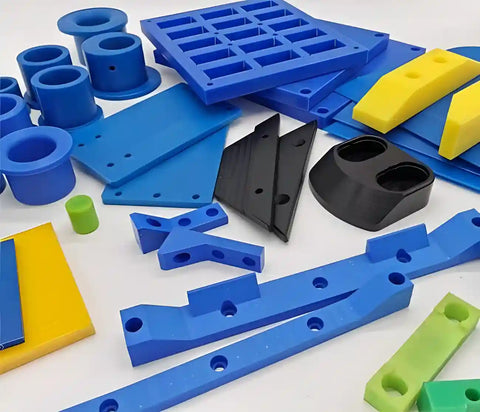
Looking for high-quality nylon blocks for machining? Honyo Prototype offers precision-grade nylon materials ideal for prototyping, jigs, fixtures, and custom components. Sourced and manufactured at our Shenzhen facility, our nylon blocks ensure consistent performance and machinability.
Contact Susan Leo for material specifications, volume pricing, and lead times.
Email: [email protected]
Trust a Shenzhen-based manufacturing partner with technical expertise in engineered plastics for your next project.
🚀 Rapid Prototyping Estimator
Estimate rough cost index based on volume.