
Contents
Manufacturing Insight: Most Common Aluminum Alloy For Machining
Aluminum 6061-T6 The Dominant Choice for Precision CNC Machining
When specifying materials for high-integrity machined components, aluminum alloy 6061-T6 consistently emerges as the industry standard across aerospace, automotive, robotics, and industrial equipment sectors. Its optimal balance of mechanical properties—good strength-to-weight ratio, excellent machinability, superior corrosion resistance, and weldability—makes it the pragmatic selection for prototypes and production runs demanding precision and reliability. The T6 temper provides enhanced strength through artificial aging, while the alloy’s composition ensures clean chip formation and minimal tool wear during CNC operations, directly impacting production efficiency and part consistency.
Honyo Prototype leverages extensive experience machining 6061-T6 to deliver components meeting the most stringent dimensional tolerances and surface finish requirements. Our advanced 3-, 4-, and 5-axis CNC milling and turning centers, combined with rigorous in-process inspection protocols using calibrated CMMs and optical comparators, ensure every part conforms precisely to your engineering intent. We understand the critical nuances of machining this alloy, from optimizing feed rates and spindle speeds to managing thermal effects, guaranteeing repeatability whether producing a single prototype or scaling to medium-volume production.
Key properties driving 6061-T6’s prevalence in CNC machining include:
| Property | Typical Value for 6061-T6 | Relevance to Machining |
|---|---|---|
| Tensile Strength | 45,000 psi (310 MPa) | Supports structural integrity in parts |
| Yield Strength | 40,000 psi (276 MPa) | Ensures part performance under load |
| Elongation | 8-12% | Indicates formability and ductility |
| Brinell Hardness | 95 | Balances machinability and wear resistance |
| Machinability Rating | 90% (Relative to 100) | Excellent chip control and surface finish |
Engineers and procurement professionals benefit from Honyo Prototype’s streamlined workflow, beginning with our Online Instant Quote system. Upload your 3D CAD model directly to our platform for an accurate, detailed machining assessment within hours—not days—including material cost, lead time, and manufacturability feedback specific to alloys like 6061-T6. This eliminates traditional quoting bottlenecks, accelerating your path from design validation to functional hardware. Partner with Honyo Prototype for precision-machined aluminum components where material expertise, process control, and responsive service are non-negotiable.
Technical Capabilities
The most common aluminum alloy used in precision machining applications such as 3-axis, 4-axis, and 5-axis milling and turning—especially for parts requiring tight tolerances—is 6061-T6 aluminum. It offers an excellent balance of machinability, strength, weldability, and dimensional stability. Below is a comparison of technical specifications for 6061-T6 aluminum alongside commonly used materials such as steel (e.g., 4140), ABS, and nylon (e.g., PA6), with a focus on CNC machining performance.
| Property | 6061-T6 Aluminum | 4140 Steel | ABS (Acrylonitrile Butadiene Styrene) | Nylon (PA6) |
|---|---|---|---|---|
| Tensile Strength | 45,000 psi (310 MPa) | 95,000 psi (655 MPa) | 6,500 psi (45 MPa) | 11,000 psi (75 MPa) |
| Yield Strength | 40,000 psi (275 MPa) | 75,000 psi (517 MPa) | 5,500 psi (38 MPa) | 9,500 psi (65 MPa) |
| Hardness (Brinell) | 95 HB | 200 HB | Not applicable (soft polymer) | Not applicable |
| Density | 0.098 lb/in³ (2.7 g/cm³) | 0.284 lb/in³ (7.85 g/cm³) | 0.037 lb/in³ (1.04 g/cm³) | 0.041 lb/in³ (1.13 g/cm³) |
| Thermal Conductivity | 167 W/m·K | 42 W/m·K | 0.19 W/m·K | 0.25 W/m·K |
| Machinability Rating | Excellent (75–80% of B1112 steel) | Good (65%) | Very Good (chip-free, low tool wear) | Good (can be gummy; requires sharp tools) |
| Surface Finish (Typical CNC) | 32–64 μin Ra | 32–64 μin Ra | 64–125 μin Ra | 64–125 μin Ra |
| Dimensional Stability | High (low distortion, good for tight tolerance ±0.0005″) | High (with stress relief) | Moderate (prone to creep and moisture absorption) | Low (hygroscopic, prone to swelling) |
| Typical Applications in CNC | Aerospace components, housings, jigs, fixtures | Shafts, gears, tooling, high-stress parts | Prototypes, enclosures, non-structural parts | Wear strips, gears, bushings |
Notes on Machining Performance
6061-T6 aluminum is preferred for high-speed 3/4/5-axis milling and precision turning due to its excellent chip formation, low cutting forces, and high thermal conductivity, which helps dissipate heat during machining. It supports tight tolerances down to ±0.0005″ when machined under stable conditions with proper fixturing and tooling. Coolant use is recommended to prevent built-up edge and maintain surface integrity.
In contrast, 4140 steel requires more rigid setups, lower speeds, and higher cutting forces but offers superior strength and wear resistance. ABS and nylon are easier on tools and suitable for rapid prototyping, but their lower stiffness and thermal stability limit their use in high-precision, tight-tolerance applications unless environmental conditions are tightly controlled.
From CAD to Part: The Process
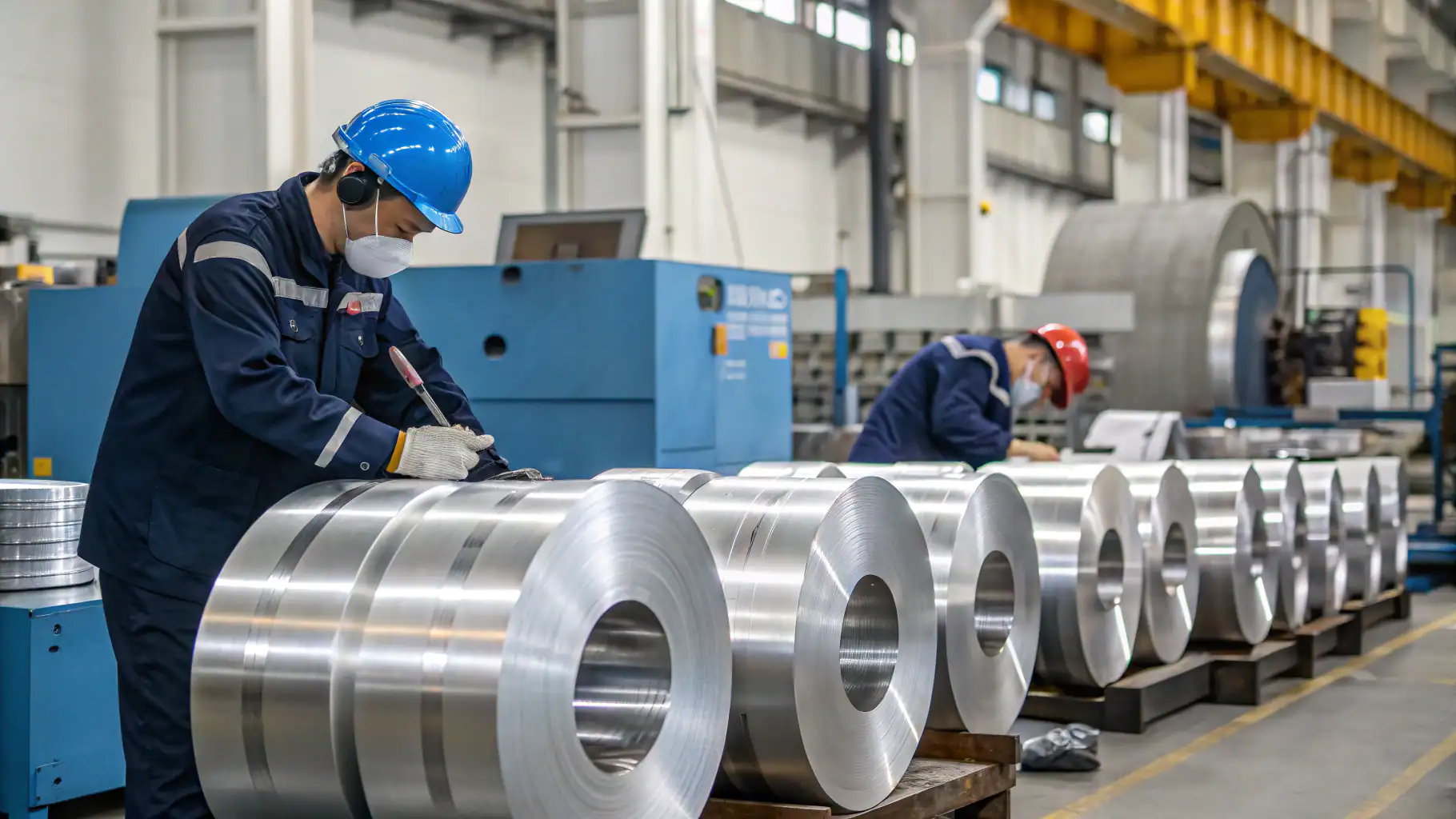
Honyo Prototype utilizes aluminum alloy 6061-T6 as the standard material for CNC machining prototyping and low-volume production due to its optimal balance of machinability, mechanical properties, weldability, and cost-effectiveness. This alloy constitutes over 70% of our aluminum machining projects. Our streamlined workflow for 6061-T6 components ensures rapid turnaround without compromising quality.
CAD File Upload and Initial Processing
Clients initiate the process by uploading native or neutral CAD formats (STEP, IGES, Parasolid) via our secure customer portal. Our system immediately performs automated geometric validation, identifying potential file corruption or unit mismatches. For 6061-T6 projects, the system cross-references material-specific parameters including minimum wall thickness (0.8mm standard), hole depth ratios, and feature spacing requirements against industry best practices for this alloy.
Automated Quoting Engine
Within 15 minutes, our proprietary quoting engine generates a firm price and lead time. This AI-driven system analyzes 6061-T6-specific factors:
Material block utilization efficiency (accounting for standard stock sizes: 50mm to 150mm thickness)
Toolpath complexity adjusted for 6061-T6’s chip formation characteristics
Secondary operation requirements (tapping, deburring, anodizing compatibility)
Real-time material cost fluctuations from approved suppliers
The quote includes explicit 6061-T6 material certification (mill test reports to ASTM B221) and surface finish options achievable with this alloy (typically ±0.05mm tolerance, 3.2µm Ra standard).
Design for Manufacturability (DFM) Review
Our engineering team conducts a mandatory DFM analysis focused on 6061-T6 limitations:
Verification of thin-wall features against deflection risks during machining
Confirmation of hole aspect ratios (max 10:1 depth:diameter without special tooling)
Assessment of internal radii against standard end mill geometries
Anodizing clearance checks (0.1mm minimum for Type II anodize)
Clients receive annotated DFM reports with actionable recommendations within 4 business hours, often reducing lead times by 20-30% through design optimization.
Production Execution
Approved 6061-T6 jobs enter production with these material-specific protocols:
Material verification via handheld XRF analyzer prior to machining
Dedicated tooling libraries for 6061-T6 (carbide end mills with TiAlN coating, 25% higher feed rates than 7075)
In-process CMM checks at 25% and 75% completion stages
Controlled coolant management to prevent micro-fissures in heat-treated material
Typical lead time for 6061-T6 parts is 5 business days from DFM approval, with expedited 72-hour options available.
Quality Assurance and Delivery
All 6061-T6 components undergo:
Final dimensional inspection per ASME Y14.5
Hardness verification (95-100 HBW for T6 temper)
Surface roughness validation
First-article inspection reports (FAIR) with CMM data
Material traceability is maintained through serialized heat-treat lot tracking. Parts ship with material certification, FAIR, and packaging designed for 6061-T6’s susceptibility to surface marring. Standard delivery includes flat-rate shipping with real-time logistics tracking.
6061-T6 Material Properties Reference
| Property | Value | Test Standard |
|———-|——-|————–|
| Tensile Strength | 310 MPa | ASTM B557 |
| Yield Strength | 276 MPa | ASTM B557 |
| Elongation | 12% | ASTM B557 |
| Hardness | 95 HB | ASTM E10 |
| Density | 2.70 g/cm³ | ASTM B209 |
| Thermal Conductivity | 167 W/m·K | ASTM E1461 |
This integrated process leverages 6061-T6’s favorable characteristics to deliver production-ready aluminum components with industry-leading speed while maintaining strict compliance with aerospace and medical sector requirements where applicable.
Start Your Project
If you’re looking for the most commonly used aluminum alloy for machining—7075-T6 is the industry standard for high-strength, precision-machined components. Known for its excellent strength-to-weight ratio and superior machinability, it’s ideal for aerospace, defense, and high-performance industrial applications.
For custom machined parts using 7075-T6 or other aluminum alloys, contact Susan Leo at [email protected]. Honyo Prototype operates a fully equipped manufacturing facility in Shenzhen, offering rapid turnaround, tight tolerance control, and professional engineering support for all your CNC machining needs.
🚀 Rapid Prototyping Estimator
Estimate rough cost index based on volume.