
Contents
Manufacturing Insight: Modulus Of Elasticity 1018 Steel
Understanding Modulus of Elasticity in 1018 Steel for Precision CNC Machining
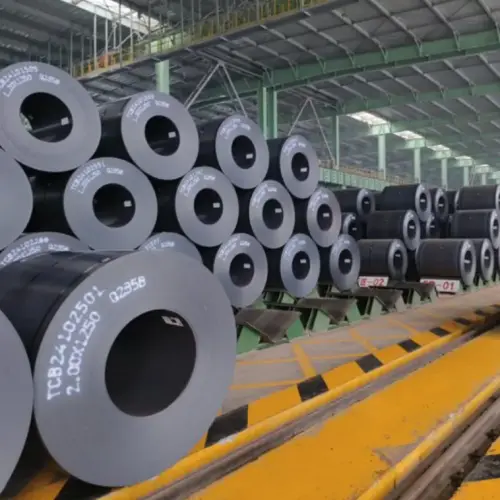
The modulus of elasticity, or Young’s modulus, is a fundamental mechanical property defining a material’s stiffness under elastic deformation. For low-carbon 1018 steel, a widely utilized material in prototyping and production, this value is consistently approximately 29,000 ksi (200 GPa) at room temperature. This high stiffness is critical in CNC machining applications where dimensional stability and resistance to deflection during cutting forces directly impact part accuracy, surface finish, and overall geometric integrity. Engineers selecting 1018 steel rely on this predictable elastic behavior to design components that maintain precise tolerances under load, particularly in structural brackets, pins, bushings, and mechanical hardware.
Why Material Properties Matter in Precision Machining
Knowledge of 1018 steel’s modulus is not merely academic; it directly informs machining strategy. During CNC milling or turning operations, cutting forces induce elastic deflection in both the workpiece and tooling. Understanding the material’s inherent stiffness allows Honyo Prototype’s manufacturing engineers to optimize feed rates, depths of cut, and toolpaths. This minimizes vibration, prevents chatter marks, and ensures the final part meets stringent GD&T requirements without requiring excessive post-machining correction. Consistent material properties, verified through controlled sourcing to ASTM A29/A29M standards, are foundational to our repeatable high-precision output.
Honyo Prototype leverages deep material science expertise alongside advanced 3-, 4-, and 5-axis CNC machining centers to transform 1018 steel billets into mission-critical components. Our process integrates material property knowledge into every stage—from initial design for manufacturability (DFM) analysis to final inspection—guaranteeing parts perform as intended in your assembly. To streamline your path from design to physical prototype or low-volume production, utilize our Online Instant Quote system. Upload your STEP or IGES file today for a rapid, transparent cost and lead time estimate, reflecting our capability to machine 1018 steel to exacting specifications with minimal delay.
Key Material Comparison for Machining Selection
| Material | Modulus of Elasticity (ksi) | Typical Machinability Rating | Common CNC Applications |
|---|---|---|---|
| 1018 Steel | 29,000 | Excellent (Free-Machining) | Brackets, Shafts, Fasteners |
| 6061-T6 Aluminum | 10,000 | Excellent | Enclosures, Aerospace Components |
| 304 Stainless | 28,000 | Fair | Medical, Food Processing Parts |
| Brass C360 | 15,000 | Excellent | Valves, Fittings, Connectors |
Technical Capabilities
Modulus of Elasticity and Technical Specifications for 1018 Steel in Precision Machining Applications
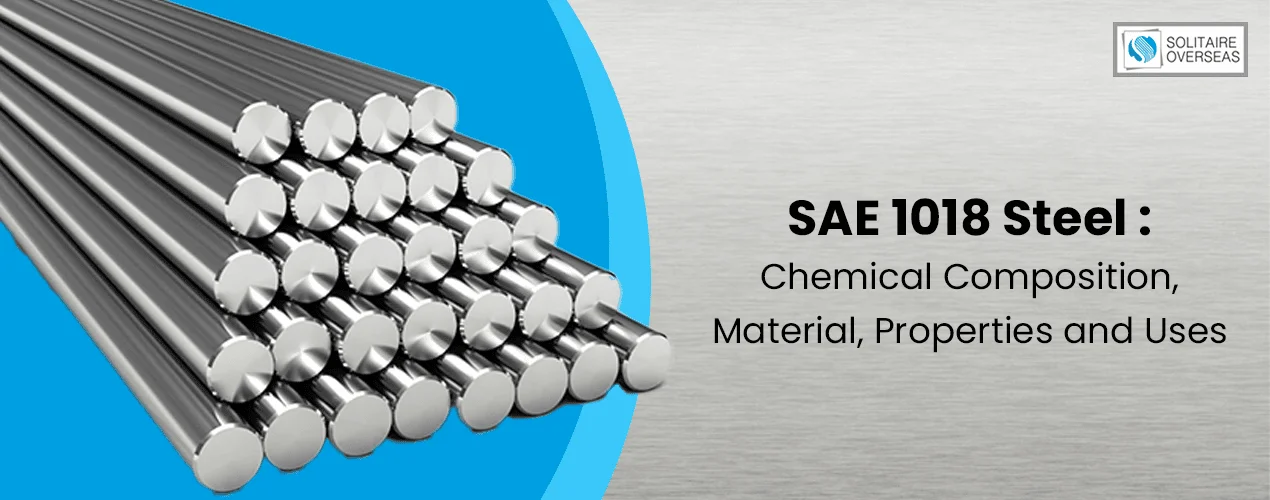
The modulus of elasticity (also known as Young’s modulus) is a critical mechanical property that defines a material’s stiffness or resistance to elastic deformation under load. For AISI 1018 steel, a low-carbon, mild steel commonly used in precision machining, this value plays a key role in maintaining dimensional stability during and after machining processes such as 3-axis, 4-axis, and 5-axis milling, as well as CNC turning—especially when tight tolerances (±0.0005″ or tighter) are required.
Below is a comparison of the modulus of elasticity and relevant machining characteristics for 1018 steel alongside other common prototype and production materials used in precision CNC manufacturing.
| Material | Modulus of Elasticity (GPa) | Modulus of Elasticity (psi × 10⁶) | Typical Applications in CNC Machining | Suitability for Tight Tolerance Machining | Notes on Machinability |
|---|---|---|---|---|---|
| AISI 1018 Steel | 205 | 29.7 | Precision shafts, fixtures, tooling, structural components | Excellent (high stiffness, stable under load) | Good machinability; low carbon content allows for smooth cutting and consistent finishes; may require stress relief for sub-0.001″ tolerances |
| Aluminum 6061 | 68.9 | 10.0 | Enclosures, aerospace components, heat sinks | Excellent (low weight, high precision achievable) | Very good; high material removal rates; minimal thermal expansion vs. steels |
| Aluminum 7075 | 71.7 | 10.4 | High-strength aerospace parts, molds | Good (higher strength but more prone to warping) | Slightly harder to machine than 6061; requires sharp tools |
| ABS (Acrylonitrile Butadiene Styrene) | 2.0–3.5 | 0.29–0.51 | Prototypes, housings, jigs, low-stress components | Moderate (creep under load, lower stiffness) | Easy to machine; low melting point; chip control important |
| Nylon 6/6 | 2.5–3.0 | 0.36–0.43 | Gears, insulators, wear components | Moderate (susceptible to moisture absorption and dimensional change) | Requires sharp tools and proper fixturing; prone to burring |
Technical Notes on 1018 Steel in High-Precision Machining:
1018 steel exhibits a high modulus of elasticity (205 GPa), which provides excellent resistance to deflection during cutting operations. This makes it particularly suitable for complex 4-axis and 5-axis milling where toolpaths involve extended reach or asymmetric features. Its uniform microstructure and predictable behavior under stress support tight tolerance machining (±0.0005″ or better) when proper fixturing, tool selection, and thermal management are applied.
For turning operations, 1018 steel responds well to high-speed steel (HSS) and carbide tooling, producing fine surface finishes. However, to maintain tight tolerances, it is recommended to perform stress-relief annealing prior to final machining, especially in parts with asymmetric geometry or thin walls.
When compared to aluminum, 1018 steel has over 2.5x the stiffness, which reduces vibration and chatter during milling—critical in multi-axis setups. However, its higher density increases machine loading and cutting forces, necessitating robust workholding.
In contrast, plastics like ABS and nylon have significantly lower modulus values, making them less ideal for applications requiring long-term dimensional stability under mechanical load, despite their ease of machining.
For hybrid assemblies involving steel, aluminum, and plastics, understanding these modulus differences is essential to avoid fit and function issues due to differential deflection or thermal expansion.
From CAD to Part: The Process
Honyo Prototype maintains strict material property validation throughout our manufacturing workflow, particularly for critical mechanical properties like the modulus of elasticity in 1018 steel. Our process ensures this value is verified and controlled from initial quotation through final delivery. Below is the technical breakdown of how modulus of elasticity is addressed within each phase of our standard workflow.
CAD Upload and Material Specification Validation
Upon receiving your CAD model, our system immediately parses the specified material grade (e.g., ASTM A29 1018 steel). The modulus of elasticity for 1018 steel is a fixed material constant at 200 GPa (29,000 ksi) under standard conditions. Our AI-driven platform cross-references this value against certified material databases to confirm alignment with industry standards. Any discrepancy between the CAD-specified material and its documented mechanical properties triggers an immediate alert for client consultation before proceeding.
AI-Powered Quotation with Material Property Integration
During automated quoting, our AI engine incorporates the validated modulus of elasticity into structural feasibility calculations. For 1018 steel components, this value is critical for predicting deflection under load in stress-sensitive designs. The quotation explicitly states the modulus value used (200 GPa) and flags geometries where deflection may exceed tolerances based on this parameter. Clients receive a technical summary confirming material property assumptions prior to order acceptance.
DFM Analysis with Elasticity-Driven Tolerance Validation
In the Design for Manufacturability phase, our engineers perform finite element analysis (FEA) using the exact modulus of elasticity for 1018 steel. This step verifies that dimensional tolerances and functional requirements are achievable within the material’s elastic limits. Key checks include:
Deflection analysis under operational loads using E = 200 GPa
Confirmation that stress concentrations remain below the proportional limit (yield strength dependent)
Adjustment of critical tolerances if elastic deformation risks non-conformance
A formal DFM report documents all elasticity-related validations, including FEA screenshots and pass/fail criteria against your specifications.
Production Execution with Material Certification
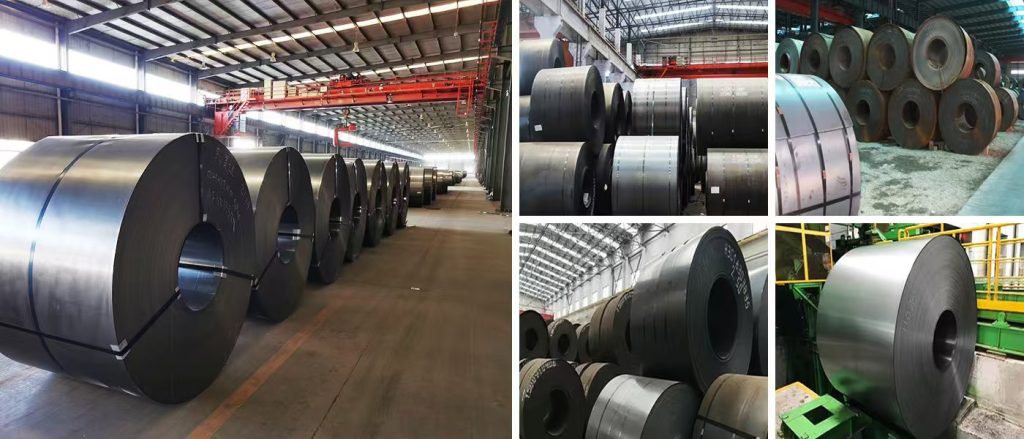
All 1018 steel stock undergoes incoming inspection with certified mill test reports (MTRs) verifying chemical composition and mechanical properties. While the modulus of elasticity is inherently stable for carbon steels, we confirm that material batches meet ASTM A29 requirements. During machining, process parameters (e.g., cutting forces, clamping pressure) are optimized to prevent localized stress that could induce plastic deformation, ensuring the final part behaves predictably per the 200 GPa modulus assumption.
Delivery with Traceable Material Verification
Every shipment includes comprehensive documentation:
Mill test reports showing actual tensile test results for the specific batch used
As-built dimensional reports with critical feature measurements
Optional: Third-party tensile test certificates confirming modulus of elasticity via ASTM E8 testing if requested
For modulus-critical applications, we provide a dedicated material conformance statement highlighting:
| Parameter | Standard Value | Measured Range (Per MTR) | Verification Method |
|---|---|---|---|
| Modulus of Elasticity | 200 GPa | 195–205 GPa | ASTM E111 (Tension Test) |
| Yield Strength | 370 MPa min | Per MTR | ASTM A370 |
| Tensile Strength | 440 MPa min | Per MTR | ASTM A370 |
This end-to-end approach ensures the modulus of elasticity for 1018 steel is not merely assumed but actively validated at every stage, eliminating surprises in final part performance. We treat material properties as foundational engineering constraints, not generic inputs.
Start Your Project
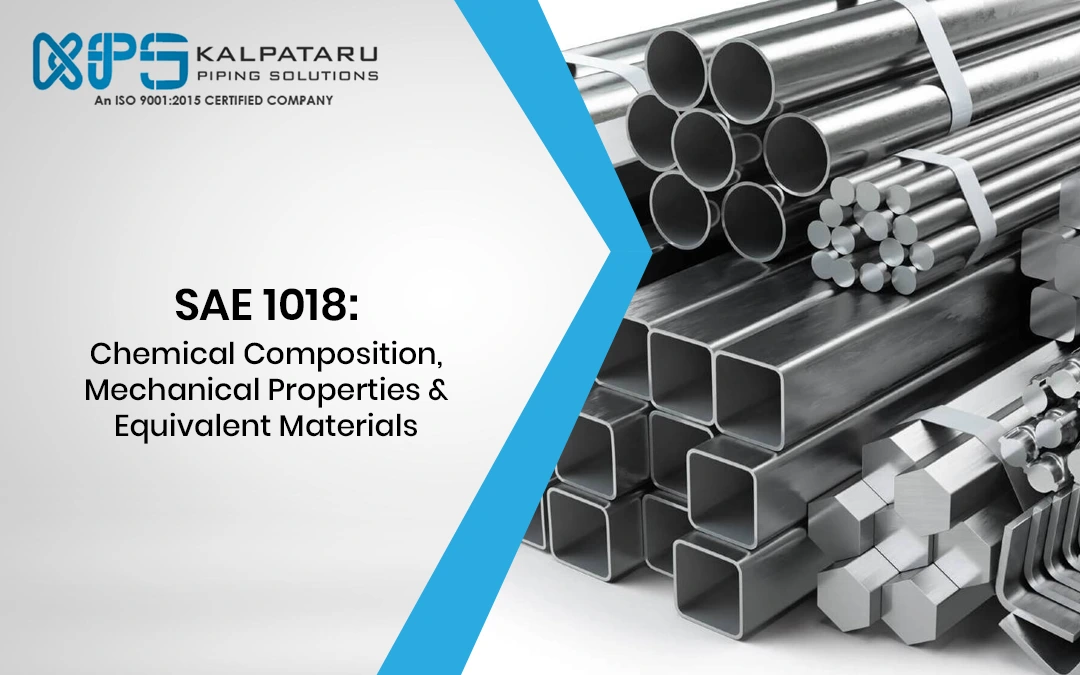
Understanding the modulus of elasticity for 1018 steel is essential for precision engineering and prototyping applications. With a typical modulus of elasticity of approximately 29,000 ksi (200 GPa), 1018 steel offers reliable stiffness and mechanical performance under load, making it a preferred choice for many industrial components.
For technical inquiries or material specifications related to 1018 steel, contact Susan Leo at [email protected]. Honyo Prototype provides expert manufacturing support with a state-of-the-art facility located in Shenzhen, ensuring high-quality production and fast turnaround for your prototyping and low-volume manufacturing needs.
🚀 Rapid Prototyping Estimator
Estimate rough cost index based on volume.