
Contents
Manufacturing Insight: Milling Brass
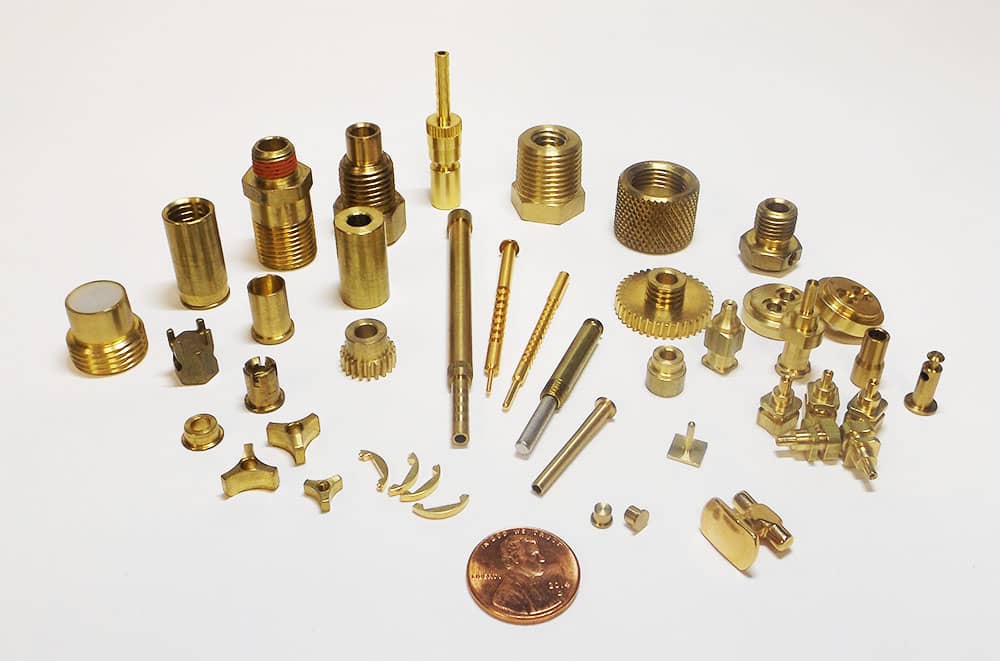
Precision Brass Milling: Where Material Science Meets CNC Excellence
Brass alloys, particularly C36000 free-machining brass, present unique challenges in precision manufacturing due to their gummy nature, thermal conductivity, and susceptibility to built-up edge. Achieving tight tolerances, superior surface finishes, and burr-free edges demands specialized CNC machining expertise beyond standard milling processes. At Honyo Prototype, we leverage decades of metallurgical insight and advanced 3- to 5-axis CNC milling capabilities to transform brass components for aerospace, medical, and semiconductor applications with uncompromising accuracy.
Our engineering-driven approach begins with optimized toolpath strategies and proprietary coolant management systems to mitigate thermal deformation and chip evacuation issues inherent in brass. We deploy carbide tooling with geometric precision tailored to brass’s material properties, ensuring micron-level repeatability and surface finishes down to Ra 0.4 µm. Every run adheres to ISO 9001-certified workflows, with in-process CMM validation to guarantee dimensional integrity from prototype to production.
For engineering teams requiring rapid brass component validation, Honyo’s Online Instant Quote platform delivers manufacturability feedback and pricing within hours—not days. Simply upload your STEP or IGES file to receive a detailed DFM analysis alongside a transparent cost breakdown, accelerating your path from design to functional prototype.
| Key Brass Milling Capabilities | Specification Range |
|---|---|
| Tolerance Control | ±0.0002″ (5 µm) |
| Surface Finish | Ra 0.4 µm to 1.6 µm |
| Max Work Envelope | 24″ x 18″ x 12″ (600 x 450 x 300 mm) |
| Supported Alloys | C36000, C26000, C37700, C46400 |
Access our Online Instant Quote platform today to experience how Honyo Prototype’s brass milling expertise eliminates traditional prototyping bottlenecks while meeting the exacting demands of high-performance assemblies.
Technical Capabilities
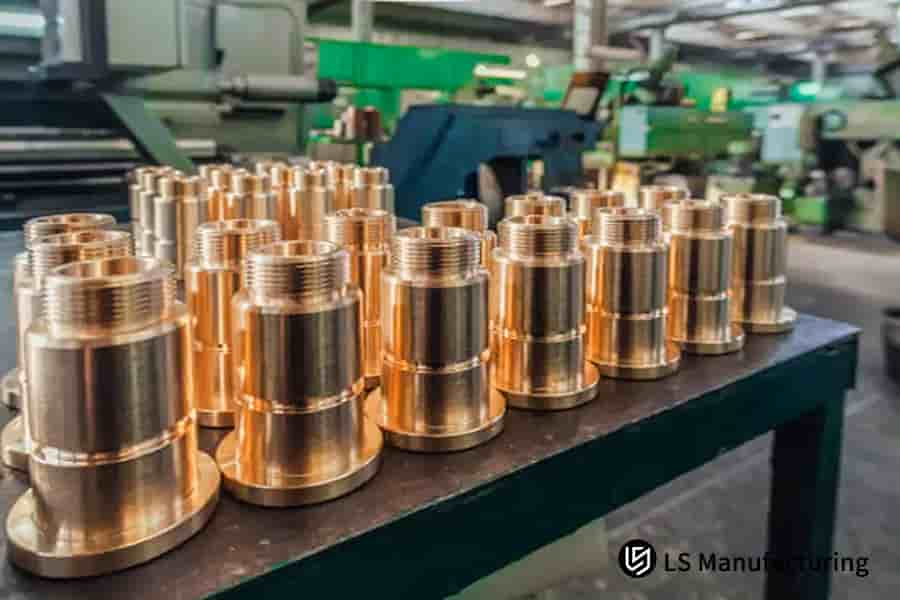
Milling Brass – Technical Specifications and Capabilities
Honyo Prototype specializes in high-precision CNC machining of brass and other engineering materials using advanced 3-, 4-, and 5-axis milling systems as well as multi-axis turning centers. Our processes are optimized for tight-tolerance components commonly used in aerospace, medical, and industrial applications.
Key Capabilities Overview
| Parameter | Specification / Capability |
|---|---|
| Machining Processes | 3-Axis Milling, 4-Axis Indexing Milling, 5-Axis Simultaneous Milling, CNC Turning (Swiss and Mill-Turn) |
| Material Compatibility | Brass (C36000, C26000, etc.), Aluminum (6061, 7075, 2024), Steel (1018, 4140, Stainless 303/316), ABS, Nylon (6, 66, 6/6-GF) |
| Tolerance Capability | ±0.0002″ (±0.005 mm) for critical features; ±0.001″ (±0.025 mm) typical for non-critical dimensions |
| Surface Finish | Typical: 32–64 μin Ra; Achievable: 16 μin Ra with polishing or fine finishing passes |
| Minimum Feature Size | 0.010″ (0.25 mm) end mill capability; micro-machining available upon request |
| Max Work Envelope | Milling: 24″ x 36″ x 20″ (600 x 900 x 500 mm); Turning: Ø1.5″ x 6″ (Ø38 x 150 mm) bar stock |
| Tooling Systems | High-speed steel (HSS) and carbide end mills; coolant-through tooling; rigid tapping |
| Spindle Speed Range | Up to 24,000 RPM for milling; up to 12,000 RPM for turning (dependent on machine model) |
| Positioning Accuracy | ±0.0001″ (±0.0025 mm) with laser calibration and in-process probing |
| Inspection Equipment | CMM (Coordinate Measuring Machine), optical comparators, micrometers, bore gauges, thread gauges |
| Secondary Operations | Deburring, passivation, anodizing (Al), plating (Brass/Ni), heat treating (Steel), cleaning |
Material-Specific Notes
Brass (especially free-machining C36000) is highly suited for tight-tolerance milling and turning due to its excellent chip formation and dimensional stability. Aluminum alloys are machined with high feed rates and sharp tooling to prevent built-up edge. Steel components require rigid setups and controlled feeds/speeds for precision. ABS and Nylon are machined with sharp tools and light cuts to minimize thermal deformation and maintain dimensional accuracy.
All brass components are machined with non-reactive coolants to preserve surface integrity and prevent staining. First-article inspection (FAI) and PPAP documentation are available for production runs.
From CAD to Part: The Process
Honyo Prototype Brass Milling Process Overview
Our brass CNC milling workflow integrates material-specific expertise with digital efficiency to ensure precision and reliability. Below is the detailed sequence for brass components, emphasizing critical brass-handling protocols at each phase.
CAD Upload and Material Specification
Clients initiate the process by uploading native or neutral-format CAD files (STEP, IGES, Parasolid) via our secure portal. During upload, the system mandates explicit material selection; for brass, users must specify the alloy grade (e.g., C36000 free-machining brass, C26000 cartridge brass). This triggers brass-specific validation checks, including verification of minimum wall thickness (≥0.5mm for standard brass), tolerance feasibility against brass’s thermal expansion coefficient (20.5 × 10⁻⁶/°C), and avoidance of geometries prone to chatter during milling.
AI-Powered Quoting with Brass Processability Analysis
Our AI quoting engine processes the CAD geometry and material input within 15 minutes, generating a technical-commercial quote. Unlike generic quoting systems, it evaluates brass-specific manufacturability risks:
Chip Evacuation Assessment: Flags deep cavities or narrow slots where brass chips may weld to tools.
Toolpath Simulation: Estimates spindle load variations due to brass’s variable hardness (e.g., C36000 vs. C28000).
Cost Drivers: Highlights premium factors like specialized coolant requirements (non-chlorinated oils to prevent dezincification) or secondary operations for stress relief.
The quote includes a brass processability score (1–5 scale), with actionable recommendations if geometry risks tool breakage or surface defects.
DFM Review: Brass-Specific Optimization
All brass projects undergo mandatory DFM analysis by our manufacturing engineers, focusing on material behavior:
Thermal Management: Adjusts feed rates to mitigate heat buildup (brass conducts heat poorly vs. aluminum), preventing work hardening.
Feature Refinement: Recommends radii ≥0.2mm on internal corners to reduce tool deflection in soft brass alloys.
Fixture Strategy: Validates clamping pressure limits to avoid part distortion (brass yield strength: 125–550 MPa depending on alloy).
Clients receive a formal DFM report with annotated CAD markups. No brass part proceeds to production without client sign-off on DFM resolutions.
Brass CNC Milling Production
Production occurs in climate-controlled cells using Haas or DMG MORI 5-axis mills with brass-optimized parameters:
| Parameter | Brass-Specific Setting | Rationale |
|---|---|---|
| Spindle Speed | 8,000–12,000 RPM | Minimizes built-up edge formation |
| Coolant | Non-emulsifiable oil mist | Prevents corrosion; ensures chip evacuation |
| Tooling | AlTiN-coated solid carbide | Resists adhesion from brass galling |
| In-Process Checks | Every 30 minutes (surface roughness, burr inspection) | Brass’s softness increases burr risk |
All brass components undergo 100% first-article inspection per ASME Y14.5, with CMM verification of critical dimensions. We implement real-time chatter monitoring to auto-adjust feeds during deep-pocket milling.
Delivery and Brass-Specific Post-Processing
Completed brass parts receive:
Ultrasonic cleaning in pH-neutral solution to remove residual oils without tarnishing.
Passivation (for dezincification-resistant alloys) per ASTM B604.
Anti-tarnish vapor corrosion inhibitor (VCI) packaging with humidity control.
Parts ship with full traceability documentation, including alloy mill certificates and first-article inspection reports. Typical lead time for brass milling is 5–7 business days from DFM approval, with rush options available for qualified geometries.
This integrated process ensures brass components meet stringent functional and cosmetic requirements while minimizing scrap from material-specific challenges like galling or dimensional drift.
Start Your Project
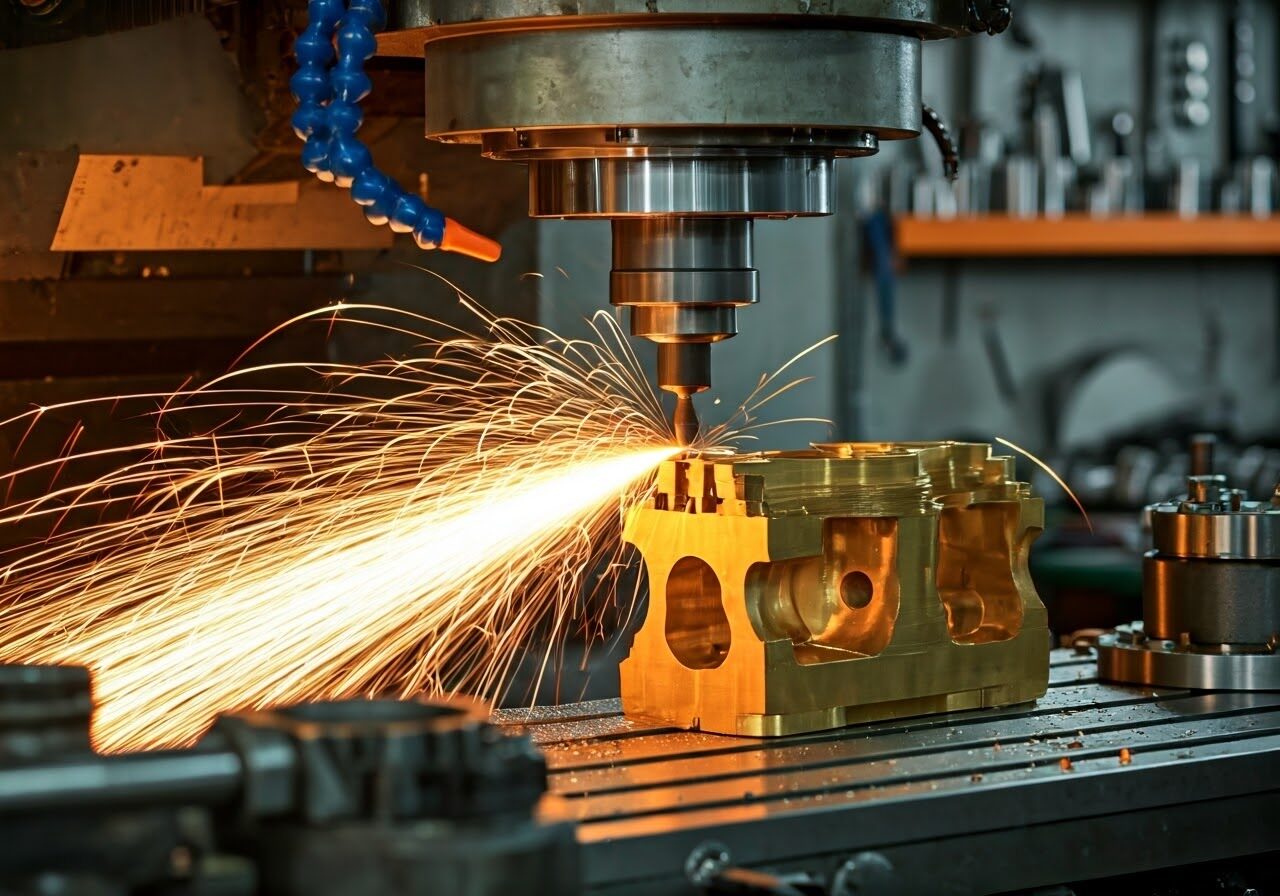
Looking for precision brass milling services? Honyo Prototype offers high-accuracy CNC milling for brass components, ideal for prototyping and low-volume production. Our factory in Shenzhen is equipped with advanced machinery and quality control systems to ensure tight tolerances and superior surface finishes.
Contact Susan Leo at [email protected] to discuss your project requirements and receive a fast, competitive quote.
🚀 Rapid Prototyping Estimator
Estimate rough cost index based on volume.