
Contents
Manufacturing Insight: Mild Steel
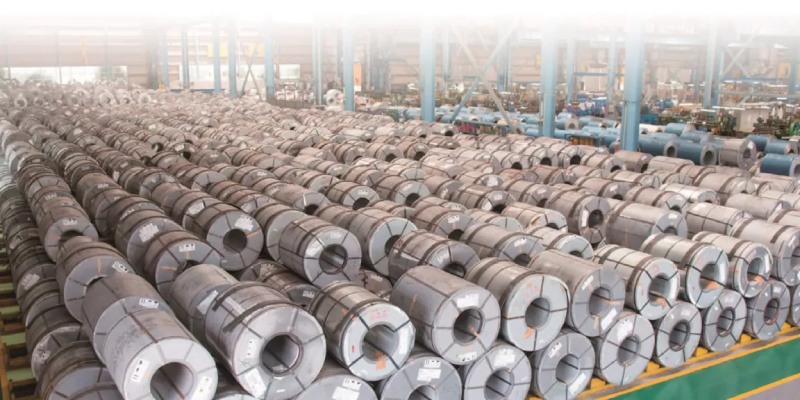
Precision Mild Steel Machining Solutions for Prototyping and Production
Mild steel remains a cornerstone material in industrial manufacturing due to its exceptional weldability, formability, and cost-effectiveness for prototyping and low-volume production. At Honyo Prototype, we leverage advanced CNC machining capabilities to transform mild steel into high-precision components meeting stringent industry requirements. Our ISO 9001:2015 certified facility utilizes state-of-the-art 3-, 4-, and 5-axis milling and turning centers to achieve tight tolerances down to ±0.005 mm and superior surface finishes, ensuring dimensional accuracy and functional reliability for applications ranging from jigs and fixtures to structural assemblies and machinery components.
We specialize in processing common mild steel grades including ASTM A36, AISI 1018, and AISI 1045, with optimized toolpaths and material-specific parameters to minimize burring and maximize throughput. Our integrated secondary operations—such as deburring, tapping, hardware insertion, and surface treatments—deliver fully finished parts in a single workflow, eliminating supply chain delays.
Key mild steel machining capabilities include:
| Parameter | Specification |
|---|---|
| Tolerance Range | ±0.005 mm to ±0.05 mm |
| Max Work Envelope | 1000 x 600 x 500 mm |
| Surface Finish | Ra 0.8 μm to Ra 3.2 μm standard |
| Lead Time | As fast as 3 business days |
Accelerate your project timeline with Honyo’s Online Instant Quote system. Upload your STEP or IGES file to receive a detailed manufacturability analysis, competitive pricing, and estimated delivery within minutes—no callbacks or email delays. Our platform provides transparent cost breakdowns while our engineering team proactively identifies potential design optimizations for mild steel fabrication. Experience how Honyo Prototype combines material expertise, precision CNC execution, and digital efficiency to deliver mission-critical components on spec and on schedule. Request your instant quote today to validate your design against real-world machining constraints.
Technical Capabilities
Technical Specifications for Mild Steel in Precision Machining Applications
Mild steel, commonly referred to as low-carbon steel (typically AISI 1018 or 1020), is widely used in precision CNC machining due to its excellent machinability, weldability, and cost-effectiveness. When utilized in 3-axis, 4-axis, and 5-axis milling operations as well as CNC turning, mild steel supports tight tolerance requirements, especially in prototyping and low-to-medium volume production. Below is a comparative technical overview of mild steel relative to other common engineering materials in high-precision machining contexts.
| Material | Tensile Strength (MPa) | Hardness (HB) | Machinability Rating (%) | Typical Tolerance (± mm) | Surface Finish (Ra, µm) | Recommended for Tight Tolerance | Notes on 3/4/5-Axis Milling & Turning |
|---|---|---|---|---|---|---|---|
| Mild Steel (AISI 1018) | 400–450 | 120–130 | 70 | 0.010 – 0.025 | 1.6 – 3.2 | Yes | Stable under cutting forces; predictable tool wear; suitable for complex 5-axis contours with proper tooling |
| Aluminum (6061-T6) | 310 | 95 | 90 | 0.005 – 0.015 | 0.8 – 1.6 | Excellent | High material removal rate; low cutting forces; ideal for high-speed 5-axis milling |
| Stainless Steel (304) | 515 | 200 | 45 | 0.010 – 0.020 | 1.6 – 3.2 | Yes (with rigid setup) | Higher work hardening; requires rigid fixturing and coolant in multi-axis operations |
| ABS (Thermoplastic) | 40 | 80 | 85 | 0.050 – 0.100 | 3.2 – 6.3 | Limited | Low melting point; prone to burring; better for turning and simple 3-axis milling |
| Nylon (PA6) | 70–80 | 75 | 80 | 0.050 – 0.125 | 3.2 – 6.3 | Moderate | High elasticity; requires sharp tools and low feed rates; not ideal for tight tolerance in 5-axis |
Key Notes on Machining Mild Steel for Tight Tolerances:
Mild steel performs reliably in both CNC turning and multi-axis milling environments. Its moderate hardness and uniform microstructure allow for consistent dimensional accuracy, especially when machining to ±0.010 mm with appropriate process control. In 4-axis and 5-axis setups, mild steel maintains stability during complex feature cutting, such as inclined holes, sculpted surfaces, and undercuts, provided that tool deflection and thermal expansion are managed.
Compared to aluminum, mild steel requires higher cutting forces and more robust tooling but offers better dimensional stability over long runs. Unlike plastics such as ABS and nylon, mild steel does not deform under heat or clamping pressure, making it superior for repeatable tight-tolerance work.
For optimal results in precision applications:
Use carbide end mills with TiAlN or AlTiN coating
Apply consistent coolant to minimize thermal drift
Employ high-precision collet systems (e.g., hydraulic or shrink fit)
Utilize in-process probing for 5-axis work envelope verification
Mild steel remains a go-to material for functional prototypes, fixtures, and end-use parts where strength, machinability, and tolerance integrity are critical.
From CAD to Part: The Process

Honyo Prototype Mild Steel Manufacturing Process Overview
Honyo Prototype executes a streamlined, technology-driven workflow for mild steel fabrication, ensuring precision, cost efficiency, and rapid turnaround. The process begins with CAD file submission and concludes with certified delivery, integrating AI and engineering expertise at critical stages. Below is the detailed sequence specific to mild steel components.
CAD File Upload and Initial Processing
Clients upload native or neutral format CAD files (STEP, IGES, Parasolid) via Honyo’s secure portal. Our system automatically validates geometry integrity and identifies material specifications. For mild steel, the platform cross-references industry-standard grades (e.g., AISI 1018, 1020, A36) to pre-configure machining parameters. File errors or unsupported features trigger immediate alerts, reducing pre-production delays.
AI-Powered Quoting Engine
Honyo’s proprietary AI engine analyzes the CAD geometry, material type, and client-specified requirements (tolerances, finishes, quantities) to generate a real-time quote. For mild steel, the AI factors in:
Grade-specific machinability indices (e.g., 1018’s superior weldability vs. 1045’s higher strength)
Secondary operation costs (welding, tapping, deburring) based on feature complexity
Material waste optimization through nesting algorithms
Quotes include lead time estimates, material certifications (e.g., ASTM A36 Mill Test Reports), and cost breakdowns within 2 hours.
Engineering-Driven DFM Analysis
All mild steel projects undergo mandatory Design for Manufacturability (DFM) review by Honyo’s engineering team. This phase addresses mild steel-specific considerations:
| Critical DFM Checkpoints for Mild Steel | Rationale | Honyo’s Action |
|---|---|---|
| Internal corner radii < 0.5mm | Risk of stress concentration and cracking during bending/welding | Recommends minimum 0.8mm radii; provides CAD annotation |
| Wall thickness < 1.5mm | Potential warpage during welding or heat treatment | Suggests localized gusseting or alternative fabrication approach |
| Tight tolerances (±0.05mm) on large flat surfaces | Mild steel’s thermal expansion may cause distortion | Proposes stress-relief annealing or tolerance relaxation |
| Unspecified weld prep | Incomplete bevels increase weld time/cost | Generates weld symbol callouts per AWS D1.1 standards |
The DFM report documents all recommendations, with client approval required before production.
Precision Production Execution
Mild steel parts enter production using optimized workflows:
CNC Machining: Milling/turning employs high-feed cutters and coolant-through tooling to manage mild steel’s gummy chip formation, minimizing built-up edge. Typical feeds/speeds adjusted for 1018 (180 SFM) vs. A36 (150 SFM).
Fabrication: Laser cutting (max 25mm thickness), press braking (with springback compensation), and MIG welding (ER70S-6 wire) follow AWS-certified procedures. All welds undergo visual inspection per ISO 17637.
Finishing: Deburring via vibratory tumbling; powder coating or zinc plating applied per client specs. Passivation not required for mild steel.
Quality-Controlled Delivery
Final inspection includes:
Dimensional verification using CMM for critical features (±0.1mm typical for mild steel)
Weld penetration checks via ultrasonic testing (if specified)
Material traceability documentation (heat numbers, MTRs)
First-article reports for production runs >50 units
Parts ship with protective VCI paper packaging and a digital quality dossier. Standard lead time for mild steel prototypes is 5–7 business days; production quantities scale via Honyo’s tiered capacity model.
Honyo’s integrated process ensures mild steel components meet structural and functional requirements while minimizing cost drivers unique to low-carbon steel fabrication. All deliverables comply with ISO 9001:2015 standards, with full revision control from CAD to shipment.
Start Your Project
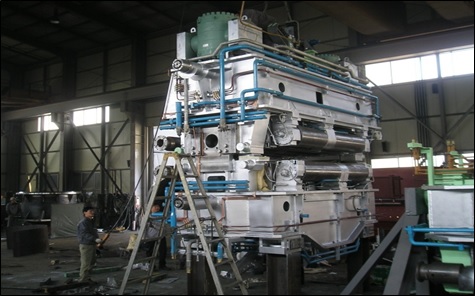
Looking for high-quality mild steel fabrication? Honyo Prototype offers precision manufacturing solutions with fast turnaround times. Our Shenzhen-based factory ensures competitive pricing and reliable production for prototyping and low-volume runs.
Contact Susan Leo today to discuss your project requirements. Email at [email protected] for technical support, quotes, and engineering collaboration.
🚀 Rapid Prototyping Estimator
Estimate rough cost index based on volume.