
Contents
Manufacturing Insight: Metal Printing Services
Precision Metal Additive Manufacturing Solutions for Demanding Industrial Applications
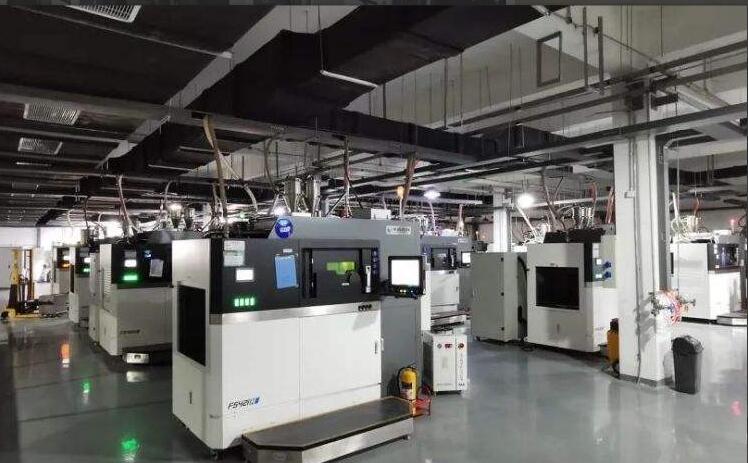
Honyo Prototype delivers advanced industrial metal 3D printing services engineered to meet the rigorous demands of modern manufacturing. Our production-grade metal additive manufacturing capabilities utilize state-of-the-art Directed Energy Deposition (DED) and Powder Bed Fusion (PBF) systems, processing high-performance alloys including Inconel 718, Titanium Ti-6Al-4V, Stainless Steel 17-4 PH, and Aluminum AlSi10Mg to exacting aerospace, medical, and energy sector standards. We specialize in transforming complex CAD models into fully dense, end-use production components with superior mechanical properties and the tight tolerance requirements critical for functional performance in demanding environments. This capability significantly reduces lead times compared to traditional subtractive methods while enabling unprecedented design freedom for lightweighting and part consolidation.
Accelerate your procurement cycle with Honyo’s Online Instant Quote platform. Simply upload your 3D model to receive a detailed, transparent cost estimate and manufacturability feedback within minutes, not days. This seamless integration of industrial-scale metal printing expertise with real-time quoting empowers engineering and procurement teams to rapidly evaluate feasibility and integrate additive solutions into your supply chain. Partner with Honyo Prototype for reliable, scalable metal additive manufacturing where precision, material integrity, and speed converge to solve your most challenging production needs.
Technical Capabilities
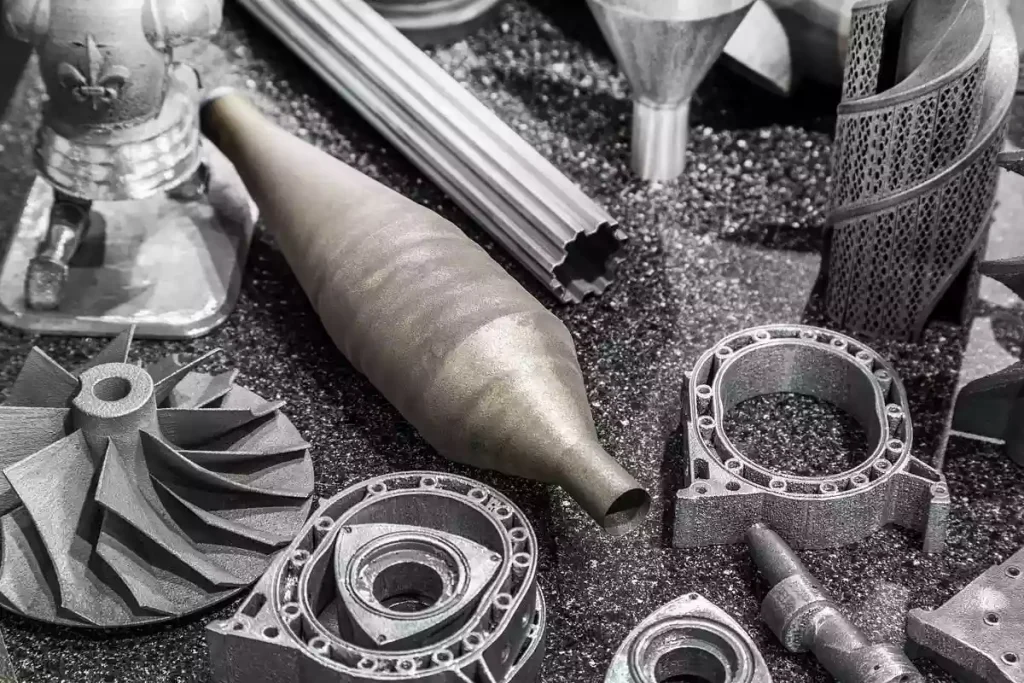
The term “metal printing services” often leads to confusion, as some additive manufacturing processes are metal-capable while others are strictly for polymers. Below is a clarification of the specified technologies—SLA, SLS, MJF, and DMLS—including their technical capabilities and compatible materials such as Aluminum, Steel, ABS, and Nylon.
Note: SLA, SLS, and MJF are primarily polymer-based processes. DMLS is the only fully metal additive manufacturing method among them.
| Technology | Full Name | Process Description | Material Compatibility | Layer Thickness Range | Build Speed | Surface Finish (Typical Ra) | Support Structures Required | Max Build Volume (Approx.) |
|---|---|---|---|---|---|---|---|---|
| SLA | Stereolithography | Uses UV laser to cure liquid photopolymer resin layer by layer | Photopolymer resins only (e.g., standard, tough, castable, high-temp); No metals or ABS/Nylon | 25–100 μm | Moderate | 0.8–1.6 μm | Yes | 1450 x 750 x 500 mm |
| SLS | Selective Laser Sintering | High-power laser sinters powdered material (typically polymer) | Nylon (PA11, PA12), Glass-filled Nylon, TPU; No metals or ABS | 80–150 μm | Fast | 6–10 μm | No (self-supporting) | 700 x 380 x 580 mm |
| MJF | Multi Jet Fusion | Inkjet array deposits fusing agent, then heated by lamps to fuse powder layer | Nylon (PA12), Glass-filled PA12; No metals or ABS | 80–100 μm | Very Fast | 4–8 μm | No | 380 x 280 x 380 mm |
| DMLS | Direct Metal Laser Sintering | High-powered laser sinters metal powder layer by layer to form dense metal parts | Stainless Steel (17-4 PH, 316L), Tool Steel (Maraging), Aluminum (AlSi10Mg, AlSi7Mg), Titanium, Inconel | 20–50 μm | Slow to Moderate | 10–20 μm | Yes (metal supports) | 250 x 250 x 325 mm |
Key Clarifications:
DMLS is the only process listed that supports true metal printing, enabling the production of high-strength, functional metal components for aerospace, medical, and industrial applications.
SLA is a photopolymer process and cannot print metals, ABS, or nylon. It offers high resolution and smooth finishes but is limited to resin materials.
SLS and MJF are both powder-bed fusion technologies for polymers, with excellent compatibility with various nylon-based materials. They do not support ABS or metal printing.
ABS-like properties can be mimicked in SLS or MJF using specific nylons or TPU, but true ABS thermoplastic is not typically used in these processes.
For metal printing services involving Aluminum or Steel, DMLS is the appropriate technology. For Nylon or functional polymer parts, SLS or MJF are preferred. SLA is ideal for high-detail prototypes but not for end-use functional parts requiring thermal or mechanical durability.
From CAD to Part: The Process
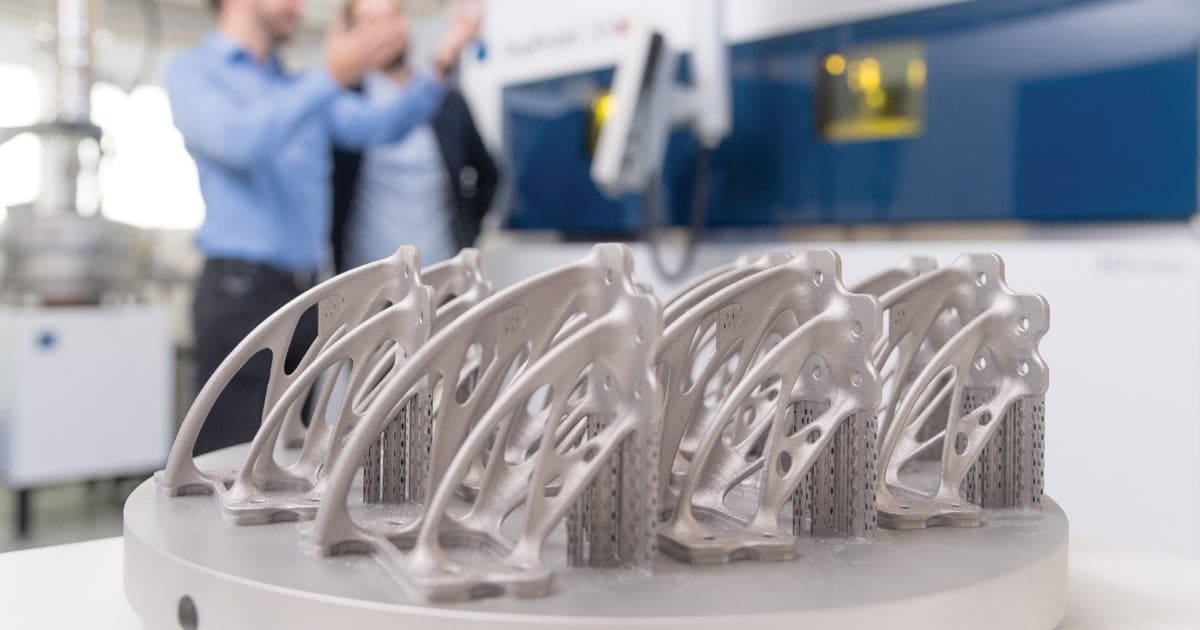
Honyo Prototype’s metal printing service follows a rigorously defined workflow designed for precision, efficiency, and client transparency. This integrated process ensures manufacturability while minimizing lead time from initial concept to finished part.
CAD File Upload and Initial Processing
Clients initiate the process by uploading their 3D CAD model file through Honyo’s secure web portal. Supported formats include STEP, IGES, and native formats from major CAD platforms. Upon upload, our system performs an immediate automated validation check for file integrity, unit consistency, and basic geometric completeness. This step confirms the file is technically ready for downstream processing and identifies any fundamental issues requiring client clarification before quoting proceeds.
AI-Powered Instant Quoting
Leveraging proprietary machine learning algorithms trained on extensive historical production data, Honyo’s AI engine analyzes the validated CAD geometry in real-time. The system evaluates critical parameters including part volume, bounding box dimensions, feature complexity, required support structures, material selection from our certified alloy portfolio (e.g., Ti64, Inconel 718, AlSi10Mg, 316L), and surface finish requirements. Within seconds, the AI generates a comprehensive preliminary quote detailing estimated material cost, machine time, post-processing requirements, and a firm delivery timeline. This quote includes clear visual annotations highlighting areas potentially impacting cost or manufacturability, providing immediate actionable insight without manual engineering intervention at this stage.
Engineering-Led Design for Manufacturability (DFM) Review
Following client acceptance of the AI quote, the project enters our mandatory DFM phase. A dedicated Honyo manufacturing engineer conducts a thorough technical review using specialized AM simulation software. This is not an automated step; it involves expert assessment of thermal management considerations, build orientation optimization, support structure strategy, residual stress prediction, and critical feature validation against metal AM process capabilities. The engineer provides specific, actionable feedback to the client, often including revised CAD suggestions or process parameter recommendations. Key DFM focus areas are systematically documented as follows:
| DFM Review Category | Specific Checks Performed | Typical Client Impact |
|---|---|---|
| Geometric Feasibility | Minimum feature size, overhang angles, cavity drainage | Avoids failed builds, reduces post-processing |
| Thermal Management | Heat accumulation zones, part symmetry, wall thickness variances | Prevents distortion, cracking, internal porosity |
| Support Strategy | Optimized placement, removability, interface surface area | Lowers cost, improves surface quality, saves time |
| Material & Finish | Alloy suitability, required HIP/HT, surface roughness spec | Ensures final part meets mechanical requirements |
Client approval of the DFM report is required before production commencement, ensuring alignment on all technical parameters.
Precision Metal Additive Manufacturing and Post-Processing
Approved jobs are scheduled on our calibrated industrial metal AM systems (primarily EOS M Series and Concept Laser Mlab platforms). Build parameters are strictly controlled per material certification and DFM specifications. Real-time process monitoring with layer-wise thermal imaging and melt pool analysis ensures build integrity. Post-build, parts undergo a defined sequence including controlled cooling, support removal via wire EDM or machining, HIP (Hot Isostatic Pressing) if specified, heat treatment, precision CNC machining for critical datums or interfaces, surface finishing (as specified: bead blast, precision grind, polish), and comprehensive metrology. All steps adhere to our AS9100D-certified quality management system with full traceability of material lot, machine parameters, and operator logs.
Quality Verification and Global Delivery
Each shipment includes a complete first-article inspection report (FAIR) with CMM data against critical dimensions, material test certificates (MTC), and process validation records. Parts undergo final non-destructive testing (NDT) per client requirements, typically including MPI or X-ray for internal defects. Honyo manages global logistics through vetted partners, providing real-time shipment tracking. Standard delivery includes protective packaging meeting international transit standards, with options for expedited shipping and customs documentation support. Our process concludes with a formal delivery confirmation and an invitation for post-delivery technical feedback to continuously refine future projects. This structured approach ensures consistent delivery of flight-worthy or production-intent metal AM components with full supply chain integration.
Start Your Project
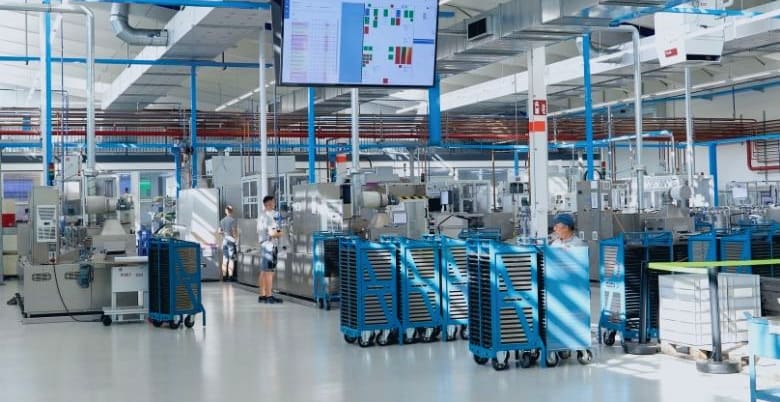
Discover high-precision metal 3D printing services engineered for prototyping and low-volume production. At Honyo Prototype, our advanced metal additive manufacturing capabilities deliver complex, high-strength parts with tight tolerances and rapid turnaround.
Based in Shenzhen, our state-of-the-art factory utilizes industry-leading technology to support demanding applications across aerospace, medical, automotive, and industrial sectors.
For project inquiries or technical specifications, contact Susan Leo at [email protected]. Let’s build what’s next—together.
🚀 Rapid Prototyping Estimator
Estimate rough cost index based on volume.