
Contents
Manufacturing Insight: Metal Injection Molding Machine
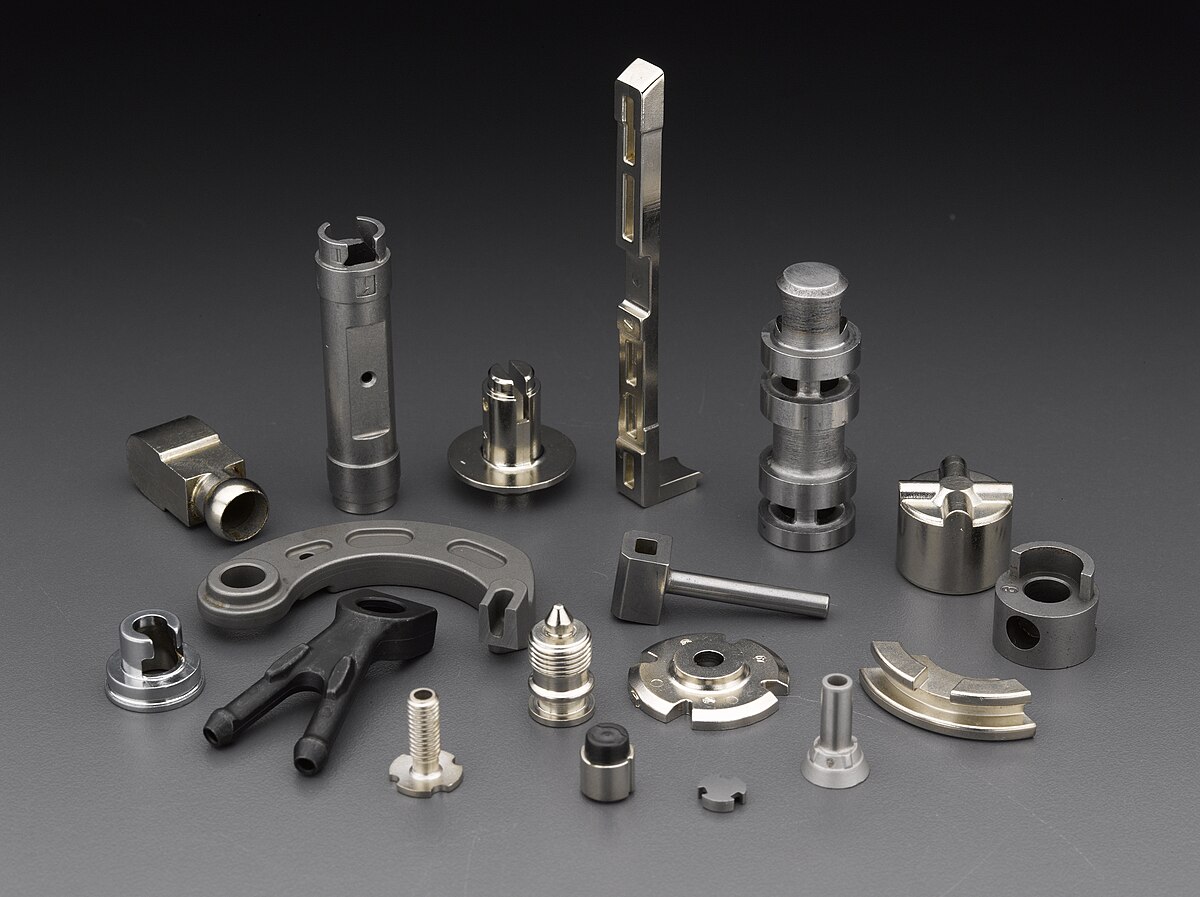
Precision Sheet Metal Fabrication Solutions for Demanding Applications
While metal injection molding serves specific high-volume production needs for complex geometries, Honyo Prototype excels in delivering advanced Sheet Metal Fabrication capabilities for rapid prototyping and low-to-mid volume production. Our engineering-driven approach ensures your precision metal components meet stringent tolerances, material specifications, and functional requirements without the long lead times or high tooling costs associated with alternative processes.
Honyo’s sheet metal services leverage state-of-the-art CNC punching, laser cutting, bending, and welding technologies to transform raw materials into mission-critical parts across aerospace, medical, and industrial sectors. We support a comprehensive range of materials including stainless steel, aluminum, copper, and specialty alloys, with capabilities spanning from simple brackets to fully assembled enclosures. Our process guarantees ±0.005″ tolerances, seamless integration of secondary operations like powder coating or anodizing, and rigorous in-process quality validation per AS9100 and ISO 13485 standards.
For engineering teams prioritizing speed and cost transparency, our Online Instant Quote platform delivers precise, no-obligation pricing in under 60 seconds. Simply upload your STEP or DXF file to receive manufacturability feedback, lead time estimates, and a formal quotation—accelerating your design-to-production timeline while eliminating procurement bottlenecks. Partner with Honyo Prototype to convert complex sheet metal designs into reality with unmatched agility and engineering rigor.
Key Capabilities Overview
| Process | Tolerance Range | Material Thickness | Max. Part Size | Lead Time (Typical) |
|———|—————–|——————–|—————-|———————|
| Laser Cutting | ±0.003″ | 0.005″ – 0.50″ | 60″ x 120″ | 3–5 days |
| CNC Punching | ±0.004″ | 0.010″ – 0.25″ | 48″ x 96″ | 4–7 days |
| Precision Bending | ±0.5° | 0.015″ – 0.375″ | 144″ length | 5–10 days |
| Hardware Insertion | ±0.002″ | N/A | N/A | Integrated process |
Technical Capabilities
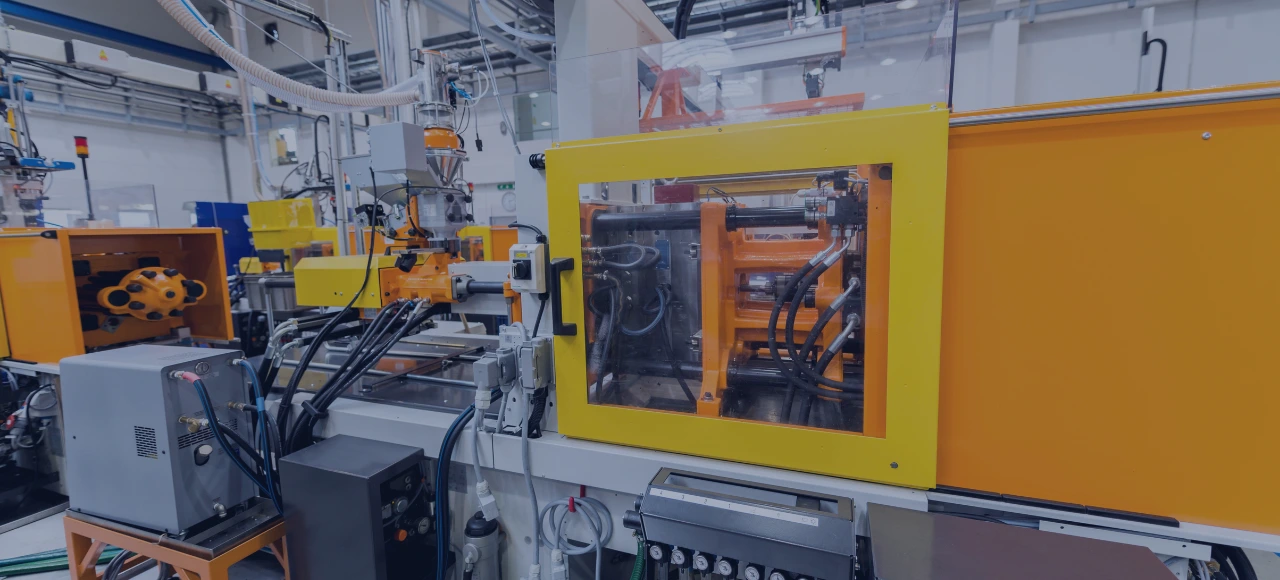
Metal Injection Molding (MIM) machines are not typically used for laser cutting, bending, or welding operations. MIM is a manufacturing process that combines the shape-making complexity of plastic injection molding with the material flexibility of powder metallurgy to produce small, intricate metal parts. However, the processes of laser cutting, bending, and welding are generally associated with sheet metal fabrication rather than MIM.
Below is a clarification of the technical capabilities and material compatibility for laser cutting, bending, and welding—commonly used in sheet metal and polymer fabrication—along with their compatibility with the listed materials. This information is provided in the context of industrial equipment used for these specific processes.
| Process | Technical Specifications | Compatible Materials (Examples) | Notes |
|---|---|---|---|
| Laser Cutting | CO₂ or fiber laser sources; power range 500 W – 6 kW; cutting thickness up to 25 mm (steel); positional accuracy ±0.1 mm; cutting speed up to 100 m/min (thin sheets) | Steel, Aluminum, ABS, Nylon | ABS and Nylon can be laser cut but may produce hazardous fumes; typically not recommended for high-volume production |
| Bending | CNC press brakes with tonnage 30–300 tons; bending length up to 4 m; angular accuracy ±0.2°; programmable backgauging | Steel, Aluminum | Not applicable for thermoplastics like ABS and Nylon in structural bending; limited to metal sheet forming |
| Welding | Fiber laser or MIG/TIG welding; power output 2–8 kW; weld speed 1–10 m/min; seam tracking and automation integration | Steel, Aluminum | ABS and Nylon may be joined via ultrasonic or hot-plate welding; not compatible with metal arc/laser welding |
Note on Material Use:
Steel and Aluminum: Fully compatible with laser cutting, bending, and welding; widely used in structural and precision fabrication.
ABS and Nylon: Thermoplastics not processed in MIM machines with metal feedstocks. These polymers are processed in plastic injection molding machines. They can be laser cut or welded using specialized polymer-compatible methods but are not suitable for metal bending or arc/laser welding.
For true Metal Injection Molding applications, equipment specifications would include injection pressures (up to 200 MPa), screw diameter (25–50 mm), clamp force (50–300 tons), and compatibility with fine metal powders (e.g., stainless steel 17-4 PH, 316L) and polymer binders. However, MIM does not involve laser cutting, bending, or welding as primary process steps.
From CAD to Part: The Process
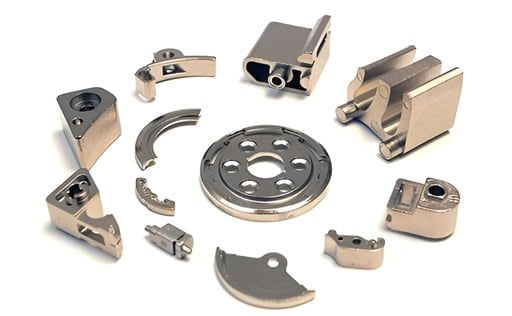
Honyo Prototype Metal Injection Molding (MIM) Process Overview
Honyo Prototype executes a streamlined Metal Injection Molding workflow designed for precision, cost efficiency, and rapid turnaround. It is critical to clarify that our process centers on the MIM part manufacturing methodology, not the operation of MIM machinery itself. Clients provide part designs; we handle material selection, tooling, and production. Below is our standardized five-phase sequence:
CAD File Upload and Initial Assessment
Clients submit 3D CAD models (STEP, IGES, or native formats) via our secure portal. Our system performs an automated geometry check for basic MIM feasibility, including volume, complexity, and file integrity. This step ensures the design aligns with MIM’s capabilities before proceeding. Incomplete or non-compliant files trigger an immediate notification for resubmission, preventing downstream delays.
AI-Powered Quoting Engine
Validated CAD files enter our proprietary AI quoting system, trained on 15,000+ historical MIM projects. The algorithm analyzes geometric complexity, material requirements (e.g., 17-4PH stainless steel, tungsten carbide), tolerances, and annual volume to generate a preliminary quote within 2 business hours. This includes raw material costs, tooling estimates, and secondary operations. Human engineers review all AI outputs to validate assumptions, especially for critical features like thin walls (<0.5mm) or undercuts.
Engineering-Led Design for Manufacturability (DFM)
Our senior MIM engineers conduct a rigorous DFM analysis, collaborating directly with the client. We identify and resolve potential issues such as non-uniform wall thickness, inadequate draft angles, or problematic parting lines. Recommendations cover gate location optimization, sintering distortion mitigation, and cost-saving design adjustments. Clients receive a detailed DFM report with annotated visuals and revised CAD suggestions. This phase typically reduces production iterations by 40–60% and is mandatory before tooling release.
Controlled Production Execution
Approved designs move to production under AS9100 and ISO 13485 certified protocols. We utilize 50–500 ton MIM presses with in-line monitoring for critical parameters (injection pressure, temperature profiles). The process sequence includes: feedstock injection, debinding (catalytic/solvent), and sintering in controlled atmosphere furnaces with ±1.5°C thermal uniformity. All parts undergo 100% first-article inspection (FAI) per AS9102 and batch-level CMM verification. Secondary operations (e.g., CNC machining, plating) occur in-house to minimize supply chain risks.
Guaranteed Delivery and Quality Handoff
Finished parts ship with full traceability documentation: material certs (MTRs), sintering profiles, FAI reports, and PPAP Level 3 packages where required. Standard lead times are structured as follows:
| Process Phase | Typical Duration | Key Dependencies |
|---|---|---|
| Tooling Fabrication | 15–25 days | Complexity, client DFM approval |
| Pilot Production | 7–10 days | Tool validation, material lot |
| Full Production | 10–18 days | Order volume, secondary ops |
| Total (Ex-Tooling) | 25–40 days | Client feedback cycles |
We guarantee on-time delivery via real-time production tracking portals and absorb costs for delays attributable to Honyo. All shipments include serialized packaging for aerospace/medical compliance, with options for bonded warehouse inventory management. This integrated approach ensures first-pass yield rates exceeding 92% while reducing total cost of ownership through proactive engineering collaboration.
Start Your Project
For more information about our metal injection molding machines, contact Susan Leo at [email protected]. Our manufacturing facility is located in Shenzhen, ensuring high-quality production and efficient delivery for global clients.
🚀 Rapid Prototyping Estimator
Estimate rough cost index based on volume.