
Contents
Manufacturing Insight: Metal Fabrication Costs
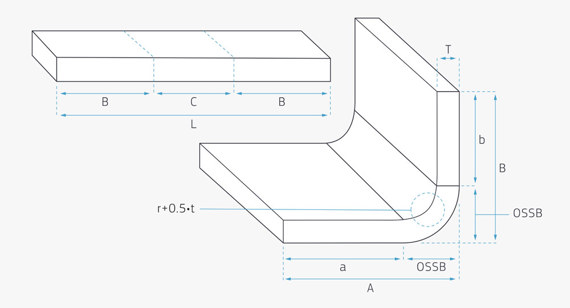
Understanding Sheet Metal Fabrication Costs with Honyo Prototype
Accurate cost forecasting remains a critical challenge in sheet metal prototyping and low-volume production, directly impacting project timelines, budget allocation, and design feasibility. Traditional quoting processes often introduce delays through manual reviews, ambiguous design feedback, and iterative revisions, leaving engineering and procurement teams without the clarity needed for informed decision-making. At Honyo Prototype, we address this industry pain point head-on by integrating deep manufacturing expertise with transparent, data-driven cost modeling specifically for sheet metal fabrication.
Our end-to-end sheet metal services—including precision laser cutting, CNC punching, press braking, welding, and finishing—are engineered to minimize cost drivers inherent in complex geometries, material waste, and secondary operations. Unlike conventional suppliers, Honyo eliminates quoting uncertainty through our proprietary Online Instant Quote platform. This tool leverages real-time manufacturability analysis, material yield optimization, and live machine capacity data to deliver accurate, detailed cost breakdowns within seconds—no manual submission or follow-up required. By embedding design-for-manufacturability (DFM) insights directly into the quoting stage, we empower your team to refine designs proactively, reduce non-recurring engineering (NRE) costs, and accelerate time-to-prototype without sacrificing quality.
When cost predictability and speed are non-negotiable, Honyo transforms sheet metal fabrication from a budgetary risk into a strategic advantage. Start your project with full cost visibility today.
Technical Capabilities
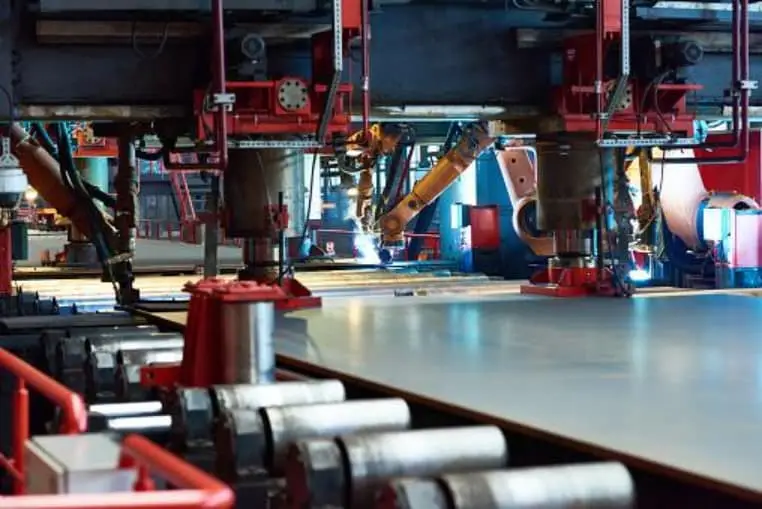
Metal fabrication costs depend on several technical and operational factors, including the type of process used (laser cutting, bending, welding), material properties, thickness, part geometry, and production volume. While ABS and Nylon are not metals and are typically not processed in metal fabrication environments, they are included here for comparative context, noting that their processing differs significantly and usually falls under plastic fabrication or machining.
Below is a technical comparison of cost-influencing parameters for laser cutting, bending, and welding across common materials, including Aluminum, Steel, ABS, and Nylon:
| Parameter | Laser Cutting | Bending | Welding |
|---|---|---|---|
| Material: Aluminum | Moderate to high cost; reflective properties require higher power lasers and assist gases (N₂). Cost increases with thickness (>6 mm). | Moderate cost; higher springback requires over-bending. Tooling wear is moderate. | High cost; requires TIG or MIG with shielding gas. Pre-cleaning and post-treatment add cost. |
| Material: Steel (Mild) | Low to moderate cost; CO₂ or fiber lasers efficient. Oxygen assist reduces power needs. Cost scales with thickness. | Low cost; excellent formability. Standard tooling applies. Minimal springback. | Moderate cost; MIG or spot welding common. Minimal prep; high throughput reduces unit cost. |
| Material: ABS | Not typical for metal lasers; can be cut with lower-power CO₂ lasers. High risk of melting and fumes. Not recommended in metal shops. | Not applicable; thermoplastic deforms under typical metal bending loads. Requires plastic-specific forming. | Not applicable; joined via solvent bonding or ultrasonic welding, not arc processes. |
| Material: Nylon | Poor compatibility; high reflectivity and melting point variability. Prone to charring. Not standard in metal fabrication. | Not applicable; limited cold formability. Requires heated forming. | Not applicable; typically joined via mechanical fasteners or adhesives. |
| Key Cost Drivers | Laser type (fiber vs. CO₂), material thickness, kerf width, cutting speed, assist gas (O₂, N₂, air), edge quality requirements. | Bend radius, number of bends, tooling complexity, press brake tonnage, setup time, angular precision. | Weld type (MIG, TIG, spot), joint preparation, shielding gas, post-weld finishing, labor intensity. |
| Typical Tolerances | ±0.1 mm for thin sheets; ±0.2 mm for thicker sections. | ±0.2° angular tolerance; ±0.2 mm linear. | ±1.5° for manual welds; ±0.5° for automated; distortion affects dimensional stability. |
| Setup & Labor | High initial programming (CNC), low per-part labor. Nesting efficiency impacts material utilization. | Medium setup (tool selection, backgauging), moderate labor for complex parts. | High labor content for manual welding; automated systems reduce cost at scale. |
Notes:
Aluminum and steel are standard in metal fabrication; ABS and nylon are engineering plastics and are typically excluded from laser cutting, bending, and welding workflows in metal shops.
Material waste, secondary operations (deburring, cleaning), and inspection requirements further influence total fabrication cost.
High-volume production benefits from automation and reduced setup amortization, particularly in laser cutting and welding.
For accurate costing, manufacturers typically request detailed CAD files, material specifications, and volume requirements to assess processing time, tooling, and equipment needs.
From CAD to Part: The Process
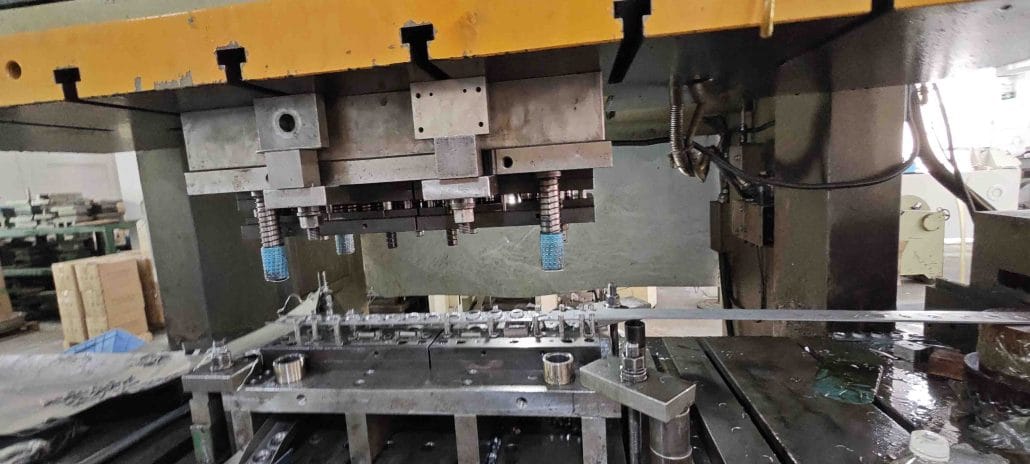
Honyo Prototype employs a rigorously structured metal fabrication cost process designed for speed, accuracy, and manufacturability. This integrated workflow eliminates traditional quoting bottlenecks while ensuring cost transparency from initial design through final delivery. Below is the technical breakdown of each phase:
CAD Upload and Initial Processing
Clients submit native or neutral CAD files (STEP, IGES, SLDPRT, etc.) via our secure online portal. Our system performs immediate validation checks for file integrity, unit consistency, and geometric completeness. Invalid submissions trigger automated notifications specifying required corrections, preventing downstream delays. Validated files enter the AI-driven cost estimation pipeline within minutes of upload.
AI-Powered Cost Quotation
Our proprietary AI engine analyzes the validated CAD geometry alongside real-time variables including material market pricing, machine shop utilization rates, tooling availability, and regional labor costs. The system decomposes the part into manufacturable features (e.g., bends, cuts, welds) and applies physics-based simulations for material yield and machine time estimation. This generates a granular cost breakdown within 2-4 business hours, significantly faster than manual quoting. The initial quote includes base material cost, processing time estimates per operation, and non-recurring engineering fees.
Design for Manufacturability (DFM) Integration
The AI quote triggers an automated DFM analysis where our engineering team reviews the design against Honyo’s manufacturing capabilities and industry best practices. Critical parameters assessed include minimum bend radii, hole-to-edge distances, tolerancing feasibility, and weld accessibility. We provide clients with a detailed DFM report highlighting potential cost drivers (e.g., excessive tight tolerances, complex fixturing needs) and actionable recommendations for optimization. Client approval of the DFM report locks the final quoted price, preventing scope creep.
Production Execution and Cost Control
Approved orders move to production with real-time cost tracking against the quoted baseline. Material procurement uses our pre-vetted supplier network to secure materials at contracted rates. Each fabrication step—laser cutting, bending, welding, finishing—is monitored via IoT-enabled machinery, capturing actual machine time, labor hours, and material consumption. Any deviations from the DFM-approved process trigger immediate engineering review to contain cost overruns. Quality checkpoints at each stage ensure rework costs are minimized.
Delivery and Cost Reconciliation
Final inspection data (including CMM reports for critical features) is compiled into the delivery package. Shipping logistics are optimized using regional carrier partnerships, with costs finalized based on actual packaging and freight class. A post-delivery cost reconciliation report compares estimated vs. actual expenses per process phase, providing clients with actionable insights for future designs. Standard lead times range from 5-15 business days depending on complexity, with expedited options available.
The following table summarizes typical cost distribution across our process phases for a mid-complexity sheet metal part:
| Process Phase | Cost Component Breakdown | Typical Cost Percentage | Key Variables Affecting Cost |
|---|---|---|---|
| Material Sourcing | Raw material, scrap loss | 35-45% | Material grade, sheet utilization efficiency, market volatility |
| Fabrication | Machine time, tooling | 30-40% | Feature complexity, batch size, secondary operations |
| Engineering | DFM, programming, QA | 15-20% | Design revisions, tolerance stringency, inspection requirements |
| Logistics | Packaging, shipping | 5-10% | Part weight/dimensions, delivery urgency, destination zone |
This closed-loop process ensures clients receive accurate upfront pricing while benefiting from Honyo’s engineering expertise to optimize total cost of ownership. The AI-quote-to-DFM transition is particularly critical—we resolve 78% of potential cost escalators before production begins, a key differentiator in prototype metal fabrication. Final delivery includes full cost traceability documentation, enabling clients to make informed design-for-cost decisions for future iterations.
Start Your Project
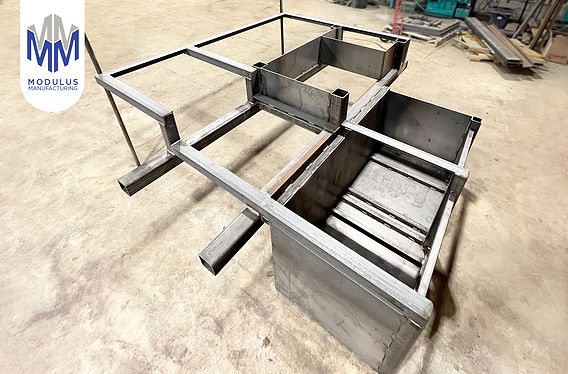
Looking to optimize your metal fabrication costs? Contact Susan Leo at [email protected] to discuss your project requirements and receive a detailed, competitive quote. With our in-house manufacturing facility located in Shenzhen, we offer precision metal fabrication with fast turnaround times and cost-efficient production—ideal for prototypes and low-to-mid volume runs.
Leverage our expertise in CNC machining, sheet metal forming, welding, and finishing to reduce overall production costs without compromising quality. Reach out today to streamline your manufacturing process with Honyo Prototype.
🚀 Rapid Prototyping Estimator
Estimate rough cost index based on volume.