
Contents
Manufacturing Insight: Metal Fabrication And Bending
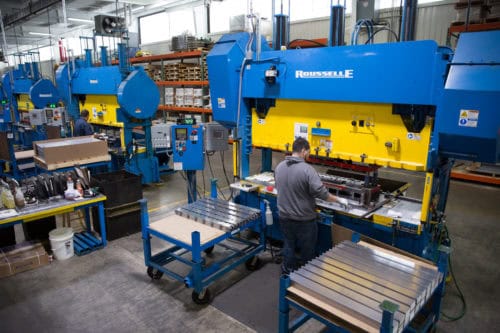
Precision Metal Fabrication and Bending: Engineered for Your Success
At Honyo Prototype, we transform raw sheet metal into mission-critical components with uncompromising precision and efficiency. Our end-to-end Sheet Metal Fabrication services integrate advanced laser cutting, CNC turret punching, and high-tolerance bending capabilities to deliver parts that meet exacting engineering specifications. Whether you require low-volume prototypes or scalable production runs, our ISO-certified facility ensures dimensional stability, repeatability, and adherence to tight tolerances down to ±0.005 inches.
We specialize in overcoming complex fabrication challenges, from intricate bracket assemblies to large-scale enclosures, leveraging our expertise in material science and geometric complexity. Our bending processes utilize state-of-the-art CNC press brakes with automatic tool changers, enabling precise angular control and consistent results across diverse materials—including aluminum, stainless steel, and cold-rolled steel—up to 0.5 inches thick.
Accelerate your development cycle with Honyo’s Online Instant Quote platform. Simply upload your STEP or DWG files to receive a detailed, transparent cost estimate in under 60 seconds—no manual submission delays, no quotation bottlenecks. This seamless integration of engineering rigor and digital efficiency ensures you move from design intent to functional hardware faster, with zero compromise on quality. Partner with Honyo Prototype to turn ambitious metal fabrication requirements into reality, on time and within budget.
Technical Capabilities
Technical Specifications for Metal Fabrication and Bending – Laser Cutting, Bending, Welding
The following table outlines the key technical specifications and capabilities for laser cutting, bending, and welding processes as applied to common materials used in precision manufacturing. These specifications are representative of standard industrial capabilities at Honyo Prototype for prototyping and low-to-mid volume production.
| Process | Parameter | Aluminum | Steel (Mild & Stainless) | ABS | Nylon |
|---|---|---|---|---|---|
| Laser Cutting | Max Material Thickness | 20 mm | 25 mm | 10 mm | 10 mm |
| Laser Type | Fiber Laser (1–6 kW) | Fiber Laser (1–6 kW) | CO2 Laser | CO2 Laser | |
| Cutting Tolerance | ±0.1 mm | ±0.1 mm | ±0.2 mm | ±0.2 mm | |
| Edge Quality | Smooth, minimal dross | Smooth, slight oxidation possible | Clean, may require post-process | Clean, may char at cut edge | |
| Kerf Width | 0.15–0.25 mm | 0.15–0.25 mm | 0.2–0.3 mm | 0.2–0.3 mm | |
| Bending | Max Material Thickness | 12 mm | 12 mm | Not recommended | Not recommended |
| Minimum Flange Length | 2.5 × material thickness + R | 2.5 × material thickness + R | N/A | N/A | |
| Bend Radius (Standard) | 1× material thickness | 1× material thickness | N/A | N/A | |
| Tolerance (Angle) | ±0.5° | ±0.5° | N/A | N/A | |
| Tooling | V-dies with standard punch profiles | V-dies with standard punch profiles | N/A | N/A | |
| Welding | Compatible Processes | TIG, MIG, Spot Welding | MIG, TIG, Spot, Laser Welding | Ultrasonic, Vibration, Solvent | Ultrasonic, Hot Gas, Solvent |
| Typical Joint Types | Butt, Lap, T-joint | Butt, Lap, T-joint, Edge | Butt, Lap | Butt, Lap | |
| Penetration (Steel/Al) | Full penetration up to 8 mm | Full penetration up to 10 mm | N/A | N/A | |
| Post-Weld Finishing | Grinding, polishing, passivation | Grinding, sandblasting, coating | Sanding, priming | Sanding, priming | |
| Distortion Control | Fixturing, pre-compensation | Fixturing, clamping, sequencing | Minimal required | Minimal required |
Notes:
Aluminum and steel are primary materials for laser cutting, bending, and welding. Both require proper fixturing and process parameter optimization to maintain dimensional accuracy and structural integrity.
ABS and Nylon are thermoplastics and not suitable for metal bending or traditional arc welding. They are included for comparison and are processed using alternative joining and cutting methods.
Laser cutting of plastics (ABS, Nylon) requires CO2 lasers due to material absorption characteristics and controlled ventilation to manage fumes.
Bending is limited to ductile metals; thermoplastics are typically formed using molding or thermoforming techniques instead of press braking.
Welding of aluminum requires clean surfaces and appropriate shielding gas (e.g., argon) to prevent oxidation and porosity.
From CAD to Part: The Process
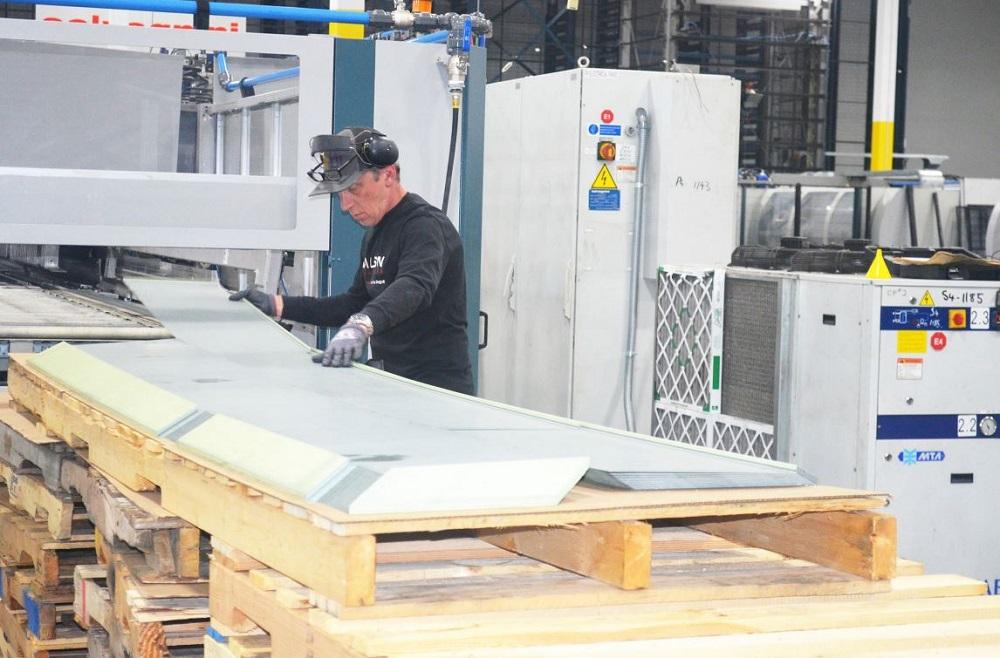
Honyo Prototype Metal Fabrication and Bending Process Overview
Honyo Prototype executes metal fabrication and bending through a rigorously defined workflow designed for precision, efficiency, and seamless client integration. The end-to-end process begins with digital file submission and culminates in certified delivery, leveraging advanced automation alongside expert engineering oversight.
Upload CAD
Clients initiate the process by uploading native or neutral CAD files (STEP, IGES, DWG, or native SolidWorks formats preferred) via our secure portal. Our system performs immediate validation for geometric completeness, unit consistency, and manufacturability flags. Files lacking critical metadata (e.g., material grade, finish requirements, or tolerances) trigger automated notifications for client clarification, preventing downstream delays. This stage ensures all geometric and specification data aligns with Honyo’s production capabilities before proceeding.
AI-Powered Quoting
Validated CAD files enter our proprietary AI quoting engine, which analyzes 12+ dimensional and material parameters including sheet thickness, bend counts, kerf allowances, and geometric complexity. The system cross-references real-time material costs, machine utilization rates, and regional scrap factors to generate a granular cost breakdown within 90 minutes. Crucially, the AI identifies high-risk features (e.g., acute bend angles near edges or non-standard radii) and routes these for senior engineer review. Clients receive a formal quote with visual markup of flagged areas and optional DFM suggestions—never an unvetted automated price.
Engineering-Driven DFM Analysis
Every project undergoes mandatory Design for Manufacturability (DFM) review by Honyo’s in-house fabrication engineers. This phase resolves conflicts between design intent and production reality, focusing on bend sequence optimization, tooling compatibility, and stress-induced distortion mitigation. Key DFM checks include:
| Parameter | Standard Tolerance | Critical Feature Tolerance | Verification Method |
|---|---|---|---|
| Bend Angle | ±1° | ±0.5° | Laser metrology |
| Hole-to-Bend Dist. | ≥2× material thickness | ≥3× material thickness | CAD simulation |
| Flat Pattern Accuracy | ±0.25mm | ±0.1mm | Nesting software |
| Grain Direction | Per client spec | Mandatory for Al 6061-T6 | Material certification |
Engineers collaborate directly with clients to refine geometries where necessary, providing annotated alternatives that maintain functional requirements while reducing cost or lead time. No project advances to production without signed DFM approval.
Precision Production Execution
Approved designs move to our climate-controlled fabrication floor. Laser cutting utilizes 4kW Trumpf systems with ±0.1mm positional accuracy, while bending employs Amada press brakes (50–500 ton capacity) with real-time bend angle feedback via optical sensors. Each stage follows documented work instructions:
Nesting software minimizes material waste through dynamic part arrangement
Bend sequences are simulated in Lantek Expert to prevent collisions and ensure repeatability
In-process inspections occur at 25%, 50%, and 75% production milestones using calibrated CMMs
Secondary operations (welding, tapping, finishing) adhere to ISO 9001-controlled procedures
Certified Delivery and Traceability
Completed parts undergo final validation against AS9102 First Article Inspection (FAI) standards where applicable, with full material traceability from mill certificate to shipment. All deliveries include:
Dimensional inspection reports with GD&T callouts
Batch-specific material certs (e.g., ASTM A36, 304SS)
Packaging compliant with ISTA 3A standards for transit protection
Digital work package accessible via client portal showing real-time production logs
Honyo maintains a 98.7% on-time delivery rate for fabricated components, with typical lead times of 7–12 business days from DFM sign-off. This integrated workflow—where AI accelerates quoting but human expertise governs critical decisions—ensures complex metal assemblies meet aerospace, medical, and industrial specifications without compromise.
Start Your Project
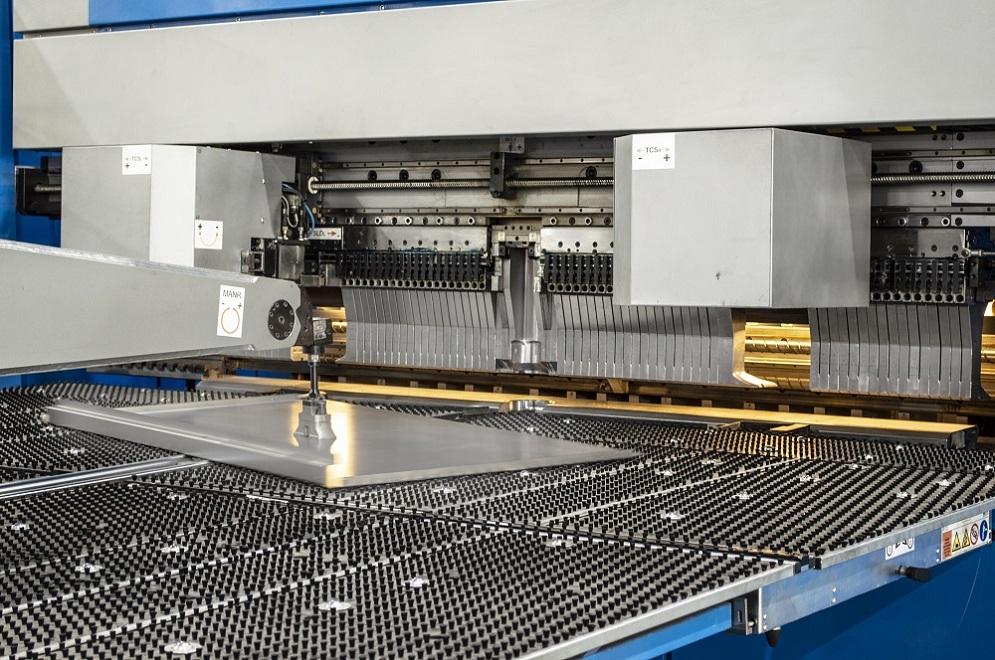
Looking for precision metal fabrication and bending services? Partner with Honyo Prototype for high-quality, custom solutions tailored to your manufacturing needs. Our factory in Shenzhen is equipped with advanced machinery and skilled technicians to deliver accurate, reliable results on time.
Contact Susan Leo today to discuss your project requirements.
Email: [email protected]
Let’s build your next project together—engineered with precision, made in Shenzhen.
🚀 Rapid Prototyping Estimator
Estimate rough cost index based on volume.