
Contents
Manufacturing Insight: Melting Point Of Ss Steel
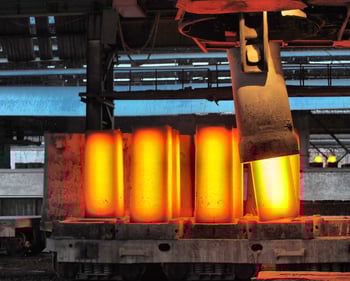
Understanding Stainless Steel Melting Points for Precision Machined Components
As a critical material property, the melting point of stainless steel directly influences component performance in high-temperature applications, from aerospace to medical devices. While CNC machining processes operate far below these thermal thresholds—removing material via cutting rather than melting—knowledge of stainless steel’s melting behavior ensures optimal grade selection for end-use environments. At Honyo Prototype, we leverage this expertise to machine grades like 304 (melting range: 1,400–1,450°C) and 316 (1,375–1,400°C) with precision, accounting for thermal stability during service life.
Our CNC machining services prioritize dimensional accuracy and structural integrity by aligning material properties with application demands. Whether your project requires corrosion-resistant 316L for marine components or high-strength 17-4PH for industrial tooling, Honyo’s engineering team validates grade suitability against operational thermal profiles. This proactive approach prevents in-field failures while maintaining tight tolerances down to ±0.005mm.
For rapid prototyping or low-volume production, utilize our Online Instant Quote platform to receive competitive pricing and lead time estimates within hours. Simply upload your CAD file, specify stainless steel requirements, and proceed with confidence in Honyo’s material-informed manufacturing capability.
Common Stainless Steel Grades and Thermal Properties
| Grade | Typical Melting Range (°C) | Key Applications |
|——-|—————————-|——————|
| 304 | 1,400–1,450 | Food processing, chemical tanks |
| 316 | 1,375–1,400 | Marine hardware, pharmaceutical equipment |
| 17-4PH| 1,450–1,510 | Aerospace actuators, nuclear components |
Technical Capabilities
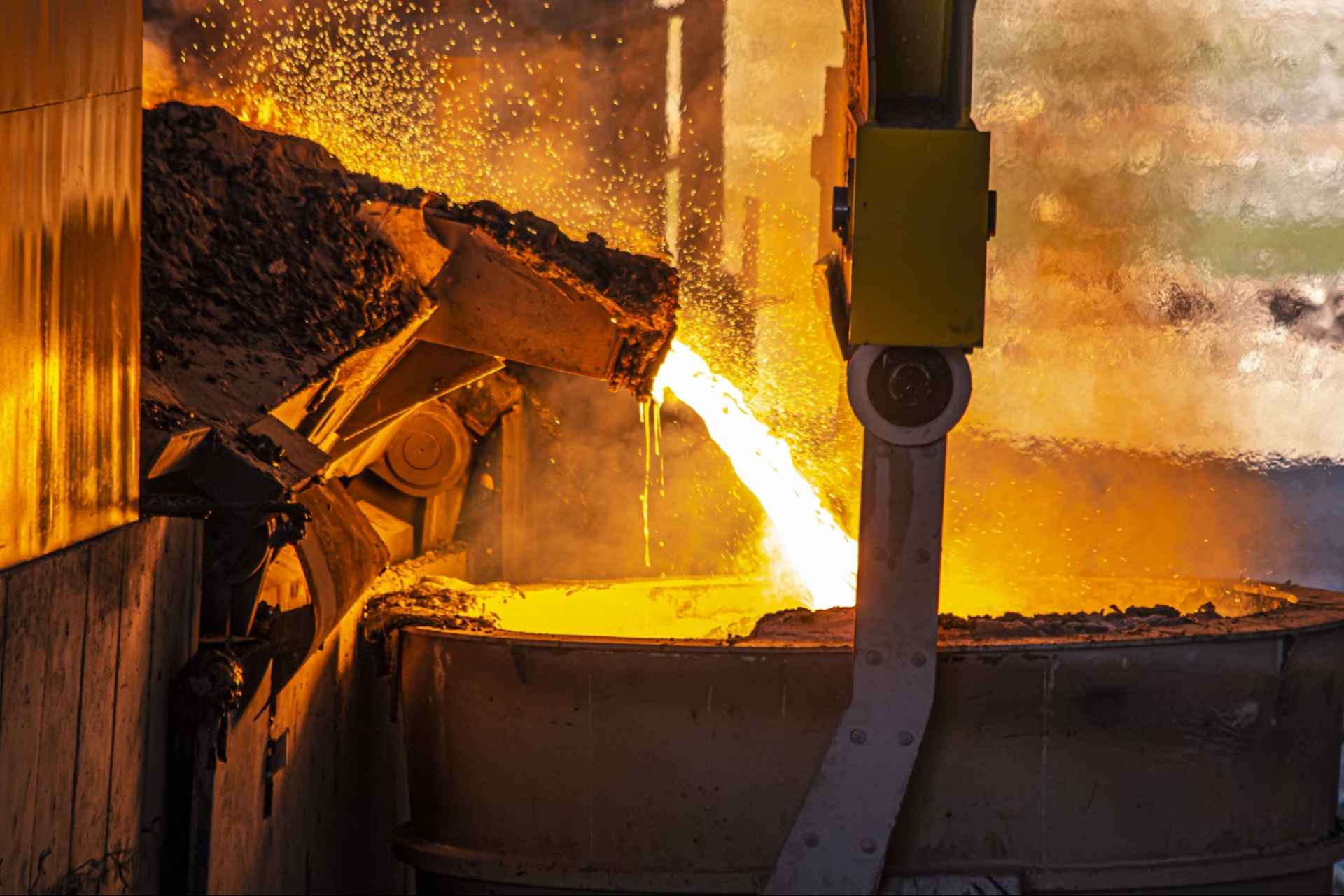
The term “melting point of ss steel” refers to the temperature at which stainless steel transitions from solid to liquid. However, in the context of precision manufacturing processes such as 3/4/5-axis milling and turning—especially when tight tolerances (±0.0002″ to ±0.005″) are required—the melting point itself is not a direct machining parameter. Instead, material thermal stability, machinability, thermal expansion, and hardness are critical factors influencing tool selection, feed rates, and coolant use.
Below is a technical comparison of common materials used in high-precision CNC machining, including stainless steel, with emphasis on thermal and mechanical properties relevant to multi-axis milling and turning operations.
| Material | Melting Point (°C) | Melting Point (°F) | Thermal Conductivity (W/m·K) | Coefficient of Thermal Expansion (µm/m·°C) | Typical Machinability Rating | Common Use in 3/4/5-Axis Machining | Notes for Tight Tolerance Work |
|---|---|---|---|---|---|---|---|
| Stainless Steel (304) | 1400–1450 | 2550–2650 | 16.2 | 17.3 (20–100°C) | Fair (40–50% of free-machining steel) | High-strength, corrosion-resistant components; medical, aerospace | High work-hardening rate; requires sharp tools, rigid setups, and consistent toolpaths; low thermal conductivity increases heat buildup |
| Steel (Carbon/Tool) | 1370–1510 | 2500–2750 | 43–52 | 10.8–13.5 | Good to Fair | Industrial tooling, molds, structural parts | Moderate thermal expansion; predictable behavior under tight tolerance regimes |
| Aluminum (6061) | 582–652 | 1080–1205 | 167 | 23.6 | Excellent | Aerospace, automotive, prototypes, heatsinks | High thermal conductivity dissipates heat quickly; prone to chatter; low melting point allows high-speed machining |
| ABS (Thermoplastic) | 105 (softens) | 221 (softens) | 0.17 | 70–100 | Very Good | Prototypes, enclosures, low-stress components | Low melting/softening point limits RPM and depth of cut; requires sharp tools to avoid melting edges |
| Nylon (PA6/PA66) | 215–265 | 420–509 | 0.25 | 80–120 | Good | Gears, bushings, insulating parts | High thermal expansion; prone to dimensional creep; must minimize heat input during machining |
Technical Notes for High-Precision Machining:
For 3/4/5-axis milling and turning operations, especially when tight tolerances are required, thermal management is critical. Materials with low thermal conductivity—like stainless steel—retain heat at the cutting interface, increasing the risk of tool wear and part distortion. This necessitates the use of through-spindle coolant, optimized toolpath strategies (e.g., high-efficiency milling), and frequent thermal stabilization during inspection.
Aluminum, while easy to machine, has high thermal expansion, which can lead to out-of-tolerance conditions if parts are measured at different temperatures. Machining should occur in thermally stable environments, and final inspections should follow thermal soak protocols.
Plastics such as ABS and nylon require specialized tooling (e.g., high rake angle cutters) and reduced cutting speeds to prevent localized melting, even though their actual melting points are below typical machining temperatures. Clamping forces must also be controlled to avoid deformation.
In summary, while the melting point of stainless steel (and other materials) is a fundamental property, successful tight-tolerance machining across materials depends on understanding the interplay between thermal behavior, mechanical stability, and process control.
From CAD to Part: The Process
Honyo Prototype maintains rigorous technical protocols for stainless steel prototype manufacturing, with explicit attention to material properties like melting point. It is critical to clarify that melting point is not a process step but an inherent material characteristic of stainless steel alloys. Our workflow ensures thermal properties are validated before production to prevent failures. Below is the precise sequence for stainless steel prototyping, emphasizing how melting point considerations are integrated:
The CAD upload initiates material specification review. Customers must declare the stainless steel grade (e.g., 304, 316, 17-4PH) in their CAD metadata or purchase order. Honyo’s system cross-references this against our material database to confirm the alloy’s certified melting point range (e.g., 1400–1450°C for 304 SS). Uncertified or ambiguous material requests trigger an immediate clarification hold.
During the AI Quote phase, thermal properties are factored into feasibility and cost modeling. The AI engine checks if the requested grade’s melting point aligns with the proposed manufacturing process (e.g., laser cutting at 1500°C exceeds 304 SS’s melting point, necessitating alternative methods). Quotes include explicit validation of material suitability based on ASTM/AMS standards.
DFM analysis is where melting point implications are operationally enforced. Our engineers verify three critical thermal parameters:
Process Temperature Limits: Ensuring all operations (welding, heat treatment, etc.) stay 100°C below the alloy’s solidus temperature to prevent microstructural damage.
Thermal Distortion Risk: Simulating heat-affected zones using the material’s thermal conductivity and melting point data.
Fixture Compatibility: Confirming workholding materials (e.g., ceramics for high-temp brazing) withstand anticipated thermal loads.
Production executes only after DFM approval. For stainless steel, this means:
Strict adherence to pre-validated thermal profiles (e.g., TIG welding at 85% of melting point energy input).
Real-time pyrometer monitoring during high-heat processes.
Material traceability via mill test reports verifying actual melting point compliance.
Delivery includes full material certification documentation. Each prototype ships with a test report showing:
Certified alloy grade and composition
Verified melting point range per ASTM E34
Process temperatures recorded during manufacturing
This structured approach prevents thermal-related defects. Crucially, Honyo does not “process” melting points—we engineer around them through material science rigor. Below is a summary of thermal validation checkpoints:
| Process Stage | Melting Point Relevance | Honyo’s Verification Action |
|---|---|---|
| CAD Upload | Material specification | Auto-flag missing/invalid grade declarations; require certified alloy ID |
| AI Quote | Feasibility screening | Reject processes exceeding 90% of solidus temperature; suggest alternatives |
| DFM | Risk mitigation | Thermal simulation of heat-affected zones; fixture material validation |
| Production | Real-time control | In-process pyrometry; deviation alerts at >85% solidus temperature |
| Delivery | Compliance proof | Attach mill test reports with melting point certification per ASTM |
Honyo treats melting point as a foundational constraint—not a variable—to guarantee stainless steel prototypes meet structural and thermal performance requirements. This eliminates field failures due to uncontrolled thermal exposure during manufacturing.
Start Your Project

The melting point of stainless steel typically ranges between 1370°C and 1530°C, depending on the specific alloy composition. For precise material specifications or custom prototyping needs involving stainless steel, contact Susan Leo at [email protected]. Honyo Prototype operates a fully equipped manufacturing facility in Shenzhen, providing high-precision fabrication, rapid prototyping, and low-volume production services with fast turnaround times.
🚀 Rapid Prototyping Estimator
Estimate rough cost index based on volume.