
Contents
Manufacturing Insight: Machining Ultem
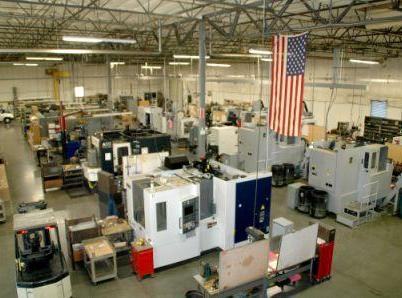
Precision ULTEM Machining Capabilities at Honyo Prototype
ULTEM resin represents a critical material choice for demanding applications in aerospace, medical, and semiconductor industries due to its exceptional thermal stability, chemical resistance, and mechanical strength at elevated temperatures. Successfully machining this high-performance polyetherimide (PEI) thermoplastic, however, demands specialized expertise beyond standard CNC operations. Thermal management is paramount; improper cutting parameters or inadequate cooling can induce stress cracking, dimensional instability, or surface degradation, compromising part integrity. At Honyo Prototype, our CNC machining services are engineered specifically for ULTEM’s unique challenges. We deploy rigorously validated processes featuring optimized toolpath strategies, precision-controlled coolant application, and material-specific feed/rate parameters to maintain tight tolerances while mitigating thermal distortion. Our dedicated material database ensures consistent first-article success, even for complex geometries requiring multi-axis milling or turning.
Streamlined Access to Expertise
Understanding the urgency of prototyping and low-volume production cycles, Honyo Prototype eliminates quoting delays with our Online Instant Quote platform. Simply upload your ULTEM part CAD file, specify material grade (e.g., ULTEM 1000, 9085), and receive a detailed, binding cost estimate within hours—not days. This direct integration with our manufacturing capabilities allows engineers to rapidly validate designs and accelerate time-to-test without administrative friction. Partner with Honyo for ULTEM components where material performance and dimensional precision are non-negotiable.
Technical Capabilities
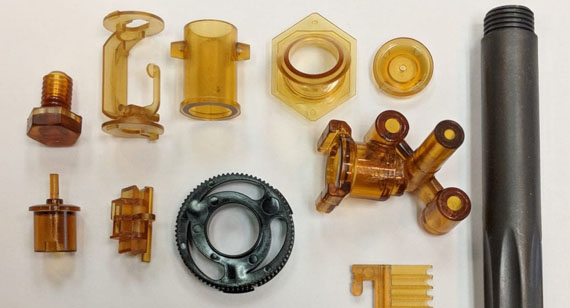
Machining ULTEM (PEI) is a specialized process due to the high-performance thermoplastic’s unique thermal and mechanical properties. ULTEM requires precise control of cutting parameters to avoid melting, warping, or delamination. While ULTEM itself is the primary material being machined, it is often compared or used in conjunction with metals and other plastics such as aluminum, steel, ABS, and nylon in prototyping and end-use applications. The table below outlines key technical specifications and considerations for machining ULTEM using 3-, 4-, and 5-axis milling and turning operations, with emphasis on tight-tolerance requirements.
| Parameter | ULTEM (PEI) | Aluminum (6061-T6) | Steel (1018) | ABS | Nylon (PA6) |
|---|---|---|---|---|---|
| Material Type | High-performance amorphous thermoplastic | Light metal alloy | Carbon steel | Thermoplastic | Semi-crystalline thermoplastic |
| Typical Applications | Aerospace, medical, electrical components | Enclosures, brackets, prototypes | Shafts, fixtures, tooling | Prototypes, housings | Gears, bushings, wear parts |
| Machinability Rating | Moderate – requires thermal management | Excellent | Good (harder than Al) | Good | Moderate (tends to absorb moisture) |
| Recommended RPM Range (Milling) | 8,000 – 15,000 | 10,000 – 18,000 | 600 – 3,000 | 10,000 – 14,000 | 8,000 – 12,000 |
| Feed Rate (mm/min) | 200 – 600 | 800 – 2,500 | 200 – 800 | 600 – 1,500 | 400 – 1,000 |
| Cutting Tool Material | Carbide or diamond-coated | Carbide | Carbide or HSS | Carbide | Carbide |
| Coolant Use | Compressed air or minimal mist (avoid water absorption) | Flood coolant recommended | Flood coolant recommended | Air or light mist | Air or light mist |
| Clamping Force | Low to moderate (avoid part deformation) | Moderate to high | High | Moderate | Moderate |
| Thermal Sensitivity | High – Tg ~217°C | Moderate | Low | Moderate | High – prone to swelling |
| Moisture Absorption | Low (0.22% at equilibrium) | None | None | Moderate | High (up to 2–3%) |
| Dimensional Stability | Excellent when dried pre-machining | High | Very high | Moderate | Low to moderate |
| Tight Tolerance Capability (± mm) | ±0.025 mm achievable with environmental control | ±0.012 mm | ±0.010 mm | ±0.050 mm | ±0.050 mm |
| Best Suited For | 3/4/5-axis for complex, high-temp stable features | High-speed 3/5-axis, complex geometries | Turning, heavy cuts, high precision | Rapid prototyping, low-stress parts | Wear-resistant parts, moderate loads |
Notes on Machining ULTEM for Tight Tolerances:
Pre-Drying: ULTEM should be dried at 150°C for 4–6 hours before machining to minimize internal stresses and moisture-related dimensional shifts.
Tool Geometry: Sharp, polished cutting edges with high rake angles reduce heat generation and improve surface finish.
Fixturing: Use non-marring, low-pressure fixtures to prevent deformation of plastic stock.
5-Axis Advantage: Enables single-setup complex contours and undercuts common in aerospace and medical ULTEM components, reducing cumulative tolerance stack-up.
In-Process Metrology: Recommended for tight-tolerance work to ensure thermal drift does not affect final dimensions.
When comparing with aluminum, steel, ABS, or nylon, ULTEM offers superior strength-to-weight ratio and thermal resistance but demands more controlled machining conditions to achieve precision results.
From CAD to Part: The Process
Honyo Prototype ULTEM Machining Process Overview
Honyo Prototype executes precision ULTEM (PEI) machining through a rigorously controlled workflow designed for high-performance polymer requirements. ULTEM’s hygroscopic nature, thermal sensitivity, and stringent dimensional tolerances demand specialized protocols at every phase. Below is the end-to-end process:
Upload CAD
Customers initiate the process by uploading native or neutral CAD files (STEP, IGES, Parasolid) via Honyo’s secure client portal. Critical parameters including geometric tolerances, surface finishes (e.g., Ra 0.8 µm), material grade (e.g., ULTEM 1010, 9085), and regulatory requirements (e.g., ISO 10993, ASTM D638) must be explicitly defined. Non-compliant submissions trigger automated validation checks for unit consistency, missing datums, or unsupported features.
AI-Powered Quoting Engine
Honyo’s proprietary AI quoting system analyzes the CAD geometry against ULTEM-specific machining constraints. The algorithm factors in material waste ratios (accounting for ULTEM’s high cost), thermal expansion coefficients (54 µm/m·°C), minimum wall thickness advisories (≥0.5 mm), and moisture-content dependencies. Quotes include real-time material availability data from ULTEM-certified suppliers (Solvay, Ensinger) and highlight cost drivers such as extended drying cycles or cryogenic cooling requirements. Turnaround time is under 2 hours for standard geometries.
DFM Analysis with Material-Specific Optimization
Honyo’s engineering team performs a dual-layer DFM review:
Automated Checks: Software flags risks like thin unsupported features prone to chatter during milling or inadequate draft angles for stress-relieved ejection.
Manual Engineering Review: Senior engineers provide actionable feedback for ULTEM-specific challenges. Key focus areas include:
| DFM Issue | ULTEM-Specific Risk | Honyo Resolution |
|---|---|---|
| Internal radii < 0.8 mm | Stress concentration leading to microcracking | Recommend minimum 1.0 mm radii; propose staged toolpath strategy |
| Moisture content > 0.02% | Delamination during high-RPM machining | Mandate 48-hour vacuum drying at 150°C pre-machining |
| Tight positional tolerances (< ±0.05 mm) | Thermal drift from machine heat | Specify in-process CMM validation every 3 operations |
Customers receive a formal DFM report with annotated CAD markups and time/cost impact assessments for proposed modifications.
Production Execution
All ULTEM machining occurs in climate-controlled environments (22±1°C, 45% RH) with these protocols:
Material Preparation: ULTEM stock undergoes mandatory desiccant drying per Solvay specifications. Moisture content is verified via Karl Fischer titration (target: <0.02%).
Machining Parameters: Carbide tooling with polished flutes (helix angle 40°) at reduced feed rates (60% of PEEK parameters) to minimize heat generation. Flood coolant is prohibited; compressed air or cryogenic CO₂ cooling is applied.
In-Process Verification: On-machine probing checks critical features after roughing and semi-finishing. Full CMM inspection occurs post-machining per ASME Y14.5.
Stress Relief: Components undergo annealing at 210°C for 2 hours with controlled cooling to eliminate residual stresses.
Delivery and Compliance Handover
Final parts ship with comprehensive documentation: material certificates (mill test reports), CMM inspection reports (GD&T compliant), and process validation records. ULTEM-specific handling instructions are included, emphasizing desiccant storage requirements and maximum allowable exposure time (8 hours at 50% RH) before post-processing. Delivery timelines include buffer periods for moisture re-equilibration testing, ensuring parts meet ASTM D6195 hygroscopic stability standards upon client receipt. All shipments comply with IATA Class 9 hazardous material regulations for polymer dust containment.
Start Your Project
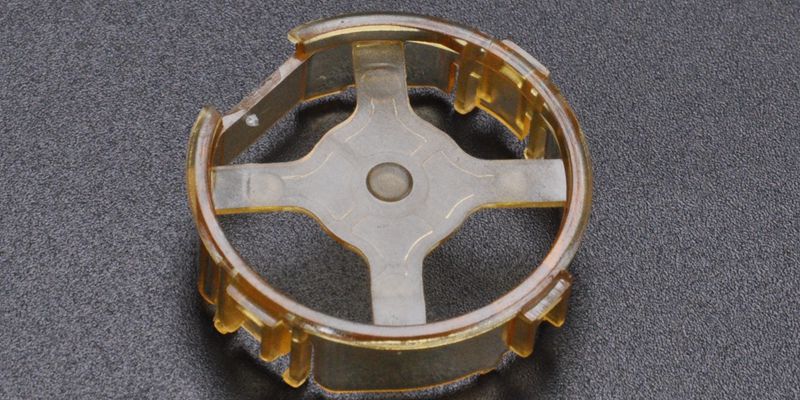
Looking for precision machining services for ULTEM? Honyo Prototype offers high-performance thermoplastic machining with tight tolerances and fast turnaround. Our Shenzhen-based factory is equipped to handle complex ULTEM components for aerospace, medical, and industrial applications.
Contact Susan Leo for expert support and quotations.
Email: [email protected]
Leverage our advanced CNC machining capabilities and material expertise to bring your demanding projects to life.
🚀 Rapid Prototyping Estimator
Estimate rough cost index based on volume.