
Contents
Manufacturing Insight: Machining Coins
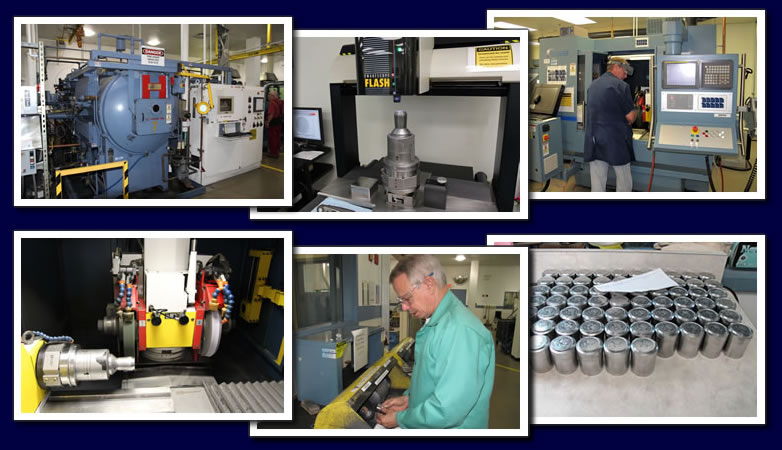
Precision Machined Coin Components: Engineered Excellence from Honyo Prototype
In industrial applications demanding micron-level accuracy, “machining coins” refers to the production of precision-engineered circular components—often metallic discs, washers, or sensor elements—where dimensional stability, surface finish, and material integrity are non-negotiable. These critical parts feature in aerospace actuators, medical device seals, semiconductor tooling, and high-reliability connectors, where even sub-micron deviations compromise performance. Honyo Prototype specializes in transforming raw billet to finished coin geometries via advanced CNC machining, leveraging Swiss-type lathes, multi-axis mills, and wire EDM systems to achieve tolerances down to ±0.001mm. Our process ensures consistent repeatability across materials including 304/316 stainless steel, titanium, aluminum alloys, and engineered plastics, with secondary capabilities like micro-blasting, passivation, and laser marking integrated seamlessly.
Unlike conventional job shops, Honyo optimizes low-to-mid volume production for complex coin profiles through automated workholding, in-process metrology, and proprietary toolpath strategies that minimize burr formation and thermal distortion. This technical rigor eliminates costly rework cycles while accelerating time-to-assembly for your supply chain. To initiate your project without procurement delays, our Online Instant Quote platform provides geometry-validated pricing in under 90 seconds—simply upload STEP/IGS files to receive DFM feedback, lead time estimates, and material cost breakdowns aligned to ISO 2768-mK standards.
For mission-critical coin components where precision defines functionality, Honyo Prototype delivers engineered solutions backed by AS9100-certified processes and responsive engineering collaboration. Submit your design today to experience manufacturing intelligence that turns specifications into success.
Technical Capabilities
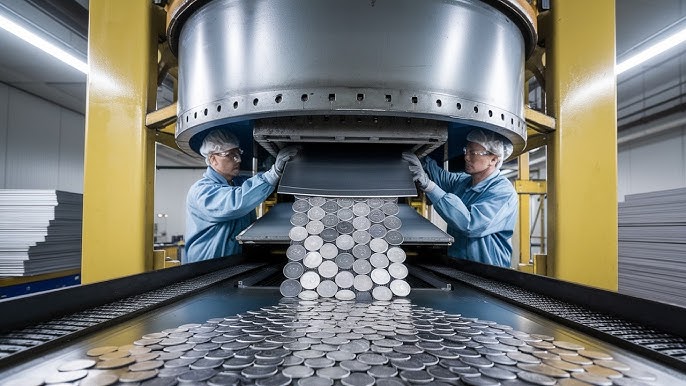
Machining coins refers to the precision manufacturing of coin-shaped components using subtractive methods such as 3-axis, 4-axis, and 5-axis milling, as well as turning operations. These parts are typically used for prototypes, commemorative items, or functional components requiring tight dimensional accuracy and fine surface finish. The process demands high repeatability, excellent toolpath control, and advanced fixturing—especially when working with complex geometries or tight tolerances.
The following table outlines the technical specifications relevant to machining coins across various processes and materials:
| Parameter | 3-Axis Milling | 4-Axis Milling | 5-Axis Milling | CNC Turning |
|---|---|---|---|---|
| Typical Tolerance | ±0.005 mm (±0.0002″) | ±0.005 mm (±0.0002″) | ±0.003 mm (±0.0001″) | ±0.002 mm (±0.00008″) |
| Surface Finish (Ra) | 0.8–3.2 µm (32–125 µin) | 0.8–2.5 µm (32–100 µin) | 0.4–1.6 µm (16–63 µin) | 0.4–1.6 µm (16–63 µin) |
| Material Compatibility | Aluminum, Steel, ABS, Nylon | Aluminum, Steel, ABS, Nylon | Aluminum, Steel, ABS, Nylon | Aluminum, Steel, ABS, Nylon |
| Minimum Feature Size | 0.5 mm (end mill limited) | 0.5 mm | 0.3 mm (with micro tools) | 0.1 mm (radius on tool nose) |
| Max Part Diameter (Typical) | 300 mm | 300 mm (+ rotary indexing) | 250 mm (with full articulation) | 100 mm (bar stock) |
| Max Part Height/Thickness | 150 mm | 150 mm | 120 mm | 200 mm (chuck clearance) |
| Toolpath Complexity | 2.5D profiles, flat engraving | Indexed angular features | Full 3D contouring, bevels | Cylindrical symmetry, grooves |
| Common Applications | Flat commemorative coins | Multi-face designs | Sculpted, artistic coins | Round coins with turned edges |
Material Notes:
Aluminum (e.g., 6061-T6, 7075-T6)
Preferred for lightweight, high-precision coins due to excellent machinability, good surface finish, and corrosion resistance. Ideal for 5-axis milling intricate relief patterns.
Steel (e.g., 303, 4140, 17-4 PH Stainless)
Used when wear resistance or structural integrity is required. Requires rigid setups and slower cutting parameters. Tight tolerances maintained with proper thermal compensation.
ABS (Acrylonitrile Butadiene Styrene)
Common thermoplastic for prototype coins. Easily machined with sharp tools to avoid edge melting. Dimensionally stable but sensitive to heat buildup during high-speed operations.
Nylon (e.g., PA6, PA66)
Tough engineering plastic with good wear and chemical resistance. Requires sharp cutting tools and controlled feed rates to prevent deformation. May need dry machining to avoid moisture absorption effects.
Tolerance and Quality Control:
For all materials and processes, tight tolerance machining (±0.005 mm or better) requires thermal stability, high-precision spindles (≤1 µm runout), and post-process inspection via CMM or optical comparators. 5-axis and turning operations offer superior geometric accuracy for complex or symmetrical coin profiles.
At Honyo Prototype, we leverage multi-axis capabilities and strict process validation to ensure repeatability and conformance for precision-machined coin components across diverse material families.
From CAD to Part: The Process
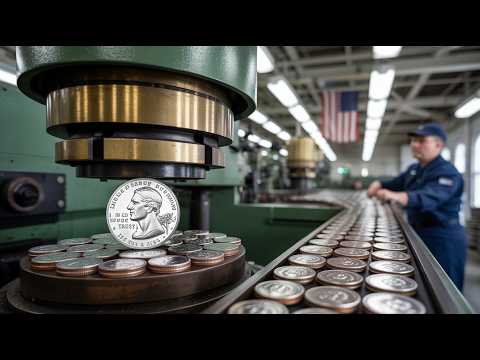
Honyo Prototype utilizes a streamlined, technology-driven workflow for precision CNC machining of small metal components including circular parts often colloquially termed “machined coins” (e.g., medallions, tokens, or precision circular inserts). This process ensures rapid turnaround while maintaining strict quality control. Below is the technical workflow:
CAD File Upload and Validation
Clients initiate the process by uploading native CAD files (STEP, IGES, Parasolid) or neutral formats via our secure customer portal. Our system performs automated geometry validation, verifying watertightness, unit consistency, and feature recognition. Non-conforming files trigger immediate client notification with specific error diagnostics before proceeding.
AI-Powered Quoting Engine
Validated CAD data feeds into our proprietary AI quoting system, which analyzes geometric complexity, material requirements, tolerances, and surface finish specifications. The engine cross-references real-time machine availability, material costs, and labor rates to generate a technically accurate quote within 15 minutes. Critical parameters like minimum wall thickness, aspect ratios, and feature accessibility are flagged for engineering review if outside standard operating ranges.
Mandatory DFM Analysis
Every project undergoes rigorous Design for Manufacturability (DFM) review by our senior manufacturing engineering team. This phase focuses on optimizing manufacturability while preserving functional intent. Common DFM interventions for circular parts include:
Recommending material substitution for improved machinability (e.g., 360 brass vs. 303 stainless for fine edge definition)
Proposing tolerance relaxation on non-critical diameters to reduce cycle time
Identifying optimal stock size to minimize raw material waste
Suggesting feature modifications to eliminate secondary operations (e.g., chamfer integration)
Client approval of DFM recommendations is required before production release.
Precision CNC Production
Approved jobs enter our production queue with full digital work instruction documentation. Machining occurs on dedicated Swiss-type lathes or 5-axis mills depending on part complexity. For coin-like components:
Material: Bar stock or pre-cut blanks (aluminum, brass, copper, stainless steel)
Typical tolerances: ±0.005 mm on critical diameters, ±0.025 mm on non-critical features
Surface finishes: Ra 0.8 µm standard, down to Ra 0.2 µm with polishing
Process sequence: Facing → OD turning → Feature machining (engraving, milling) → Deburring → Final inspection
All operations follow ISO 9001:2015 documented procedures with in-process verification at critical stages.
Quality-Controlled Delivery
Finished parts undergo 100% dimensional verification using calibrated CMMs and optical comparators against the approved CAD model. Critical characteristics receive SPC tracking. Components are cleaned, passivated (if stainless), and packaged in anti-tarnish materials. Comprehensive documentation including:
FAI report (per AS9102 for aerospace)
Material certification (MTR)
Dimensional inspection report
Process nonconformance log (if applicable)
accompanies every shipment. Standard lead time is 5-7 business days from DFM approval.
Technical Capabilities Summary for Circular Components
| Parameter | Standard Capability | Enhanced Capability | Notes |
|——————–|———————|———————|————————————|
| Diameter Range | 3 mm – 100 mm | 1 mm – 150 mm | Sub-3mm requires special fixturing |
| Thickness | 0.5 mm – 25 mm | 0.2 mm – 50 mm | Thin sections require stress relief|
| Tolerance (Dia.) | ±0.005 mm | ±0.002 mm | GD&T controls recommended |
| Surface Finish | Ra 0.8 µm | Ra 0.2 µm | Mirror finish requires polishing |
| Materials | Al, Brass, SS, Cu | Ti, Inconel | Exotic materials +25% cost |
This integrated process reduces prototype lead times by 40% compared to industry averages while ensuring first-article compliance. All “machined coin” projects receive dedicated engineering support from quoting through delivery, with real-time production updates accessible via client portal. Optional secondary services include plating, laser engraving, and packaging customization.
Start Your Project
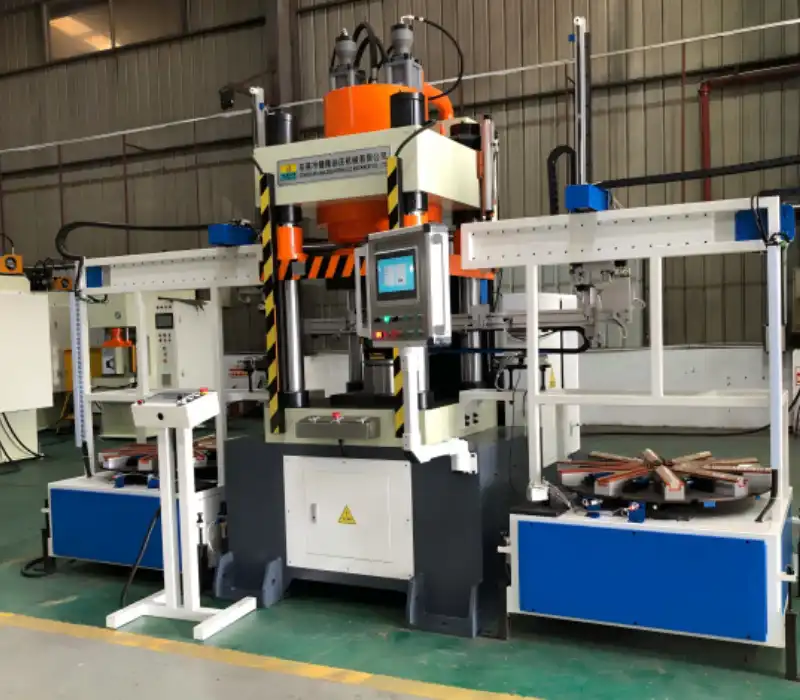
Looking to prototype or produce precision-machined coins? Honyo Prototype delivers high-quality CNC machining services with fast turnaround times. All manufacturing is supported by our in-house factory in Shenzhen, ensuring tight tolerances, consistent quality, and cost-effective production.
For project inquiries or quotes, contact Susan Leo at [email protected]. Let’s turn your concept into reality.
🚀 Rapid Prototyping Estimator
Estimate rough cost index based on volume.