
Contents
Manufacturing Insight: Machining Acetal
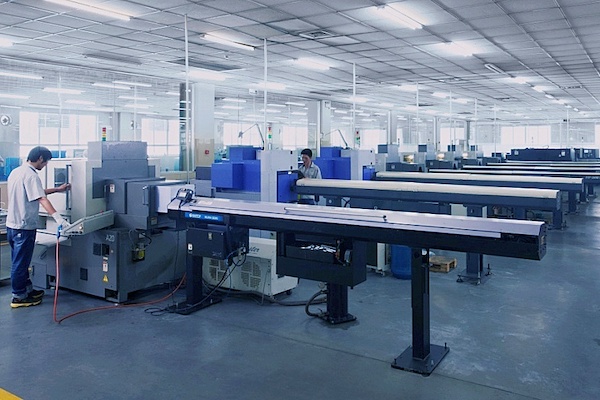
Precision Acetal (POM) Machining: Engineering Reliability with Honyo Prototype
Acetal homopolymer (POM-H) and copolymer (POM-C) are critical engineering thermoplastics valued for exceptional dimensional stability, low friction, high fatigue resistance, and outstanding chemical resilience. These properties make acetal indispensable for precision components in demanding applications—from automotive fuel systems and medical device mechanisms to industrial automation gears. However, achieving tight tolerances and optimal surface finishes in acetal demands specialized CNC machining expertise due to its unique thermal behavior and susceptibility to stress cracking during processing.
At Honyo Prototype, our CNC machining services leverage proprietary toolpath strategies, cryogenic cooling techniques, and rigorously validated material-specific parameters to overcome these challenges. We consistently deliver acetal parts meeting ±0.005 mm tolerances with superior edge integrity and minimal internal stress, ensuring long-term functional reliability. Our ISO 9001-certified facility utilizes HAAS and DMG MORI multi-axis mills with in-process probing, eliminating secondary operations and accelerating time-to-assembly for complex geometries.
Key acetal grades we machine with certified process control include:
| Grade Type | Common Applications | Honyo Machining Advantage |
|---|---|---|
| POM-H (Delrin®) | High-stress gears, bearings, precision cams | Stress-relieved fixturing to prevent warpage |
| POM-C (Celcon®) | Fluid-handling components, snap-fits | Optimized feed rates to minimize micro-cracking |
Accelerate your acetal component development with Honyo’s Online Instant Quote platform. Upload CAD files in 15 seconds to receive a detailed manufacturability analysis, precise lead time, and competitive pricing—no sales intermediary required. Our system automatically flags potential machining risks for acetal-specific considerations like wall thickness ratios or undercuts, empowering informed design decisions before prototyping begins. For mission-critical applications demanding zero-defect performance, trust Honyo’s 18-year heritage in engineered polymer machining to transform your acetal designs into production-ready reality.
Technical Capabilities
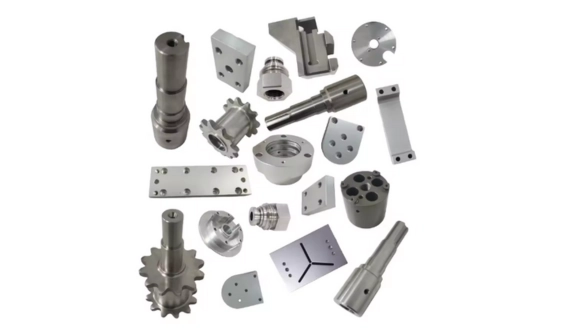
The term “machining acetal” refers to the precision manufacturing processes used to shape acetal (also known as POM – polyoxymethylene), a high-performance engineering thermoplastic. While the query references materials such as aluminum, steel, ABS, and nylon, these are distinct from acetal and are typically machined using different parameters due to their unique physical and thermal properties. Below is a technical comparison focused on 3/4/5-axis milling and turning operations, emphasizing tight-tolerance capabilities, with specific attention to acetal and how it contrasts with the other listed materials.
| Material | Machinability Rating | Recommended Cutting Speed (Milling) | Feed Rate (Milling) | Tooling Recommendations | Typical Tolerance (±) | Notes on 3/4/5-Axis Machining | Thermal Sensitivity |
|---|---|---|---|---|---|---|---|
| Acetal (POM) | Excellent | 200–400 m/min | 0.1–0.3 mm/tooth | Carbide or diamond-coated tools; sharp cutting edges | 0.025 mm (0.001″) | Low melting point requires low heat buildup; ideal for complex geometries with high dimensional stability | High – prone to melting if heat not managed |
| Aluminum (6061, 7075) | Excellent | 300–1000 m/min | 0.1–0.25 mm/tooth | Carbide with polished flutes; high positive rake | 0.0125–0.025 mm (0.0005–0.001″) | High material removal rate; excellent for multi-axis contouring and thin-wall features | Moderate – requires coolant to prevent built-up edge |
| Steel (1018, 4140) | Moderate to Good | 60–150 m/min | 0.1–0.2 mm/tooth | Carbide or HSS with TiN/TiCN coating | 0.0125 mm (0.0005″) | High rigidity required; suitable for tight-tolerance turning and milling with proper toolpaths | Low – high thermal conductivity helps dissipate heat |
| ABS | Good | 150–300 m/min | 0.1–0.25 mm/tooth | Carbide with polished edges; low rake angle | 0.05 mm (0.002″) | Prone to deflection; best for non-load-bearing prototypes; avoid excessive heat | High – softens at low temperatures |
| Nylon (PA6, PA66) | Good | 150–350 m/min | 0.1–0.3 mm/tooth | Sharp carbide tools with high rake angles | 0.05 mm (0.002″) | Hygroscopic – must be dry-machined; slight post-machining dimensional drift possible | High – sensitive to heat and moisture |
Technical Notes:
Acetal (POM) is one of the most dimensionally stable thermoplastics for precision machining. It exhibits low moisture absorption, high stiffness, and excellent creep resistance, making it ideal for tight-tolerance parts in automotive, medical, and industrial applications.
In 3/4/5-axis milling, acetal allows for complex undercut features and smooth surface finishes without the need for secondary operations. However, chip evacuation and heat control are critical due to its low melting point.
Turning operations on acetal require sharp tools, light cuts, and consistent feed to avoid smearing or burring. Coolant is generally not required but air blast is recommended for chip removal.
Compared to metals like aluminum and steel, acetal and other plastics (ABS, nylon) require lower cutting forces but are more sensitive to thermal deformation. Thus, high-speed machining with minimal dwell time is preferred.
Tight-tolerance machining (±0.025 mm or better) is achievable in acetal when environmental conditions (temperature, humidity) are controlled and post-machining stabilization is considered.
This data supports process planning for high-precision prototype and low-volume production components at Honyo Prototype, where material-specific strategies ensure optimal surface finish, accuracy, and part integrity.
From CAD to Part: The Process
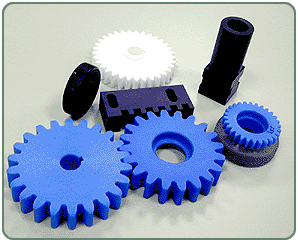
Honyo Prototype employs a rigorously defined workflow for acetal (POM) machining projects, designed to ensure precision, efficiency, and material integrity while minimizing client risk. This process leverages our technical expertise in polymer machining and integrated digital systems. Below is the detailed sequence:
Upload CAD
Clients initiate the process by uploading industry-standard CAD files (STEP, IGES, Parasolid, or native formats) via our secure customer portal. For acetal, we specifically require geometric dimensioning and tolerancing (GD&T) data and critical surface finish specifications (e.g., Ra 0.8 µm) due to the material’s sensitivity to thermal and mechanical stress during machining. Non-disclosure agreements are automatically applied upon upload to protect intellectual property.
AI Quote Generation
Our proprietary AI engine analyzes the CAD geometry against real-time machine capacity, tooling availability, and material-specific parameters for acetal homopolymer or copolymer stock. The system factors in critical considerations such as minimum wall thickness requirements (typically ≥1.5 mm to prevent warpage), maximum aspect ratios for slender features, and necessary hold-down strategies to counteract acetal’s tendency toward vibration-induced chatter. Within 2 business hours, clients receive a binding quote including material certification (e.g., Celcon® M90), machined part cost, and preliminary lead time estimation. The AI flags potential high-risk geometries requiring immediate DFM review.
DFM Analysis and Engineering Collaboration
All acetal projects undergo mandatory Design for Manufacturability (DFM) validation by our polymer machining specialists. This is not an automated step but a collaborative engineering review focusing on acetal-specific challenges:
| DFM Focus Area | Critical Considerations for Acetal | Honyo Mitigation Strategy |
|---|---|---|
| Thermal Management | Low thermal conductivity; prone to localized heating | Prescribed reduced feed rates (≤0.05 mm/rev), air blast cooling only (no coolants) |
| Stress Relief | Internal stresses from material processing cause warpage | Mandatory 48-hour thermal stress-relieving cycle pre-machining |
| Feature Geometry | Thin walls/slots amplify vibration | Redesign suggestions for ribbing or chamfered transitions |
| Tolerance Stack-up | Higher CTE (9–11 x 10⁻⁵ /°C) vs. metals | Statistical tolerance analysis; ±0.05 mm as standard default |
Engineers provide marked-up CAD feedback and a DFM report within 24 hours of quote acceptance, resolving conflicts through direct client consultation. No project proceeds to production without formal DFM sign-off.
Precision Production
Machining occurs in our climate-controlled polymer facility (22±1°C, 45% RH) using dedicated CNC mills/turning centers with carbide tooling optimized for acetal. Key production protocols include:
Material pre-conditioning: Acetal stock is stored at 23°C for 72 hours prior to machining to stabilize moisture content.
Toolpath strategy: High-speed machining (HSM) with climb milling to minimize heat generation; spindle speeds capped at 12,000 RPM.
In-process verification: Critical dimensions checked via coordinate measuring machine (CMM) after roughing and semi-finishing stages to detect stress-induced distortion early.
Clean handling: Parts never contact metal surfaces; non-abrasive vacuum chucks prevent surface marking.
Quality-Controlled Delivery
Final inspection validates all dimensions against the approved CAD model using calibrated CMMs and optical comparators. Acetal-specific checks include flatness verification (per ASTM D6272) and visual inspection for micro-cracks under oblique lighting. Each shipment includes:
Material test report (MTR) with lot traceability
First-article inspection report (FAIR) showing actual vs. nominal dimensions
Packaging in anti-static, humidity-controlled containers with desiccants
Shipment tracking with ETA visibility via client portal
Standard lead time from DFM approval to delivery is 5–10 business days for quantities ≤50 parts, with expedited options available. All acetal components are guaranteed to meet ISO 2768-mK tolerances unless tighter specifications were validated during DFM.
Start Your Project
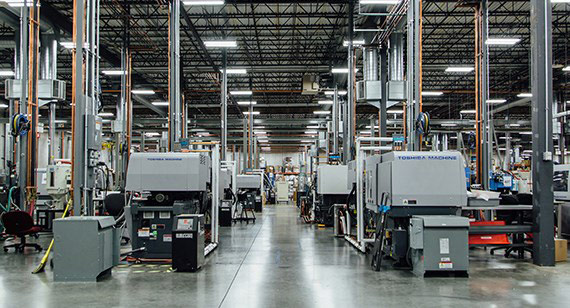
Looking for precision machining services for acetal? Honyo Prototype offers high-accuracy CNC machining of acetal (POM) components with fast turnaround times. Our manufacturing facility in Shenzhen is equipped with advanced machinery and quality control systems to ensure tight tolerances and consistent part quality.
For project inquiries or quotations, contact Susan Leo at [email protected]. We support low to medium volume production runs and provide comprehensive prototyping and production solutions tailored to your specifications.
🚀 Rapid Prototyping Estimator
Estimate rough cost index based on volume.