
Contents
Manufacturing Insight: Machining 4140
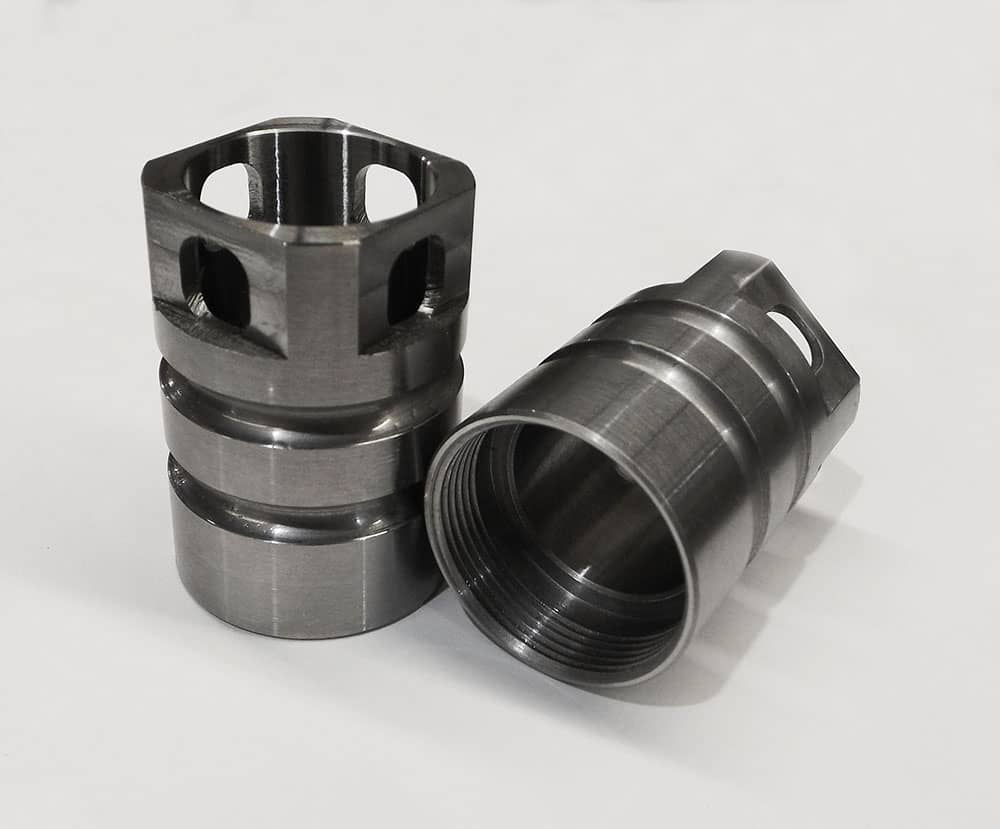
Machining 4140 Steel: Precision Engineering for Demanding Applications
4140 alloy steel remains a cornerstone material in aerospace, defense, and heavy equipment manufacturing due to its exceptional balance of high tensile strength, toughness, and fatigue resistance after heat treatment. Its chromium and molybdenum content provides superior hardenability and wear performance, making it ideal for critical components like landing gear, hydraulic rods, and high-stress shafts. However, machining 4140—particularly in its hardened and tempered state (typically 28-32 HRC)—presents significant challenges, including work hardening, tool deflection, and thermal management risks that demand specialized expertise and process control.
At Honyo Prototype, our CNC machining services are engineered specifically to overcome these complexities. We leverage advanced multi-axis milling and turning centers equipped with high-rigidity spindles, optimized coolant delivery systems, and proprietary toolpath strategies to maintain micron-level tolerances while minimizing thermal distortion in 4140. Our in-house metallurgical oversight ensures precise heat treatment sequencing and stress-relief protocols, guaranteeing dimensional stability and surface integrity critical for mission-critical parts. Every operation adheres to stringent AS9100 and ISO 9001 standards, with real-time process monitoring to validate first-article quality.
Accelerate your 4140 prototyping or low-volume production with Honyo’s Online Instant Quote platform. Upload your STEP or IGES file to receive a detailed manufacturability analysis and competitive price within minutes—not days—enabling faster design validation and time-to-market for your most demanding applications. Partner with us for precision where material performance and machining excellence converge.
Technical Capabilities
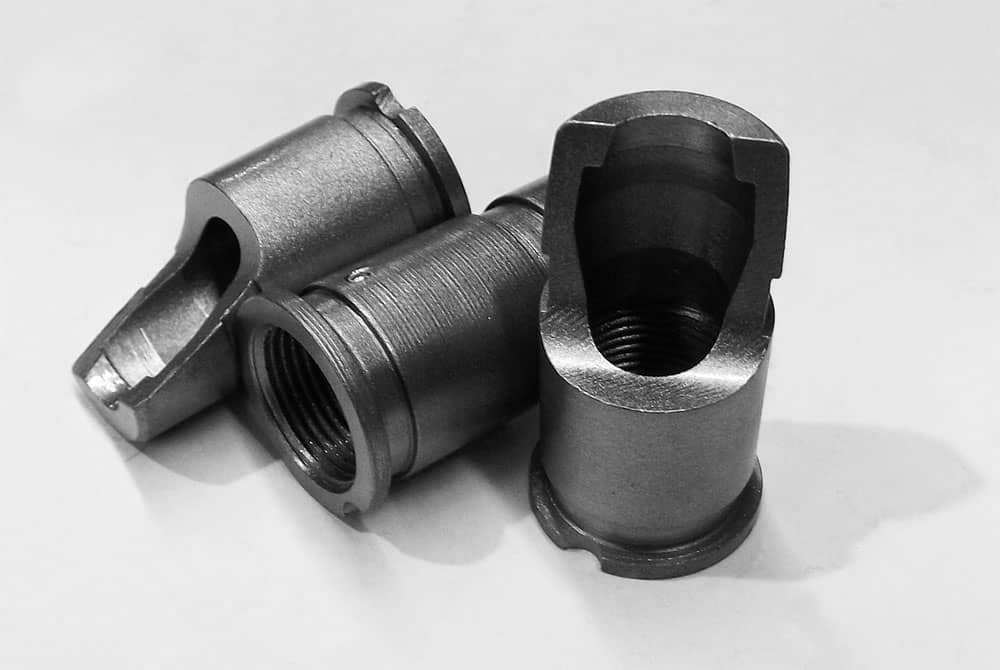
Technical Specifications for Machining 4140 Steel in 3/4/5-Axis Milling and Turning – Focus on Tight Tolerance Applications
4140 alloy steel is a chromium-molybdenum steel known for its high fatigue strength, toughness, and wear resistance, making it ideal for demanding applications in aerospace, defense, and industrial machinery. When machining 4140 under tight tolerance requirements (±0.0005″ or better), precision equipment such as 3-axis, 4-axis, and 5-axis CNC milling centers and CNC turning centers are employed. Below is a comparison of machining parameters and capabilities across various materials, with a focus on 4140 steel.
| Parameter | 4140 Steel (Pre-Hardened) | Aluminum 6061-T6 | ABS (Thermoplastic) | Nylon (PA6/PA66) |
|---|---|---|---|---|
| Typical Hardness (HB) | 280–320 | 95–105 | N/A (Soft, ductile) | N/A (Semi-ductile) |
| Cutting Speed (SFM) | 200–400 (Carbide) | 800–1500 | 500–1000 | 400–800 |
| Feed Rate (IPR / IPT) | 0.005–0.015 (Turning), 0.002–0.006 IPT (Milling) | 0.010–0.020 (Turning), 0.004–0.008 IPT (Milling) | 0.005–0.015 (Turning), 0.003–0.007 IPT (Milling) | 0.004–0.012 (Turning), 0.002–0.005 IPT (Milling) |
| Tooling Type | Carbide (TiAlN/PVD coating), CBN for hard turning | Carbide (Uncoated or ZrN), Polycrystalline Diamond (PCD) for high volume | High-speed steel or carbide, sharp cutting edges | Carbide, sharp rake angles, avoid built-up edge |
| Coolant Requirement | Flood coolant required | Flood or mist recommended | Air blast or minimal coolant | Air blast preferred; coolant if needed |
| Tolerance Capability | ±0.0005″ (achievable with thermal stability and high-precision CMM verification) | ±0.0002″ (easily achievable due to stability and machinability) | ±0.001″ (limited by material creep and thermal expansion) | ±0.001″ (challenging due to hygroscopic nature) |
| Surface Finish (Ra) | 16–32 μin (standard), 8–16 μin (with fine finishing passes) | 8–16 μin (routine), <8 μin achievable | 32–63 μin (typical), hard to polish | 32–63 μin (prone to smearing) |
| Machining Challenges | Work hardening, heat buildup, tool wear; requires rigid setup | Chatter due to low modulus; built-up edge; requires high spindle speeds | Melting, burring, poor chip control | Gummy chips, dimensional instability due to moisture absorption |
| 5-Axis Suitability | High – ideal for complex geometries with tight alignment tolerances | Very High – excellent for complex, lightweight structures | Moderate – used for prototypes and fixtures | Low to Moderate – limited by mechanical stability |
| Post-Processing Needs | Stress relief, heat treat (if required), precision grinding, CMM inspection | Deburring, anodizing, CMM | Vapor polishing, painting, adhesive bonding | Annealing (to stabilize), machining after conditioning |
Notes on Tight Tolerance Machining of 4140 Steel:
Pre-machining heat treatment (annealed or normalized) is recommended prior to roughing, followed by final stress-relief and hardening if required.
For tolerances below ±0.0005″, machining should be performed on thermally stabilized CNC platforms with in-process probing and laser tool measurement.
5-axis milling allows single-setup machining of complex 4140 components (e.g., aerospace fittings, shafts), reducing cumulative tolerance stack-up.
Turning operations on 4140 benefit from rigid tooling, consistent depth of cut, and programmed peck cycles to manage chip breaking.
At Honyo Prototype, we utilize high-precision DMG MORI and HAAS 5-axis CNC systems with Renishaw probing and automated tool compensation to ensure repeatable, tight-tolerance results across 4140 steel and other engineered materials.
From CAD to Part: The Process
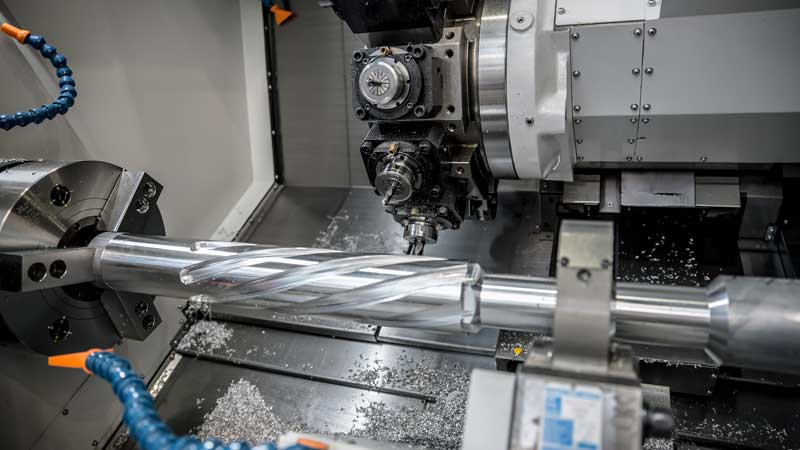
Honyo Prototype’s Precision Machining Process for 4140 Steel
Our end-to-end workflow for machining AISI 4140 alloy steel integrates advanced digital tools with rigorous metallurgical controls to ensure dimensional accuracy, structural integrity, and on-time delivery. This process is optimized for 4140’s specific challenges, including its sensitivity to heat treatment, risk of distortion during machining, and stringent mechanical property requirements.
Upload CAD
Clients initiate the process by uploading native or neutral-format CAD files (STEP, IGES, Parasolid) to our secure portal. Our system automatically validates geometric integrity, checks for unit consistency (critical for 4140’s tight tolerance applications), and flags potential manufacturability conflicts. For 4140 components, we prioritize identifying features prone to stress concentration—such as sharp internal corners or thin walls—which could lead to cracking during subsequent heat treatment. All files undergo immediate cybersecurity screening to protect intellectual property.
AI-Powered Quoting
Honyo’s proprietary AI engine analyzes the CAD geometry, material specifications, and client-defined requirements (e.g., hardness, surface finish, critical dimensions) to generate a preliminary quote within 2 hours. For 4140 steel, the AI specifically evaluates:
Machining time based on 4140’s moderate machinability rating (70% of B1112 steel) and required reduced cutting speeds to prevent work hardening.
Material waste calculations accounting for 4140’s typical annealed starting condition (197–235 HB) and necessary stress-relief allowances.
Heat treatment sequencing implications (e.g., pre-machining annealing vs. post-machining hardening).
The output includes a detailed cost breakdown, lead time projection, and preliminary material certification requirements.
DFM Analysis
Our engineering team conducts a formal Design for Manufacturability review focused on 4140’s metallurgical behavior. This phase addresses:
Elimination of stress risers through recommended radius adjustments (minimum 0.030″ for critical sections).
Specification of optimal heat treatment stages (e.g., annealing at 1600°F ±15°F followed by controlled furnace cooling to 1000°F).
Machining sequence validation to minimize distortion—such as roughing allowances for stress relief before final finishing.
Verification of hardness targets against achievable ranges (e.g., 28–32 HRC for structural components). Clients receive a marked-up DFM report with actionable engineering suggestions, not generic feedback.
Production Execution
Machining occurs in climate-controlled cells with tooling calibrated for 4140’s wear characteristics. Key protocols include:
Use of carbide tooling with positive rake angles and reduced feed rates to manage 4140’s abrasiveness.
In-process stress relief baking at 1000°F for >4 hours after rough machining for components exceeding 5″ in critical dimensions.
Real-time thermal monitoring during milling/turning to prevent localized heating that induces residual stresses.
Dedicated fixturing to avoid clamping-induced distortion in this medium-carbon alloy.
All 4140 parts undergo intermediate CMM checks at rough, semi-finish, and finish stages per AS9100 standards.
Quality Assurance & Delivery
Final inspection validates compliance with both dimensional and material specifications:
| Inspection Parameter | Method | Acceptance Criteria for 4140 |
|---|---|---|
| Dimensional Accuracy | 5-axis CMM | ±0.0005″ for critical features |
| Hardness | Rockwell C-scale testing | Within client-specified range (e.g., 28–32 HRC) |
| Surface Integrity | Optical profilometer | Ra ≤ 32 μin for bearing surfaces |
| Material Certification | Mill test reports + UT scan | ASTM A331/A506 compliance with traceability |
Upon certification, parts ship with full material traceability documentation (heat number, test results), first-article inspection reports, and packaging engineered to prevent vibration-induced stress during transit. Typical lead time from CAD upload to delivery is 12–18 business days for complex 4140 assemblies, with expedited options available for qualified projects.
This integrated approach ensures 4140 components meet aerospace, defense, and industrial performance standards while minimizing scrap rates and rework—critical for this high-value alloy where material costs represent 30–40% of total project value.
Start Your Project
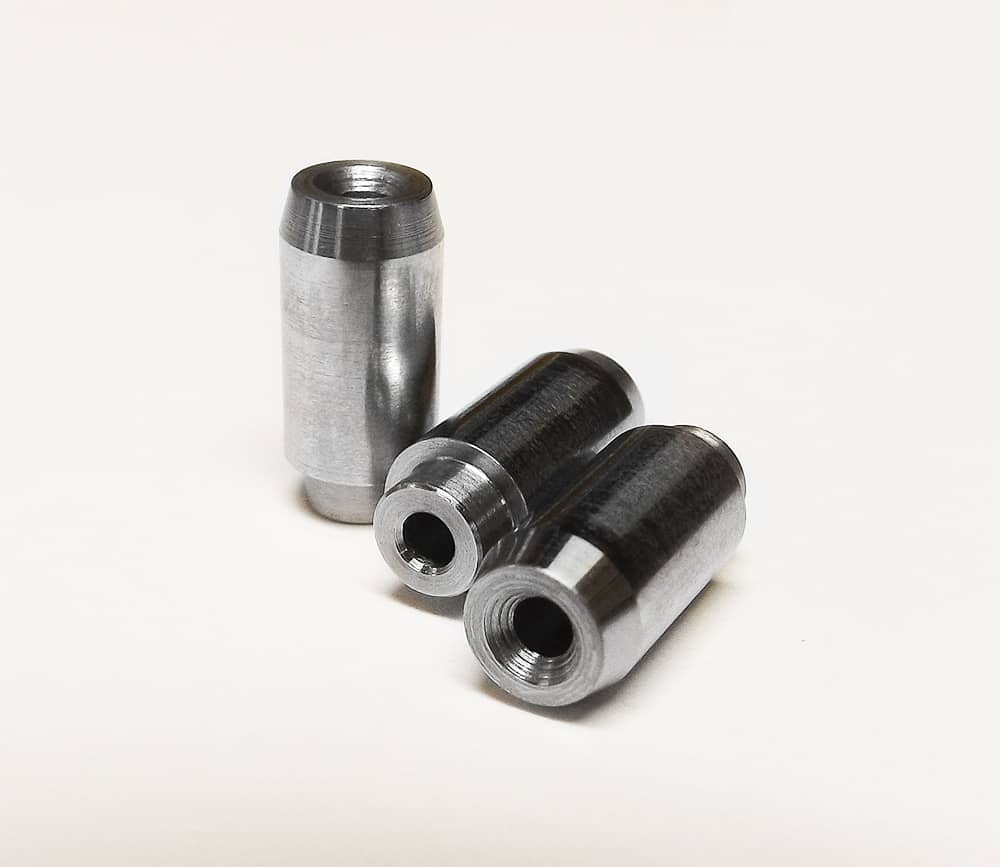
Looking for precision machining services for 4140 steel? Honyo Prototype offers high-quality CNC machining of 4140 alloy steel with tight tolerances and fast turnaround. Our manufacturing facility in Shenzhen is equipped with advanced machinery and staffed by experienced engineers to ensure consistent part quality and on-time delivery.
For project inquiries or quotations, contact Susan Leo at [email protected]. We support prototyping and low-to-mid volume production runs with comprehensive material and finishing options.
🚀 Rapid Prototyping Estimator
Estimate rough cost index based on volume.