
Contents
Manufacturing Insight: Lightweight Strong Plastic
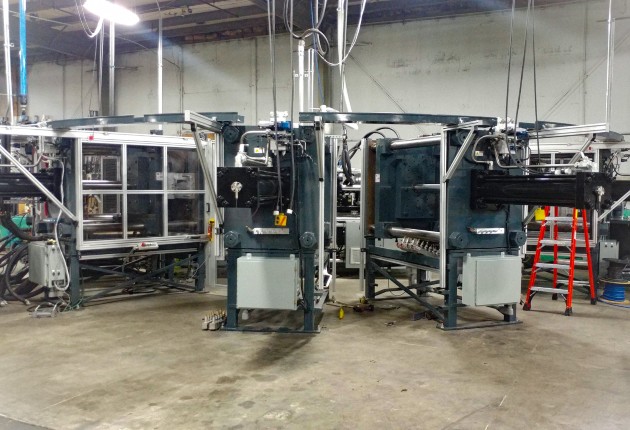
Lightweight Strong Plastics: Precision Engineered Through Honyo Prototype CNC Machining
For engineering teams demanding exceptional strength-to-weight ratios without compromising dimensional accuracy or material integrity, Honyo Prototype delivers advanced CNC machining solutions specifically optimized for high-performance plastics. We expertly machine demanding polymers like PEEK, Ultem, PPSU, and reinforced nylons, transforming complex CAD designs into functional prototypes and low-volume production parts with tight tolerances down to ±0.025mm. Our rigorous process control ensures consistent mechanical properties and surface finishes critical for aerospace, medical, and robotics applications where weight savings directly impact performance and efficiency.
Honyo Prototype eliminates prototyping bottlenecks through our integrated manufacturing ecosystem. Our state-of-the-art CNC milling and turning centers, operated by certified engineers, handle intricate geometries and stringent material requirements inherent in lightweight structural components. Accelerate your development cycle by leveraging our Online Instant Quote system, providing detailed manufacturing feedback and precise cost estimates within hours—simply upload your 3D CAD file directly to our secure portal. Experience how our technical expertise in plastic CNC machining delivers the robust, lightweight parts your innovation requires, on your timeline. Submit your design today for immediate evaluation.
Technical Capabilities
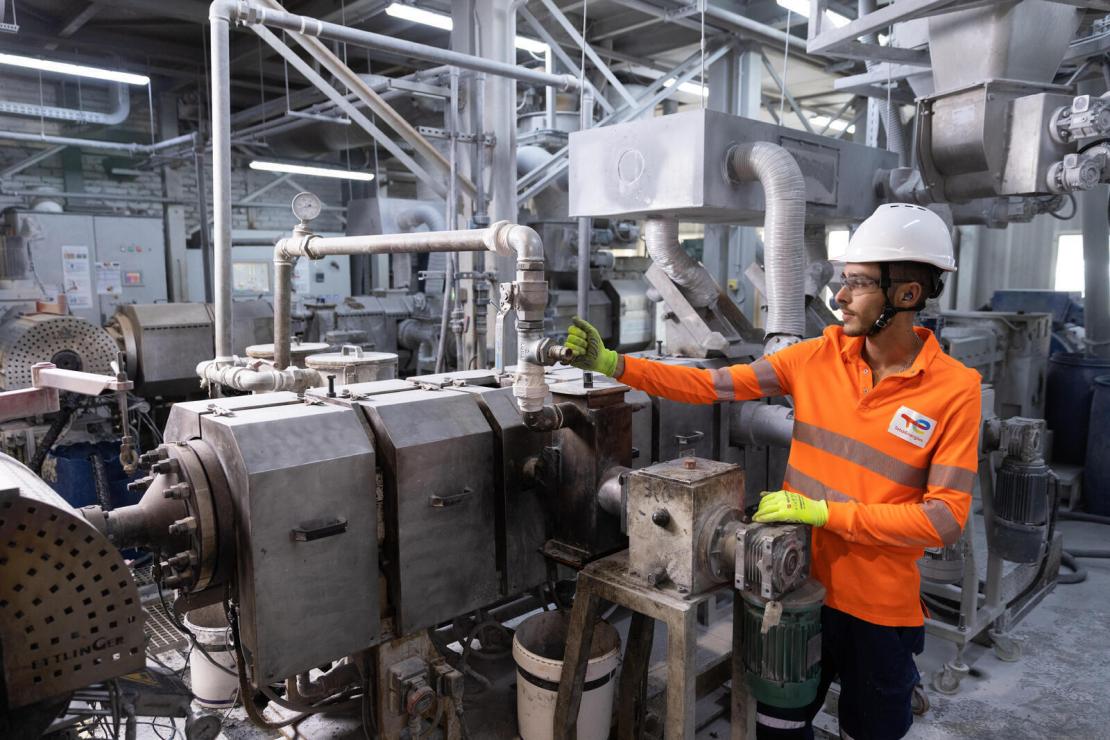
Technical specifications for a “lightweight strong plastic” suitable for precision machining processes such as 3-axis, 4-axis, and 5-axis milling, as well as turning operations with tight tolerance requirements, must balance mechanical strength, dimensional stability, machinability, and weight. Below is a comparative overview including relevant engineering plastics and metals commonly used in prototyping and production applications at Honyo Prototype.
| Property | Aluminum (6061-T6) | Steel (1018) | ABS (Acrylonitrile Butadiene Styrene) | Nylon (PA6 or PA66) |
|---|---|---|---|---|
| Density (g/cm³) | 2.7 | 7.85 | 1.04 | 1.13 |
| Tensile Strength (MPa) | 310 | 440 | 40–45 | 70–85 |
| Flexural Modulus (GPa) | 68.9 | 200 | 2.0–2.4 | 2.6–3.0 |
| Elongation at Break (%) | 12 | 15 | 3–5 | 30–150 |
| Thermal Deflection Temperature (°C) | 165 (at 1.8 MPa) | ~200 | 95–105 | 70–80 (unfilled), up to 210 (glass-filled) |
| Machinability Rating | Excellent | Good | Very Good | Good |
| Surface Finish Quality | High (smooth, reflective) | High (with proper tooling) | Good (matte finish, minimal burring) | Moderate (can be fibrous) |
| Typical Tolerance (± mm) | ±0.025 | ±0.025 | ±0.05 to ±0.1 | ±0.05 to ±0.1 |
| Moisture Absorption (24 hrs, %) | Negligible | Negligible | 0.2–0.4 | 1.5–2.5 (requires drying) |
| Suitability for 3/4/5-Axis Milling | Excellent | Excellent | Excellent | Good (chatter control needed) |
| Suitability for Turning | Excellent | Excellent | Good | Moderate (requires sharp tools) |
| Weight Consideration | Light | Heavy | Very Light | Very Light |
| Recommended for Tight Tolerance? | Yes | Yes | Yes (for non-structural) | Yes (with controlled environment) |
Notes:
Aluminum and steel are benchmark materials for high-precision CNC machining due to their excellent dimensional stability and predictable tool engagement. However, they are significantly heavier than plastics.
ABS is a lightweight, impact-resistant thermoplastic ideal for functional prototypes requiring good machinability and moderate strength. It holds tolerances well under stable conditions but is less suitable for high-temperature environments.
Nylon offers higher strength and wear resistance than ABS, with good fatigue performance. However, its hygroscopic nature requires pre-drying before machining to prevent dimensional variation and surface defects. Glass-filled grades improve rigidity and thermal performance, making them better suited for tight-tolerance parts in dynamic applications.
For applications demanding both lightweight design and high strength with precision machining, glass-filled Nylon or high-performance alternatives like PEEK (though not listed) may be preferred over standard ABS. Aluminum remains the go-to metal for lightweight structural components needing tight tolerances, while steel is used when maximum strength and rigidity are critical, despite added weight.
From CAD to Part: The Process
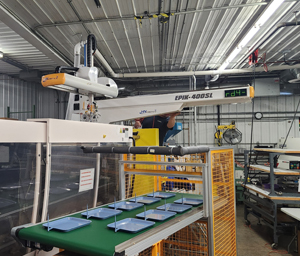
Honyo Prototype Lightweight Strong Plastic Process Workflow
Honyo Prototype executes a streamlined, technology-driven workflow for producing lightweight yet structurally robust plastic components. This process begins with secure CAD file submission via our encrypted client portal, supporting STEP, IGES, and native formats from major CAD platforms. Upon upload, our proprietary AI quoting engine performs instantaneous material compatibility analysis, geometric complexity assessment, and initial weight estimation against target strength requirements. The AI generates a detailed commercial quote within 2 hours, including projected part weight, material options optimized for strength-to-weight ratio (e.g., glass-filled nylons, carbon-reinforced PEEK), and preliminary cycle time estimates.
Critical to achieving lightweight strength is our integrated Design for Manufacturability (DFM) phase. Our senior manufacturing engineers conduct a dual-layer analysis: automated simulation checks wall thickness uniformity, draft angles, and stress concentration points using Moldflow, followed by manual expert review. We proactively identify opportunities to reduce mass without compromising structural integrity—such as strategic rib placement, topology-optimized internal lattice structures, and localized gusset reinforcement. Clients receive a comprehensive DFM report with annotated 3D models highlighting suggested modifications, expected weight reduction percentages, and validation of minimum factor-of-safety thresholds per application requirements.
Production leverages Honyo’s certified ISO 9001 cleanroom facilities with precision electric injection molding machines (50-600 tons). For lightweight strong plastics, we implement specialized parameters: controlled melt temperatures to prevent fiber degradation in reinforced materials, sequential valve gating for uniform wall packing, and micro-pulse cooling cycles to minimize warpage. Every production run undergoes real-time cavity pressure monitoring, with first-article inspection including ASTM D638 tensile testing and CT scanning for internal void detection.
Final delivery includes traceable documentation: material certificates with UL 94 flammability ratings, full first-article inspection reports against ASME Y14.5 GD&T, and dimensional certification via CMM data. Typical lead time from CAD approval to shipment is 8-12 business days, with expedited options available. This closed-loop process ensures clients receive production-intent prototypes meeting exacting weight and performance specifications on schedule.
Start Your Project

Looking for a reliable solution in lightweight, high-strength plastic components? Honyo Prototype delivers precision-engineered plastic parts tailored to your specifications, leveraging advanced manufacturing techniques and rigorous quality control.
Our Shenzhen-based factory ensures fast turnaround times and cost-efficient production, ideal for prototyping and low-to-mid volume runs.
Contact Susan Leo today to discuss your project requirements.
Email: [email protected]
🚀 Rapid Prototyping Estimator
Estimate rough cost index based on volume.