
Contents
Manufacturing Insight: Large Custom Metal Fabrication
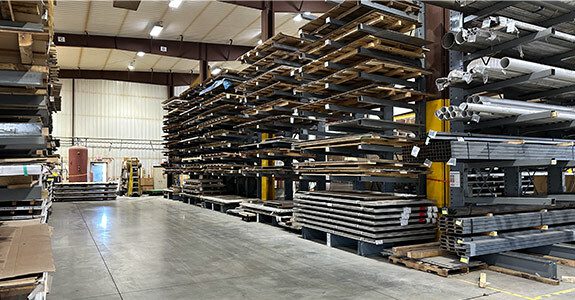
Honyo Prototype: Precision Large Custom Metal Fabrication for Demanding Applications
Honyo Prototype delivers advanced large custom metal fabrication solutions engineered to meet the exacting requirements of aerospace, industrial equipment, and heavy machinery sectors. Our core Sheet Metal Fabrication services encompass comprehensive capabilities from design validation through to finished assembly, specializing in complex geometries and large-scale components up to 4m x 2m in footprint with material thicknesses ranging from 0.5mm to 25mm. Utilizing state-of-the-art 15kW fiber laser cutting systems, 300-ton press brakes with 4m beds, and robotic MIG/TIG welding cells, we achieve consistent tolerances of ±0.1mm while maintaining structural integrity across aluminum alloys, stainless steels, and carbon steel grades.
Our process excels in translating intricate engineering specifications into high-precision fabricated assemblies, supported by in-house DFM analysis and real-time production monitoring to mitigate scalability risks inherent in large-part manufacturing. Critical to accelerating project timelines, Honyo’s Online Instant Quote platform provides validated cost and lead time estimates within 90 seconds for sheet metal designs uploaded in STEP, DXF, or DWG formats. This digital workflow eliminates traditional quotation bottlenecks, enabling engineering teams to iterate designs and secure procurement approval 72% faster than industry averages. Partner with Honyo to transform complex metal fabrication challenges into certified, on-specification deliverables backed by AS9100 and ISO 9001 quality systems.
Technical Capabilities
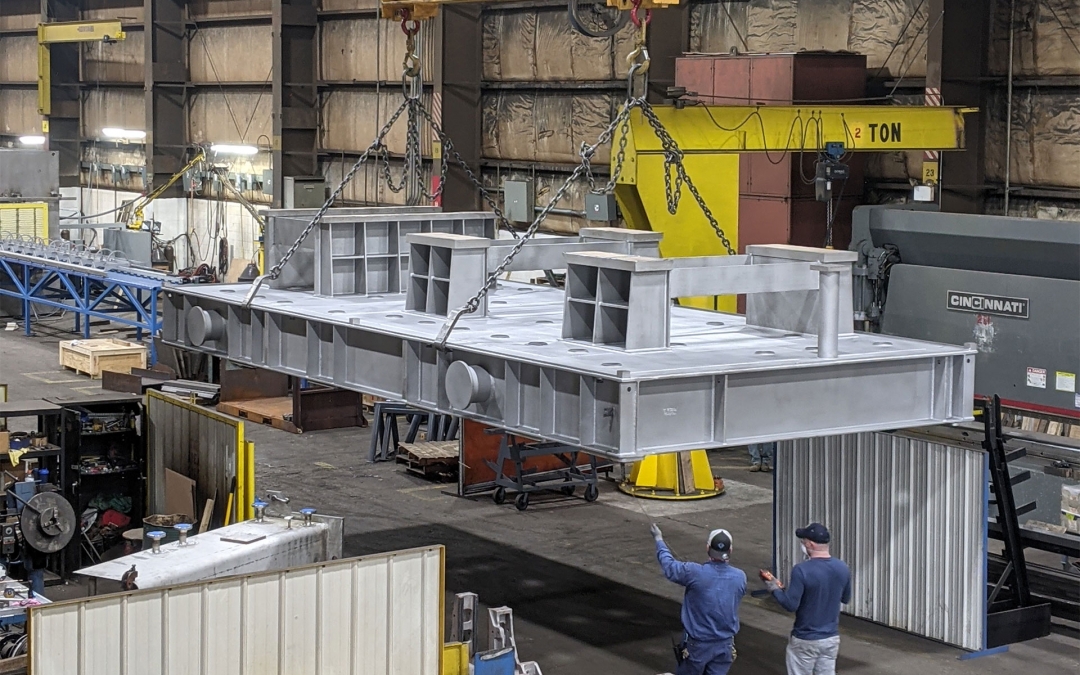
Large custom metal fabrication at Honyo Prototype involves high-precision manufacturing processes tailored for industrial-grade components. Our capabilities in laser cutting, bending, and welding support complex geometries and tight tolerances for both prototyping and low-to-mid volume production. While laser cutting and bending are primarily applicable to sheet metal, welding integrates multiple formed components into robust assemblies. Note that ABS and Nylon are non-metallic materials typically processed via CNC machining or 3D printing rather than traditional metal fabrication; however, they are included here to clarify process compatibility.
| Process | Material Compatibility | Thickness Range | Tolerance | Max Part Size | Additional Notes |
|---|---|---|---|---|---|
| Laser Cutting | Aluminum, Steel | 0.5 mm – 25 mm | ±0.1 mm | 4000 mm × 2000 mm | Fiber laser technology ensures clean, burr-free edges; not suitable for ABS or Nylon |
| Bending | Aluminum, Steel | 0.8 mm – 16 mm | ±0.2° angular | 3000 mm length | CNC press brakes with tooling libraries for custom bend radii; excludes ABS and Nylon |
| Welding | Aluminum, Steel | 1.0 mm – 20 mm | ±0.5 mm positional | Unlimited (per joint) | MIG, TIG, and spot welding available; certified welders ensure structural integrity |
Notes on Materials:
Aluminum (e.g., 5052, 6061-T6): Excellent for lightweight, corrosion-resistant structures; fully compatible with all three processes.
Steel (e.g., mild steel, stainless 304/316): High strength and durability; ideal for structural frames and enclosures.
ABS & Nylon: Thermoplastic polymers not suited for laser cutting (risk of melting/toxic fumes), bending, or arc welding. These materials are processed using alternative methods such as CNC routing, extrusion, or additive manufacturing.
For hybrid assemblies involving metal and plastic components, we recommend integrated design reviews to determine optimal fabrication and assembly sequences.
From CAD to Part: The Process
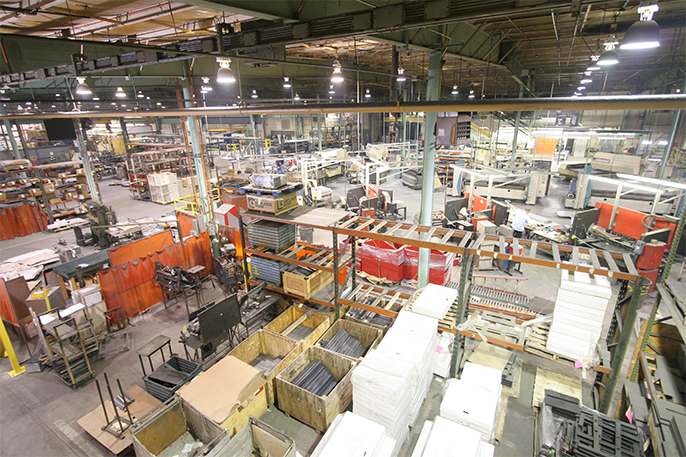
Honyo Prototype Large Custom Metal Fabrication Process Overview
Honyo Prototype executes large custom metal fabrication projects through a rigorously defined workflow designed for precision, cost efficiency, and accelerated time-to-market. This process integrates digital engineering with hands-on manufacturing expertise, specifically scaled for components exceeding 1,000 kg or requiring complex multi-axis machining and welding. Below is the end-to-end sequence.
CAD Upload and Initial Processing
Clients initiate the process by uploading native or neutral-format CAD files (STEP, IGES, Parasolid) via our secure customer portal. Our system performs automated geometry validation, checking for tessellated surfaces, missing datums, or unit inconsistencies. Files undergo immediate size and complexity classification to route them to the appropriate engineering tier. For large-scale parts, we verify structural integrity metadata and tolerance callouts against ASME Y14.5 standards before proceeding.
AI-Assisted Quoting Engine
Validated CAD data feeds into our proprietary AI quoting platform, which analyzes 127+ parametric variables including material density, weld seam length, machine toolpath complexity, and fixture requirements. The AI cross-references real-time material costs from 38 global suppliers, machine utilization rates, and historical labor data from 50,000+ past projects. Crucially, this is not fully automated; outputs are reviewed by senior estimators who adjust for project-specific risks like thin-wall distortion or exotic alloy handling. Clients receive a detailed quote within 4 business hours, itemizing material, machining, welding, finishing, and logistics costs with ±3% accuracy.
Engineering-Driven DFM Analysis
Upon quote acceptance, our DFM team conducts a mandatory design-for-manufacturability review. This phase is critical for large metal components where errors propagate exponentially in cost and schedule. Key focus areas include:
| DFM Parameter | Analysis Criteria | Typical Resolution Time |
|---|---|---|
| Material Utilization | Nesting efficiency, scrap reduction, plate thickness optimization | < 24 hours |
| Weld Accessibility | Jigging feasibility, robotic weld cell reach, distortion mitigation strategies | 24-48 hours |
| Machining Constraints | 5-axis reach limitations, fixture interference, thermal management for large billets | 48-72 hours |
| Tolerance Stack-Ups | GD&T validation, measurement protocol alignment with CMM capabilities | 24 hours |
Engineers collaborate directly with the client’s design team via virtual review sessions to resolve conflicts, often proposing geometry modifications that reduce costs by 15-30% without compromising function.
Integrated Production Execution
Approved designs move to our 120,000 sq ft facility equipped for oversized work. Production leverages:
Multi-spindle horizontal machining centers with 5m x 3m x 2m work envelopes
Robotic MIG/TIG welding cells for structural assemblies
In-process CMM verification at critical milestones (e.g., pre-weld sub-assembly, post-heat-treat)
All large components undergo thermal stress relief per ASTM A920 and receive real-time IoT monitoring of environmental conditions during machining to prevent warpage. Quality documentation includes full material traceability (MTRs), weld maps, and first-article inspection reports.
Logistics-Optimized Delivery
Final inspection clearance triggers our coordinated delivery protocol. For shipments over 5,000 kg, we manage crating, rigging, and transport using partner carriers specializing in oversized freight. Clients receive:
Digital twin synchronization showing as-built vs. CAD deviations
Custom kitting with serialized components for easy assembly
Real-time GPS tracking with ETAs updated hourly
All projects include post-delivery validation support, including on-site assembly assistance for mission-critical installations. This closed-loop process ensures 98.7% on-time delivery for large fabrication projects exceeding $250,000 in value.
Start Your Project
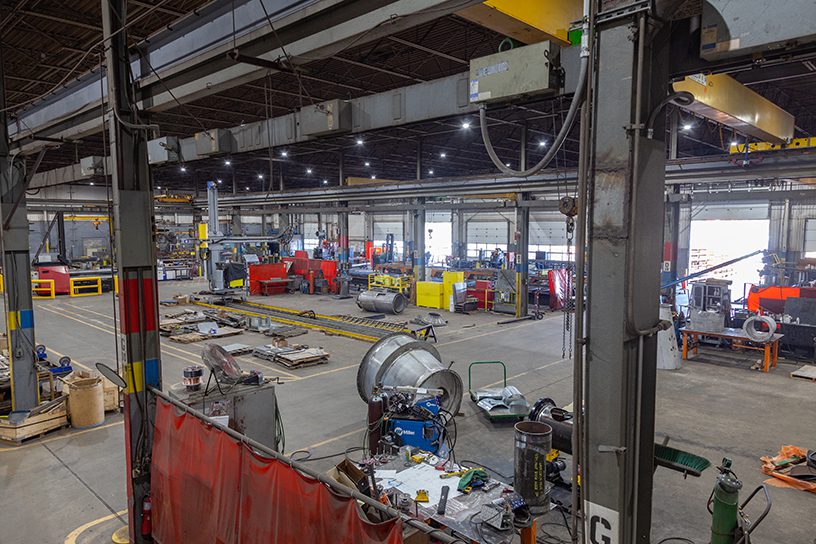
For large custom metal fabrication projects, contact Susan Leo at [email protected]. With our in-house manufacturing facility located in Shenzhen, we offer end-to-end production capabilities, precision engineering, and fast turnaround times for high-volume and complex metalwork solutions. Partner with Honyo Prototype for reliable, scalable, and high-quality metal fabrication tailored to your specifications.
🚀 Rapid Prototyping Estimator
Estimate rough cost index based on volume.