
Contents
Manufacturing Insight: Is Titanium More Expensive Than Stainless Steel
Material Cost Realities in Precision Manufacturing
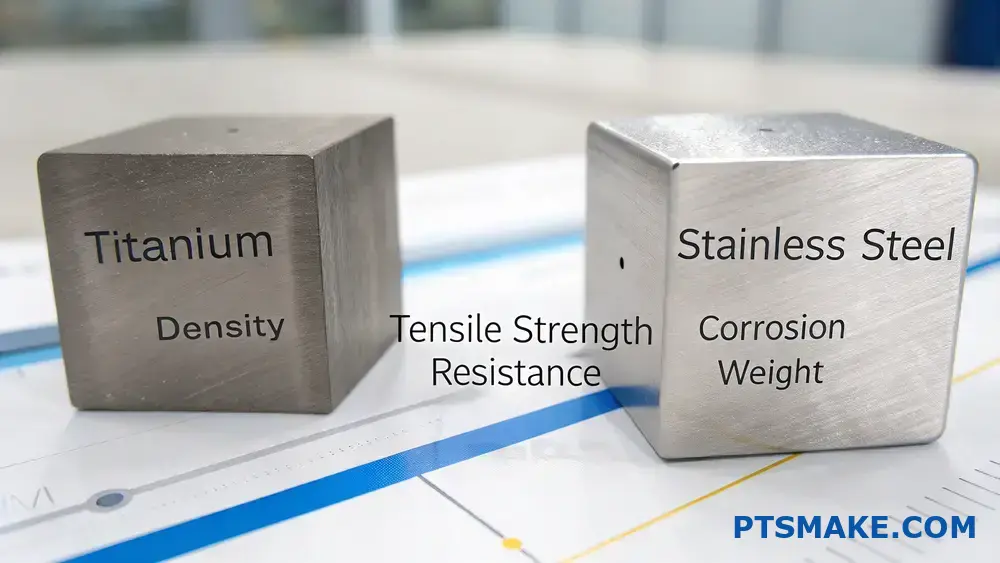
The question of whether titanium is more expensive than stainless steel often oversimplifies a critical engineering decision. While titanium commands a higher raw material cost per kilogram—typically 3–5× that of common stainless steel grades like 304 or 316—the true expense lies in manufacturability. Titanium’s low thermal conductivity, high chemical reactivity, and propensity for work hardening demand specialized CNC machining strategies, including slower feed rates, rigid setups, and premium tooling. Conversely, stainless steel’s machinability varies by grade but generally allows faster processing with standard tooling, reducing cycle times and labor costs. For prototypes or low-volume production, these factors can amplify titanium’s cost premium beyond raw material differentials alone.
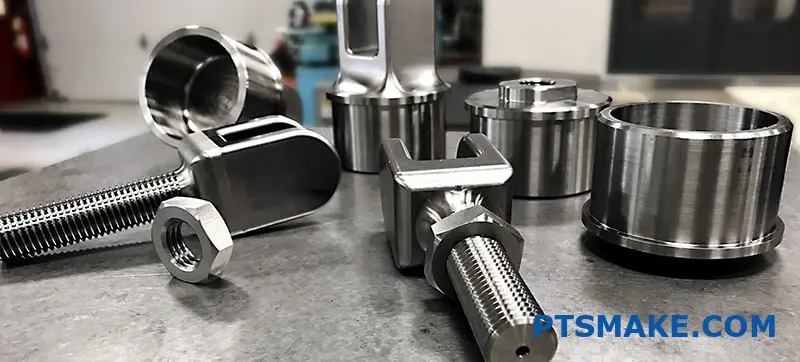
At Honyo Prototype, our expertise in precision CNC machining for both materials ensures optimal cost-performance balance. We leverage advanced 5-axis milling, tight-tolerance turning, and material-specific process validation to minimize waste and maximize yield—whether you’re prototyping aerospace titanium components or medical-grade stainless steel assemblies. Our engineers analyze your design holistically, factoring in material behavior, toolpath efficiency, and secondary operations to deliver the most economical solution without compromising integrity.
Stop estimating costs based on material sheets alone. Experience precise, data-driven pricing with Honyo’s Online Instant Quote platform. Upload your CAD file, specify material requirements, and receive a detailed machining cost analysis in minutes—enabling informed decisions before a single chip is cut.
Technical Capabilities
Titanium is generally more expensive than stainless steel due to higher raw material costs, lower machinability, and increased tooling and labor expenses—especially in precision machining processes such as 3/4/5-axis milling and turning with tight tolerance requirements. The following table compares key technical and economic factors across common engineering materials, including titanium, stainless steel, aluminum, carbon steel, ABS, and nylon, with a focus on high-precision CNC machining environments.
| Material | Relative Cost (USD/lb) | Machinability Rating | Thermal Conductivity (W/m·K) | Tensile Strength (MPa) | Typical Applications in Precision Machining | Notes for 3/4/5-Axis Milling & Turning |
|---|---|---|---|---|---|---|
| Titanium (Grade 5, Ti-6Al-4V) | 35–50 | 20–30% (Poor) | 6.7 | 950–1000 | Aerospace components, medical implants, high-performance automotive | Low thermal conductivity leads to heat buildup; requires slow speeds, high-pressure coolant, and rigid setups. Tool wear is high, increasing cost per part. |
| Stainless Steel (316/17-4 PH) | 8–15 | 40–55% (Fair) | 15–18 | 500–1300 | Medical devices, marine hardware, fluid systems | Better machinability than titanium; galling and work hardening require optimized feeds/speeds. Moderate tool wear. |
| Aluminum (6061-T6) | 2–4 | 90–100% (Excellent) | 167 | 310 | Enclosures, prototypes, aerospace structures | High MRR possible; suitable for high-speed 5-axis milling. Minimal tool wear. Low cost per machined part. |
| Carbon Steel (1018/1045) | 1–2 | 60–70% (Good) | 52 | 400–700 | Industrial fixtures, shafts, structural components | Predictable chip formation; easy to turn and mill. Requires coolant for tight tolerance work to manage thermal expansion. |
| ABS (Thermoplastic) | 2–3 | 80% (Good) | 0.19 | 40–50 | Prototypes, jigs, non-structural enclosures | Low melting point; requires sharp tools and light cuts. Minimal tool wear. Ideal for rapid prototyping on CNC mills. |
| Nylon (PA6/PA66) | 3–5 | 70% (Fair) | 0.25 | 70–85 | Insulating components, gears, low-friction parts | Prone to swelling with moisture; requires pre-drying in high-precision applications. Dimensional stability can be a challenge at tight tolerances (±0.0005″). |
Key Observations for Tight Tolerance Machining:
Titanium’s high strength-to-density ratio and corrosion resistance make it desirable, but its poor thermal conductivity and reactivity with cutting tools significantly increase machining time and cost. In 5-axis milling operations, where complex geometries demand long tool paths and minimal setup changes, titanium requires specialized carbide or coated tools, reduced cutting parameters, and frequent tool monitoring.
Stainless steel, while less expensive and easier to machine than titanium, still presents challenges such as work hardening and moderate tool wear—particularly in 17-4 PH when heat-treated. However, it remains more cost-effective for high-tolerance parts requiring moderate strength and corrosion resistance.
Aluminum dominates in high-speed, tight-tolerance 5-axis applications due to its excellent machinability and dimensional stability. ABS and nylon are cost-effective for non-metallic prototypes or functional parts but require environmental controls to hold tolerances tighter than ±0.001″.
In summary, titanium is substantially more expensive than stainless steel not only in raw material cost but also in machining complexity, tooling, and cycle time—especially in precision 3/4/5-axis milling and turning operations.
From CAD to Part: The Process
Honyo Prototype’s process for evaluating whether titanium is more expensive than stainless steel for a specific part follows a structured, data-driven workflow that moves from digital design to physical delivery. This sequence quantifies the cost difference within the context of your actual geometry and requirements, not just raw material prices. Below is the technical breakdown of how each stage contributes to the final cost comparison.
Upload CAD initiates the process by ingesting your precise 3D model. Our system extracts critical parameters including part volume, surface area, feature complexity, and tolerance requirements. This geometric data is essential because titanium’s cost premium over stainless steel is heavily influenced by machinability factors. For instance, a part with deep cavities or thin walls will amplify titanium’s machining cost due to lower cutting speeds and tool wear, whereas a simple block minimizes this differential. Raw material cost alone is insufficient; the CAD geometry determines how significantly processing costs escalate the titanium premium.
AI Quote analyzes the CAD-derived parameters against real-time material pricing, historical machine utilization data, and process-specific cost drivers. It calculates two distinct cost estimates: one for titanium (typically Grade 5 Ti-6Al-4V) and one for stainless steel (e.g., 304 or 17-4 PH). The system accounts for titanium’s higher base material cost per kilogram (approximately 3-5x stainless steel) but also factors in critical secondary costs. These include extended CNC machining time (titanium requires 30-50% slower feed rates), increased tooling consumption (carbide tool life reduced by 40-60%), and potential fixture modifications for vibration control. The output is a side-by-side cost projection showing the absolute dollar difference and percentage premium for titanium specific to your part.
DFM (Design for Manufacturability) review validates and refines the AI Quote by applying engineering judgment. Our manufacturing engineers assess whether design features inadvertently exacerbate titanium’s cost disadvantages. Examples include sharp internal corners requiring slow EDM machining or insufficient support causing chatter during milling. We provide actionable feedback such as modifying radii to enable faster toolpaths or suggesting alternative titanium alloys like Grade 2 for less demanding applications. This stage often identifies opportunities to reduce the titanium cost gap by 15-25% through minor design adjustments, ensuring the quoted premium reflects optimized manufacturability rather than suboptimal geometry.
Production executes the validated design using material-specific process parameters. For titanium, this means strict adherence to low cutting speeds (30-50 m/min vs. 100-150 m/min for stainless), high-pressure coolant systems to prevent galling, and rigorous chip evacuation protocols. Each machine hour is tracked with material-specific labor and overhead rates. Stainless steel parts benefit from higher throughput and lower scrap rates, while titanium incurs extended cycle times and potential rework from thermal distortion. Our real-time production monitoring captures the actual cost delta, which typically ranges from 2.5x to 4x stainless steel depending on part complexity, aligning with but often exceeding the AI Quote due to unforeseen process challenges.
Delivery provides final cost reconciliation and performance data. The packing slip details material cost, machining hours, tooling expenses, and secondary operations for both material options. Clients receive a comparative report showing how geometric complexity translated into the realized cost premium. For high-precision aerospace components, titanium may cost 3.8x stainless steel due to stringent surface finish requirements, while for a simple bracket, the ratio might be 2.7x. This empirical data informs future material selection decisions beyond theoretical cost tables.
The following table summarizes key cost drivers differentiating titanium and stainless steel in Honyo’s process:
| Parameter | Titanium (Ti-6Al-4V) | Stainless Steel (304) | Cost Impact Factor |
|---|---|---|---|
| Raw Material Cost/kg | $80 – $120 | $25 – $35 | 3.2x – 3.4x |
| Typical Machining Speed | 30 – 50 m/min | 100 – 150 m/min | 30% – 50% slower |
| Tool Life (vs. SS) | 40% – 60% of stainless | Baseline | 1.7x – 2.5x tool cost |
| Cycle Time Multiplier | 1.3x – 1.5x | 1.0x | Direct labor cost increase |
| Scrap Rate | 8% – 12% | 3% – 5% | Material waste cost |
| Typical Final Part Cost | 2.5x – 4.0x stainless | Baseline | Geometry-dependent |
The cost difference is fundamentally context-dependent. Titanium becomes economically viable when its strength-to-weight ratio, corrosion resistance, or biocompatibility delivers greater value than the cost premium. Honyo’s integrated process transforms this abstract comparison into an actionable, part-specific analysis, ensuring clients make informed material decisions based on real manufacturability data rather than generic price lists. We recommend initiating the CAD upload to generate your precise cost delta projection.
Start Your Project
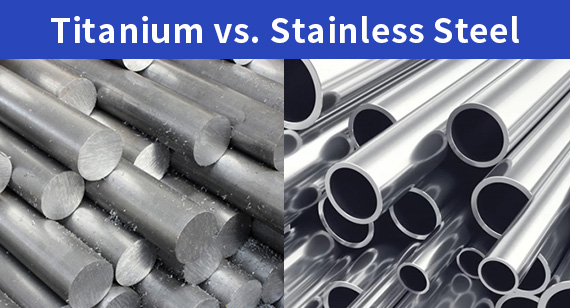
Yes, titanium is generally more expensive than stainless steel due to its complex extraction process, lower availability, and higher energy requirements during production. While stainless steel is composed of iron, chromium, and nickel—elements that are relatively abundant and easier to process—titanium requires more intensive refining from raw ores like ilmenite or rutile, contributing to its higher cost.
Additionally, titanium offers superior strength-to-density ratio, excellent corrosion resistance, and performance at elevated temperatures, making it ideal for aerospace, medical, and high-performance automotive applications. Stainless steel, on the other hand, provides good corrosion resistance and mechanical properties at a lower price point, making it suitable for a broader range of industrial and consumer applications.
For detailed material cost comparisons and prototyping quotes using either titanium or stainless steel, contact Susan Leo at [email protected]. Honyo Prototype operates a precision manufacturing facility in Shenzhen, offering CNC machining, sheet metal fabrication, and rapid prototyping services with strict quality control and fast turnaround times.
🚀 Rapid Prototyping Estimator
Estimate rough cost index based on volume.