
Contents
Manufacturing Insight: Is Titanium Better Than Aluminum
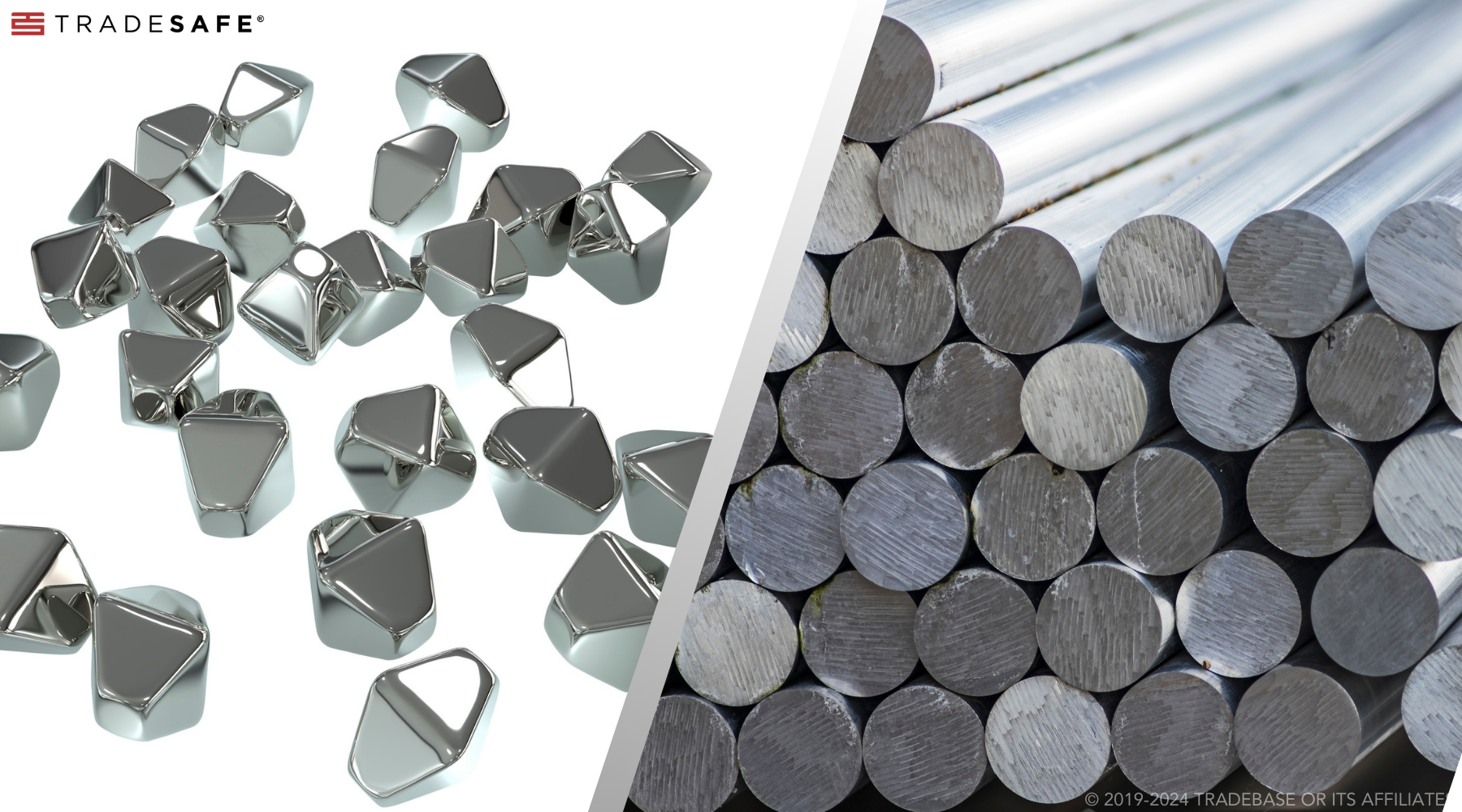
Material Selection Guidance for Critical Applications
The question Is titanium better than aluminum frequently arises in aerospace, medical, and high-performance industrial design, where material properties directly impact component durability, weight, and lifecycle costs. Titanium offers superior strength-to-weight ratio and exceptional corrosion resistance, making it ideal for extreme environments, while aluminum provides cost-effective machinability and thermal conductivity for less demanding applications. This trade-off requires precise engineering analysis to avoid over-specification or premature failure.
At Honyo Prototype, our CNC machining expertise ensures optimal execution regardless of material choice. We deploy advanced 5-axis milling and turning centers with specialized tooling and process parameters calibrated for both titanium alloys (e.g., Ti-6Al-4V) and aluminum grades (e.g., 6061-T6, 7075-T7351), maintaining tight tolerances down to ±0.0002″ while mitigating challenges like titanium’s low thermal conductivity or aluminum’s susceptibility to burring. Our engineering team collaborates with clients to validate material suitability during the design phase, reducing prototyping iterations and accelerating time-to-test.
Leverage our Online Instant Quote platform to upload CAD files and receive manufacturability feedback with cost and lead time estimates in under 60 seconds—enabling data-driven material decisions before project commitment. This integration of precision machining capability and digital procurement streamlines your path from concept to validated prototype.
Technical Capabilities
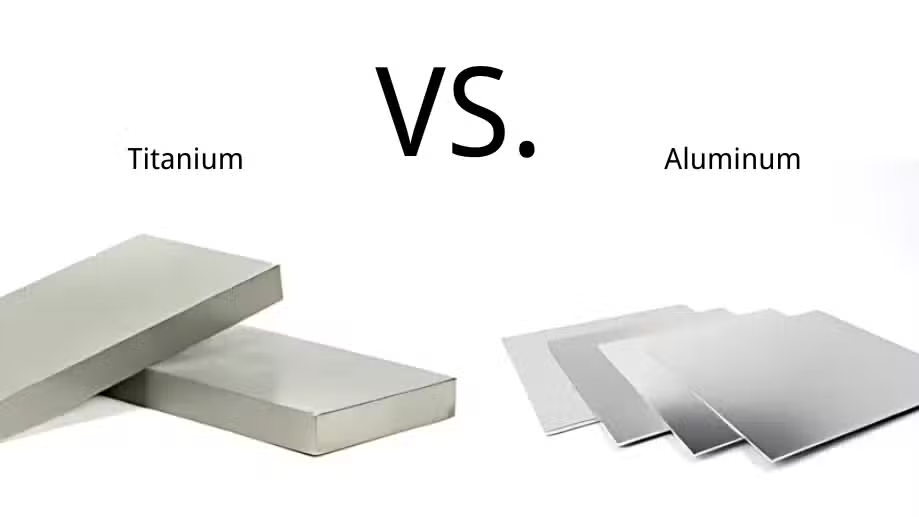
When evaluating whether titanium is better than aluminum for precision machining processes such as 3/4/5-axis milling and turning—especially under tight tolerance requirements—several technical factors must be considered. These include material properties, machinability, thermal behavior, tool wear, and application context. Below is a comparative analysis of titanium, aluminum, steel, ABS, and nylon across key technical specifications relevant to high-precision CNC operations.
| Property / Material | Titanium (Grade 5, Ti-6Al-4V) | Aluminum (6061-T6) | Steel (4140, Annealed) | ABS (Acrylonitrile Butadiene Styrene) | Nylon (PA66) |
|---|---|---|---|---|---|
| Density (g/cm³) | 4.43 | 2.70 | 7.85 | 1.04 | 1.14 |
| Tensile Strength (MPa) | 900–950 | 310 | 655 | 40–50 | 75–85 |
| Yield Strength (MPa) | 830 | 276 | 415 | 35–40 | 60–70 |
| Modulus of Elasticity (GPa) | 114 | 68.9 | 200 | 2.0–3.0 | 2.5–3.0 |
| Thermal Conductivity (W/m·K) | 6.7 | 167 | 42.6 | 0.19 | 0.25 |
| Coefficient of Thermal Expansion (µm/m·°C) | 8.6 | 23.6 | 11.3 | 70–100 | 80–120 |
| Machinability Rating (%) | 20–30 | 90–100 | 60–70 | Excellent (low cutting forces) | Good |
| Tool Wear (Relative) | High | Low | Moderate | Very Low | Low |
| Chip Formation | Stringy, difficult to evacuate | Easily broken chips | Continuous, manageable | Fine powder | Long, stringy |
| Coolant Requirement | Mandatory (high heat retention) | Recommended | Required | Not required | Not required |
| Typical Tolerance Capability (± mm) | ±0.005 – ±0.012 | ±0.005 – ±0.010 | ±0.005 – ±0.012 | ±0.05 – ±0.1 | ±0.05 – ±0.1 |
| Surface Finish (Ra, µm) | 0.8–1.6 (with care) | 0.4–0.8 | 0.8–1.6 | 1.6–3.2 | 1.6–3.2 |
| Common Applications | Aerospace, medical implants, high-temp components | Enclosures, heat sinks, prototypes, aerospace structures | Gears, shafts, tooling | Jigs, fixtures, low-stress prototypes | Bearings, gears, wear components |
Technical Insights:
Titanium offers superior strength-to-density ratio and excellent performance at elevated temperatures, making it ideal for aerospace and medical applications where tight tolerances and reliability under stress are critical. However, its low thermal conductivity leads to heat concentration at the cutting zone, accelerating tool wear and requiring slower feed rates and rigid setups during 3/4/5-axis milling and turning.
Aluminum, by contrast, is highly machinable with excellent thermal dissipation, enabling high-speed machining and fine surface finishes. It is the preferred choice for complex 5-axis milled prototypes and parts requiring tight tolerances with fast turnaround.
Steel provides high rigidity and wear resistance but demands more powerful equipment and robust tooling. It is suitable for high-precision tooling and structural components where dimensional stability under load is required.
ABS and nylon, as engineering plastics, are easy to machine with minimal tool wear but have high thermal expansion and lower dimensional stability. They are typically used for non-structural, tight-tolerance fixtures or prototypes where metal performance is not required.
In summary, titanium is not inherently “better” than aluminum—it depends on the application. For high strength, temperature resistance, and performance in extreme environments, titanium excels. For cost-effective, high-speed, tight-tolerance machining with excellent surface finish, aluminum is generally superior. Material selection should align with functional requirements, production volume, and environmental conditions.
From CAD to Part: The Process
Honyo Prototype applies a structured engineering evaluation—not a blanket declaration—to determine whether titanium or aluminum is optimal for a specific client application. Our process integrates material science with real-time production data within the standard workflow, ensuring decisions are driven by functional requirements, cost efficiency, and manufacturability. Below is the phase-specific breakdown:
Upload CAD
Upon receiving the CAD file, our system extracts critical parameters including geometric complexity, tolerance specifications, wall thicknesses, and surface finish requirements. Material-agnostic metadata (e.g., part volume, feature density) is auto-logged. Crucially, the system flags features sensitive to material properties—such as thin-walled sections prone to deflection (aluminum) or high-stress zones requiring fatigue resistance (titanium)—for downstream DFM analysis.
AI Quote
The AI engine cross-references the CAD-derived parameters against Honyo’s proprietary material database and live production metrics. It calculates comparative estimates for titanium (Grade 5 Ti-6Al-4V) and aluminum (6061-T6) across three dimensions:
Machining Cost Drivers: Titanium’s lower thermal conductivity and higher strength increase tool wear rates by 35–50% versus aluminum, extending cycle times by 20–30%.
Secondary Operations: Aluminum anodizing costs 18–25% less than titanium passivation but lacks titanium’s corrosion resistance in salt-spray environments.
Material Waste: Titanium’s density (4.43 g/cm³) versus aluminum (2.7 g/cm³) impacts raw material cost per part, though near-net-shape designs mitigate this.
The output delivers a side-by-side cost/performance matrix—not a unilateral recommendation—highlighting scenarios where titanium’s strength-to-weight ratio justifies its 3–4× material cost premium (e.g., aerospace load-bearing components) versus aluminum’s cost efficiency for non-structural housings.
DFM Analysis
Our engineers conduct a material-specific manufacturability review:
For titanium, we assess risks like galling during tapping (requiring oversized tap drills) or heat buildup in deep pockets (mandating reduced feed rates).
For aluminum, we evaluate chatter in thin walls (needing adaptive toolpaths) and burr formation on sharp edges (requiring secondary deburring).
The DFM report explicitly states: “Titanium is recommended only if yield strength > 900 MPa or operating temperature > 250°C is required; otherwise, aluminum 7075-T6 offers superior machinability for this geometry.” Alternative alloys (e.g., 2024 aluminum for high fatigue) are proposed where applicable.
Production
Material selection directly dictates process parameters:
Titanium parts undergo pre-machining stress relief and use carbide tooling with 40% lower RPMs to prevent work hardening.
Aluminum parts leverage higher spindle speeds but require coolant optimization to avoid built-up edge.
In-process inspections verify material-specific outcomes: titanium parts are checked for micro-cracks via dye penetrant testing, while aluminum parts undergo dimensional stability checks post-machining due to thermal expansion differences.
Delivery
Lead times reflect material realities: titanium typically adds 2–4 days for stress-relief annealing and specialized finishing. All deliverables include a Material Justification Dossier documenting:
Quantified performance trade-offs (e.g., “Titanium reduces part mass by 42% but increases cost by 220%”)
Validation test data (e.g., salt-spray results per ASTM B117)
Lifecycle cost projections for high-volume scenarios
Honyo’s approach ensures material selection aligns with functional needs—not assumptions. The table below summarizes key decision criteria:
| Parameter | Titanium Advantage Threshold | Aluminum Advantage Threshold | Honyo Validation Method |
|---|---|---|---|
| Operating Temperature | > 300°C | < 250°C | Thermal simulation + test coupons |
| Weight-Sensitive Design | Mass reduction > 30% critical | Mass not primary constraint | FEA stress-to-weight analysis |
| Corrosion Environment | Saltwater/chemical exposure | Mild indoor/outdoor | ASTM G59 electrochemical testing |
| Production Volume | Low-volume (<500 pcs) | High-volume (>2,000 pcs) | TCO modeling including tooling |
This data-driven methodology eliminates guesswork, ensuring clients select the right material for their application—not merely the “better” one in isolation.
Start Your Project
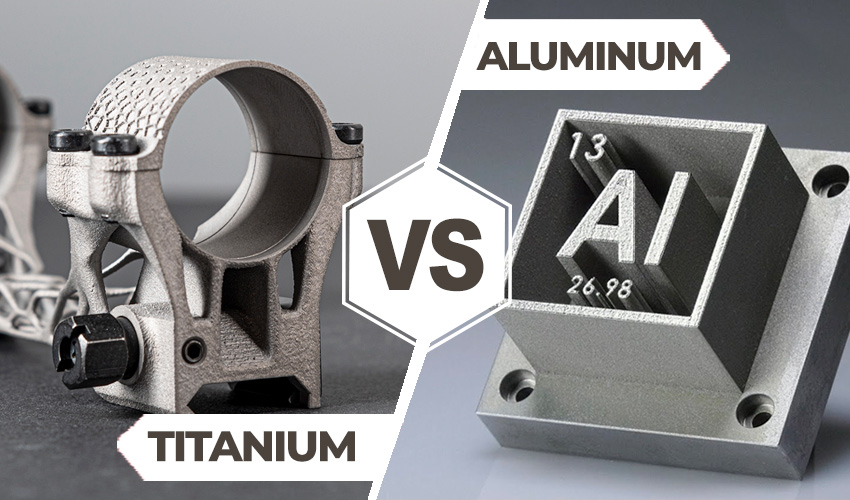
Titanium offers superior strength-to-density ratio, excellent corrosion resistance, and performs well in high-temperature environments, making it ideal for demanding applications in aerospace, medical, and high-performance automotive industries. Aluminum, while lighter and more cost-effective, may not match titanium in extreme conditions or durability requirements.
When material performance is critical to your prototype or production part, choosing the right metal matters. At Honyo Prototype, we specialize in precision manufacturing with both titanium and aluminum, leveraging our in-house expertise and advanced machining capabilities at our Shenzhen factory.
For a detailed comparison tailored to your application, contact Susan Leo at [email protected] to discuss material selection, lead times, and prototyping solutions.
🚀 Rapid Prototyping Estimator
Estimate rough cost index based on volume.